The Institute for Digital Archaeology (IDA), a joint-venture between Harvard University (US), the University of Oxford (UK) and Dubai’s Museum of the Future (UAE) have announced that they will replicate a structure of architectural significance that was destroyed earlier this year by IS, or 'Islamic State', at full scale in the centre of London and New York City. The arch—all that remains of the Temple of Bel at the Syrian UNESCO World Heritage site—was captured by militants in May and destroyed. By no means an isolated case, IS have looted and demolished a number of similar architectural and anthropologically important sites that "pre-date Islam in Iraq," condemning them as "symbols of idolatry."
The Colossus of Rhodes, a thirty-metre high sculpture depicting the Greek Titan God Helios that once stood guard at the entrance to the city's harbour, may be realised once again. Standing for only 54 years until it was destroyed by an earthquake in 226BC, its position in the ranks of Seven Wonders of the Ancient World has become almost mythological. Plans to construct a new, much larger inhabitable statue—that will stand almost four times taller at 122 metres—have now been put in motion by a small collective of architects, engineers, and tourism agents.
British filmmaker Joe Gilbert has created a short tribute film to Alison and Peter Smithson's Robin Hood Gardens estate in Poplar, East London, which—as of August 2015—is set to be demolished. Accompanied by insightful commentary from Timothy Brittain-Catlin, the film charts the buildings' history and recent threats to a backdrop of monochrome shots of the estate, in all of its dilapidated and "pleasantly wild" current state. The 'Streets in the Sky', made famous by the Smithsons and both widely praised and criticised as a response to the collapse of low-density terrace housing, are one of the focuses of the film.
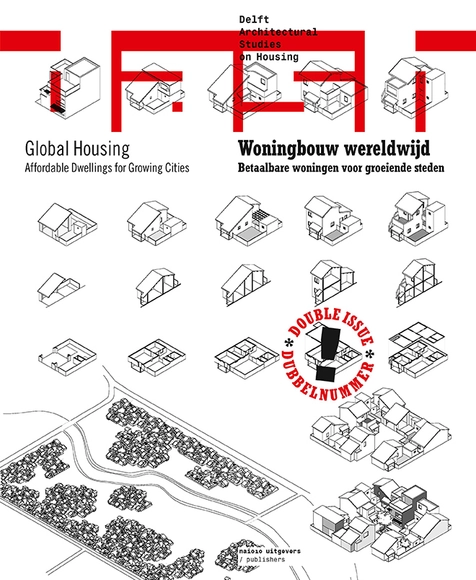
The latest issue of DASH (Delft Architectural Studies on Housing), a thematic journal devoted to residential design edited by members of TU Delft's Dwelling Chair, focuses on 'Global Housing: Affordable Dwellings for Growing Cities'. With "massive urbanisation" occurring across emerging economies worldwide, there is "an acute need for affordable housing" – the scale of which goes far beyond conventional building production, "requiring complex, politically- and economically-oriented solutions."
Malkit Shoshan, shortlisted earlier this year for the Harvard GSD Wheelwright Prize, has been selected by Het Nieuwe Instituut to curate the Dutch Pavilion at the 2016 Venice Biennale. Founder of the Amsterdam-based architectural think tank FAST (Foundation for Achieving Seamless Territory), Shoshan has been fellow of the Institute for the past two years having previously authored the award-winning book Atlas of Conflict: Israel-Palestine (2010). Her current work, entitled Drones and Honeycombs, is a study of the architecture and landscape of war and peace and examines "public space as war zone." It is this research, under the title 'Blue', which will be presented as a new series of narratives for architecture in conflict areas.
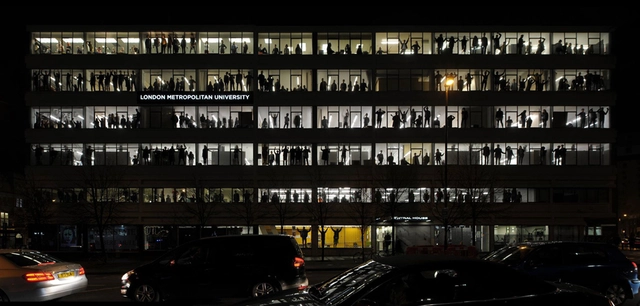
Robert Mull, former Dean of London Metropolitan University's Sir John Cass Faculty of Art, Architecture and Design—also known as 'The Cass'—has resigned over a dispute about proposed relocation plans for the school's campus in Aldgate, East London. As reported in The Independent, campaigners argue that the move, which was first announced in October 2015 by the university's Vice Chancellor John Raftery, would cause courses and jobs to be unnecessarily cut. The university's vision, named 'One Campus, One Community', aims to invest £125million ($185million) to create "a new, single campus in Islington, north London, bringing all of the [university's] faculties together on one site for the first time in the institution’s 170-year history."
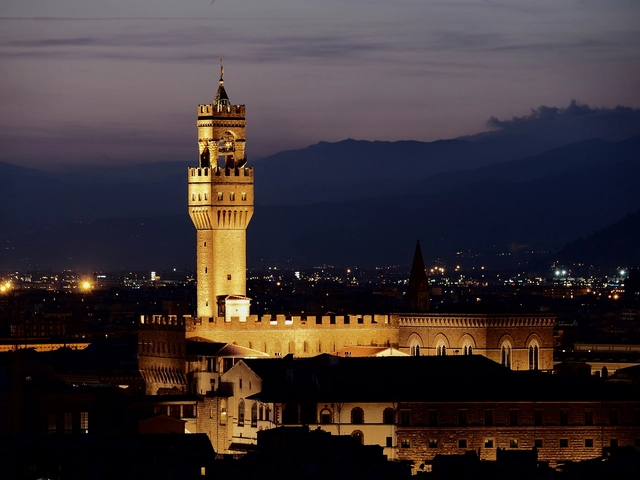
The Italian city of Florence is, according to an article for The Observer, seeking "a better class of tourist." Palazzos are being sold off and converted into hotels and spas, and the ubiquitous 'luxury apartment' development brands are creeping ever closer to some of the city's most treasured architectural monuments. In response, a recent report from UNESCO is urging the municipal government to consider the long-term effects of proposed infrastructural plans on the city, which was inscribed in 1982. "For many vocal and disgruntled Florentines," Stephanie Kirchgaessner writes, "the Palazzo Vecchio is looking less like a stately symbol of civic pride and more like an estate agency."
Following an open-call and two-stage evaluation, Mehmet Kütükçüoğlu, Ertuğ Uçar, and Feride Çiçekoğlu with the support of Namık Erkal and Cemal Emden, have been selected as co-curators of the Turkish Pavilion at the 2016 Venice Architecture Biennale, directed by Chilean architect Alejandro Aravena under the theme 'Reporting from the Front'. Commissioned by the Istanbul Foundation for Culture and Arts (İKSV), the project's title—'Darzanà'—reflects the great "twin harbours of the Mediterranean:" Istanbul and Venice.
A Belarus-based rendering studio, iddqd, have faithfully recreated Marcel Breuer's St. John's Abbey Church in a series of highly detailed images representing both the building's interior spaces and iconic external volume. The first in a long-term project called 'Unforgotten Heritage', this collection of drawings are complemented by a movie which shines a spotlight on a building which, according to the artists, "might otherwise be forgotten."
London-based practice Sam Jacob Studio, led by a former partner of FAT, have installed a 1:1 replica of a standing sarsen stone from the Avebury stone circle in the centre of the British New Town of Milton Keynes. The 'MK Menhir', situated on a Porte Cochère on the city's Midsummer Boulevard, has been (CNC) milled from hard-coated foam using data from a 3D scan of the original stone. It has been given an iridescent tint using techniques similar to those used to spray paint a car.
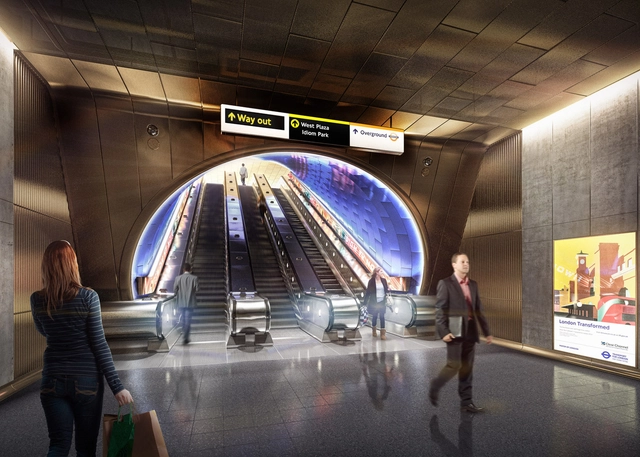
London-based practice Studio Egret West have developed designs for future London Underground stations which centre on a holistic approach to infrastructure design. The so-called 'Station Design Idiom' is, according to the designers, "deliberately wide-ranging." As a manifesto, it "covers small interventions, like repainting, through to full station refurbishments and new builds" and "complements existing London Underground standards and guidance and is the first port of call for all design decision-making on the network."
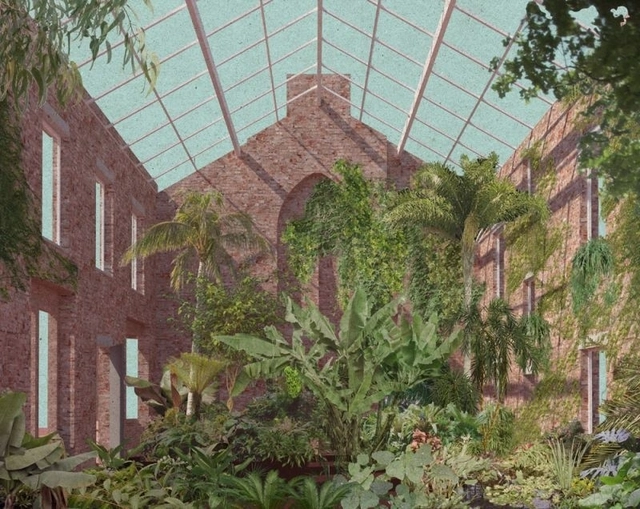
Design for a winter garden in a derelict home in Granby Four Streets. Image Courtesy of Assemble
Assemble, a London-based collective who "work across the fields of art, design and architecture to create projects in tandem with the communities who use and inhabit them," have been announced as the winners of the 2015 Turner Prize – Europe’s most prestigious contemporary visual art award. Their nomination was a surprise to many, not least because an architect (or architecture collective, in this case) has not been shortlisted before. Previous winners—some of whose work has intersected with the world of architecture—include Gilbert & George, Anish Kapoor (known for the Orbit at the 2012 London Olympic Games), Antony Gormley, Damien Hirst, Gillian Wearing and Grayson Perry (a collaborator on FAT's final built work).
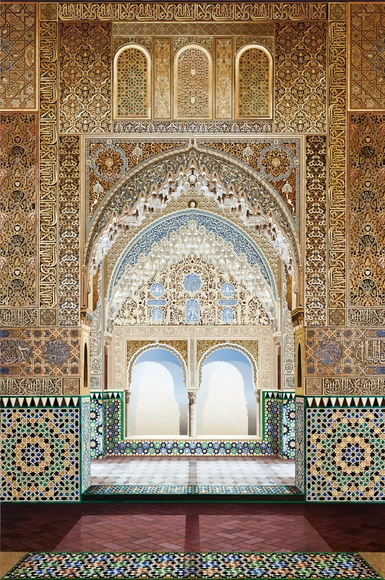
Ben Johnson is a painter preoccupied by realism – especially when it comes to the two-dimensional representation of architectural space. A British artist practicing in London, Johnson has been working professionally since the mid-1960s. In that time his extensive œuvre has encompassed painted cityscapes and prints to depictions of rooms designed—among others—by Norman Foster, John Pawson, I. M. Pei, and David Chipperfield.
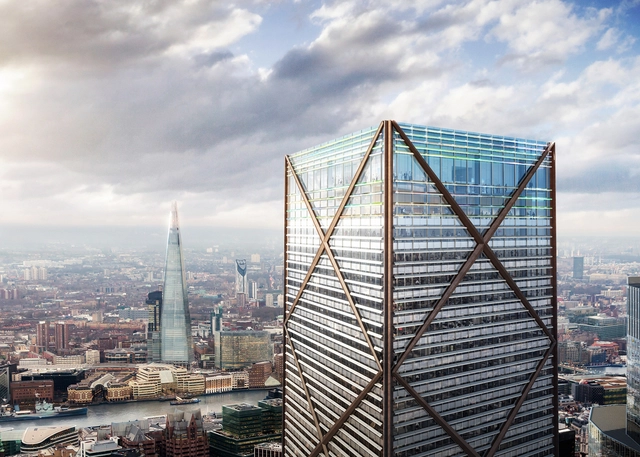
London-based Eric Parry Architects have unveiled a design proposal for a 73-storey office tower in the heart of London's financial district. Named '1 Undershaft', after its street address, the building will be one of the tallest in the city (standing at 294.6m) competing only with Piano's Shard (306m). Having been commissioned by Aroland Holdings (Singapore), the tower will contain 90,000sqm of internal space and feature "a new public square at its base" and "the capital's tallest free public viewing gallery at the top," according to Parry. It will stand in place of the existing 'Aviva Tower'.
'The Heteroglossic City' (RIBA Silver Medal: Finn Wilkie, Mackintosh School of Architecture). Image Courtesy of RIBA
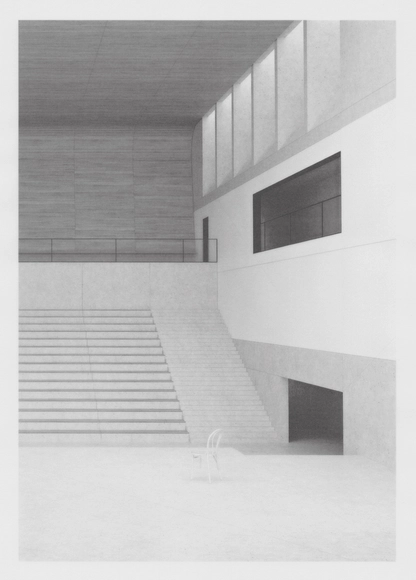
The Royal Institute of British Architects (RIBA) announced the President’s Medals Student Awards at a special event yesterday in London. The awards, recognised as the world’s most prestigious in architectural education, were inaugurated in 1836 (making them, including the RIBA Gold Medal, the institute's oldest award). Three medals in particular – the Bronze for a Part I student (Bachelor level), the Silver for a Part II student (Master level), and the Dissertation Medal – are awarded to “promote excellence in the study of architecture [and] to reward talent and to encourage architectural debate worldwide.” In addition to these, the winners of the Serjeant Award for Excellence in Drawing and the inaugural RIBA Research Medal alongside a rostra of commendations have also been announced.
See the winning projects and a full list of commendations after the break.
The six concept designs for the Tintagel Castle footbridge, the practices behind which were announced earlier this year, have now been revealed. With a shortlist featuring design consortiums led, among others, by WilkinsonEyre and Niall McLaughlin Architects, the proposals all respond to English Heritage's ambition for "a bridge that is of its place, [...] that, with its structural elegance and beauty, is in harmony with its extraordinary setting and landscape."
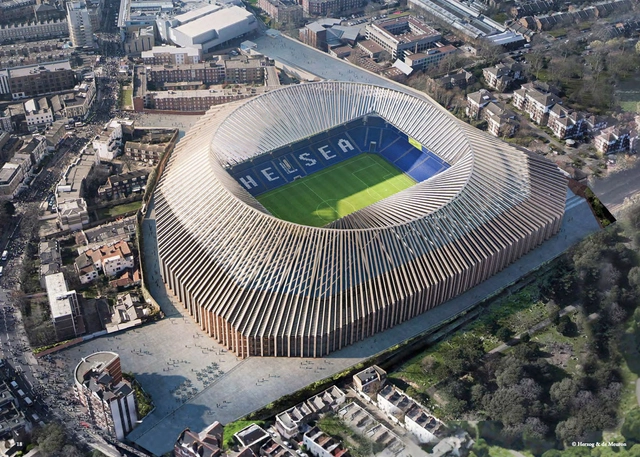
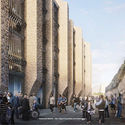
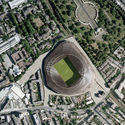
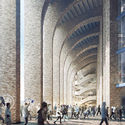
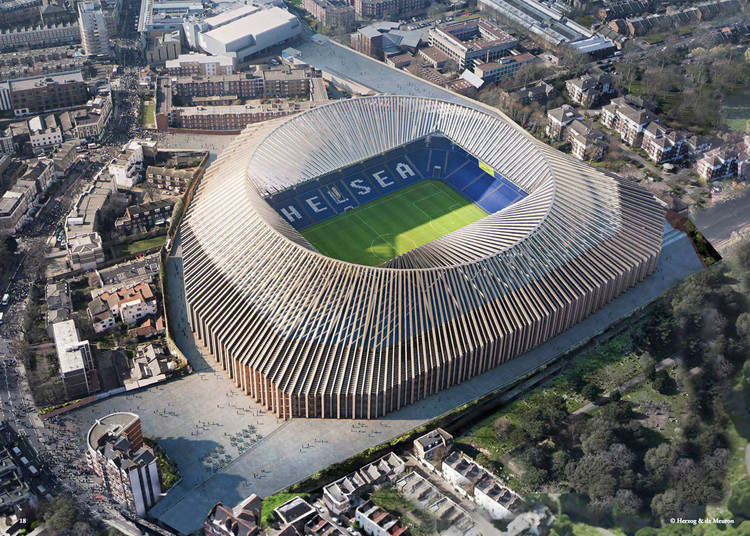
Following the announcement earlier this year that Herzog & de Meuron were developing designs for a new £500million stadium for Chelsea Football Club, the Swiss practice have released a series of official images which narrate the project's design intentions and contextual implications. The new stadium, which will be built in place of the football club's existing stadium at Stamford Bridge, will contain a "three-tier, four-stand, bowl with a capacity of 60,000 supporters" (compared to the current 41,837 capacity) and have around 60,000sqm of facilities housed within its ribbed shell.
In an article for theFinancial Times, Edwin Heathcote responds to the recent news that OMA, based in Rotterdam, have won the competition to design the British city of Manchester's new "ultra-flexible" arts venue. The Factory, so-named because of city's rich musical heritage, will be one of the largest cultural projects of its kind. Having gained and maintained financial support from Westminster, the building—which must be able to transform from a 2,200-seat theatre into an open 5,000-capacity space—is a flagship project for the British government.



.jpg?1451379729&format=webp&width=640&height=580)