Following the death of Zaha Hadid on March 31st of this year Section D, Monocle 24's weekly review of design, architecture and craft, hones in on the role of women in architecture and design. They discuss why, despite an almost 50:50 gender split in undergraduate architecture courses, women are still grossly underrepresented at senior levels within the profession by featuring conversations with two leading female architects, Angela Brady OBE and Amanda Levete. The episode also looks back over the lives of some of architecture's overlooked heroines.
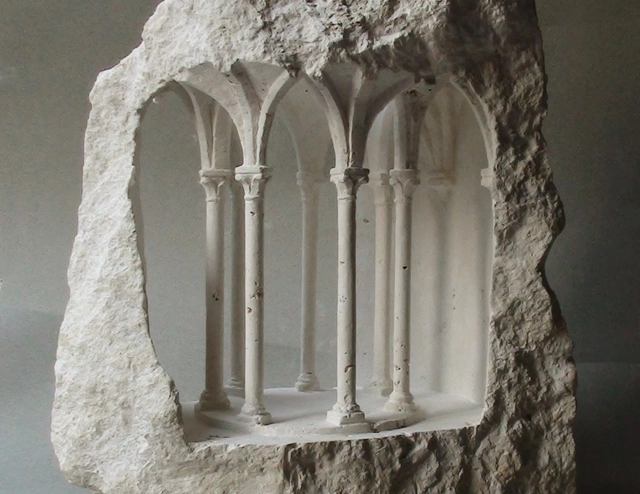
Matthew Simmonds, an art historian and architectural stone carver based in Copenhagen, is known as the creator of exceptionally beautiful miniature spaces hewn from stone – a number of which have been previously featured on ArchDaily. Drawing on the formal language and philosophy of architecture, his work "explores themes of positive and negative form, the significance of light and darkness and the relationship between nature and human endeavour." Here he shares four recent projects: Ringrone (Faxe Limestone, 2016, 61cm tall), Corona (Faxe Limestone, 2016, 30cm tall), Ararat: Study II (Faxe Limestone, 2016, 20cm tall), and Tetraconch (Limestone, 2015, 31cm tall).
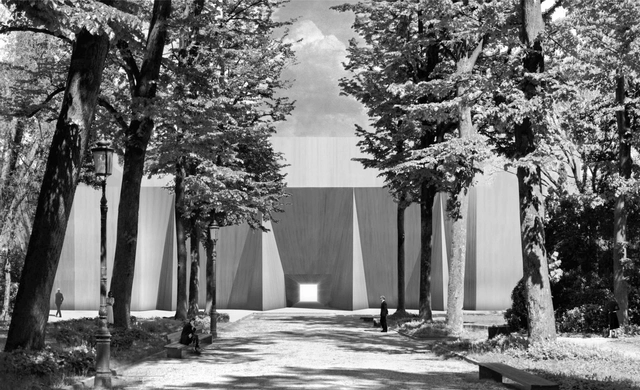
Cloaked: Italian (Central) Pavilion. Image Courtesy of RAAAF
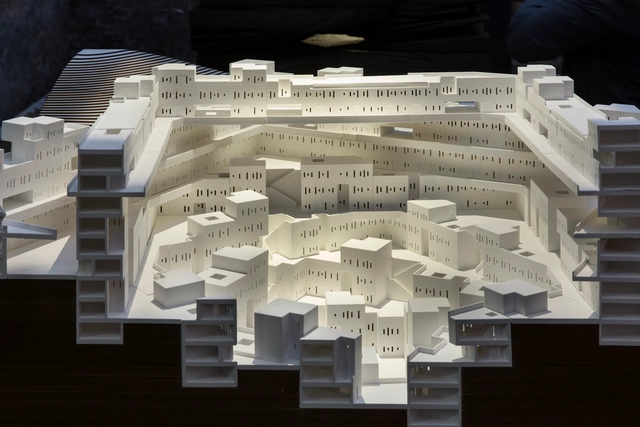
Few have ever considered what the Giardini—the park of national pavilions for the Art and Architecture Biennales in Venice—is like during the winter months. In light of the fact that, during their "off-season," the gardens are often left in a state of disrepair,RAAAF—a Dutch multidisciplinary studio based in Amsterdam, alongside architect Marcel Moonen—have proposed a series of installations in an attempt to "reclaim valuable public space" which sits at the heart of an often overcrowded city.
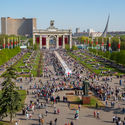
The Russian contribution to the 2016 Venice Biennale has been revealed to be "an account of how the V.D.N.H. (the 'Exhibition of Attainments of the National Economy’)—a unique complex in both scale and architecture—is being transformed into a multi-format cultural and educational space, accessible to all." Entitled V.D.N.H. Urban Phenomenon, the show will examine the park's global significance "given that the whole world is concerned by the question of how to develop society’s intellectual potential and how to create effective mechanisms for cultural assimilation." Following the Biennale, the exhibition will be permanently relocated to the V.D.N.H. in Moscow.
This episode of Section D, Monocle 24's weekly review of design, architecture and craft, examines the changing use and role of "one of the most simultaneously decried and admired materials in twentieth century architecture:" concrete. Exploring the "unlikely revival of a polarising product" in the cultural perception of many, this cheap, abundant and energy-hungry resource is studied as one of the most prolific and diverse building materials in history.
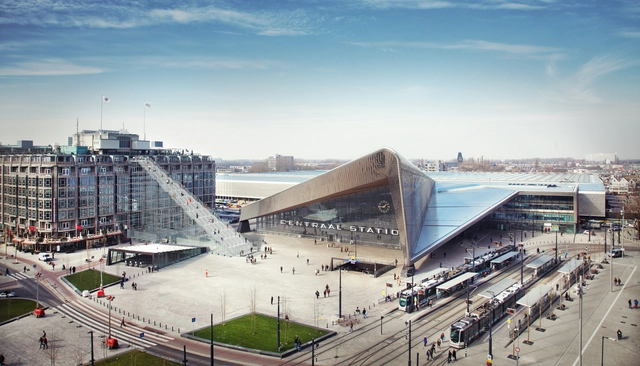
Rotterdam—the original "tabula rasa" city—will soon become host to a giant staircase, ascending 180 steps from Stationsplein (outside Rotterdam Central Station’s iconic entrance) to the top of the world-renowned Groot Handelsgebouw building. According to MVRDV, the structure will "follow in the city's tradition of celebrating reconstruction milestones" and, as such, the scaffolding system used to construct the staircase will be "a nod" to the 75th anniversary of the rebuilding of the city following World War II.
We are pleased to announce a new content partnership between ArchDaily and Moscow's Strelka Institute for Media, Architecture and Design in which we will share a collection of critical essays, interviews and articles on urban events, studies in urbanism, and urban technologies which are currently taking place in Russia. ArchDaily's Editors will be working closely with those of Strelka Magazine, which was launched in 2014, to translate and publish ideas and opinions from their expert team of local writers.
Alvar Aalto was born in Alajärvi in central Finland and raised in Jyväskylä. Following the completion of his architectural studies at the Helsinki University of Technology he founded his own practice in 1923, based in Jyväskylä, and naming it Alvar Aalto, Architect and Monumental Artist. Although many of his early projects are characteristic examples of 'Nordic Classicism' the output of his practice would, following his marriage to fellow Architect Aino Marsio-Aalto (née Marsio), take on a Modernist aesthetic. From civic buildings to culture houses, university centers to churches, and one-off villas to student dormitories, the ten projects compiled here—spanning 1935 to 1978—celebrate the breadth of Aalto's œuvre.
In the latest installation of NOWNESS’In Residence series, British architect Ian Simpson describes how was told by his careers teacher "not to set [his] sights too high" when he decided that he wanted to become an Architect. Here, he discusses the design intentions behind his home – the tallest residence in the United Kingdom's second city: Manchester. For Simpson, "home is [only] forty seconds away by lift."
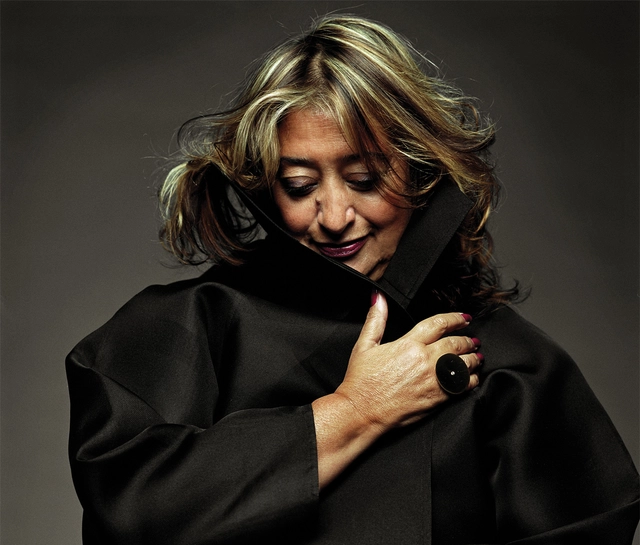
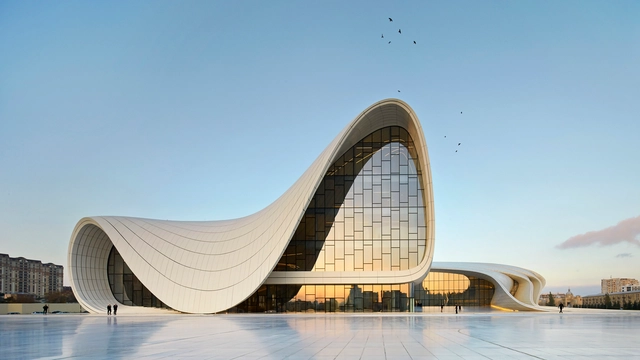
The Iraqi-born British Architect Dame Zaha Hadid, DBE (1950-2016) has died aged 65, in Miami, Florida. According to reports from the BBC, Hadid was being treated in hospital for bronchitis when she suffered a heart attack. Earlier this year she became the first sole woman to receive the RIBA Royal Gold Medal at a ceremony in London.
Read on for the official statement from Zaha Hadid Architects:
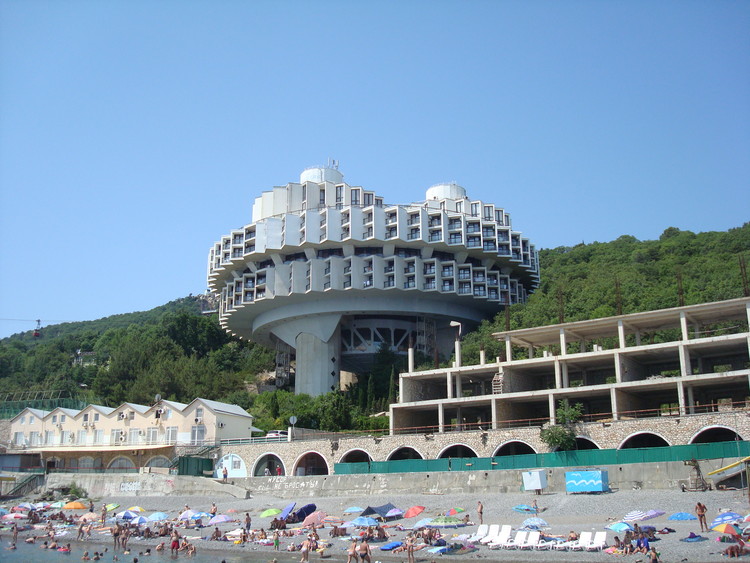
Khoja Obi Garm is a Soviet sanatorium nestled high in the mountains of Tajikistan – a place known for its curative, radon-rich waters. When Maryam Omidi, a former journalist, visited in 2015 she was "blown away" by both the architecture and landscape: a enormous concrete, Brutalist block at the peak of a snow-capped mountain. She has since launched a Kickstarter campaign to develop a book of photographs exploring "the best sanatoriums" across the former Soviet Union.
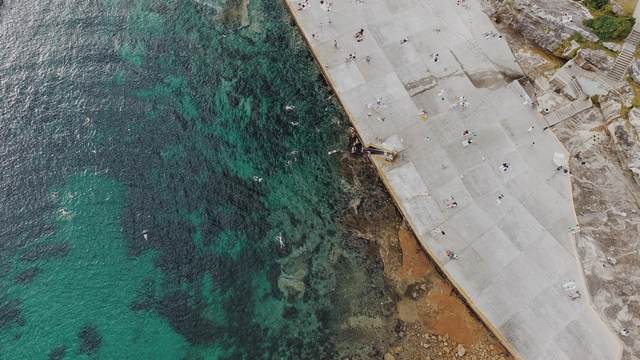
Following the announcement that the swimming pool—"one of Australia’s greatest cultural symbols—will form the foundation of the Australian Exhibition at the 2016 Venice Biennale, more information has been revealed about what will be presented.
According to the organisers, "eight prominent cultural leaders from various fields have been selected to share their personal stories, using the device of the pool as a platform to explore the relationship between architecture and Australian cultural identity." These include Olympic swimmers Ian Thorpe and Shane Gould, environmentalist Tim Flannery, fashion designers Romance was Born, authors Christos Tsiolkas and Anna Funder, Indigenous art curator Hetti Perkins and musician Paul Kelly.
The Pavilion of Morocco at the 14th Venice Biennale, Fundamentals, focused on territorial speculations in the Sahara: Inhabiting the Uninhabitable. For the exhibition, which was the country's first representation at the Biennale, Paris-based practice OUALALOU+CHOI proposed an urban structure for this desert territory – "a means of putting down roots, implanting urbanity and civilization. The Sahara, with its extreme geography and climatic conditions, remains unexplored territory for architectural speculation."
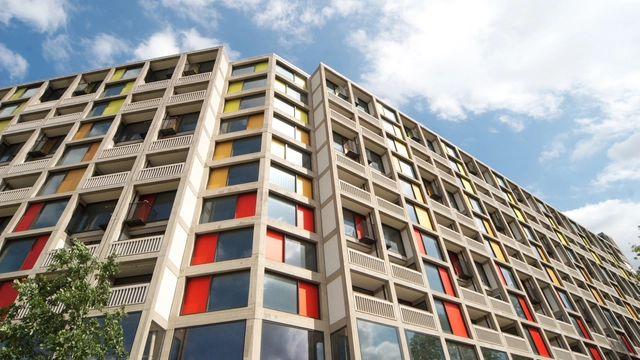
London's Central Hill housing estate, located in Brockwell Park (South London) and designed by Edward ('Ted') Hollamby is, like many 1960s schemes of its ilk, under threat of demolition. In this short film by British filmmaker Joe Gilbert, the estate is viewed through the narration of a long-term resident, Clifford Grant, who discusses its history and argues for its future security.
Scotland, a country within the United Kingdom, will be showcasing a projected entitled Prospect North at the forthcoming Venice Biennale. Curated collaboratively between the Scottish Government, Architecture and Design Scotland, Creative Scotland,and the British Council Scotland, the installation will be designed by Lateral North, Dualchas Architects, and Soluis. As reported by the Architects' Journal, the show is set to examine "Scotland’s relationship with its northern neighbours" by focusing "on people and place, [and] looking at how communities from the Northern Isles of Orkney to the central belt of Scotland are using grassroot action."
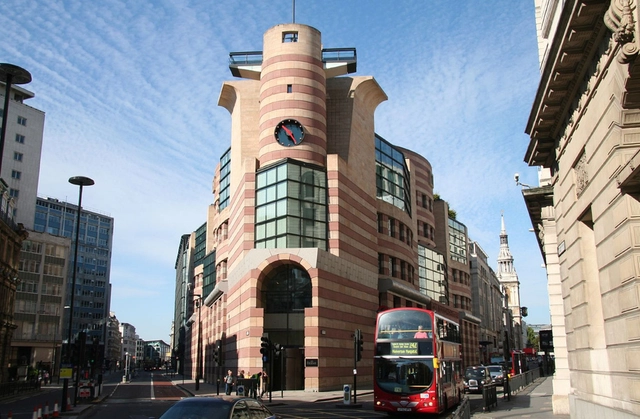
The British Twentieth Century Society (C20) have announced a forthcoming conference in London on Postmodernism. Speakers including Sir Terry Farrell, Piers Gough and Charles Holland (Ordinary Architecture) will join Alan Powers, Emily Gee and Elain Harwood of Historic England to "raise the profile of Britain’s best Postmodernist buildings following concerns over proposed changes to leading examples of this much maligned style."
The third Kuwaiti Pavilion at the 2016 Venice Biennale, entitled ‘Between East and West: A Gulf’, will "look past Kuwait’s borders to the contested hydrography of the Persian/Arabian Gulf" in order to propose a new masterplan for the region. Curated by Hamed Bukhamseen from Kuwait and Ali Karimi from Bahrain the pavilion will, in an area of physical, religious, and political division, "tell the story of the Gulf’s islands and the possibilities they hold for a joint territorial project."




.jpg?1459424952 "© VDNH")





.jpg?1459371467 "© Nowness")
.jpg?1459371483 "© Nowness")
.jpg?1459371408 "© Nowness")
.jpg?1459371440 "© Nowness")
.jpg?1459371518)