AD Editorial Team

BROWSE ALL FROM THIS AUTHOR HERE

ArchDaily's Top 20 Most Read Articles of 2015

Subscriber Access | 

Over the past 12 months at ArchDaily, we've been working hard to bring our readers more articles that will interest, inspire and aid them, and our most read articles of the year reflect a few trends that have characterized the year. Firstly, they show the success of our attempts to bring our readers’ favorite articles from the past back into the limelight through social media and other means, with 7 of our top 20 articles from the year published earlier than 2015. Secondly - perhaps more obviously - it shows the continuing popularity of lists. And what do we do when 75 percent of our most popular articles of the year are lists and rankings? Why, we make a list of them of course. So put your countdown cap on and keep reading to see our top 20 most read articles of the year - including everything from the world's top 100 universities, to 19 notable former architects, to 22 websites you didn't know would be useful to you.

Who Should Win the 2016 Pritzker Prize?

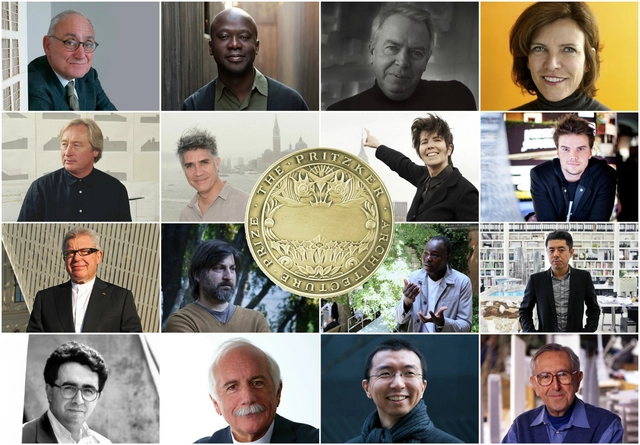
The Pritzker Prize has announced that it will be revealing its 2016 laureate on the 13th of January, starting what is sure to be a month of intense speculation about who the next winner of architecture's most prestigious prize might be. Will the jury honor an influential member of the old guard, as they did this March when they gave the award to the late Frei Otto? Or will they recognize a young architect who has made a big splash? Will they reward virtuoso spatial design, or will they acknowledge the role of social impact, as they did in awarding the prize to Shigeru Ban in 2014? And will the award go to an individual or to two or more architects working together, as it did in 2010 when SANAA scooped the prize?

We want to hear from our readers - not just about who probably will win the prize, but about who should win the prize and why. Read on to cast your vote in our poll, and let us know in the comments whose name you'd like to hear announced on January 13th.

Call for Submissions: ArchDaily's 2015 Holiday Card Contest

It's that time of year again! At ArchDaily we clearly appreciate holiday cards with an architectural spin, and we want to see your card designs. Whether that involves a modernist menorah, a christmas tree cross-section or even a Mies van der Ho-Ho-Ho, you're invited to submit your own architectural holiday card to be hung above ArchDaily's impeccably postmodern mantle.

We thoroughly enjoy the creativity of our readers and look forward to viewing your submissions. 

Follow ArchDaily China on WeChat

Subscriber Access | 

ArchDaily readers with WeChat: Are you following us yet? See the latest news and projects from ArchDaily China updated daily in articles especially tailored for WeChat. Subscribe to our official account by scanning the QR code below or via our WeChat ID: ADCNews.

Follow ArchDaily China on WeChat - Image 5 of 4

Call for ArchDaily Interns: Spring 2016

UPDATE: The Deadline has been extended to Wednesday, December 3rd at 9:00 AM EST.
is looking for motivated architecture geeks to join our team of interns for Spring 2016! An ArchDaily internship is a great opportunity to learn about our site and get exposed to some of the latest and most interesting ideas shaping architecture today. Read on to find out what it takes to work for the world’s most visited architecture website!

Interested? Then check out the requirements below.

AD Essentials: BIM

AD Essentials: BIM - Image 1 of 4

This article is part of ArchDaily Essentials, a series of articles which give you an overview of architecture's most important topics by connecting together some of our best articles from the past. To find out more about ArchDaily Essentials, click here; or discover all of our articles in the series here.

We often hear of the great tectonic shift that digital technologies have brought to almost every aspect of our lives, but in one particular yet understated way, architecture has been revolutionized by computerization. Building Information Modeling (BIM) is a background revolution that has implications on every stage in the building process from development through construction and onto the lifecycle of the building. As defined by the US National Building Information Model Standard Project Committee:

"Building Information Modeling (BIM) is a digital representation of physical and functional characteristics of a facility. A BIM is a shared knowledge resource for information about a facility forming a reliable basis for decisions during its life-cycle; defined as existing from earliest conception to demolition." [1]

While that gives some indication of BIM’s applications, many people may still be wondering how such a shift came about, what are its present applications and benefits, and how it will shape architecture’s future?

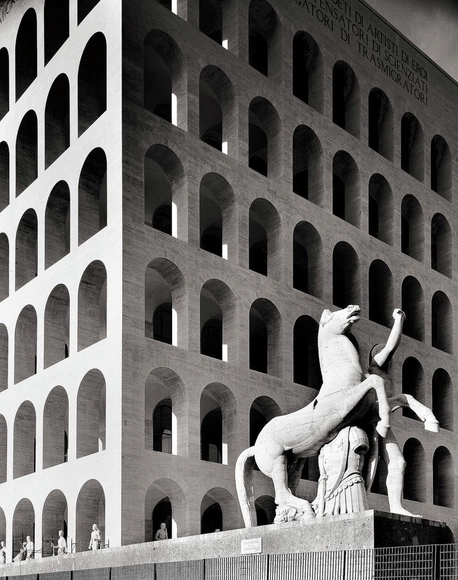
Fendi Fashion House Relocates to the Palazzo della Civiltà Italiana in Rome

The Palazzo della Civiltà Italiana (also known as the 'Square Colosseum') is perhaps the most emblematic architectural project realised during Benito Mussolini's Fascist dictatorship, which governed Italy between 1922 and 1943. Now, sixty years later and having never been used, Italian fashion house Fendi and architect Marco Costanzi have—amid controversy—renovated the historically charged building into their headquarters, with office space to accommodate around 450 employees. Having reportedly signed a fifteen year lease with the municipality of Rome, the haute fashion house will be paying around €240,000 ($265,000) in annual rent.

Fendi Fashion House Relocates to the Palazzo della Civiltà Italiana in Rome - Image 2 of 4

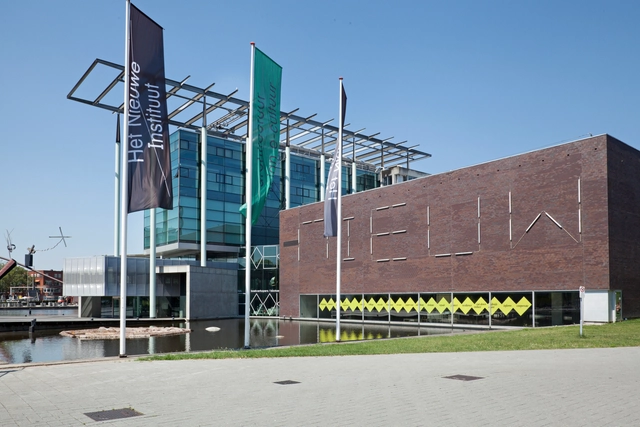
MVRDV Transfer Early Work to the Archives of Rotterdam's Nieuwe Instituut

Rotterdam-based practice MVRDV have begun a transfer of their early work, spanning fifteen years from 1993 to 2008, to Het Nieuwe Instituut — the central architecture archive of The Netherlands. This collection, which will eventually be made available to the public, will be in the institute's first primarily digital donation (approximately eight terabytes of data) and consisting of material from 400 of the practice's 680 total projects, including the Villa VPRO, the Silodam in Amsterdam, and the Markthal Rotterdam, as well as unrealised projects such as Meta City Datatown, Pig City, and 3D City Cube.

AD Interviews: Joseph Grima / Chicago Architecture Biennial

Subscriber Access | 

A few weeks ago, during the opening of the Chicago Architecture Biennial, we eagerly awaited our opportunity to speak with Joseph Grima, the co-artistic director of the first Chicago Architecture Biennial. In an exhibition with such an open theme, we wanted to understand the driving forces behind the assembly of the participants, in addition to how the city of Chicago itself influenced decisions in the planning of this largest gathering of architecture in North America. Watch the video above and read a transcript of Grima's answers below.

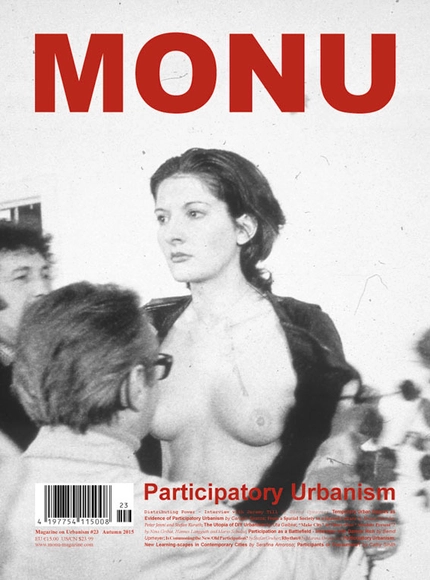
MONU Magazine #23: Participatory Urbanism

Subscriber Access | 

From the publisher. In order to avoid participation in architecture and urban design becoming merely a politically required token of democratic involvement - a kind of fake participation that does not actually engage the participants in any meaningful way - architects, planners, and designers need to commit themselves and relinquish control, as Jeremy Till claims in an interview with us entitled "Distributing Power." With this new issue of MONU on the topic of "Participatory Urbanism" we aim to find out and reassess to what extent individual citizens really can and should become proactive in the production and development of cities and in the shaping of neighborhoods, and where the limits of such Participatory Urbanism really lie.

Gallery: OMA's Garage Museum of Contemporary Art Photographed by Laurian Ghinitoiu

Photographer Laurian Ghinitoiu has shared with us images of OMA's recently completed Garage Museum of Contemporary Art in Moscow. The museum project repurposed the 1960s Vremena Goda restaurant in Gorky Central Park and transformed it into a modern exhibition space adorned with Soviet era tiles, mosaics and bricks preserved from its previous life.

"The building offers a wide range of interior conditions for the exhibition of art beyond the ubiquitous “white cube,” described OMA in the project's description. Scroll down for more images of the museum by Ghinitoiu.

Gallery: OMA's Garage Museum of Contemporary Art Photographed by Laurian Ghinitoiu - Image 1 of 4Gallery: OMA's Garage Museum of Contemporary Art Photographed by Laurian Ghinitoiu - Image 2 of 4Gallery: OMA's Garage Museum of Contemporary Art Photographed by Laurian Ghinitoiu - Image 3 of 4Gallery: OMA's Garage Museum of Contemporary Art Photographed by Laurian Ghinitoiu - Image 4 of 4Gallery: OMA's Garage Museum of Contemporary Art Photographed by Laurian Ghinitoiu - More Images+ 29

Win a FREE Full Pass to Greenbuild from reThink Wood

This fall, reThink Wood is heading to Washington D.C. for Greenbuild - the world's largest conference and expo dedicated to green building. If you haven’t registered already, this is your chance to win a freepass to the conference and participate in educational workshops celebrating sustainable architecture.

reThink Wood is offering a full pre-paid pass to the 2015 Greenbuild Conference & Expo ($1,050 value) to one lucky ArchDaily reader. The winner will be invited to meet with architects onsite that are passionate about sustainable design with wood in a variety of structures – including tall wood buildings.

To be entered to win, simply fill in your details in the form at the bottom of this article before Monday, October 19 at 12:00PM EST.

More on reThink Wood at Greenbuild after the break.

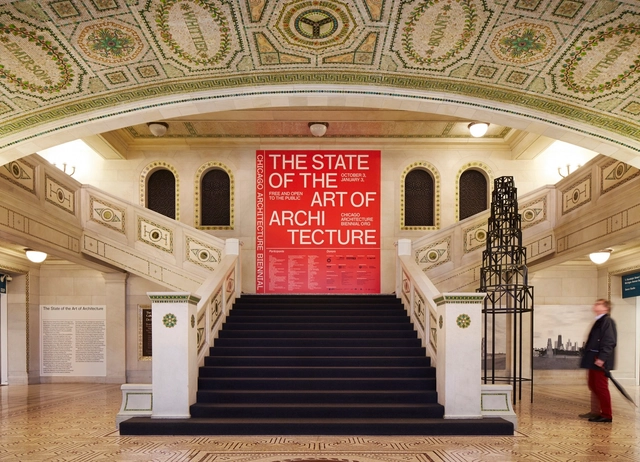
15 Must-See Installations at the Chicago Architecture Biennial

What is the state of architecture today? What motivates different architects from around the world to improve the conditions of the planet's inhabitants? If you find yourself in the City of Chicago in the next few months, you will be submerged in a discussion of what architecture is, and what it can and should be in the future.

The ArchDaily team spent the end of last week at the opening of the Chicago Architecture Biennial, an anticipated celebration of architecture at a scale previously unseen in North America. Supported in large part by the city of Chicago itself, Mayor Rahm Emanuel expressed that he wanted his city "to be dead center" in a conversation about how architecture can positively impact cities around the world. In response, curators Joseph Grima and Sarah Herda reviewed the work of over 500 architects worldwide and selected over 100 architects from more than 30 countries to "demonstrate that architecture matters at any scale."

Under the title "The State of the Art of Architecture," Grima and Herda looked to the architects themselves to reveal not one theme in particular, but to highlight the built forms, strategies and speculations that emphasize the "agency of the architect." Spread over seven venues (The Chicago Cultural Center, Millennium Park, Stony Island Arts Bank, Graham Foundation, 72 E. Randolph, Water Tower Gallery and IIT), world-renowned, well-known architects exhibit projects alongside up-and-coming instigators. Some of the installations are serious, others are more light-hearted and provocative; on the whole, however, they provide an inviting global snapshot of the challenges facing architecture production today. 

Poll: Which Project Do You Think Should Be Awarded the 2015 RIBA Stirling Prize?

With a week to go until the announcement of the 2015 RIBA Stirling Prize, we're interested to see which project ArchDaily readers would place at the top spot. Six projects are vying for this year's prestigious award, which was won last year by Haworth Tompkins' Everyman Theatre in Liverpool. Following a rigourous system of regional awards (all of which you can see on ArchDaily), the shortlist has been picked from a handful of nationally award-winning projects. The winning scheme will be the one which, in the eyes of the jury, "has made the greatest contribution to British architecture over the past year."

You can see each project in more detail and read the judges' citations here.

Happy World Architecture Day!

Created by the Union International des Architects (UIA) in 2005, World Architecture Day is celebrated on the first Monday of October with the aim of reminding the world about the collective responsibility of architects in designing our future cities and settlements.

This year, the UIA has selected “Architecture, Building, Climate” as the theme of the day, seeking to highlight the essential role that architecture, design and urbanism have in the reduction of greenhouse gas emissions. With international climate treaty negotiations set to happen later this year, the “UIA members, working bodies and partners will mobilize on 5 October to promote actions and solutions that apply the enormous power of architecture and urban design in coping with global climate change, one of the greatest challenges of our time.”

Through small actions architects can collectively make a big difference and create significant changes. To celebrate World Architecture Day, we have rounded up a selection of projects that have taken steps towards the challenge of protecting our environment.

2016 Oslo Triennale Launches International Calls for Intervention Strategies and Associated Projects

The 2016 Oslo Triennale – After Belonging: A Triennale In Residence, On Residence and the Ways We Stay in Transit – has launched a call for intervention strategies and associated projects. To be held from September 8- November 27, 2016, the Triennale will look at contemporary population mobility—including an interest in migration, new forms of tourism and refugeesim— with the intention of designing “the objects, spaces and territories for a transforming condition of belonging.” Specifically, it seeks to answer the questions: “How can different agents involved in the built environment address the ways we stay in transit?” And, “how can architects intervene in the reconfiguration of the contemporary residence?"

AD Essentials: Rendering

Subscriber Access | 
AD Essentials: Rendering - Image 1 of 4

This article is part of ArchDaily Essentials, a series of articles which give you an overview of architecture's most important topics by connecting together some of our best articles from the past. To find out more about ArchDaily Essentials, click here; or discover all of our articles in the series here.

Daniel Libeskind's Jewish Museum Berlin Photographed by Laurian Ghinitoiu

The Jewish Museum in Berlin opened its doors 14 years ago today. Inspired by a lecture given by Daniel Libeskind, Berlin-based photographer Laurian Ghinitoiu captured the building and its dramatic plays of light and texture in a series of 20 photographs.