

Produce personalized presentation boards that distill complex concepts into simple visual representations with a few helpful tools and effects.
Articles
How to Create Architectural Presentation Boards
| Sponsored Content
https://www.archdaily.comhttps://www.archdaily.com/catalog/us/products/37234/how-to-create-architectural-presentation-boards-lumion
Jan Gehl: “In The Last 50 Years, Architects Have Forgotten What a Good Human Scale Is”
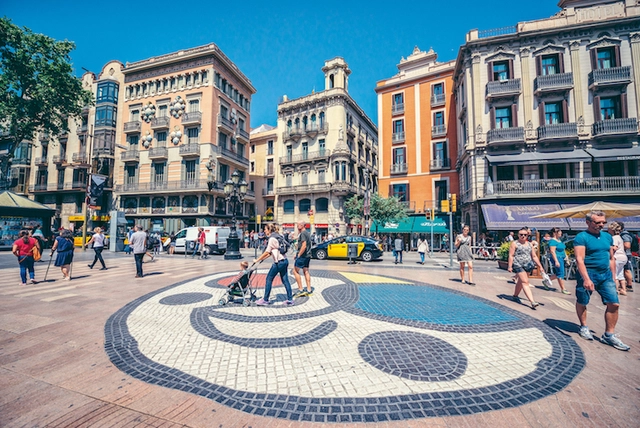
This interview was initially published in Spanish by City Manager as “Jan Gehl, ciudades para la gente.”
Jah Gehl is recognized as a follower of Jane Jacobs, the “grandmother” of urbanism and humanist planning. He has been a professor at the Danish Real Academy of Fine Arts in Copenhagen and visiting professor in Canada, the United States, New Zealand, Mexico, Australia, Belgium, Germany, Poland, and Norway. In 2000, he created his own consultancy along with Helle Søholt, Gehl Architects, in Denmark, where he completed diverse urban projects from around the world using data and strategic analysis.
The below text comes from an interview with the Danish architect, theorist and world leader in urban development, and promoter, following Jane Jacobs, of the human scale in the design of public spaces.
https://www.archdaily.com/877602/jan-gehl-in-the-last-50-years-architects-have-forgotten-what-a-good-human-scale-isRodrigo Alonso
INTERIORS: Stranger Things

Interiors is an Online Publication about the space between Architecture and Film, published by Mehruss Jon Ahi and Armen Karaoghlanian. Interiors runs an exclusive column for ArchDaily that analyzes and diagrams films in terms of space.
The first season of Stranger Things, which debuted on Netflix in July 2016, pulls its influences from the likes of Steven Spielberg, John Carpenter, and Stephen King, and stands on its own merits as a result of the inventiveness of its creators, filmmaking duo Matt and Ross Duffer.
Interiors spoke with Production Designer Chris Trujillo on the visuals of the series and several of the core spaces used throughout the first season, including Hawkins Laboratory, Will Byers’ house and, of course, the mysterious world of the Upside Down, which takes bits and pieces of the real world and twists them into a space entirely its own, one that exists both as part of, and outside of, the real world.
https://www.archdaily.com/882405/interiors-stranger-thingsINTERIORS Journal
The 6 Best European Cities to Start an Architecture Business

This article was originally published by Archpreneur as "Booming Cities: 6 European Startup Hubs for Architects."
Starting a company can be extremely stressful. Fresh graduates, freelancers and directly employed architects looking to create startups face various initial obstacles and need to have a clear view of the operating model for their businesses. They have to choose where to cut costs, which can relate to choice of location, office space and limited living expenses.
Following the guidelines of The Lean Startup method—popularized by author and entrepreneur Eric Ries—can be very beneficial for the early phase of a company’s development. This can mean focusing on budget-friendly setups, and creating businesses on the idea of developing products and productizing design services. Being part of an entrepreneurial community can also influence the way owners grow their businesses, as it provides opportunities to establish valuable contacts and partnerships.
We have compiled a list of 6 startup hubs in Europe, which includes established centers for entrepreneurship as well as cities emerging as exciting new places for experimentation at the intersection of digital technology and architecture.

https://www.archdaily.com/882377/the-6-best-european-cities-to-start-your-architecture-businessLidija Grozdanic for Archipreneur.com

The Expansive and Inclusive Architectural Galaxy of Archive of Affinities

This article was originally published on the blog of the Chicago Architecture Biennial, the largest platform for contemporary architecture in North America. The 2017 Biennial, entitled Make New History, will be free and open to the public between September 16, 2017 and January 6, 2018.
In the era of the Internet every image is an advertisement. Almost every architect contributes to the limitless overabundance offered by social media by sharing instantaneous personal archives, student projects, and their own work. Each image is a miniature manifesto shared with the broader public, circulating freely and endlessly – they shape and identify the work of architects, they track and create lineages and alliances, and they also begin to form and transmit sensibilities, ideologies, and aesthetic preferences, both individually and collectively.






https://www.archdaily.com/881672/the-expansive-and-inclusive-architectural-galaxy-of-archive-of-affinitiesAndrew Kovacs
The World's Most Expensive Buildings

If the Great Pyramid were to be built today, it would cost between 1.1 and 1.3 billion US dollars, according to a cost estimate by the Turner Construction Company—not surprising, considering how that is roughly the same amount of money that it took to build the Trump Taj Mahal or the Petronas Twin Towers. Complicated structural requirements, delayed work timelines, complex building programs, the need for good earthquake or typhoon proofing, the use of advanced mechanical and electronic systems, and costly materials and finishes can all add up to the eventual cost. But sometimes—and especially in cases in which governments or powerful clients set out to beat existing records such as the “tallest building in the world”—money is spent for no real reason except for an unabashed display of wealth, power or strength.
Emporis, the renowned global provider for building data, has compiled a list of the top 200 money-guzzlers from recent years, and not surprisingly, a lot of high-rises have made the list. Read on to see the top 20.
https://www.archdaily.com/881766/the-worlds-most-expensive-buildingsZoya Gul Hasan

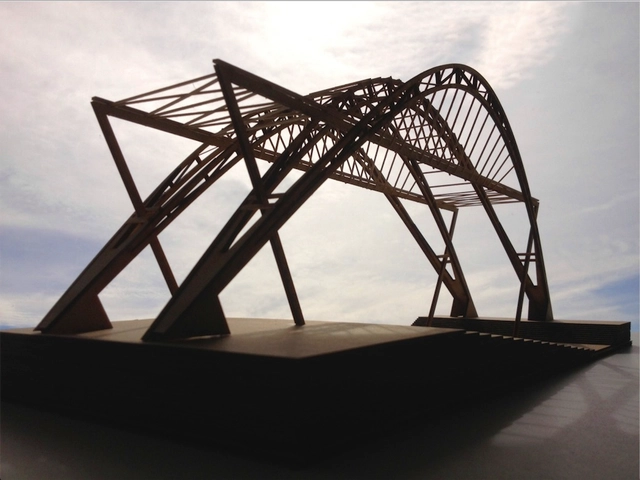
13 Tips to Help You Avoid an All-Nighter

All-nighters: the bane of all architecture students. The new academic year brings in an influx of fresh, enthusiastic architecture students alongside slightly more hardened veterans of the degree, and students of all experience levels are reminded of the unfortunate tendency for work to stretch through the night. It's an easy habit to slip into for both students and even those working in practice; however many times we may tell ourselves at the end of a project that we will be more organized next time, the work always piles up and it seems like the only option – but it’s not!
With architecture holding the title for the degree that works the longest hours, it is important to maintain a healthy work-life balance throughout. If you feel that you are falling into the trap of staying up until 6am every day then this article should prevent any further sleep deprivation. With advice taken from several architecture students with years of experience dodging the twilight hour, this list will guide you on your way to enough sleep and decent grades.
https://www.archdaily.com/881903/13-tips-to-help-you-avoid-an-all-nighterElla Thorns
Italian Fashion Hub: Call For Entries
| Sponsored Content

YAC – Young Architects Competitions – and Centergross launch “Italian Fashion Hub”, an architectural competition to redevelop a multi-service area of the wider fashion district in Europe. A cash prize of € 20,000 will be awarded to the winners selected by an internationally-renowned jury made by, among the others, Patrik Schumacher (Zaha Hadid Architects), Ben Gilmartin (Diller Scofidio + Renfro), Marie Hesseldahl (3XN), Aurélien Coulanges (Ateliers Jean Nouvel).





https://www.archdaily.com/881908/italian-fashion-hub-call-for-entriesRene Submissions
Against All Odds, Photos Show Qatar's Determination to Construct World-Class City

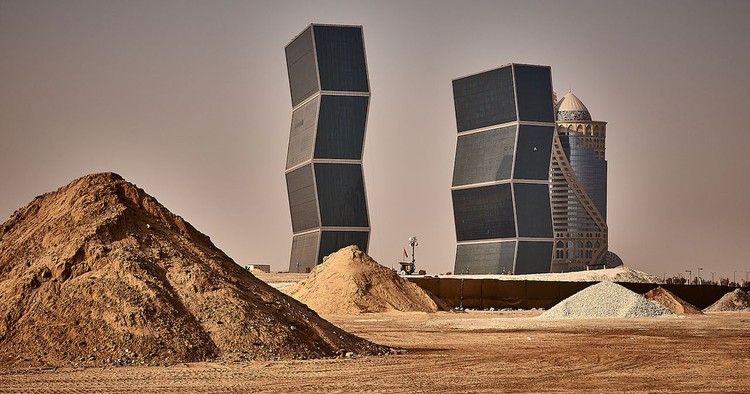
The history of the Qatar Peninsula—or Catara, as first labeled on an ancient map drawn by the Greco-Roman polymath Claudius Ptolemaeus—dates back to the Paleolithic Age. By the 1930s, the tiny Gulf state was struggling to maintain its position as the center of the pearl trade, but soon after, in the 1940s, it found itself at the forefront of economic growth and progress after the discovery of its vast oil reserves. Today, Qatar is the world’s richest country per capita; its capital Doha an ever-growing crop of shiny high-rises, with occasional buildings by the world's most sought-after architects thrown in for effect, its skyline flecked with tireless cranes, and its suburbs strewn with bulldozers, machinery, and endless mounds of displaced sand.
Seen in these photographs by Manuel Alvarez Diestro is a record of the country's impatient race towards an extravagant desert dream—but perhaps it can also be read as a subtle nod towards Qatar’s sheer determination to forge ahead, despite being steeped in controversies and crises during recent years.



https://www.archdaily.com/881561/against-all-odds-photos-show-qatar-determination-construct-world-class-cityZoya Gul Hasan
"Autotuned Architecture" Is Endangering the Craft of Architectural Construction
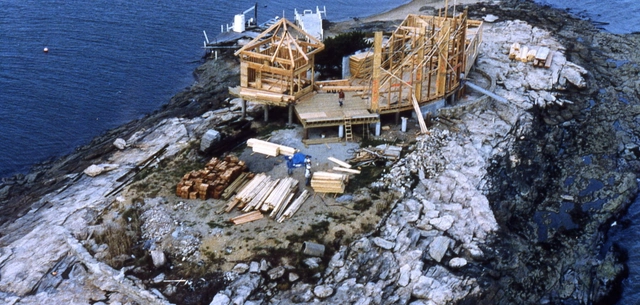
This article was originally published by Common Edge as "Separating Architecture From the Building Arts Produces Soulless Structures."
Truth be told, many architects I know are a little uneasy about their lack of building knowledge. Since architecture without construction is largely a graphic arts exercise, this is either deeply ironic or grimly paradoxical. To bridge this yawning gap, architects today typically hire a slew of consultants—roof, skin, curtain wall, interior, sustainability, preservation—who join the growing influence of software-driven structural and mechanical engineers to absorb much of what architects once assumed they could handle.

https://www.archdaily.com/881823/autotuned-architecture-is-endangering-the-craft-of-architectural-constructionDuo Dickinson
Architecture Guide to Montevideo: 15 Sites That Every Architect Should Visit
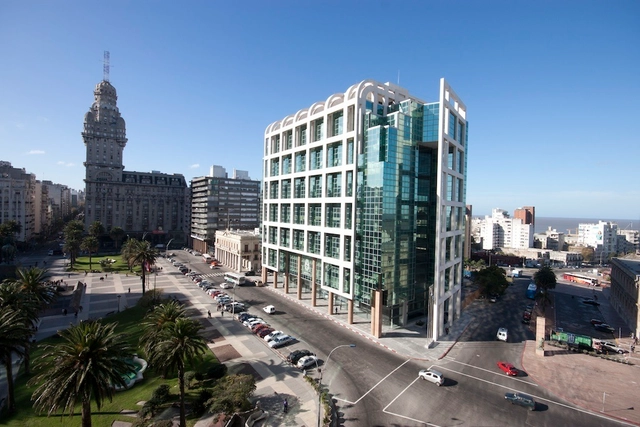
There are a number of reasons to visit the architecture of Montevideo: the coastal city is the result of a complex interaction of historical factors that provided multiple trends and architectural styles, currently coexisting at par. Its streets and buildings tell the story of its past.
The city´s architectural sites are easily found walking around Ciudad Vieja (Old Town) or in the renowned Rambla. Below is a list of 15 sites that every architect should know of and visit.
https://www.archdaily.com/881189/architecture-guide-to-montevideo-15-sites-that-every-architect-should-visitFabian Dejtiar
The Unexpected Low-Tech Solutions That Made the Guggenheim Bilbao Possible

This article originally appeared on guggenheim.org/blogs under the title "How Analog and Digital Came Together in the 1990s Creation of the Guggenheim Museum Bilbao," and is used with permission.
The Guggenheim Museum Bilbao, which celebrates its twentieth anniversary this month, has been hailed as a pinnacle of technological progress since its October 1997 opening. While the use of the modeling software CATIA (Computer Aided Three-Dimensional Interactive Application) was without question groundbreaking, some of the greatest moments of ingenuity during the building’s design and construction were distinctly low-tech. Developed between 1991 and 1997, the curved and angular titanium-clad building was conceived at the turning point between analog and digital practice. This profound shift enveloped and permeated every aspect of the project, from the design process and construction techniques to the methods of communication technology put to use.
https://www.archdaily.com/881663/the-unexpected-low-tech-solutions-that-made-the-guggenheim-bilbao-possibleAshley Mendelsohn
How to Make Beautiful Stylized Floor Plans Using Photoshop
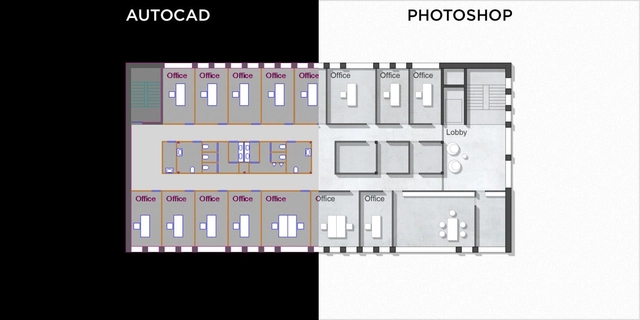
This article was originally published by RenderPlan as "How to Render an AutoCAD Floor Plan with Photoshop."
Rendering plans in Photoshop is an essential part of presenting your work to your client or to convince a competition jury to pick your design as a winner. Whenever you publish your work for books, websites or presentations the design quality of your plans will be your business card to future clients and the audience you build around your practice. Let’s start step by step.

https://www.archdaily.com/881660/how-to-make-beautiful-stylized-floor-plans-using-photoshopRenderPlan
The 7 Best Podcasts Hosted by Architects, for Architects

This article was originally published by The Architect's Guide as "The 7 Best Architecture Podcasts For Architects, Hosted By Architects."
As an avid podcast listener I thought I would put together a list of the best architecture podcasts that are also hosted by architects. I think it is helpful to get insight into the design and business side of architecture from someone who has been through the process personally.
So, in no particular order, here are my picks for the best architecture podcasts currently available.

https://www.archdaily.com/881587/the-7-best-podcasts-hosted-by-architects-for-architectsBrandon Hubbard
Architecture Books You Can Borrow (For Free) From The Internet's Largest Library

Have you registered for your free library card? If you haven't, you're missing out on some serious perks! The Internet Archive has a lending feature that allows users to electronically "borrow" books for 14 days. With over 2,000 borrowable books on architecture, patrons from across the globe can read works by Reyner Banham, Walter Gropius, Ada Louise Huxtable and Jonathan Glancey. There are also helpful guides, dictionaries and history books.
https://www.archdaily.com/881522/architecture-books-you-can-borrow-for-free-from-the-internets-largest-libraryBecky Quintal
Jalisco, Mexico: Prototype for INFONAVIT, by ZD+A and Iñaki Echeverría
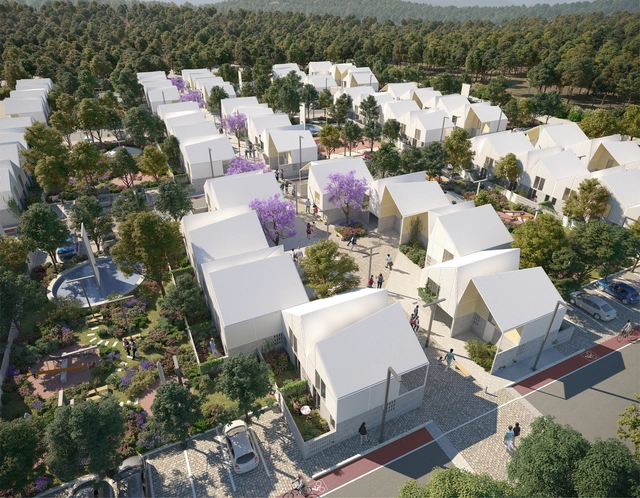
The exercise, “from territory to inhabitant”, organized by the Centre of Investigation for Sustainable Development (CIDS) of Infonavit, seeks to respond to the diverse cultural, social, environmental, spatial and functional needs of different localities and bioclimates in finding assisted self-build housing solutions. The main objective of this investigation is to establish the legal, conceptual and architectonic processes that can be used to create these types of houses.
In their next project, CIDS invited the Mexican studio ZD+A to collaborate with Iñaki Echeverría to make a proposal for a social housing prototype for assisted self-build with the municipality of Tala in Jalisco, Mexico.
https://www.archdaily.com/877604/jalisco-mexico-protoype-for-infonavit-by-zd-plus-a-and-inaki-echeverriaKarina Zatarain
11 Questions to Ask Yourself Before Designing or Redesigning Your Workplace

According to Blake Zalcberg, president of OFM, when designing or redesigning a workplace, it is important to consider how the space will affect both the employees and clients. It has the power to encourage drive and manipulate communication within the office whilst being the first impression most people gain of the company.
The values of the company must be thought about to instill within the fabric of the workspace - the flow of people or choice of color and materiality says a lot about your ethos, whether it comes to the level of seriousness required or atmosphere expected.
This list sums up all the often-overlooked questions that are important to ask in order to effectively design an office whether you are ready to start a business, moving location or redesigning your existing workspace.
https://www.archdaily.com/881120/11-questions-to-ask-yourself-before-designing-or-redesigning-your-workplaceAD Editorial Team

The 10 Different Ways to Measure a Skyscraper's Height

How do we determine the actual height of a building? Where do we place the dimension line? The history of measuring skyscrapers dates back to 1885, way before AutoCAD or Revit dimensions, when the Home Insurance Building in Chicago was among the first to boast of being the world's tallest building, but the Council on Tall Buildings and Urban Habitat (CTBUH)—or the Joint Committee on Tall Buildings, as it was originally called—wasn’t formed until 1969. Recognized by many as the foremost authority on tall buildings, the CTBUH is often cited in determining the world’s (or country’s or city’s) tallest building. However, the CTBUH is not the only organization with a stake in measuring buildings; the global building information database Emporis is also a major player. Between them, these two organizations provide 10 different ways to determine a skyscraper's height, which we have summarized below.
https://www.archdaily.com/881090/the-10-different-ways-to-measure-a-skyscrapers-heightLindsey Leardi
The Evolution of Light in IM Pei’s Museums, from Dark Concrete Voids to Luminous Glass Pyramids
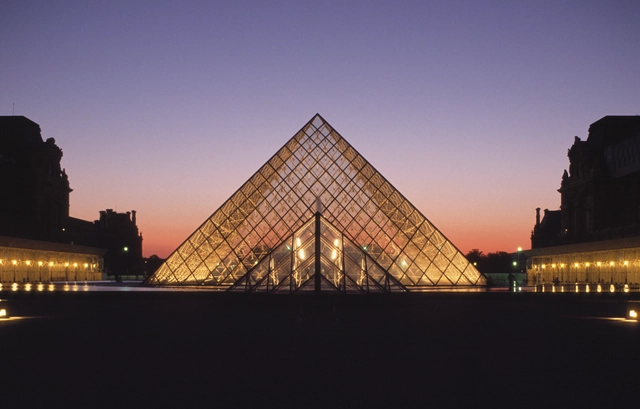
Although the Louvre pyramid, often recognized as his masterwork, created a luminous icon for presenting culture, IM Pei’s early museums were characterized by the harsh shadows of brutalism. Project by project, the Chinese-American master developed a sophisticated, open architectural language. Pei’s holistic approach for welcoming museum visitors comprises powerful symbols which utilize sunlight to its fullest during the daytime, while employing the magical glow of illumination in the evening.
Whereas most assessments of the Louvre have praised the achievements of the luminous pyramid as seen above the ground, the actual design challenge laid underground, in offering visitors a successful underground space. Later, Pei transferred his language to multiple other museum projects, where light was always a key factor in defining museum experiences. In a year of celebratory events such as “Rethinking Pei: A Centenary Symposium,” which begins tomorrow at the Harvard Graduate School of Design, an examination of Pei’s use of light in museums can contribute an important cultural emphasis.




https://www.archdaily.com/881407/the-evolution-of-light-in-im-peis-museums-from-dark-concrete-voids-to-luminous-glass-pyramidsThomas Schielke
Architecture Portfolio Hacks: How To Create A Recruiter-Approved Portfolio
The following article, originally published by the self-titled "Portfolio Queen," Stephanie Gleeson, gives you an insider's perspective into what recruiters are looking for when they open your portfolio. Gleeson, a Senior Consultant at boutique recruiting firm Bloomfield Tremayne & Partners, offers her top tips on everything from hierarchy tips, software and formatting, and how to present your portfolio in the interview.
When it comes to individuals pursuing architectural or interior design there is the added concern of the portfolio.
Your portfolio can tell a potential employer so much about you as an individual:
- Are you organized?
- Do you understand the progression of your own projects?
- Who are you as a designer?
We want you to ace the portfolio, so here are my top hacks from having gone through the grueling process myself and what I’ve seen as a recruitment consultant. And trust me – I’ve seen a lot.
https://www.archdaily.com/881338/architecture-portfolio-hacks-how-to-create-a-recruiter-approved-portfolioStephanie Gleeson, Bloomfield Tremayne & Partners
How to Succeed in a Skype-Based Architecture Job Interview

This article was originally published on The Architect's Guide as "How To Ace Your Web (Skype) Architecture Job Interview."
Love it or hate it, online job interviews are becoming more and more common. Especially given how the architecture job search process is no longer limited to your immediate area.
I worked abroad for many years and I have experienced applying from both the U.S. and Europe. I learned a few tips and tricks along the way that should be helpful if you are faced with this interview type.
https://www.archdaily.com/881180/how-to-succeed-in-a-skype-based-architecture-job-interviewBrandon Hubbard