Short answer: The trusted, the elected, and those with the money.
Long answer: It would be nice to answer that we all do, but it’s really not that simple. In many contexts, there is someone who finally decides. Municipalities have antiquarians and architects who draw up the outlines for what deserves to be preserved and what can be permitted for construction. Despite their learned expertise, these two groups often come into conflict with each other. The antiquarians defend the tracks of history, while the architects want to make new tracks. Hopefully, both are acting in the public interest, but the architect’s reasoning is always more abstract. The challenge of coming to an agreement about what is architecture cannot compare to the question of what can become architecture. That is the core of the architect’s expertise.
https://www.archdaily.com/772449/who-decides-what-architecture-isRasmus Wærn & Gert Wingårdh
Long answer: In a world of fluid, virtual values, architecture endures. The images that you, your work, your city, and your country create by building will more than likely outlive you. Buildings are the most important traces we leave behind as people. Old ones were here long before we arrived and the new ones we make will be here long after we’re gone. Architecture is a collective selfie. It’s a status that can’t be updated.
https://www.archdaily.com/772447/what-is-architectureRasmus Wærn & Gert Wingårdh
Renderpeople in a Modelled Environment. Image via Renderpeople
Renderpeople, a company that produces 3D-models of people ready to be rendered in any program, has released two of their models for free, to demonstrate the effectiveness of their product. “Rosy” and “Dennis” are now available through their website, and can be used in any 3D-modeling and rendering software. Unlike other, free sites like SKALGUBBAR and Escalalatina which offer PNG images of people for use with Photoshop, Renderpeople offers detailed, life-like 3D models which can be placed directly into the modeled environments in question.
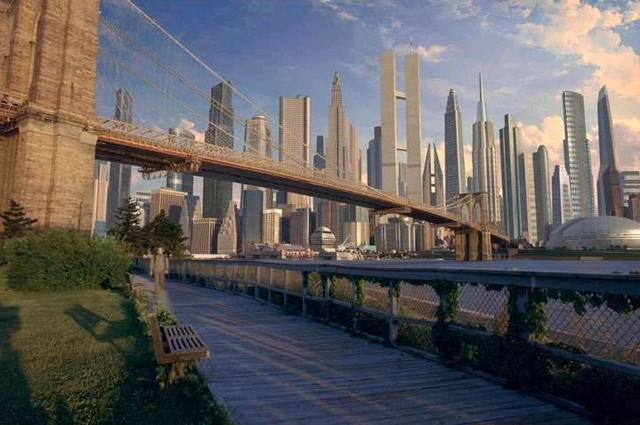
As a scientist and science fiction writer, Asimov knew a little about creativity and planning the future. Here, a screenshot from the 1999 film Bicentennial Man (based on Asimov's 1976 book) showing Manhattan in 2075. Image via Skyscraper City
Innovation, rebellion or “the next big thing” – whatever you call it, it seems architects and designers are eternally on the hunt for the idea that will put them on the map: the original thought that is fully and unarguably theirs. In this essay by Isaac Asimov, written in 1959 but only recently published on Technology Review, the scientist and writer poses the question: how do people get new ideas? Though originally written to provoke scientists and engineers working on defense systems, the thoughts and contributions serve as a gentle reminder to all creative classes, of the role of collaboration, play and failure in the design process.
It's no secret that most architects who are also parents want their children to follow in their footsteps. But how can we encourage our children to think like architects – critically, spatially and creatively? For parents in Manhattan, for the past five years Rockwell Group's Imagination Playground has provided an answer. The educational play system consists of large-scale blocks of varying sizes and uses, allowing children to build whatever they can imagine – without the long hours and deadlines. Now, with the release of Imagination Playground 3D Builder, the creative platform is now available digitally, for free.
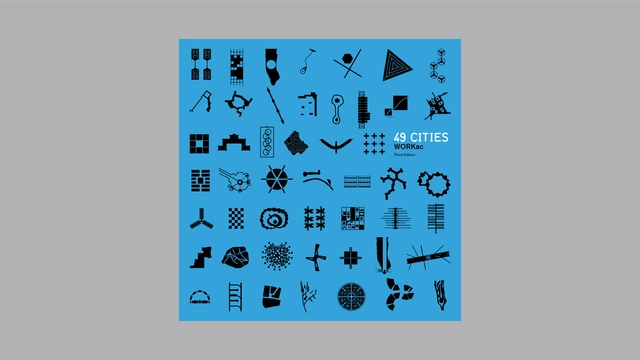
WORKac has begun crowd-funding for the 3rd Edition of their book, “49 Cities”. As the title implies, the book follows examples of urbanism throughout several centuries, from the ideal Roman city to the 21st century visions of utopia. 49 Cities looks at sustainability beyond the notion of the “Green Building”, serving as a catalyst and fertilizer for discussion and ideas on the design of the City of Tomorrow. Going out of print in 2010, demand for the book has continued, and it may now finally be available once again thanks to partnerships by WORKac with Inventory Press and Project Projects.
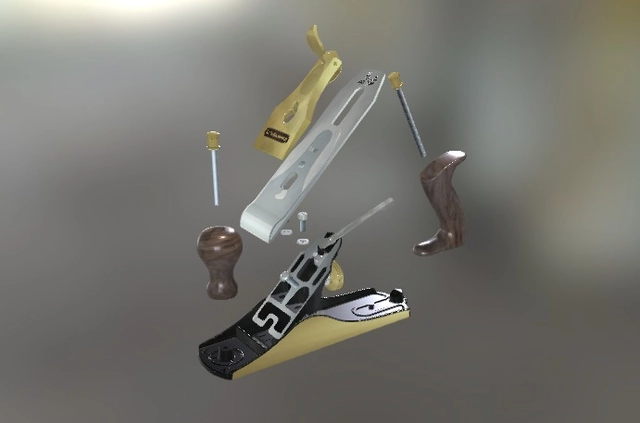
Sketchfab, an online database for 3D-models, has announced that they will soon begin implementing support allowing users to showcase not only their 3D models, but accompanying animations as well. The site, likened to a “Youtube for 3D models”, has grown tremendously in the short time it’s been active, and the new step adds many possibilities for both new users and veterans of the platform (read more about Sketchfab here).
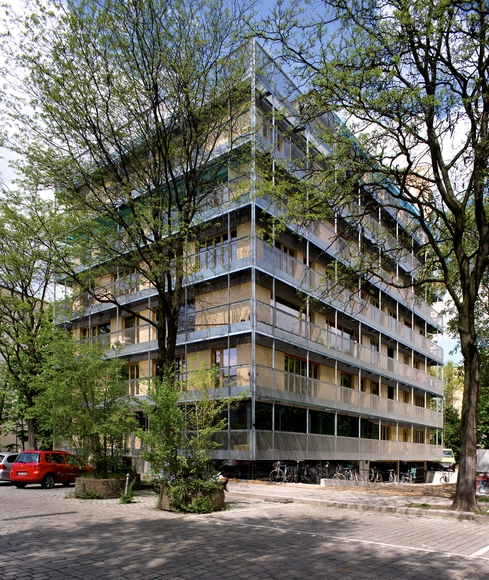
The latest episode of KCRW's podcast, “Design and Architecture” (DnA), explores whether the Baugruppen, a co-housing model in Berlin, could work in Los Angeles. Produced by Frances Anderton and Caroline Chamberlain, the episode looks at how LA residents and Berliners have approached the same problem of affordable living space. The Baugruppen (“building groups”) are communities of homes where you can choose who to live with and share the development costs. After visiting R50, a Baugruppe complex by firms Heide & Von Beckerath and IFAU, co-principals Christoph Schmidt and Verena von Beckerath explained the process of collaborative design that came with building the 19 households of R50. Listen to the whole podcast here.
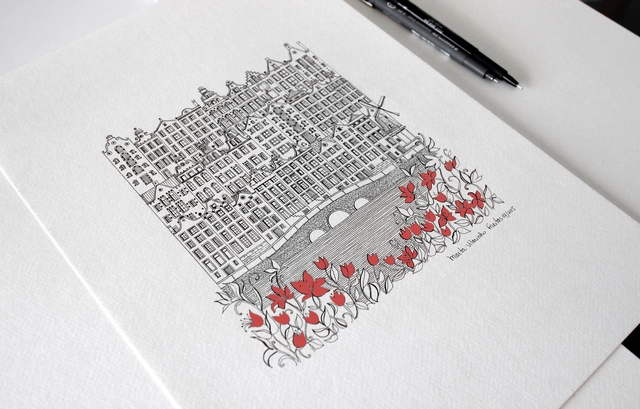
Through her project "Cities and Memory - the Architecture and the City" Architect Marta Vilarinho de Freitas has created a set of illustrations that focus on architecture and the fantasy worlds it can create. The project arose from her thesis on “Communicating Art” at the Superior Artística School in Porto, and seeks to tell stories of the “cities and the life that inhabits in each of them.”
View more images and a text from the architect after the break.
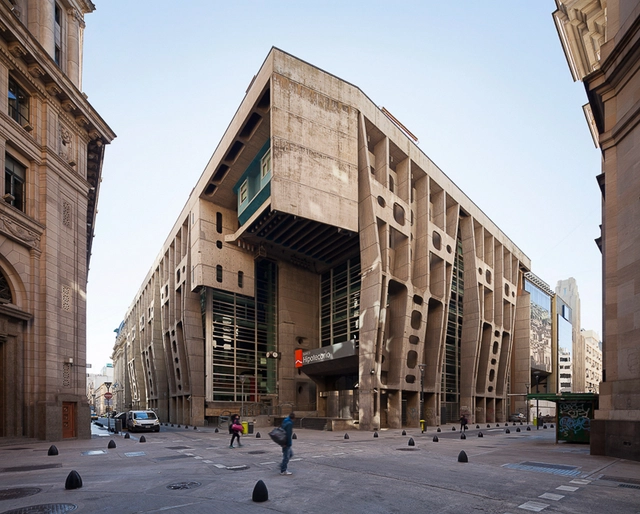
Argentine photographer and architect Federico Cairoli has shared photos with us of Clorindo Testa’s Banco de Londres (Bank of London) in Buenos Aires. Testa and his firm SEPRA won a competition in 1959 to design the bank and the Brutalist building was completed in 1966.
View Cairoli’s photos after the break and check out more of his work on his webpage and Facebook page.
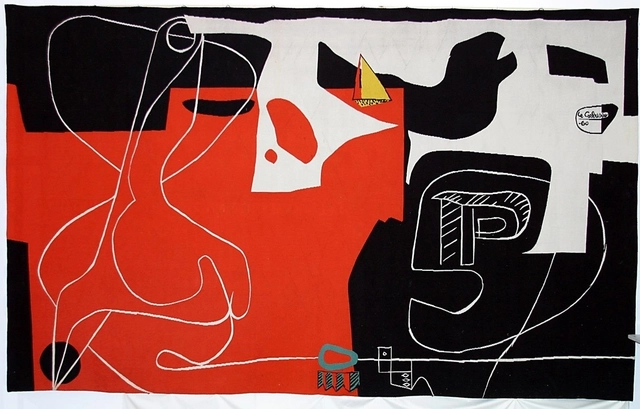
On June 9, 2015, philanthropists finally acquired a tapestry by Le Corbusier originally intended to be hung in the Sydney Opera House. After Jørn Utzon won the commission for the building in 1958, he wrote to Le Corbusier, whom he admired, requesting a piece of “decoration, carpet and painting” for the Sydney Opera House, including drawings of his design. The two met in Paris in 1959 and the work was completed and delivered in 1960, where it was hung in Utzon’s own house. After Utzon left Australia in 1966, the tapestry was never installed in the Opera House, remaining in the Utzon house until now. Read the whole story on Architecture AU here.
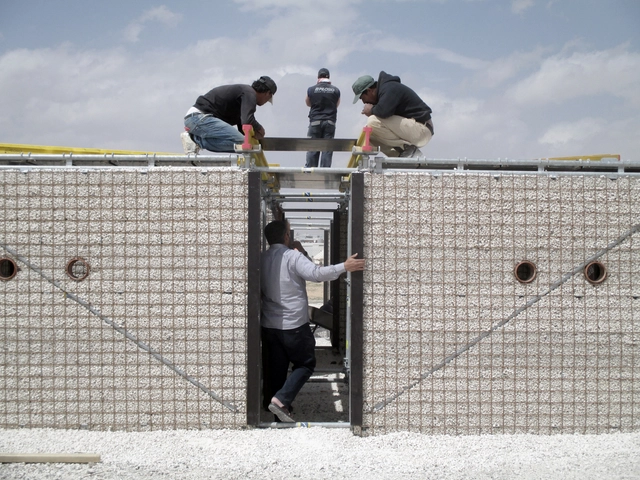
Za'atari Refugee Camp, Jordan. Image Courtesy of Pilosio Building Peace
Using the ground “beneath your feet,” the Pilosio Building Peace organization, along with architects Pouya Khazaeli and Cameron Sinclair, have developed RE:BUILD, an incredible constructive system for building safe and comfortable structures in refugee camps. The system allows for the construction of temporary buildings of high quality through the use of wall panels formed with scaffolding and grids, which are then assembled and filled with gravel, sand or earth, creating well insulated interiors at a low cost.
Although the structures can be used for hospitals, housing, and other functions on this occasion we present two schools constructed using this system in Jordan.
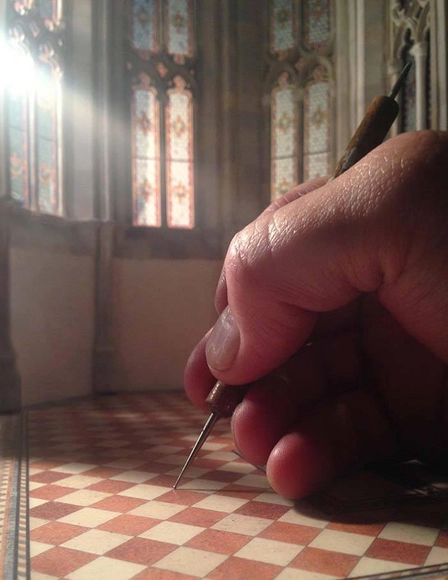
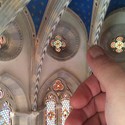
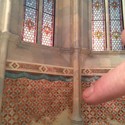
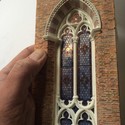
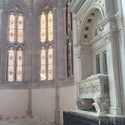
Ryan McAmis, an artist from Brooklyn, New York, is designing and building a miniature, scale model of a late GothicItalianCathedral, recreating everything from the stained glass windows to the vaulted ceiling, wall tombs and paintings. He first creates the pieces from a variety of materials, ranging from hand scribed brickwork on treated paper, to clay and wood. He then combines the materials together and creates a silicon mold, casting each piece in white plastic to be hand painted later. See more photos and read about his process after the break.
Architect David Craig and Dublin Design Studio have launched a crowd-funding campaign on Kickstarter for Scriba - a stylus designed with the input of hundreds of illustrators, designers, architects, animators, artists, mobile workers and tablet users that aims to make sketching for architects and designers more natural than ever.
The city of London has been growing rapidly in the past decade, and with the help of New London Architecture's large-scale urban model of the city, some strange and interesting trends can be seen. Since the advent of ever-taller buildings, London has put laws into place to prevent views to historically significant buildings like St. Paul’s Cathedral and the Parliament Building from being blocked. As a result, strangely-shaped designs like the Leadenhall Building, endearingly referred to as the “cheese grater” by Londoners, have emerged as a way to work around the sightlines enforced by the city. Watch the video above for more on this interesting design dilemma.
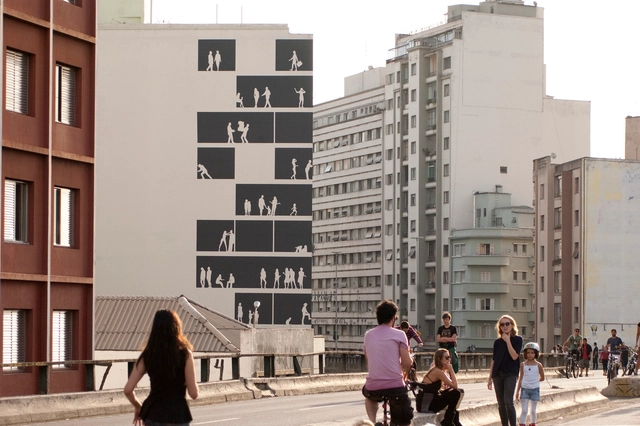
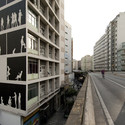
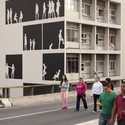
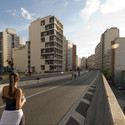
São Paulo 's famed elevated highway, the Minhocão is lauded for its dual use; during the day its serves as a highway, and at night, Sundays and holidays parts of the 2.2-mile roadway transform into a bustling public space. The Curbed reports , the densely populated space is lined with window-less towers and massive "Blind Walls," that Were once used the space for advertisement. However, since ads Were banned in 2006, artists have Begun to slowly transform these walls into beautiful art. Nitsche Architects is the latest to Intervene, exposing the inner life of one of the building's with a human-scale, monochrome wall. Read on for more images.
The success of a design, from inception to construction, can depend on the extent to which designers can represent their intentions, but the days when architects used the drafting pencil and parallel edge to exercise physical control over their work are rapidly fading away. While computerization makes possible innovative forms and new methods of working, if not calibrated and engineered perfectly, digital technology can bring unintended consequences into the design process. Samsung’s UD970 monitor, however, resynchronizes the design process with the build environment through ultra-high definition (UHD) technology. Samsung partnered with leading designers, including Mark English Architects, to explore the importance of high-resolution detail in their work and ArchDaily has teamed up to bring these UHD monitors to our readers. To learn more, read on after the break.