On schedule to be China’s tallest and the world’s second tallest skyscraper, the Gensler -designed Shanghai Tower has topped out at 632 meters (2,074 feet). Upon completion in 2014, the spiraling megastructure will complete a trio of towers - including the adjacent Jin Mao Tower and Shanghai World Financial Center - to become the centerpiece of the city’s Lujiazui commercial district - one of Asia’s leading financial centers which developed from farmland in just over 20 years.
Defined by series of distinctive sky gardens, the state-of-the-art tower will house Class-A office and retail space, along with a luxury hotel and cultural venues.
Continue reading to learn how the Shanghai Tower’s structure saved millions and why it will achieve LEED Gold.
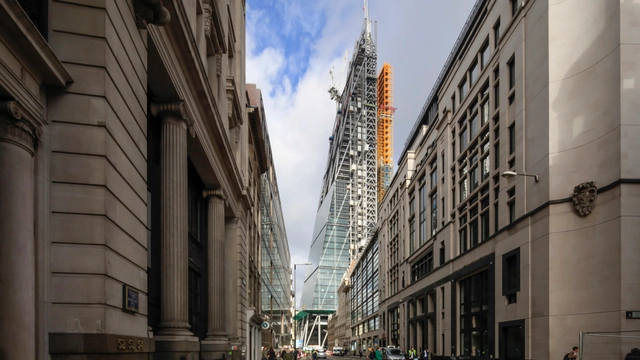
Rogers Stirk Harbour & Partners’ Leadenhall Building became the tallest building in the City of London when it topped out on June 18th. The 50 story tower opposite Lloyd’s of London rises to a height of 224.5 meters 802 feet), its slender form creating its own distinctive profile within an emerging cluster London. The building’s tapering profile is prompted by a requirement to respect views of St Paul’s Cathedral, in particular from Fleet Street. The building comprises a number of distinct architectural elements that provide clarity to the composition both as a whole and as a legible expression of its constituent parts. These elements include the primary stability structure, the ladder frame, the office floor plates, the northern support core, the external envelope and the public realm.
More images and video of The Leadenhall Building after the break...
Last year interdisciplinary architecture firm Höweler + Yoon Architecture were announced the winners of the Audi Urban Future Award for the project Boswash:Shareway 2030. The City Dossier in Boston, held this May, was organized as a series of workshops between Höweler + Yoon Architecture and Audi experts in developing steps to realize aspects of the Boswash: Shareway vision. Part research project, part feasibility study, part road map to the future of mobility - the focus of the workshops is to propose a pilot project that can be tested in the proposed region of Boston - Washington.
We featured the project last year as it highlights how the landscape of urban development has changed. The focus of "Shareway" is the string of high-density metropolitan areas, their suburbs and ex-urbs along I-95 between Boston, MA and Washington, DC. The I-95 corridor caters to some fifty million inhabitants, many of whom commute into metropolitan areas for work. Mobility and transportation are critical to the economic vitality of these urban areas; "Shareway" proposes an intentionally re-engineered "highly orchestrated and deliberately produced platform from which we might imagine alternate paths, different trajectories, or new cultural dreams" whereby imagining an "alternate life for the road" is imagining a new American Dream.
Read on for more on the progress of this project after the break.
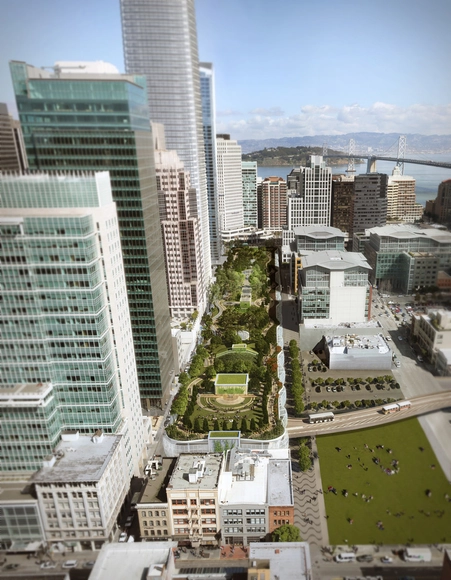
The revamped Transbay Transit Center in downtown San Francisco broke ground earlier this week, a project that will introduce a 1.5 million square foot development that will be part transportation hub, part public park and urban space, and part offices and retail establishments. The massive undertaking, designed by renowned architecture firm Pelli Clarke Pelli will bring together 11 systems of local and national transportation, serving 45 million people per year. In addition to securing access to myriad transit lines, the project will also provide downtown San Francisco with a 5.4-acre rooftop park, designed by PWP Landscape Architecture, along with numerous cultural programs. The project is budgeted at 4.2 billion dollars and is projected for completion in 2017. It is funded in part by the construction of a 1,070-foot tower that is adjacent to the Transbay Transity Center. It is also designed by Pelli Clarke Pelli and is slated to be the tallest tower in San Francisco. The tower will secure 60 stories of office space and jobs and will contribute to the projected $87 billion of revenue through 2030.
Join us after the break for more details on this project.













_SDL-02.jpg?1375047504)
_SDL-02.jpg?1375047366 "Courtesy of Studio Daniel Libeskind")


_SDL-02.jpg?1375047504)






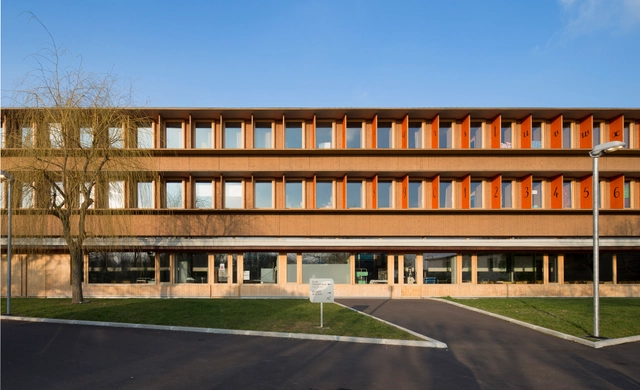







_ORCO-photo-by-Krzysztof-Wierzbowski_08.jpg?1366124262&format=webp&width=640&height=580)
_ORCO-photo-by-Krzysztof-Wierzbowski_09.jpg?1366124261 "© ORCO photo by Krzysztof Wierzbowski")
_ORCO-photo-by-Krzysztof-Wierzbowski_03.jpg?1366124281 "© ORCO photo by Krzysztof Wierzbowski")
_Studio_Daniel_Libeskind.jpg?1366124707 "© Daniel Libeskind")
_Aldinger___Wolf.jpg?1366124743 "© Daniel Libeskind")
_ORCO-photo-by-Krzysztof-Wierzbowski_08.jpg?1366124262)