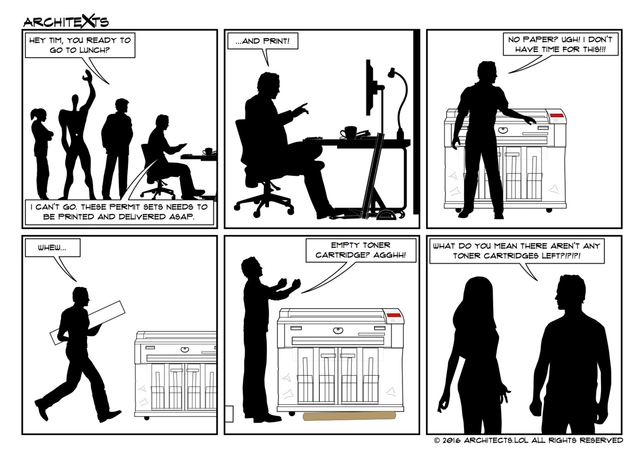
Let’s face it, becoming a licensed architect is not for everyone, and is certainly not necessary to having a fulfilling career. Becoming a licensed architect is not easy. For many, it's not a decision; becoming licensed has always been the plan. For others, there are lots of factors involved that make pursuing licensure a difficult decision. It’s an important decision to make, and will affect your life, personally and professionally. Professional support for pursuing an architecture license may vary from firm to firm, but it is very important that everyone who wants to be licensed get some form of support from their employer. From the smallest firms to the largest, architecture as an industry has a responsibility to architects of tomorrow to do their part to achieve that ultimate professional goal of becoming an architect.
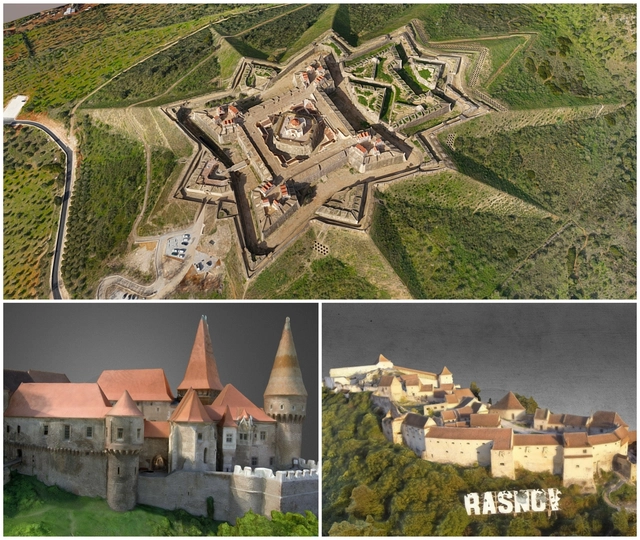
Today, thanks to our partnership with Sketchfab, we take you on a virtual tour of some of the most breathtaking historic fortresses across Europe. The design of castles and fortress complexes are particularly interesting because of their strategic siting and defense mechanisms. As strongholds of territorial claim, fortress complexes are meant to be self-sustaining in times of conflict and contain not only defense fortifications but a suite of supporting structures such as chapels, schools, and housing. This effectively turns fortress complexes into a village within a village. These richly detailed scans hosted on Sketchfab allow us to see in detail the urban planning strategies of different historic periods and places.
For a more immersive experience, all of these models can be viewed on a virtual reality headset such as Google Cardboard.
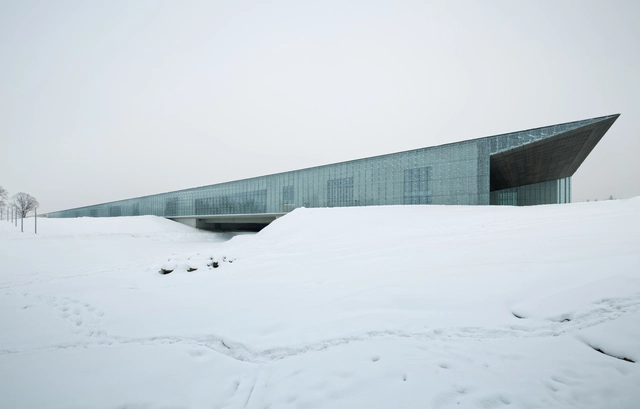
For the last three centuries, museums -as an architectural typology- have transitioned from being an important node in the city to becoming an icon of identity for a whole culture. Museums have transformed into a civic landmark in a local and international scale.
This month we highlight the Estonian National Museum which not only proposes a strategy for meeting spaces and exhibition, but also stands as a cultural, historic and territorial recognition of the country. Placed as an extension of the ruins of an old aeronautical field used during the Soviet occupation, the museum contrasts it’s historic context with a new building that rises as the projection to a new reality and a national future.
https://www.archdaily.com/790838/project-of-the-month-estonian-national-museumAD Editorial Team
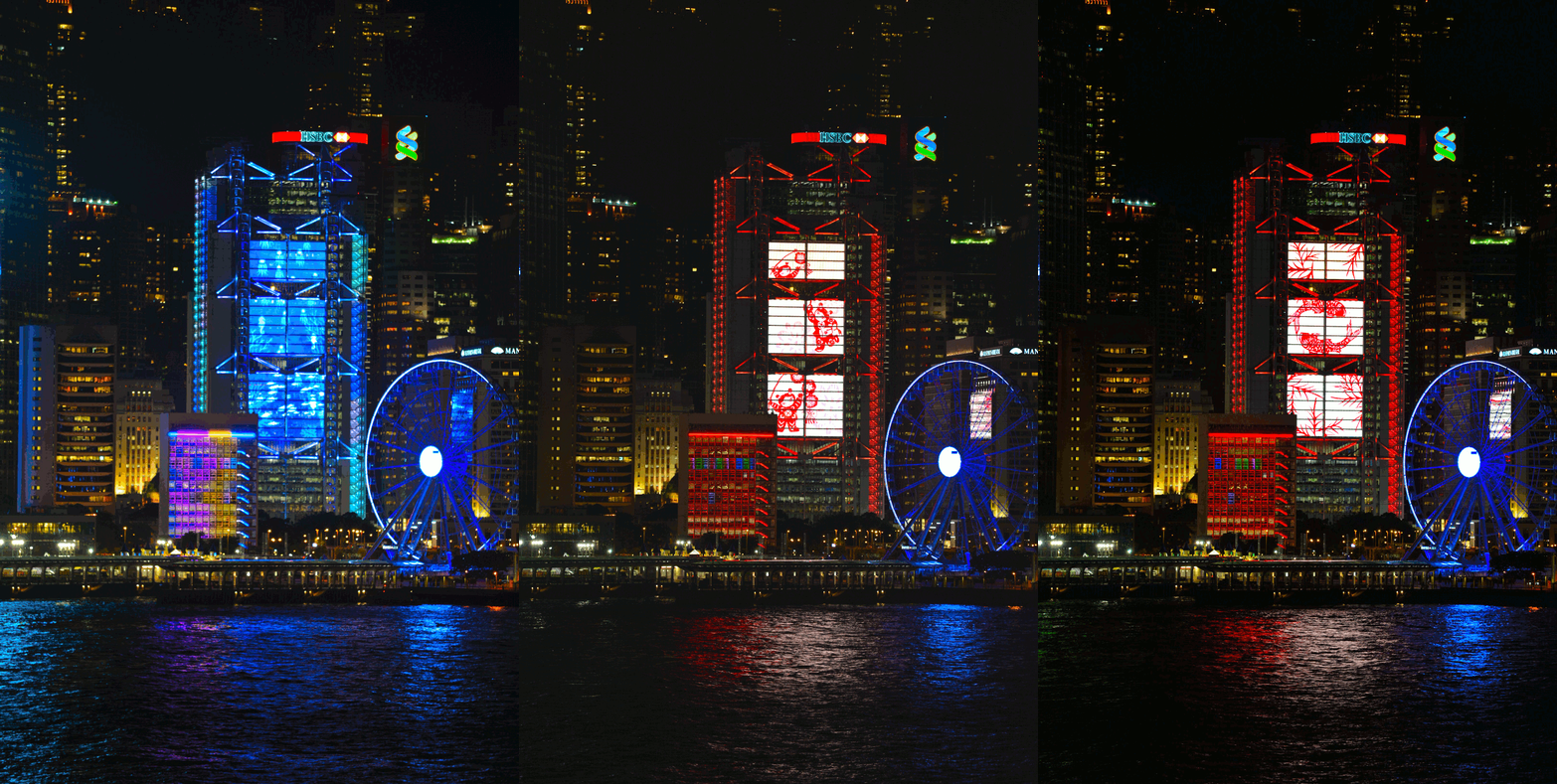
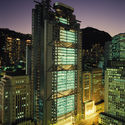
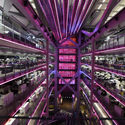
Three decades ago the Hongkong and Shanghai Bank (HSBC) Headquarters by Norman Foster emerged onto the architectural seen as an exemplary product of industrial design. The open layout with its exposed steel structure generated a powerful corporate identity for the bank. But the restrained atmosphere of white architectural lighting and the lack of distinctive façade lighting has lost its attractiveness after sunset. Now the colorful and dynamic relighting presents a remarkable example of how an architectural icon has shifted from a productivist ideology towards a scenographic image. To the western observer the multicolored light language may give off a playful impression, but to the local culture the transformation evokes grandiosity.
As part of ArchDaily's coverage of the 2016 Venice Biennale, we are presenting a series of articles written by the curators of the exhibitions and installations on show.
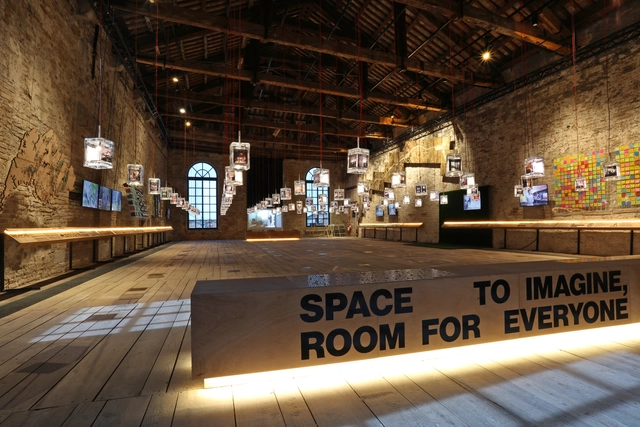
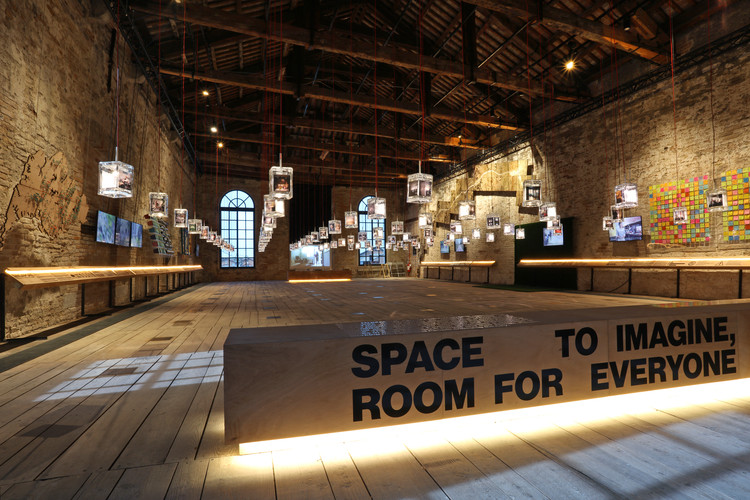
Responding to the primary theme of 15th International Architecture Exhibition, ‘Reporting from the Front,’ Singapore’s presentation places the small “battles” fought at the home-front. These efforts are contributing to the emergence of an invigorated Singapore.
From within the comfort and the security of the domestic environments and public spaces that have been created over the past five decades, we are now pushing the home-front from within – to create more Space to Imagine, and Room for Everyone.
When we started talking about migration [as a conference theme], everybody said ‘don’t do it, it’s too controversial.’ We said that’s exactly why we’re going to do it.
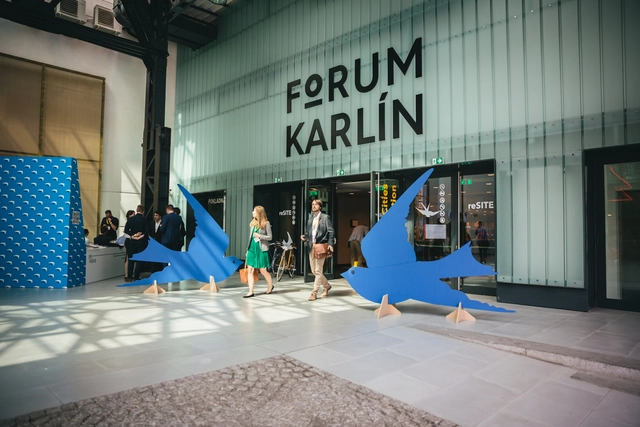
This defiant attitude was how Martin Barry, Chairman of reSITE, opened their 2016 Conference in Prague three weeks ago. Entitled “Cities in Migration,” the conference took place against a background of an almost uncountable number of challenging political issues related to migration. In Europe, the unfolding Syrian refugee crisis has strained both political and race relations across the continent; in America, Republican Presidential candidate Donald Trump has led a populist knee-jerk reaction against both Mexicans and Muslims; and in the United Kingdom—a country only on the periphery of most attendees’ consciousness at the time—the decision in favor of “Brexit” that took place a week after the conference was largely predicated upon limiting the immigration of not only Syrians, but also of European citizens from other, less wealthy EU countries.
In architecture, such issues have been highlighted this year by Alejandro Aravena’s Venice Biennale, with architects “Reporting from the Front” in battles against, among other things, these migration-related challenges. From refugee camps to slums to housing crises in rich global cities, the message is clear: migration is a topic that architects must understand and respond to. As a result, the lessons shared during reSITE’s intensive two-day event will undoubtedly be invaluable to the architectural profession.
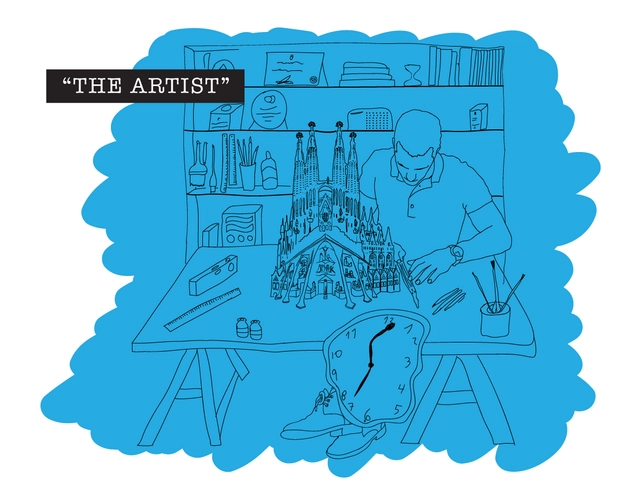
Architecture is a broad field of practice, an industry where individual personalities are embraced as intrinsically part of the job. We’re all architects and we all live for design but we’re quite a varied bunch. Here we’ve cheekily compiled a list of the 21 different architects you’ll meet at some point in your career.
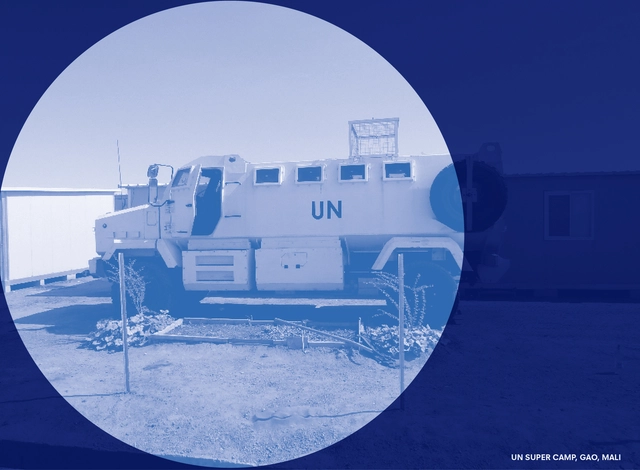
Volume #48: The Research Turn contains the exhibition catalogue for BLUE: The Architecture of UN Peacekeeping, the Dutch entry at the 15th International Architecture Exhibition, la Biennale di Venezia, by Malkit Shoshan. BLUE focuses on the most prominent footprint of the United Nations’ peacekeeping operations: the compound.
After the collapse of the Soviet Union and increasingly since 9/11 and the ‘War on Terror’, warfare has moved into the city. While the wars of the 20th century were largely between nations, fighting over territorial sovereignty and along disputed borders, the wars of the 21st century have been internal and borderless. Today’s wars are being fought between large multinational coalitions of security regimes and insurgent networks. It’s not just war that has moved to the city though: the entire security apparatus has moved with them too, including its peacekeepers and their entire infrastructure. Today, United Nations (UN) peacekeeping operations are taking place in hundreds of cities around the world and at a large scale.
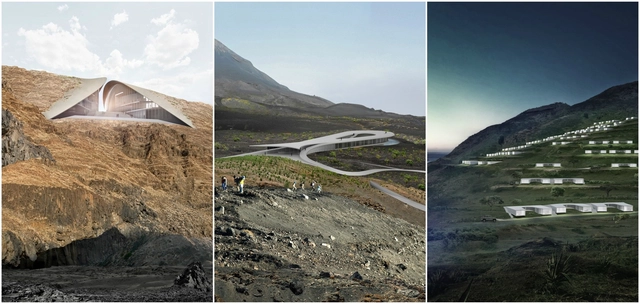
The 2016 Venice Biennale has highlighted that dealing with natural disasters may become one of the main preoccupations of architecture in the future. But nature has its destructive ways, and volcanic eruptions are among the most extreme case in point. On the Island of Fogo (Cape Verde), the Natural Park Venue designed by OTO – and elected Best Building of the Year 2015 by Archdaily readers – was destroyed by molten lava flow only one year after its opening in 2013. The building, which combined a cultural center and administrative activities, helped to activate the economy in the island’s most remote area. Following the disaster, Adrian Kasperski, a student at Krakow University, devoted his master’s thesis to the redevelopment of this area, by proposing the expansion of the existing roads and hiking trails and designing facilities to improve alternative tourism offerings.
As part of ArchDaily's coverage of the 2016 Venice Biennale, we are presenting a series of articles written by the curators of the exhibitions and installations on show.
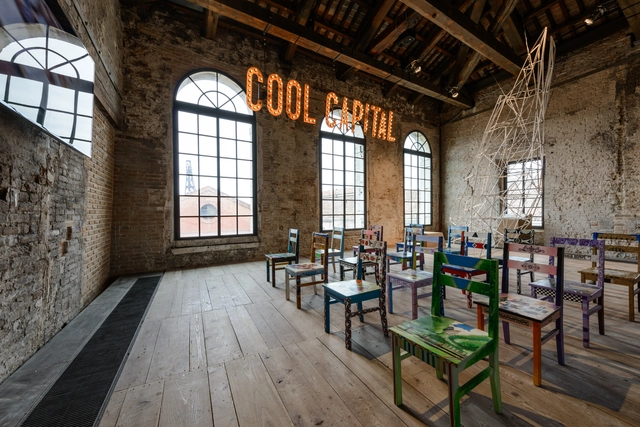
In line with creative director Alejandro Aravena's theme for the 15th La Biennale di Venezia "Reporting from the Front", the 2016 South African pavilion at building D in the Sale d'Armi presents successful physical outcomes and practical solutions to urban challenges, conceived and implemented by citizens for the citizens of the administrative capital city of South Africa under the umbrella organization of "Cool Capital".
Curated by architect Pieter J. Mathews of Mathews & Associates Architects, this year’s South African Pavilion is called “The Capital of Uncurated Design Citizenship”, and showcases a selection of projects from Cool Capital – an urban experiment and labour of love for Mathews and a small team of dedicated architects, artists and designers that began in 2012, coincidentally at the 2012 Biennale Architettura.
This article is part of our new "Material Focus" series, which asks architects to elaborate on the thought process behind their material choices and sheds light on the steps required to get buildings actually built.
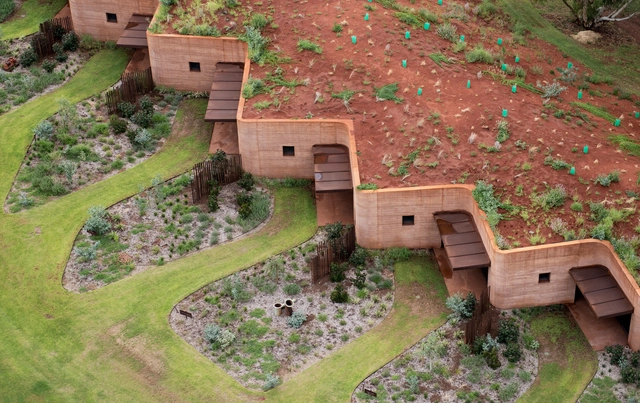
The Great Wall of WA, designed by the Australian firm Luigi Rosselli Architects, and selected as one of Archdaily’s Best Building of the Year 2016, provides a unique example of rammed earth construction. At 230 meters in length, the Great Wall of WA is the longest structure of its kind in Australia and possibly the South Hemisphere, according to its architects. Built in remote North Western Australia, the building is made from locally available materials whose thermal properties help it to endure a variable climate. We spoke with the architect Luigi Rosselli to learn more about his compelling choice of material and the determining role it played in his concept design.
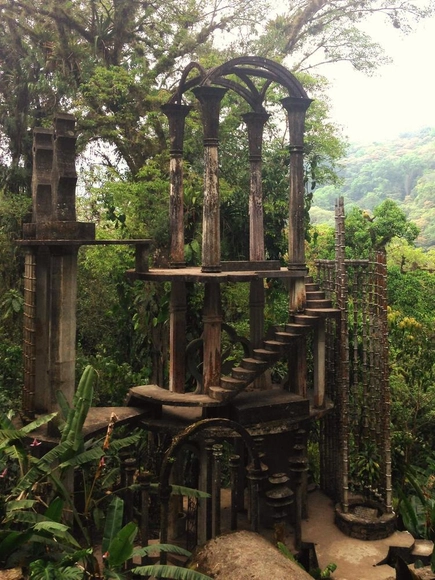
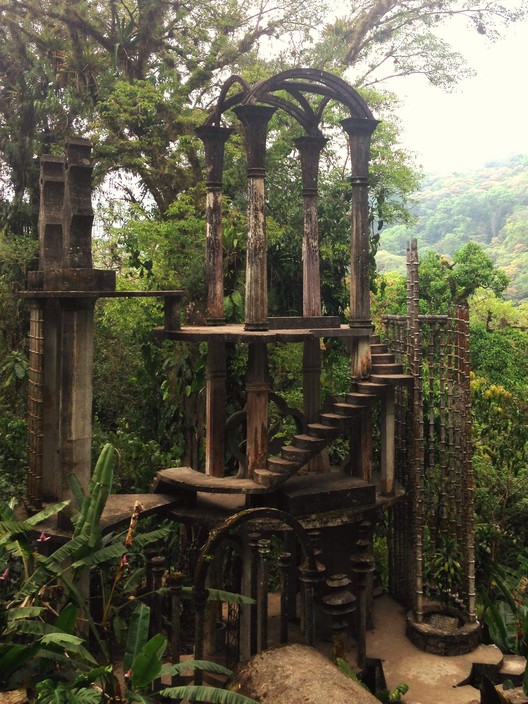
Edward James, one of the most eccentric and interesting twentieth-century collectors of surrealist art, arrived in Xilitla, Mexico at the end of the 1940's. The British writer was captivated by the splendor of the landscape of "Las Pozas" (The Wells), where he created a fantastic home, which includes a unique sculptural space unlike any other in the world.
Surrealism, whose sources of creation are found in dreams and the subconscious, in theory, could never be used to build things in real life. Edward James - described by Salvador Dalí as "crazier than all the Surrealists together" - designed a sculpture garden that defies any architectural label and allows a glimpse of something new, moving between fantasy and reality.
Columns with capitals that look like giant flowers, gothic arches, dramatic gates, pavilions with undetermined levels and spiral staircases that end abruptly in mid-air, as if they were an invitation to the horizon. In short, Edward James made concrete flourish along the lush flora and fauna of Xilitla, making surrealist architecture possible.
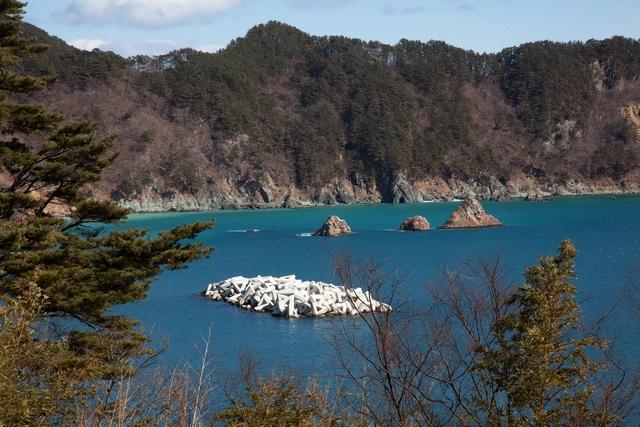
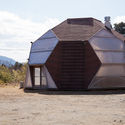
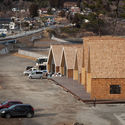
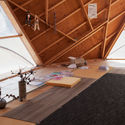
In this article, written by Christian Dimmer and illustrated with photographs by Max Creasy, the post-earthquake and tsunami coastal architectural landscape of the Japanese Prefectures of Aomori, Iwate and Miyagi are presented and studied.
Few disasters were as complex and their implications as hard to grasp as the compound calamity of earthquake, tsunami, nuclear meltdown that hit the North-East of Japan on March 11, 2011. While over 500 kilometers of coastline were devastated, the disaster unfolded in each of the hundreds of towns affected differently depending on local topographies, urban morphologies, existing landscape formations, collective memory of past disasters and preparedness, and the social ties within the communities.
As part of ArchDaily's coverage of the 2016 Venice Biennale, we are presenting a series of articles written by the curators of the exhibitions and installations on show.
The Venice Biennale of Architecture is an integral part of architectural culture. However, this year’s cycle “Reporting from the Front” is more unique, highlighting the capacity and potential of architecture’s role inside communities; “architecture makes the difference”, as 2016 Venice Biennale director Alejandro Aravena puts it.
The Egyptian pavilion commissioned and curated by Architect Ahmad Hilal with a team composed of Eslam Salem, Gabriele Secchi, Luca Borlenghi and Mostafa Salem, seeks to reveal various successful stories of architecture narrating the difficulties and challenges inside the Egyptian built environment. The works inside the pavilion reveal how architecture is actively creating change in communities. Nowhere are these confrontations more evident than in the urban context, and nowhere more so than in Egyptian cities.
The XV International Architecture Exhibition at the Venice Biennale opened its doors last month. Under the directorship of Chilean Pritzker Prize-winner Alejandro Aravena, “Reporting the front” asked architects to go beyond “business as usual” and investigate concealed built environments – conflict zones and urban slums, as well as locations suffering from housing shortage, migrations and environmental disasters. Clearly, the aim of this Biennale is to open the profession to new fields of engagement and share knowledge on how to improve people’s quality of life.
This stance that has been highly criticized by Patrik Schumacher, director of Zaha Hadid Architects, who believes that architects “are not equipped to [address these issues]. It’s not the best value for our expertise.” But is this a view shared by the rest of the design world and its critics? What are the limits and benefits of this “humanitarian architecture”? Read on to find out critics’ comments.
These days, BIM is becoming standard practice. Most people involved in the construction sector—from the architects and engineers who use BIM to the governments that are implementing mandates for BIM in certain project types—are well and truly sold on the benefits it brings, including efficiency, collaboration, cost-savings, and improved communication. As a result, many practices these days that haven’t yet switched to BIM give the same reason: the dreaded transitional period.
Of course, these fears of transition are not entirely unfounded, as new software, staff training and teething problems are an inevitable part of upending your existing workflow. These initial costs create a barrier for many busy practices who simply can’t afford the time or money right now that would enable them to unlock BIM’s benefits down the line. The key to solving this conundrum of course is to minimize the initial costs—and one way of doing this that many experts recommend is to start your firm’s transition to BIM with a single pilot project, in which you will be able to establish a workflow and define standards that suit your practice, and transfer these lessons onto later projects.
But what is the best way to select this pilot project? Should you work on a large or small building? A complex work or a simple one? Here, three early adopters of BIM share what they learned from their own pilot projects, each with very different characteristics.
https://www.archdaily.com/790251/how-to-adopt-bim-3-ways-to-approach-your-firms-pilot-projectAD Editorial Team
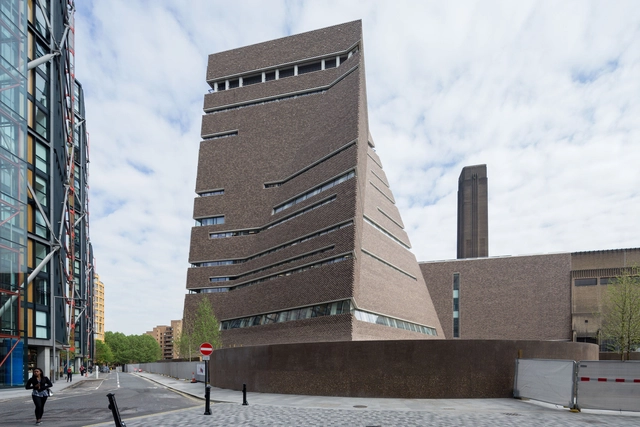
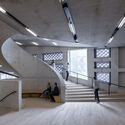
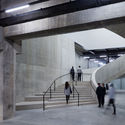
London's Tate Modern just got bigger. Last week, the well-known modern art museum opened its new extension to the public. The so-called “Switch House” was designed by Swiss architects Herzog & de Meuron, the same firm that designed the successful rehabilitation of the original Giles Gilbert Scott’s Bankside Power Station in 2000.
The museum could not be more satisfied: “It’s a dream,” says Tate Modern’s new director Frances Morris, “We’ve never had such an open space before. The possibilities are endless.” While critics generally approved of the design, they expressed mixed feelings for the addition’s materiality and urban character. Read on to find out more about the views of Frieze Magazine’s Douglas Murphy, The Evening Standard’s Robert Bevan, The Guardian’s Rowan Moore, and The Financial Times’ Edwin Heathcote.
















.jpg?1467048931&format=webp&width=640&height=580)
.jpg?1467048966 "© Michela di Savino, Morgane Quere")
.jpg?1467048992 "© Michela di Savino, Morgane Quere")
.jpg?1467049034 "The MAS urban design of ETH Zurich contribution to the Egyptian pavilion. Image © Michela di Savino, Morgane Quere")
.jpg?1467049080 "PennDesign of University of Pennsylvania contribution to the Egyptian pavilion. Image © Michela di Savino, Morgane Quere")
.jpg?1467048931)
.jpg?1466786438&format=webp&width=640&height=580)
.jpg?1466786438 "The \"Reporting the Front\" exhibition/ curated by Alejandro Aravena at the 2016 Venice Biennale. Image © Laurian Ghinitoiu")
.jpg?1466786448 "Gabinete de Arquitectura at the 2016 Venice Biennale. Image © Laurian Ghinitoiu")
.jpg?1466786425 "NLÉ's Makoko Floating School at the 2016 Venice Biennale. Image © Laurian Ghinitoiu")
.jpg?1466786407 "\"OUR AMAZON FRONTLINE\" / curated by Sandra Barclay and Jean Pierre Crousse. Peruvian Pavilion at the 2016 Venice Biennale. Image © Laurian Ghinitoiu")
.jpg?1466786438)