The fallen Christopher Columbus statue outside the Minnesota State Capitol after a group led by American Indian Movement members tore it down in St. Paul, Minnesota, on June 10, 2020. Author: Tony Webster, licensed under the Creative Commons Attribution 2.0 Generic via Wikimedia Commons.
What is the story that your city's public space tells? Who are the people honored in monuments scattered throughout it? Issues like these have led to a series of insurgencies in recent years in several cities. The notions of memory and representation have expanded the reflection on which narrative we build in our spaces, a fact that has triggered an urban question for the future: after all, what do we want to remember (or forget) through the symbols that we rise (or destroy) in cities?
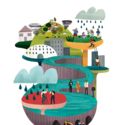
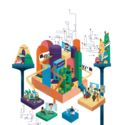
UN-Habitat has just released its annual World Cities Report during the eleventh session of the World Urban Forum, which took place in Katowice, Poland from June 27 until June 30, 2022. Titled “Envisaging the Future of Cities”, the 2022 release highlights insights on the future of the urban realm, based on “existing trends, challenges, and opportunities, as well as disruptive conditions, including the valuable lessons from the COVID-19 pandemic”. In fact, it seeks to present cities with ways to be prepared for future challenges and address current issues.
As the global population living in urban areas is set to rise from 56 percent in 2021 to 68 percent in 2050, mainly in Africa and the Middle East, transforming our cities in order to achieve a better future should be a global interest. Urgently needing “innovative solutions for urban areas to respond to this triple C crisis of COVID, climate and conflict” as stated by UN Under-Secretary-General and Executive Director of UN-Habitat Maimunah Mohd Sharif, the 2022 World Cities Report calls for greater commitment by national, regional and local governments, and encourages the further adoption of innovative technologies and urban living concepts.
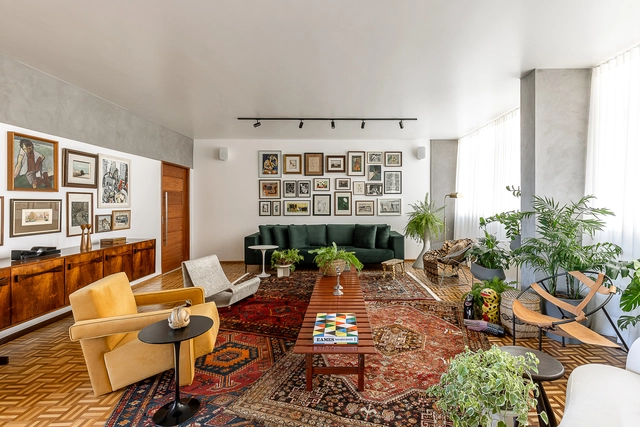
Rugs are not items that usually go unnoticed in residential environments. In addition to warming the environment and making them more cozy, when used correctly, rugs connect the furniture and give unity to the decor. Here are some tips on how to properly size and choose this item in your home.
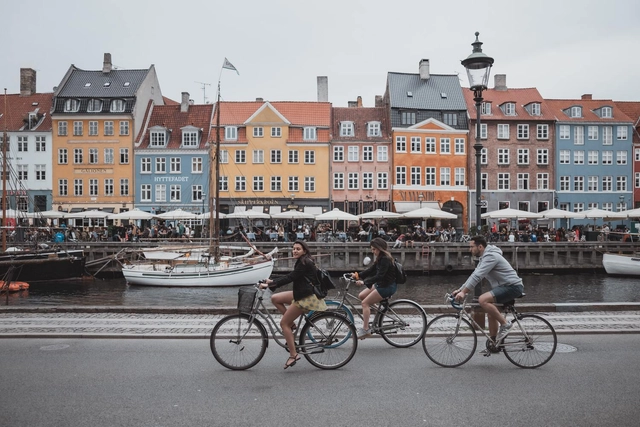
According to the World Happiness Report, Denmark has continually topped the survey of happiest countries for years. Copenhagen, the capital of Denmark, is known for its brightly colored waterfront buildings and radical contemporary architecture, both reflecting the joyful ethos of the city. The maritime metropolis is an urban designer’s favorite case study with its carbon-neutral infrastructure, pedestrian and bike-friendliness, and thriving public realm.Danish designers have cracked the code to build happier cities, leaving plenty of models to learn from.
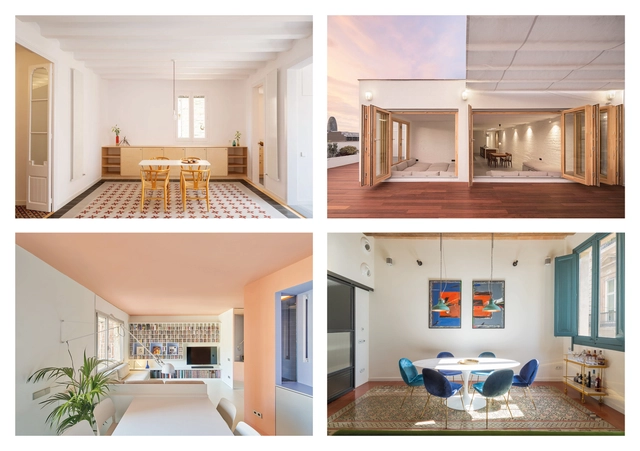
Reforma en Sants, Un oasis en el corazón del Poblenou, Departamento THE DUKE, Reforma de vivienda en la calle Calabria. Montaje con fotografías de reformas en Barcelona. Image via ArchDaily
Nowadays, the integral reform of flats in Barcelona is one of the most common activities for both freelance architects and local architectural studios. This is not surprising in a city with more than 4,000 years of history in which there is a lot of buildings and little room for new construction.
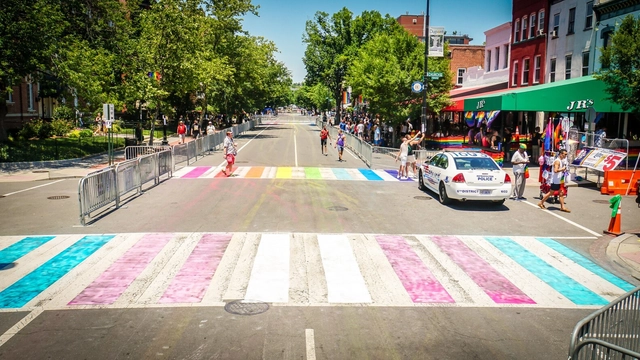
#DCRainbowCrosswalks Washington, DC USA. Flickr by Ted Eytan Attribution-ShareAlike 2.0 Generic (CC BY-SA 2.0)
In the 1970s, in Berkeley, California, a group of disability rights activists called the Rolling Quads began dismantling curbs and improvising sidewalk ramps, demanding access for wheelchair users. But what people did not expect was that wheelchair users would not be the only ones to benefit from the intervention. Soon, pedestrians with baby strollers, heavy suitcases or simply with reduced mobility started using the ramps. Likewise, a gender-inclusive city works better for everyone. A city where all gender minorities of different ages and abilities can move around easily and safely, participate fully in the workforce and public life, live healthy, sociable and active lives, is a city that improves everyone's lives.
Is there only one way to inhabit the coast? The Pacific coast, the largest ocean on earth, is a vast territory with a great diversity of temperature, winds, and topography, among others. Consequently, it has a great variety of ecosystems, ranging from the freezing point near the poles, vast deserts and forests, to the hot tropical rainforest. Such majestic diversity is no stranger to architecture, responding to the different contexts in which it is placed. As a result, there is a great variety of architectural works, all of which share in framing the views of the sea.
The following list shows 30 residential projects along the Latin American Pacific coastline, revealing the diverse architectural approaches that exist along the coast.
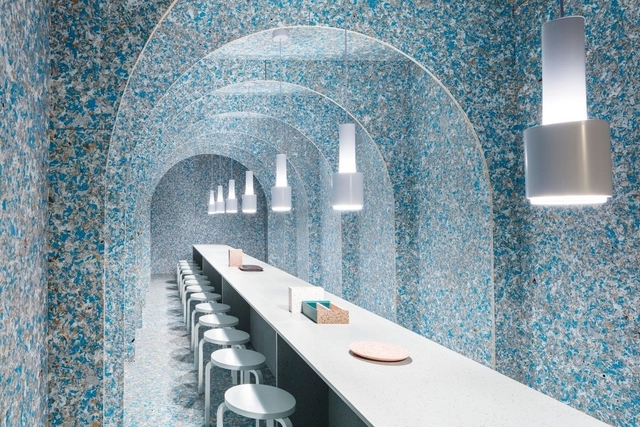
Recycling and reusing in civil engineering is extremely important, especially when considering the amounts of waste production and energy consumption involved in the processes related to the construction site. Creating construction elements by re-designing the role of old objects or materials represents an objective approach to upcycling, as a path towards a more sustainable and responsible future.
Global management consultancy McKinsey & Company in 2016 noted that the construction industry was ripe for disruption. Considered one of the world’s largest sectors, the forced advancement and adoption of innovative technologies have allowed the engineering and construction (E&C) industry to persevere in the last two years. In fact, a more recent report, also from McKinsey, noted that the construction industry is more likely to emerge from the pandemic leaner, more digitised, and with a greater eye toward sustainability.
Was there ever a time when architects felt properly valued? Probably not. Certainly not since the profession became dependent on the business of America, which is business. With economic growth as the country’s prime directive through the 20th century, architects—as members of the construction industry—played their part. How? By designing buildings of all kinds that were lighter, cheaper, and quicker to erect. Architects’ values might have been social, artistic, even cosmic, but their value to society has been primarily economic.
Concrete can be found in almost any type of construction around the world. But how is it made?
During manufacturing, once in contact with water, concrete’s main ingredient, cement, binds to any aggregates present and goes through a number of complex chemical reactions. That eventually turns it into concrete, a material that is very durable and easy to work with. Despite this reliable durability, concrete can go through a number of internal processes that can lead to serious structural concerns. One of these is alkali-silica reaction (ASR), which can cause cracks in concrete and even put structures in danger of collapse over time.
Architecture is born from materials. Between structure, light, movement, and comfort, materials profoundly shape our experiences. But materials also change over time, new ones are created, and a wide range of assemblies and construction techniques are introduced. Increasingly, architects and designers are looking into the possibilities of composite materials made with natural elements.
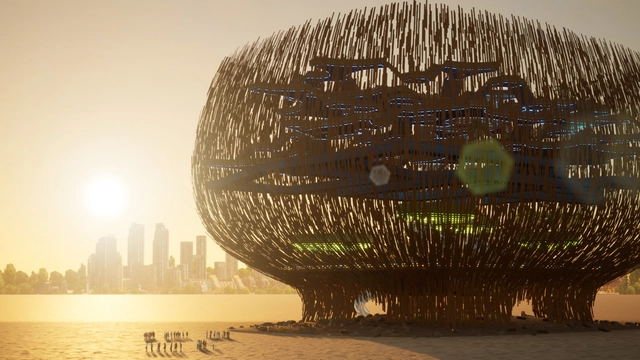
As part of an initiative for Tequila José Cuervo, Rojkind Arquitectos presents its new and first project of the metaverse under the name "Metadestilería" (Metadistillery) which is based on a design exercise that responds to the function of objects with respect to human needs within specific contexts with the challenge of creating unique experiences through objects and architecture.
We say that with confidence knowing the city’s demographics (nearly 80 percent African-American and with one of the highest poverty rates in the United States) present unique challenges to providing economic opportunity. And we say that with certainty knowing that a pernicious history of redlining, loan discrimination, and other inequities has denied Detroit’s Black majority the kind of power and say-so in design and economic development that would produce more favorable outcomes.
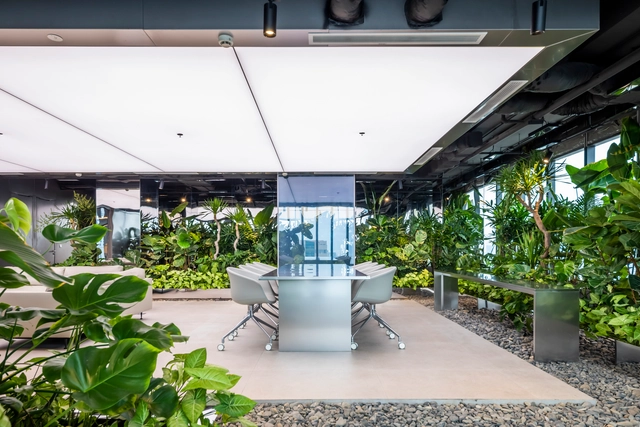
Biophilic design is capable of improving the well-being of those who use a space through reconnection with nature. When this practice is implemented in offices and workshops, this property translates into many benefits. After all, in addition to the emotional qualities that vegetation can bring, it has the ability to filter noise, lighting and allow for a milder climate, with results in team productivity and more optimized services.
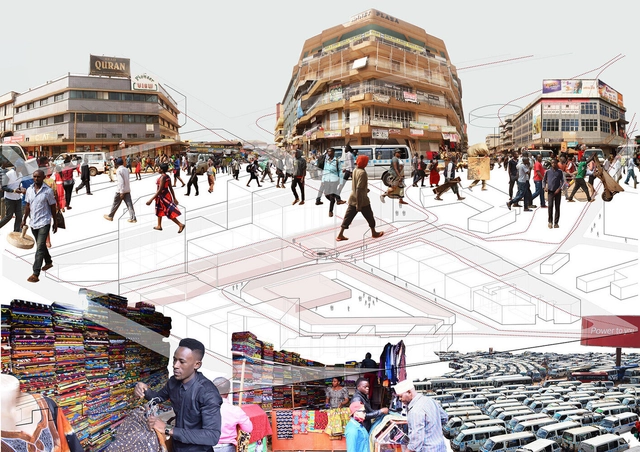
Doreen Adengo, Ugandan architect and trailblazer, passed away on July the 22nd of this year, after battling a long-term illness. She founded Adengo Architecture, a studio based out of her home city of Kampala. A designer who studied in the United States, worked in firms in New York, Washington, and London, and was teaching at Uganda Martyrs University – her legacy is nothing short of extraordinary. It is a legacy that spans disciplines and geographies – but a legacy, too, that is deeply rooted in the context of Africa, Uganda, and Kampala.
In 1969, ‘The Architects' Resistance’, a collective of students from Yale University, Columbia University, and the Massachusetts Institute of Technology (MIT), published a manifesto titled ‘Architecture: whom does it serve?’
With this manifesto, the group sought to place the practice of architecture in a broader economic, social and environmental context than the one taught in their university lecture rooms. In just two and a half pages, we find a powerful call to reclaim a more social and ecologically conscious architecture. It unambiguously denounces the role architecture played during those years as a practice in service to those in power while adding that “the architect's submission to the system begins with the belief that they possess special skills and knowledge that are inaccessible to the general public.”
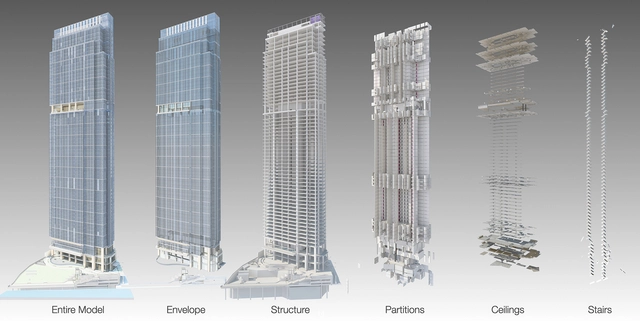
Wolf Point East Building / Pappageorge Haymes. Image Courtesy of Graphisoft
Considered the second most requested skill (behind field experience) in the industry and used by a growing number of design professionals, Building Information Modeling (BIM) has proved to be the present of architecture. But with constant new features and exciting improvements, it is also very much the future. For decades, the revolutionary software has established itself as a powerful tool with a long list of invaluable capabilities: detecting errors, reducing costs and material waste, mitigating risks, optimizing workflows and, above all, allowing for seamless, multi-disciplinary collaboration.