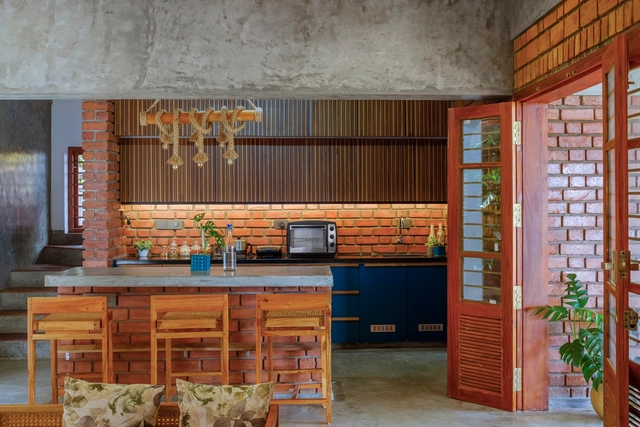
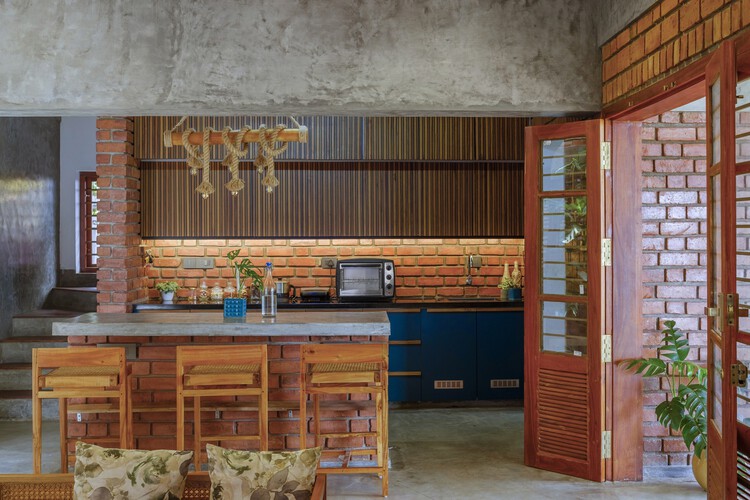
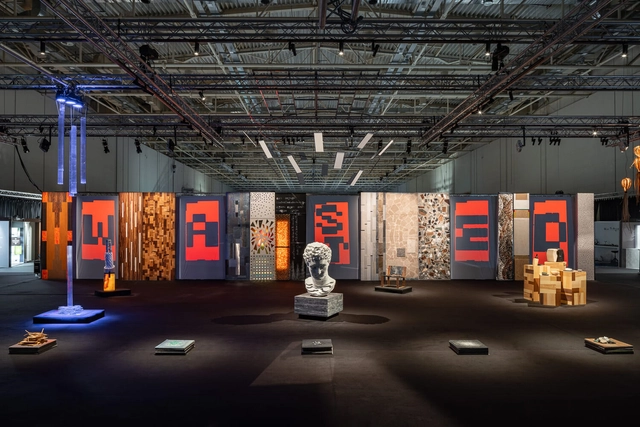
The transformation in the domestic spaces’ dynamics impacts the architecture inside and outside houses and apartments. Kitchens are the prime example of this transformation. Historically considered marginalized workspaces, they have gained more prominence as architectural spaces. This influences not only the size of the rooms and their organization but also the used claddings.
Located in the southern part of Benin-Republic, near the port city of Cotonou, is Ganvie; the largest floating village in Africa. It is situated in the middle of Lake Nokoué and is characterized by colorful wooden stilt houses arranged around artificial islands dating back to the 17th century.
This unique architecture was born from the history of the Tofinu tribe, who built it as a refuge from the slave trade. It has been sustained over time by their communal socio-ecological aquacultural systems and has now become a global tourist attraction for the country. The village was recognized as a world cultural heritage site by UNESCO in 1996, attracting up to 10,000 visitors annually. However, this influx of tourists has impacted the locals and their socio-ecological practices that sustain this water environment. Aquaculture has become increasingly challenging to maintain as the village struggles to retain its economic foundation. Additionally, traditional building practices have given way to modern ones, and the village faces ongoing environmental challenges. Nevertheless, the unique lifestyle of the locals around the water still offers many lessons for the design of prospective floating cities.
Concepting is all about the early stages of the design process. A process where architects need to explore, think, make, create and express. It is not a linear process with a defined start and end point but rather a circular/iterative process. It involves testing and rejecting. Sometimes an entire concept will be 'thrown away', while at other times, the architect will keep and discard parts and continue to evolve.
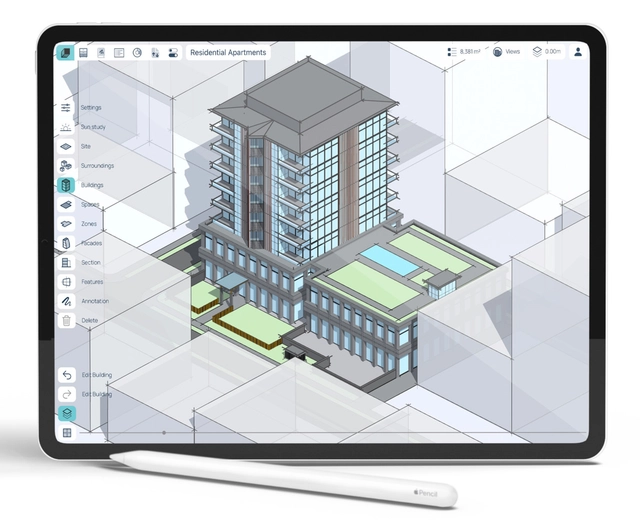
The work of lead architects is essential during the concepting stage, where their experience and vision allow them to set the project's parameters and overall design intent. By enabling architects to spend more time in this stage, with more data and feedback, Spaces contributes to creating better project outcomes and architects who can spend more time doing what they do best and enjoy the most.
"The taste of the apple lies in the contact of the fruit with the palate, not in the fruit itself," Jorge Luis Borges once said. The taste is not something inherent in itself; its experience is the result of an encounter. Similarly, emotions are not contained within architecture, but are only felt through the encounter of the body with the space, when it becomes a place. How does the environment affect how we feel? This is the question that drives the duo of artists and filmmakers Ila Bêka and Louise Lemoine in their latest endeavor, the book "The Emotional Power of Space," which will be released on May 17th in an event preceding the opening of the Venice Architecture Biennale 2023.
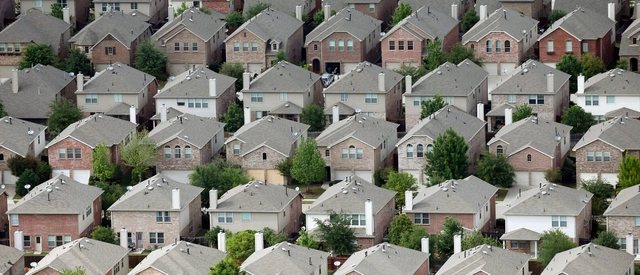
Ice caps are rapidly receding; one of America’s two political parties is actively undermining federal authority; despite new materials and additive manufacturing, most houses constructed today are built much as they were several generations ago; the pathological suburbanization of the nation continues unabated. In the face of this and more, it seems, “the center cannot hold.” Such were several of the issues that prompted Keith Krumwiede, a soon-to-be fellow at the American Academy in Rome (AAR) at the time, to argue in 2017 that if a single detached house for every family is at the core of “The American Dream,” then we need a new dream.
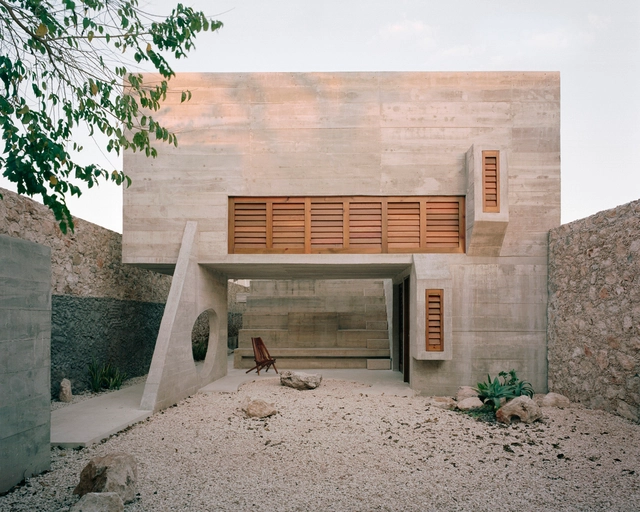
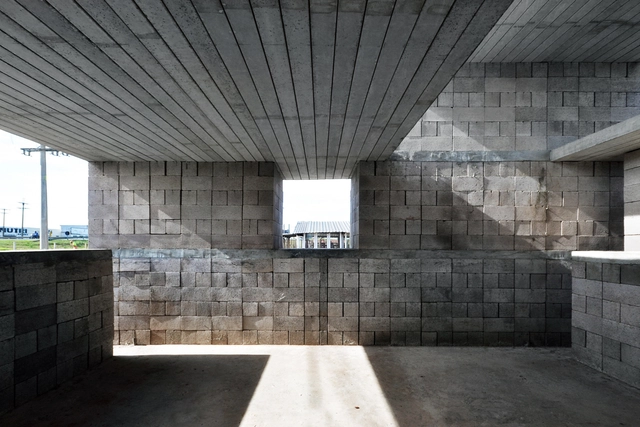
Brutalism is an architectural style that originated in the 1950s and became popular in the 1960s. Its name comes from the French "béton brut," which means "raw concrete," as this material is one of the most characteristic elements of the style. Its main features are the apparent use of concrete, offering visuals where natural texture and tonality are the protagonists of the buildings. Brutalist buildings often have an austere and massive aesthetic, with simple and repetitive geometric shapes. The use of industrial materials and innovative construction techniques is also common in brutalism.
Videos
The Architect Show in Athens provides a forum for presenting the latest building products and discussing key themes facing the architecture profession. Image Courtesy of The Architect Show
With so many architecture and design trade shows taking place around the world each year, it can be challenging to identify which ones offer exhibitors and visitors a genuinely useful and valuable experience. In recent years there has been a trend towards more local events that provide opportunities for industry professionals to make meaningful connections with potential partners. Since it was established in 2019, The Architect Show has become an important forum for Greece’s architecture community, bringing together representatives from national and international brands that support the country’s vibrant real estate market.
Professionals in the AEC industry are well aware of the issues that grapple the built environment. That the construction industry is the largest consumer of materials and is responsible for 40% of all carbon emissions is a commonplace fact. Construction work is also a large waste generator and could greatly benefit from circular design principles. Almost three-quarters of all construction projects tend to be over budget, and nearly half of the spending on buildings goes into the overheads. In a fast-paced world with multi-faceted challenges, technology, and digitization seek to deliver significant solutions.
In theory, architecture is separate from art. Some even argue that there is a hierarchy between the two. Fortunately, Vão is an example of how this separation doesn't need to exist and how having a hierarchy between them is unproductive for both sides. Founded in 2013 by Anna Juni, Enk te Winkel, and Gustavo Delonero in São Paulo, the office develops architectural projects fueled by artistic thought. It also develops artistic works on an architectural scale.
SpaceX founder and science-fiction fan Elon Musk is attempting to make the fiction of space travel a scientific reality. ‘In order to safeguard the existence of humanity,’ he explains, ‘we need to become a multi-planetary civilization.’ Musk says he’s laser-focused on ensuring we make a second home elsewhere in space, and has his sights set on Mars. He’s not alone, of course. NASA’s recently-released Moon to Mars Architecture Concept Review is a ‘study of the hardware and operations needed for human missions to the Moon and Mars,’ leading to long-term scientific discovery and human habitation in deep space.
But there’s a long way to go before we get there – and not just the 140 million miles (average distance to Mars). The biggest challenge to Mars habitation and eventual colonization is humanity itself, and our indecision. Many of us question why we should sink so much of our energy – both effort and resources – into such a task, when there are plenty of more pressing matters to address here on Earth?
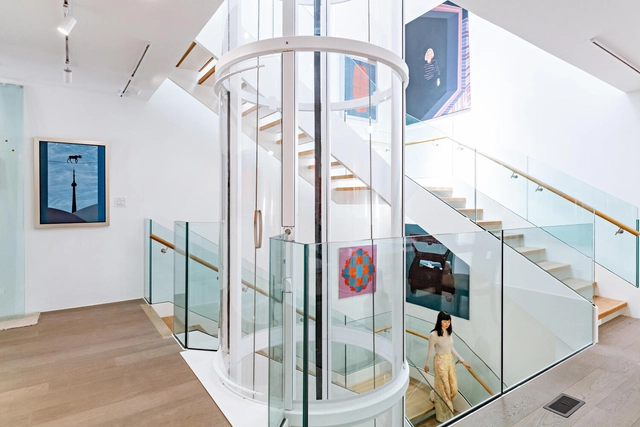
Home elevators have always increased a home's functionality. Now, they can also enhance its aesthetic appeal, not to mention value. Photo: Arash Moallemi. Image Courtesy of Savaria
Home elevators are increasing in popularity. For one thing, people are living longer and the vast majority plan to age in place. Indeed, a US survey found that 90% of adults over 65 would like to stay in their current residence. A lift in one's home serves a number of practical purposes besides enhancing mobility, like the convenience of moving groceries or heavy objects between levels. In addition, a home elevator is a real conversation piece – not to mention that it can add up to 10% to the value of a home.
But as desirable as home lifts are, they are often perceived as a visual intrusion. Many architects, designers and homeowners look to install them in an out-of-the-way corner, or hide them in a series of vertically aligned closets converted into an elevator shaft. One company, however, believes it’s time to bring the home elevator out into the open.
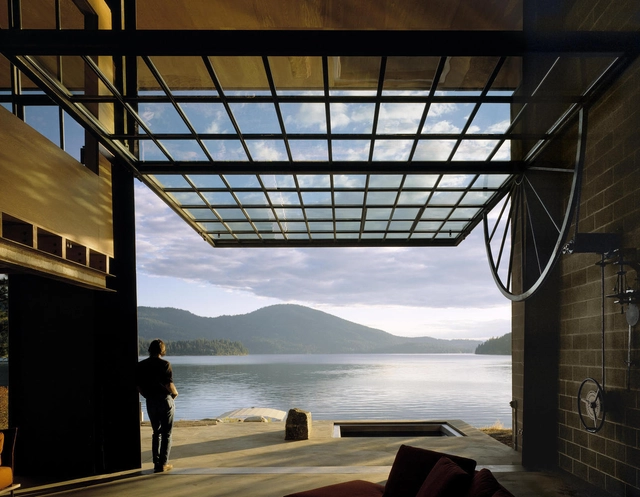
Seattle-based Olson Kundig is an example of how context and culture can influence a firm's design approach. Founded in 1966 by Jim Olson and now consisting of hundreds of employees and thirteen principals/owners, including Tom Kundig, the firm has an extensive and diverse portfolio that spans different scales and budgets. In lectures and interviews, Kundig in particular often talks about how having grown up in a region with a strong mining and lumbering tradition has influenced the industrial and rational aesthetic of his designs, the use of durable and low-maintenance materials, and a special attention to craftsmanship. In many of the firm's designs, however, the ingenuity and emphasis on moving parts –blurring the boundaries between inside and outside– is striking. This is usually achieved by incorporating hand-held devices that allow users to activate the building directly, connecting them both to the context but also to the building itself and the dynamic mechanisms therein.
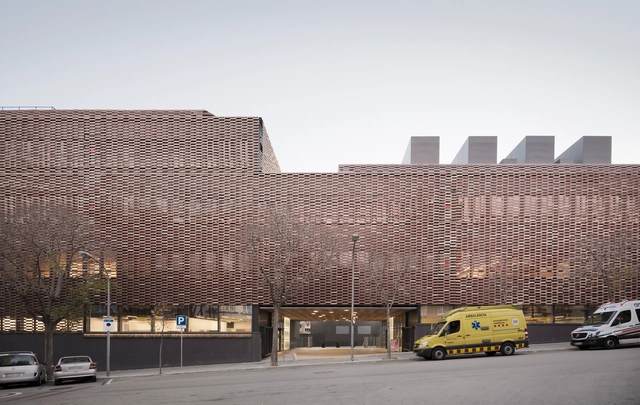
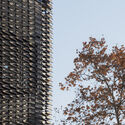
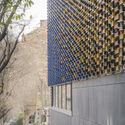
The Santa Creu & Sant Pau Hospital Research Institute, designed by Pich Aguilera Arquitectes in conjunction with 2BMFG Arquitectos, stands in the Santa Creu & Sant Pau Hospital complex in Barcelona –one of the biggest Modernist Spanish architectural ensembles, declared a World Heritage Site by the UNESCO.
The Research Institute stands out for its striking ceramic envelope and its capacity to blend in with Sant Pau Hospital’s Modernist buildings, while also focusing on high energy savings and improved comfort inside the building. The ceramic slats were made to measure for the project by Faveker, a specialist in high-tech façade solutions.
Cuadra San Cristóbal, Los Clubes, Atizapán de Zaragoza, State of Mexico, 1966-1968. Perspective sketch of the main courtyard by Luis Barragán. Image via Barragan Foundation
Two years ago, as part of an initiative by the Barragan Foundation, the launch of the institution's renewed website was announced via its Instagram account. This represented an effort to compile all the information that exists so far from the Barragán Archive that enriches the study of his career, opening up the panorama to understand his trajectory and evolution from a clear chronology, experiments, and collaborations, as well as unrealized or demolished projects. The website compiles these five decades of career, presenting a list of 170 works inside and outside the country that is updated as more material is researched and collected.
The importance of lighting in interior design cannot be overstated: done right, it not only accentuates a space's architectural features but also makes inhabitants feel at ease. As Carmelo Zappulla of Lighting Studio External Reference explains in an interview with Architonic, light is a crucial tool to add an emotional element and 'animate a space.'
There are a plethora of artificial lighting options to choose from. Which works best is usually determined by the nature of the interior they're in and the desired spatial effect. One of the most common is indirect lighting. This technique uses fixtures to aim light onto surfaces that act as reflectors, softening the emitted rays to prevent pillar-like, bulky beams in favor of a more evenly distributed glow.
Wivi Lönn (1872-1966) established and ran her own architectural office in Finland, becoming the first woman to do so. Lönn designed a number of significant public facilities and received widespread professional recognition, serving as a role model for aspiring female architects. And in May 1942, while a group of female architects gathered to commemorate Wivi Lönn's 70th birthday, they founded Architecta, the Finnish Association of Women Architects. At that point, up to a hundred women architects had already graduated in Finland. To celebrate the 150th birthday of architect Lönn and the 80th anniversary of the organization, Architecta commissioned interviews that highlight the different types of careers pursued by women in the field. Discover the profiles of 11 female Finnish architects with texts by Paula Holmila, journalist and architecture critic at Helsingin Sanomat, translated by Pirkko-Liisa Schulman.
Renovations are not only a popular way to update and modernize homes, offices, and other structures but also a critical component in reducing carbon emissions and achieving the goals of the Paris Agreement. The existing building stock is responsible for a significant portion of global carbon emissions, with energy inefficient buildings being a major contributor.
According to a report by the Financial Times, there is a large energy efficiency gap in the UK housing stock, with many buildings falling short of their potential energy performance levels. Unsurprisingly, old buildings in the UK are seen as one of the primary factors contributing to this energy efficiency gap.
If we were to design an ideal building material, it would look like bamboo. At least, that's what Neil Thomas, director of the London-based structural engineering firm Atelier One, claims. Its tubular shape, vascular bundles, fast growth rate, and ease of manipulation make it ideal for construction. Today, it is even more interesting to the market as a renewable source with low environmental impact compared to other materials. Additionally, it is extremely versatile and can be used in various ways in construction. Here, we list some of them.