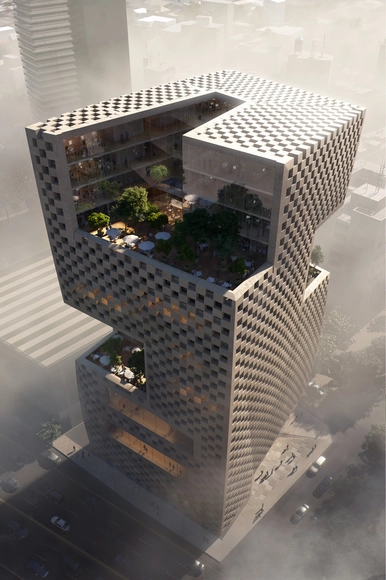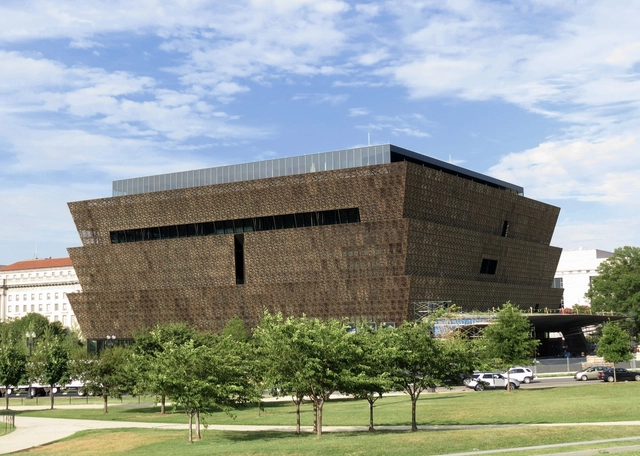
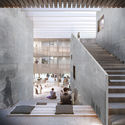
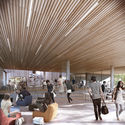
Photographer Paul Clemence of ARCHI-PHOTO has shared with us images of Adjaye Associates' nearly-completed Smithsonian National Museum of African American History and Culture. The building draws inspiration from the nearby Washington Monument, mirroring the 17-degree angle of its capstone in the museum’s tiered corona. Adjaye has described the building’s ornamental bronze lattice as “a historical reference to African American craftsmanship.” The skin can also be modulated to control the transparency and amount of sunlight reaching the interior spaces. The building will open to the public on September 24, 2016.
Continue on for Clemence’s full photoset.








.jpg?1470849628&format=webp&width=640&height=580)
.jpg?1470849628 "© Terra")
.jpg?1470849674 "© Terra")
.jpg?1470849573 "© Terra")
.jpg?1470849542 "© Terra")
.jpg?1470849628)