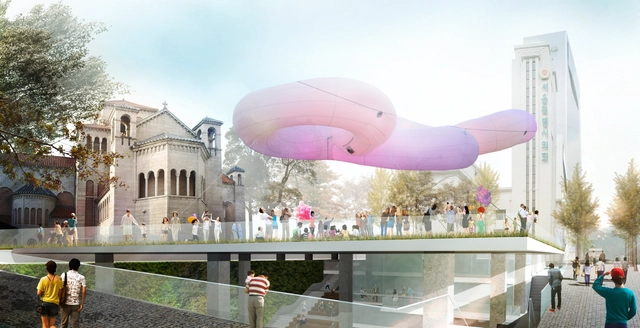
A consortium led by Sergey Skuratov Architects (SSA) was selected over Steven Holl Architects and Miralles Tagliabue EMBT to develop a concept for a multi use complex on Moscow's Sofiyskaya Embankment. Planned for a historic area on the Moscow-river bank, opposite Kremlin, the winning concept calls for three "longitudinal units with roofs of different types and heights" that produce a "picturesque outline" and offers a "gentle transition" from the "old buildings to new."
Read on for a glimpse of the winning and two runner-up proposals.
Snøhetta's 10-story expansion of the San Francisco Museum of Modern Art (SFMOMA) is nearing completion. As announced by SFMOMA, the "transformed" museum will reopen to the public on Saturday, May 14, 2016. Its new 235,000-square-foot addition (that nearly tripled SFMOMA's gallery space) was designed by Snøhetta to "weave" into the city and connect "seamlessly" to the museum's existing 225,000-square-foot building designed by Mario Botta.
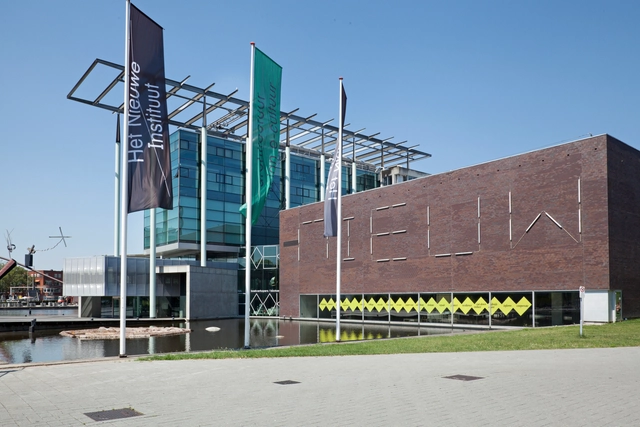
The New Institute (formerly the NAi). Image Courtesy of Het Nieuwe Instituut
Rotterdam-based practice MVRDV have begun a transfer of their early work, spanning fifteen years from 1993 to 2008, to Het Nieuwe Instituut — the central architecture archive of The Netherlands. This collection, which will eventually be made available to the public, will be in the institute's first primarily digital donation (approximately eight terabytes of data) and consisting of material from 400 of the practice's 680 total projects, including the Villa VPRO, the Silodam in Amsterdam, and the Markthal Rotterdam, as well as unrealised projects such as Meta City Datatown, Pig City, and 3D City Cube.
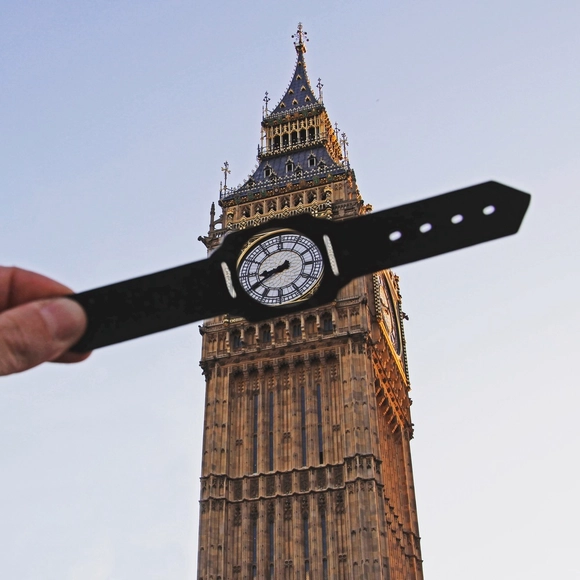
For the past few months, Rich McCor has been traveling around the world reimagining famous landmarks with paper cutouts.
Starting with some research on the locations he visits, McCor shifts between finding instant inspiration and letting his subconscious drive his creations: “After doing the first few cut-outs, I think my brain learned to look for quirky shapes and ideas in architecture and everyday objects; it’s a pretty good mental exercise.”
WELL-line by Chetwoods. Image Courtesy of London Royal Academy of Arts
The Royal Academy of Arts in London has announced the four shortlisted proposals in their Urban Jigsaw competition, which aims to generate ideas for the renewal of Brownfield sites in London. After appraisal of many high-quality entries, four finalists have been selected to move onto the next stage of the project. See the finalist proposals after the break.
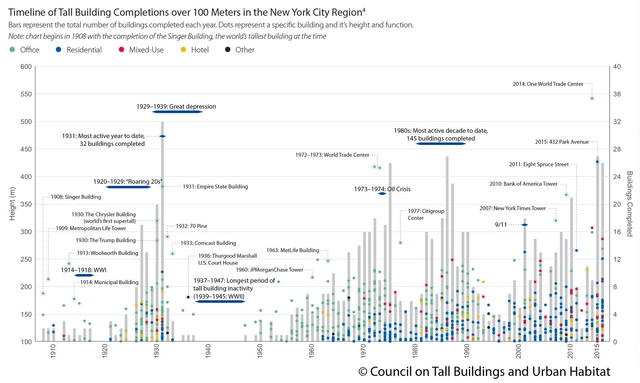
The Council on Tall Buildings and Urban Habitat has released a new research study called New York: The Ultimate Skyscraper Laboratory, which utilizes data to “develop graphic features showing the progression of tall building development in New York City.”
The Timeline of Skyscrapers in New York City Region 1906-2018 graphic illustrates “how skyscraper construction aligned with social or political events in history” in the context of key events, for example, building inactivity around the period of World War II.
Model. Image Courtesy of Forward Slash ( / ) ARCHITEKTUR
Performa has selected the office of Christoph A. Kumpusch, Forward Slash ( / ) ARCHITEKTUR, as the winner of the competition to design the Performa 15 Hub. Held in New York City, Performa is a Biennale dedicated to live performance across artistic disciplines. This year’s Biennial, Performa 15, will take place November 1 -22, and the Performa Hub serves as the biennial's headquarters, offering a venue for special performances, screenings, panel discussions, artists’ seminars, a lounge, a shop and a visitor information center. Read more about the winning entry and Performa after the break.
DITTEL | ARCHITEKTEN GmbH has created Pop Up Box, a convertible retail space located in a shopping center in Stuttgart, Germany. With its cube design, the Box serves as a self-contained, customizable presentation area, where retailers can move three of the four pieces to create his or her own sales space.
A 1,200 square-meter "test lab" of what aims to be the world's first underground park has opened its doors to New Yorkers. View a sneak peek above, shared with ArchDaily by The Spaces, to see just how the Lowline (as the project's known) plans to "plumb" sunlight into an abandoned trolley terminal beneath the city's Delancey Street in an attempt to transform the forgotten space into a sun-lit, subterranean public garden.
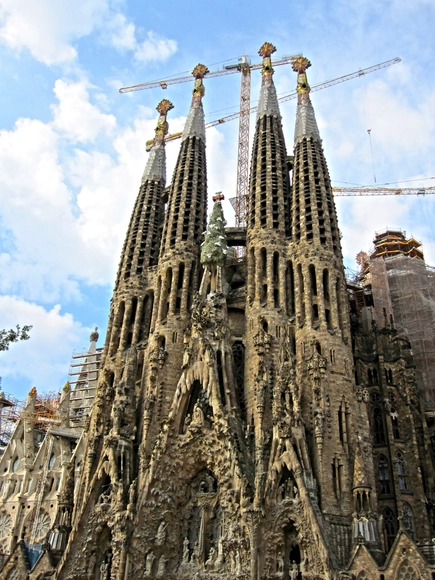
133 years since the laying of its foundation, the construction of Antoni Gaudí's Sagrada Família has entered its final phase. This news was announced in a recent press conference by the project's directing architect Jordi Faulí, who will oversee the completion of six new towers that will raise the "Tower of Jesus Christ" to 172.5 meters-tall, making it the tallest religious structure in Europe and Barcelona's tallest building.
The final stage will include the construction of the 172.5 meter Tower of Jesus Christ, as well as five other 135-meter towers honoring the Virgin Mary and the four apostles.
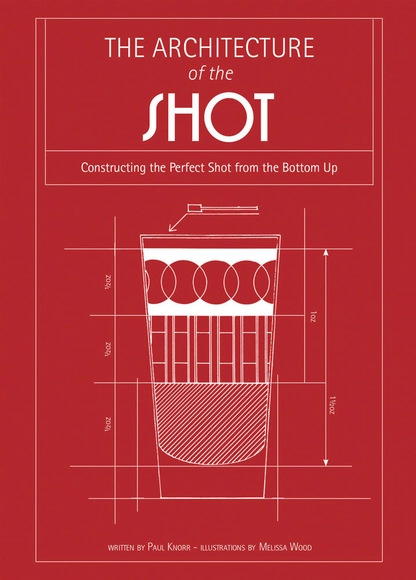
The best buildings always start with a background, materials, and a plan. With a little help, now shots can too. In their new book, The Architecture of the Shot, author Paul Knorr and architectural planner Melissa Wood teamed up to create 75 blueprints detailing the creation of "the perfect shot from the bottom up." With historical backgrounds, detailed materials lists, and precise plans, anyone with an architectural eye will feel right at home constructing the “perfect” mixtures.
Seoul Chronicle. Image Courtesy of Sejongdaero Competition
The winners of the Sejongdaero Competition to masterplan the former National Tax Service building site in Seoul, Korea have been announced. The competition called for entries that not only addressed the site, but also the underground area of Sejongdaero and the old city area of Seoul. The jury was looking specifically for entries that addressed the many layers of culture and history in the area, promoting a new vision for the future.
After receiving 80 entries from 20 countries; first, second and third places, as well as 10 honourable mentions were awarded. See the three finalists along with the jury’s comments after the break.
'Defiance' manifests itself in many forms: riots in Baltimore, makeshift housing in Rwanda, Pink Floyd in Venice and plants growing where they ought not sprout. To defy the norm is an act of rebellion and in architecture, doubly so. In the third issue of LOBBY, the burgeoning magazine from London's Bartlett School of Architecture, the notion of defiance and its incarnations are investigated in a collection of essays, interviews and discussions with leading and emerging thinkers in urbanism and architecture. From Swiss master Mario Botta to Carme Pinós, former partner to Enric Miralles, this latest LOBBY investigates the act of defiance as a core tenet of architectural practice.
UAEU professor Yasser Elsheshtawy has been appointed to curate the United Arab Emirates' participation at the 2016 Venice Biennale. Elsheshtawy plans to work with a group of selected interns on an exhibition that will reflect the UAE's contribution to the advancement of architecture and culture. A theme for the exhibition has yet to be announced.
"You never change things by fighting the existing reality. To change something, build a new model that makes the existing model obsolete." - R. Buckminster Fuller
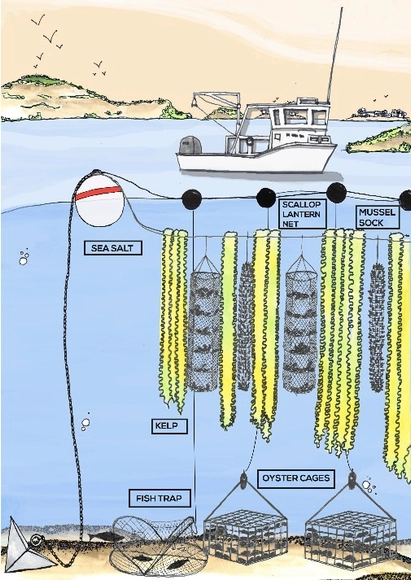
The Buckminster Fuller Institute (BFI) has announced GreenWave as the winner of its 2015 Fuller Challenge - "Socially-Responsible Design's Highest Award." The non-profit is responsible for designing the world's first multi-species 3D ocean farms with the intent to "restore ocean ecosystems and create jobs in coastal communities by transforming fishers into restorative ocean farmers."
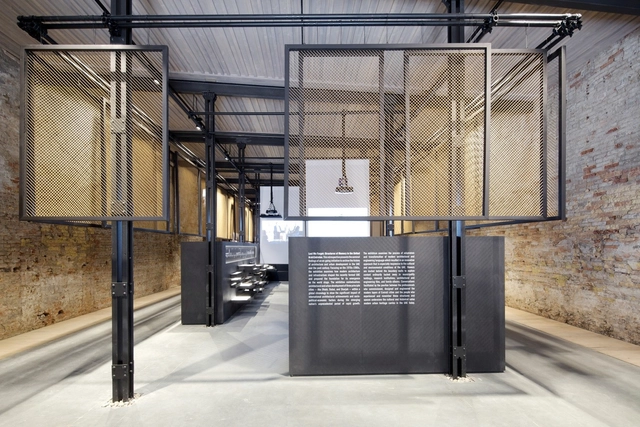
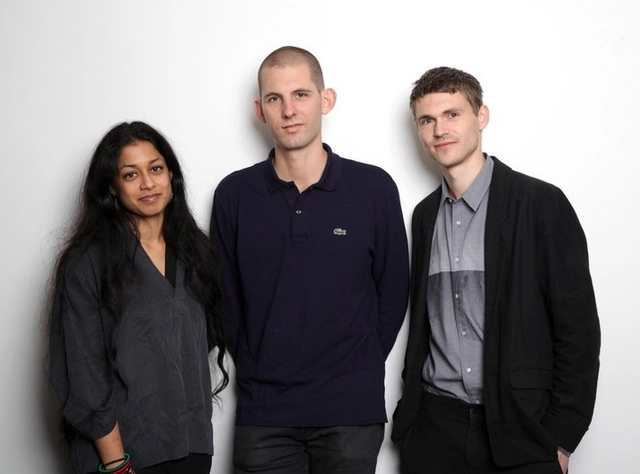
“Home Economics addresses the frontline of British architecture: the family home," says the winning team. "The exhibition will ask urgent questions about the future of housing. Social and technological changes are collapsing the patterns of domestic life - but the design of the home hasn't caught up. Can the house ever escape its economic status as an asset? Should our homes still be considered private spaces? How do new types of families and households produce new spatial needs? What are the models of ownership, finance and work that make these conditions possible?"
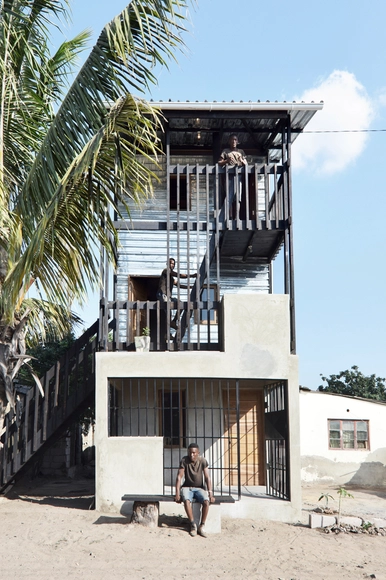
The Department of Human Settlements at the Royal Danish Academy of Fine Arts' School of Architecture, Design, and Conservation has developed a new low-income housing prototype for Maputo, Mozambique in southeast Africa as part of the Casas Melhoradas research project. The prototype reinterprets the area’s traditional “Casa de Madeira e Zinco,” which is made of wood and corrugated iron sheets, and the "Casa de Blocos," which is composed of concrete blocks.
The new Florentine museum of the Opera del Duomo, affiliated to the city's cathedral of Santa Maria del Fiore, is set to reopen its doors to the public next week following years of restoration and reconstruction. 6000 square metres of exhibition space, designed by Adolfo Natalini and Guicciardini & Magni architetti, will house the largest collection of Florentine medieval and Renaissance sculpture in the world, including pieces by Donatello, Michelangelo (the Florentine Pietà), Andrea Pisano, Lorenzo Ghiberti (Gates of Paradise), and Luca della Robbia. It will also exhibit fifteen 14th century statues and almost seventy fragments from the cathedral's original medieval façade.
Read Monsignor Timothy Verdon's, Director of the Opera, narrative of the new spaces after the break.
Former SHoP partner, scholar, author and urbanist Vishaan Chakrabarti has announced the creation of Partnership for Architecture and Urbanism (PAU), a new practice focused on the "advancement of cities through cosmopolitan architecture and strategically innovative urban planning." As founder and CEO, Chakrabarti will lead the New York City-based firm with a mission "to create an ecological network of empowered citizens, generous buildings, discursive public space, strong infrastructure and a thriving urban environment."
PAU's first client will be Sidewalk Labs, a new urban innovation company funded by Google that seeks to solve urban issues through the application of technology.
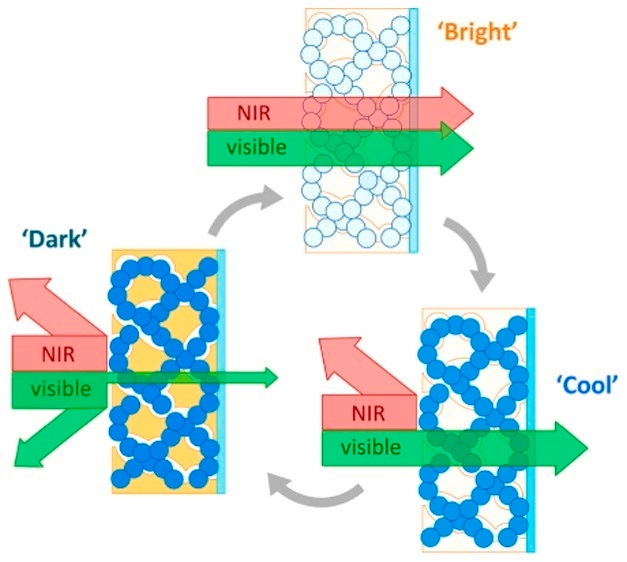
In an era when both environmental comfort and sustainability are key concerns in architecture, the tendency to cover buildings entirely in glass is among the most criticized and controversial traits of contemporary architecture, as all-glass buildings often guzzle energy thanks to their demanding cooling and heating requirements. Over the years, a number of fixes for this problem have been attempted, including smart glass solutions that allow users to modify the transparency of the window. The problem with this solution, however, is that smart glass is unable to block infrared (heat) transmission without ruining the very thing that makes glass attractive in the first place: its transparency to visible light. That conundrum may soon be a thing of the past, though. As reported by Phys.org, a team of researchers at the Cockrell School of Engineering at The University of Texas at Austin have developed a new smart window technology that allows users to selectively control the transmission of light and heat to suit their requirements.
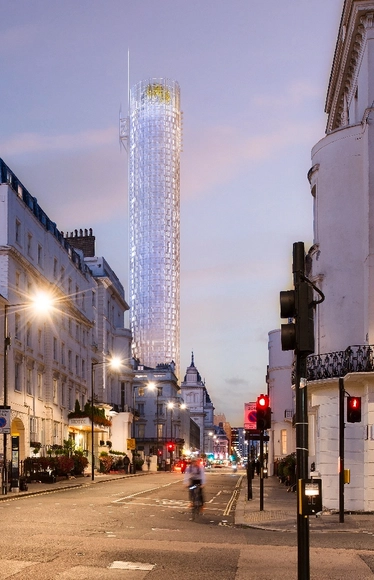
Plans have been unveiled for a "skinny Shard" in London's Paddington area. Designed by Renzo Piano, the 65-story skyscraper is the focus of a £1 billion plan aimed at revitalizing the "soulless" district.
"At the moment you only go to Paddington for two reasons - to catch a train or to see someone in hospital. It is soulless and has no life and yet it is only five minutes from Hyde Park and seven or eight minutes from Marble Arch," Sellar Property Group chairman Irvine Sellar told Evening Standard. "It is a fantastic location but it is stuck in a Fifties time-warp. We intend to create a place for people to go, where they will want to live, work, eat and shop."
“Aside from uneven demand for design services in the Northeast, all regions are project sectors are in good shape,” said AIA Chief Economist Kermit Baker. “Areas of concern are shifting to supply issues for the industry, including volatility in building materials costs, a lack of a deep enough talent pool to keep up with demand, as well as a lack of contractors to execute design work.”
A breakdown of regional highlights, after the break.
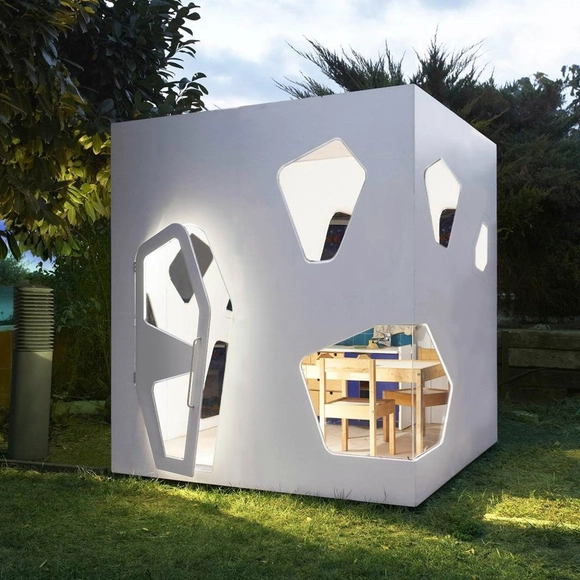
Barcelona-based designer David Lamolla of SmartPlayhouse creates children’s playhouses based on contemporary architecture styles, aiming to create fun spaces for children that are also sculptural elements for the garden. His Kyoto playhouse series is inspired by minimalist Japanese architecture, taking on a form reminiscent of Toyo Ito’s Mikimoto Ginza 2 building.
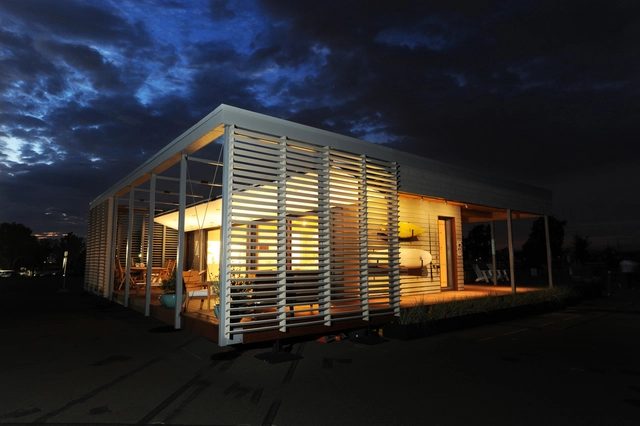
"SU+RE HOUSE powers itself with clean solar power, and uses 90 percent less energy than its conventional cousins," says the winning team. "In the aftermath of a storm, SU+RE HOUSE can become a hub of emergency power for surrounding neighborhoods."








_by_Chetwoods.jpg?1445476730&format=webp&width=640&height=580)