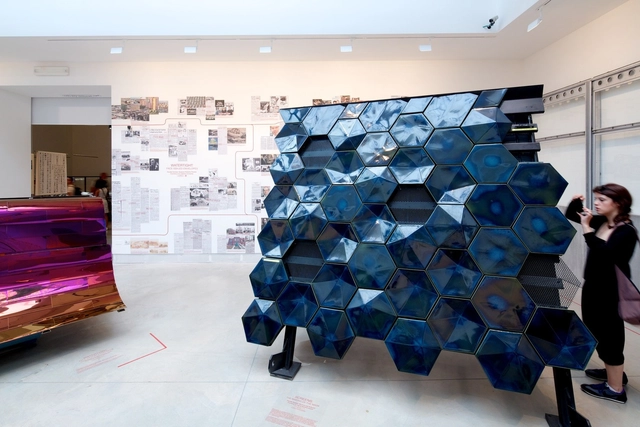
The Victoria & Albert Museum (V&A) has collaborated with La Biennale di Venezia on the Special Project Applied Arts Pavilion with an exhibition called A World of Fragile Parts. The project will examine threats faced by global heritage sites and how copies can act as an aid in the preservation of cultural artifacts.
“Climate change, natural disasters, urbanisation, mass tourism and neglect, as well as recent violent attacks have brought the risks faced by many heritage sites and cultural artefacts into public conversation," states the A World of Fragile Parts press release, outlining the concerns of the project. "Artists, activists and educational institutions are beginning to respond to the urgent need to preserve by exploring opportunities provided by digital scanning and new fabrication technologies. Several key questions emerge: What do we copy and how? What is the relationship between the copy and the original in a society that values authenticity? And how can such an effort be properly coordinated at a truly global and inclusive scale?”
"Architecture is about giving form to the places where we live. It is not more complicated than that, but also not easier than that." - Alejandro Aravena
On the first day of the vernissage 15th International Architecture Exhibition at La Biennale di Venezia, ArchDaily is pleased to show you a preview of the exhibitions and installations that were hand selected by Alejandro Aravena and his firm Elemental. Separate from (but in dialogue with) the National Pavilions, "Reporting From the Front" celebrates work that "address[es] a problem that matters and for which quality architecture made a difference."
In an exhibition whose aim is to share the "success stories" where architecture is making a difference, Alejandro Aravena has convened offices and practitioners from across the globe to show—"in the simplest possible terms (without trivializing)"—projects that demonstrate innovation, resolve and quality problem-solving abilities.
The resignation itself was demanded* by Princeton University President Christopher Eisgruber after Zaera-Polo was accused of plagiarizing parts of a text he produced for the “Elements of Architecture” exhibition curated by Rem Koolhaas at the 2014 Venice Biennale. From the start, Zaera-Polo has denied that his texts violate Princeton’s academic code of conduct, but nevertheless agreed to Eisgruber’s demand. In the documents leaked Tuesday, Zaera-Polo criticizes the actions taken by Princeton both before and since his resignation, arguing that they have damaged his reputation. He is thus suing them on four charges: “breach of contract,” “breach of the implied covenant of good faith and fair dealing,” “tortious interference with contract and prospective economic advantage,” and finally “trade libel.”
The story will undoubtedly receive a lot of attention, given that it involves a controversial dispute between an internationally renowned architect and a university with an international stature. But the real story behind the dispute is not about Alejandro Zaera-Polo’s academic conduct or Princeton’s handling of its staff contracts; instead, it has everything to do with our expected standards for architectural research.
Rogers Partners'Elmer A. Henderson: A John Hopkins Partnership School (Henderson-Hopkins) has received the 2016 American Institute of Architects (AIA) Institute Honour Award for Architecture, as well as the 2016 American Institute of Architects Committee on Architecture for Education (AIA-CAE) Educational Facility Design Award of Excellence.
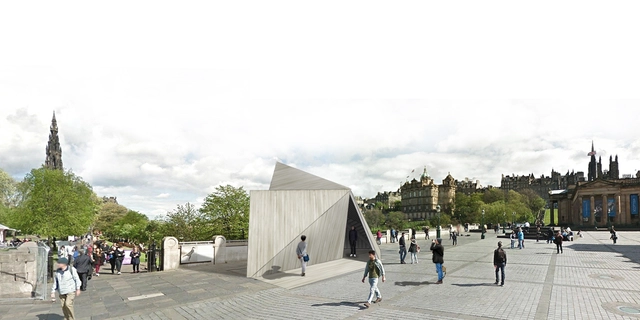
Exterior Perspective Views. Image Courtesy of Konishi Gaffney Architects
Edinburgh-based studio, Konishi Gaffney Architects, has won the competition to design a temporary pavilion for the Pop-Up Cities Expo. The Pop-Up Cities Expo is a headline event at Scotland’s Festival of Architecture, featuring pop-up pavilions at Mound Square from cities around Europe. Konishi Gaffney will be representing Edinburgh – the host of the expo - with their winning pavilion design.
The Centre de Cultura Contemporània de Barcelona (CCCB) has announced the finalists for the 2016 European Prize for Urban Public Space. An international jury of architects, critics, and directors of museums and institutions from across the continent selected 25 projects from 276 entries representing 33 countries. According to the organization, "[the shortlisted projects recognize] the creation, recovery, and improvement of public spaces, as clear indicators of the democratic health of our cities.” All finalists will have their work featured in an exhibition that will tour Europe over the next two years, and also will be published in an online archive that features past finalists. The 2016 winner of the award will be announced at the CCCB on July 4.
MVRDV has designed a fully transparent kitchen for Kitchen Home Project, a satellite event at this year’s Venice Biennale, focusing on living and the home environment. Kitchen Home Project was initiated by Weng Ling of the Beijing Centre for the Arts (BCA), and also features works by Kengo Kuma and the Hong Kong-based media artist Au Yeung Ying Chai. MVRDV’s proposal, “Infinity Kitchen,” imagines the next stage of kitchen design, creating counters, shelving, cabinets, and faucets entirely out of glass – the metaphor being that a see-through environment will add greater transparency to the food being made in the kitchen, and make inhabitants more aware food choices, cleanliness, and the culinary experience.
The Victoria and Albert Museum has unveiled its latest installation: the Elytra Filament Pavilion, a project displaying the culmination of four years of research on the integration of architecture, engineering, and biomimicry principles, in an exploration of how biological fiber systems can be transferred to architecture.
The 200-square-meter structure is inspired by lightweight construction principles found in nature, namely "the fibrous structures of the forewing shells of flying beetles known as elytra," states a press release.
The Pavilion of Turkey at the 2016 Venice Biennale will feature an exhibition titled Darzanà: Two Arsenals, One Vessel, which links the cultural heritage between the language and architecture of dockyards in Istanbul and Venice. Curated by a team of Turkish architects, the display will present “a last vessel," that has been built using waste materials found at the Haliç dockyards in Istanbul, and transported to the Biennale.
In the newest video by architects Wahyu Pratomo and Kris Provoost of YouTube’s #donotsettle, the duo visit MVRDV’s "The Stairs" installed outside Centraal Station in Rotterdam. The project commemorates the 75th anniversary of the city’s reconstruction after World War II by devising the staircase now attached to the Groot Handelsgebouw, a landmark and one of Rotterdam’s first post-war buildings. In the video, Pratomo and Provoost discuss the idea of temporariness, experience-driven architecture, context, and symbolism inspired by MVRDV’s intervention, all the while asking other visitors for their own reactions to the spectacle.
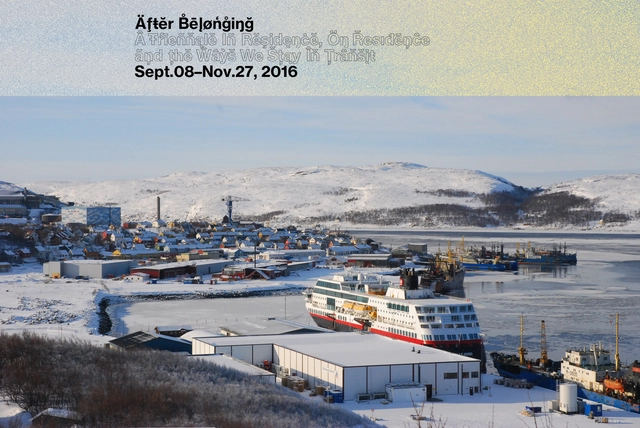
The Oslo Architecture Triennale has announced the program and participants for this year's sixth edition of the event, titled After Belonging, which will open in September of this year. Participants will contribute to two exhibitions, occurring alongside a conference, and collateral events, taking place September 8-November 27, 2016.
As described by the Oslo Architecture Triennale website: "The 2016 Oslo Architecture Triennale designs the objects, spaces, and territories for a transforming condition of belonging. Global circulation of people, information, and goods has destabilized what we understand by residence, questioning spatial permanence, property, and identity—a crisis of belonging. Circulation brings greater accessibility to ever-new commodities and further geographies. But, simultaneously, circulation also promotes growing inequalities for large groups, kept in precarious states of transit. After Belonging examines both our attachment to places and collectivities—Where do we belong?—as well as our relation to the objects we own, share, and exchange—How do we manage our belongings?”
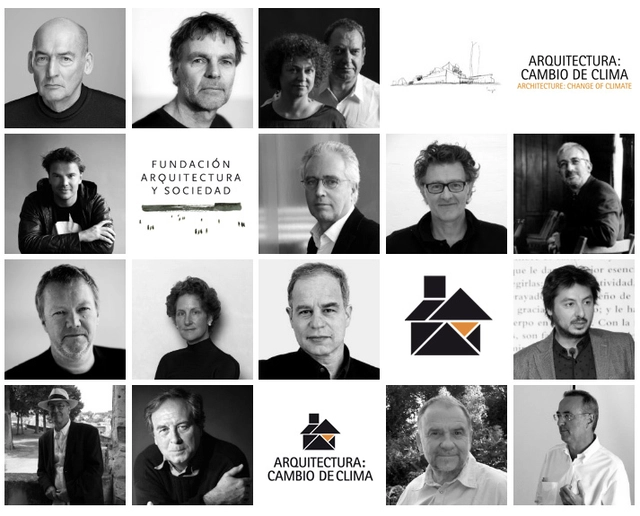
As part of their mission to foster debate about architecture and the city within a broader social context, the Fundación Arquitectura y Sociedad will carry out the 4th edition of their International Architecture Congress from June 29-July 1st in Pamplona. Titled “Architecture: Change of Climate,” the latest event echoes themes from the previous years, which were related to the crisis affecting Spain and its architects. This year the debate seeks to emphasize the need for change in architectural practices in order to improve our environment.
The title of this year’s congress refers as much to the change of climate taking place in architecture, which the crisis has put at an economic and ethical crossroads, as to the importance of architecture and planning when facing the challenges posed by climate change, perhaps the most pressing matter of our time.
Read on after the break for the full program and text from Luis Fernández-Galiano, Director of the IV International Architecture Congress, which introduces the paradigms that architects like Rem Koolhaas, Bjarke Ingels, Winy Maas, Pierre de Meuron, Iñaki Ábalos and Jean-Philippe Vassal will examine at this event.
https://www.archdaily.com/787816/rem-koolhaas-and-bjarke-ingels-to-discuss-change-of-climate-at-international-architecture-congress-in-pamplonaPola Mora
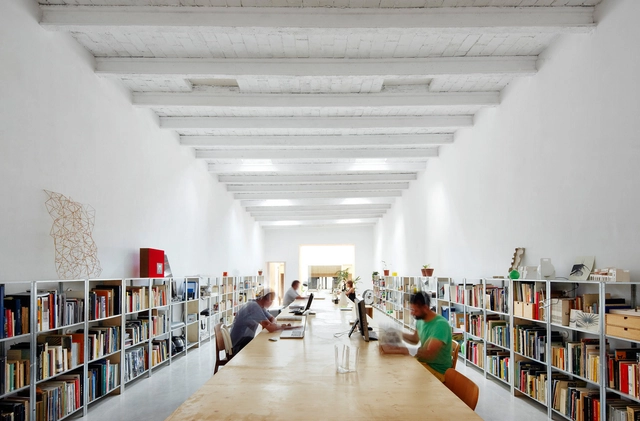
The Museum of Architecture and Design (MAO) in Ljubljana, Slovenia has announced that the project, Home at Arsenale, will be presented in the Slovenia Pavilion at the 15th International Biennale in Venice.
The project, curated by Aljosa Dekleva and Tina Gregoric, responds to the Biennale’s title, Reporting From the Front, by creating a "curated library" that addresses topics of home and dwelling as social and environmental issues.
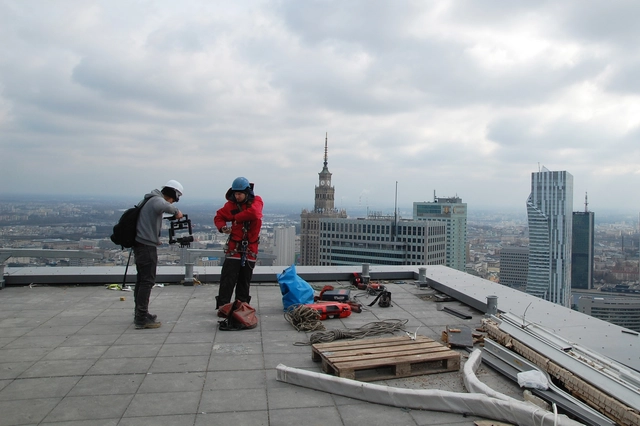
Construction workers are one of the most critical yet underrepresented groups of people in the architecture industry. Often times, the safety of labor conditions are pushed aside in favor of budget constraints and strict deadlines. The Fair Building, an exhibition hosted by the Polish Pavilion at the 2016 Venice Biennale, will address these issues and ask: “why don’t buildings come with ‘fair trade’ marks?”
Responding to the theme of “Reporting from the Front”, the curatorial team, Martyna Janicka, Dominika Janicka, and Michal Gdak, based their pavilion design around the idea that “construction sites represent the frontline in architecture.”
Anna Puigjaner has been selected from nearly 200 applications as the winner of the Harvard University Graduate School of Design 2016 Wheelwright Prize. The $100,000 travel grant was awarded for her proposal, Kitchenless City: Architectural Systems for Social Welfare, for which she will study “exemplars of collective housing in Russia, Brazil, Sweden, China, Korea, and India, which reflect a variety of approaches to organizing and distributing domestic spaces.” Puigjaner notes that this typology is "deeply understood as a tool for social transformations," and through her investigation, she hopes to apply new thinking to the housing dilemmas of today. The prize will fund her travel and research over the next two years.
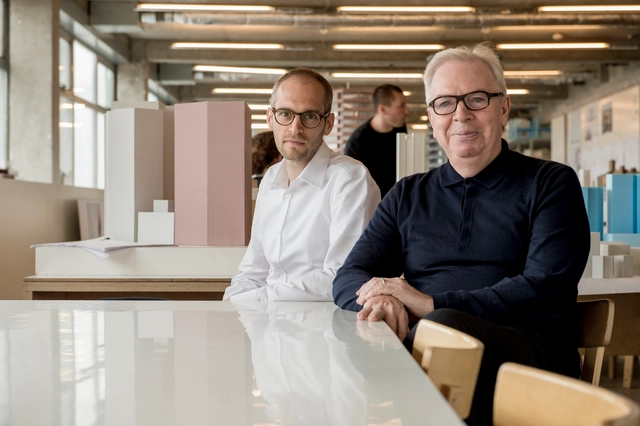
Simon Kretz and David Chipperfield. Image Courtesy of Rolex Mentor and Protégé Arts Initiative
David Chipperfield has chosen to mentor Swiss architect Simon Kretz as part of the Rolex Mentor and Protégé Arts Initiative for 2016-2017. Launched in 2002, but working with architects only since 2012, the venture is a biennial philanthropic programme created by Rolex to “ensure that the world’s artistic heritage is passed on from generation to generation, across continents and cultures.”
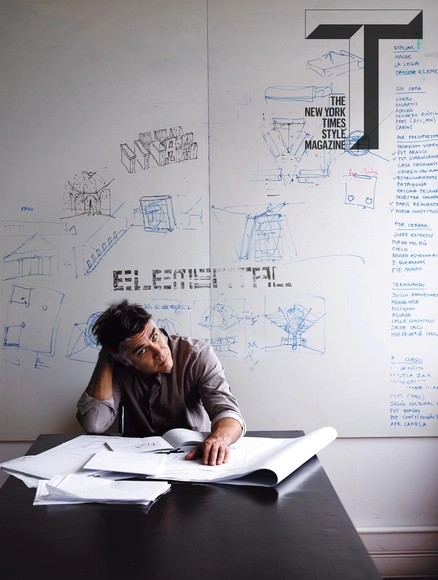
On the eve of the Venice Biennale, The New York Times’ Michael Kimmelman sits down with Alejandro Aravena in an intimate profile for T Magazine’s Beauty Issue. Visiting a number of projects by the architect and his office, Elemental, Kimmelman experiences socially minded architecture in an age of informal growth, income inequality, and mounting threats linked to climate change, all while learning about Aravena’s own path and growth as a practitioner. Although told by colleagues that he might be standoffish, Kimmelman finds Aravena to be “earnest, open, a little nerdy –– and deadly serious.”
Selfie Automaton, an exhibition for the Romanian Pavilion at the 2016 Venice Architecture Biennale, utilizes an automated puppet show to raise the question: “can we—architects—mock ourselves? Can we imagine a less idyllic selfie?”
The exhibit contains seven “mechanical automata” with forty-six built in characters assembled in decided locations for the show. Unlike typical puppets, these wooden marionettes have been removed from their strings, which typically give them the "freedom of movement," and are nailed to various mechanisms that only allow for one repetitive gesture.
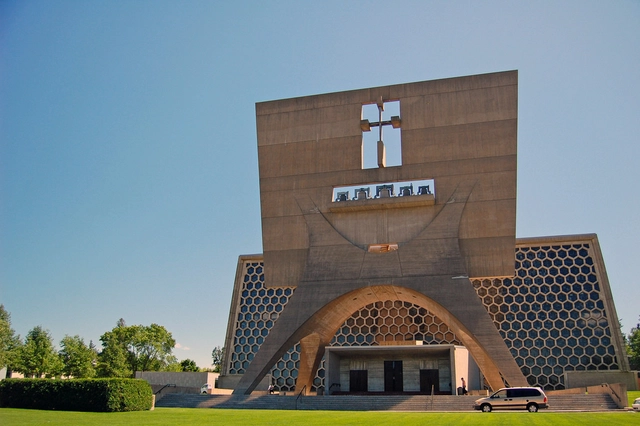
Known as Lajkó to his friends, Marcel Lajos Breuer (21 May 1902 – 1 July 1981) helped define first the interior contents, then the form, of the modernist house for millions; his influential approach to housing was one of the first to demonstrate modernism on a domestic, practical level. Beginning as a furniture designer at the height of Bauhaus, Breuer was hailed as one of the most innovative designers working in the 1930s, before moving to architecture and helping define the modernist vernacular—most notably as one of America's foremost Brutalist architects.
Following a competition that received 286 entries from 26 of the 32 states of Mexico, 31 proposals have been selected to be presented at the Mexican Pavilion at the 2016 Venice Biennale. Narrating the “deep history of social participation in Mexico,” the exhibit, “Unfoldings and Assemblages,” will feature “architectures assembled from fragments, modules, relations, stories, tactics, technologies and construction strategies.” The exhibit will focus on work and experiences that can change, propagate and adapt, rather than closed systems or final products.
https://www.archdaily.com/787588/unfoldings-and-assemblages-mexicos-pavilion-at-the-2016-venice-biennaleArchDaily Team
Governors Island is a small, pedestrian-only island to the south of Manhattan and to the west of Brooklyn. It’s just across from Red Hook, the Brooklyn neighborhood known to many a Manhattanite as the home of New York’s only Ikea. To get there, you have to take the East River Ferry—that’s the only option. No subway, no bus, no rail. But it wasn’t always that way.
Nancy Nowacek is a Red Hook-based artist whose vision, since 2012, has been to create an alternative way to reach this backyard of New York City. She has always had a close relationship with the waterfront, but many, she suggests, do not. “It’s really hard to get to the water’s edge from most points inland,” she says. “It’s not a part of the New York that the kids in my building...live in, nor many others who live a few miles away geographically, but experientially are a world away.”
The Greek Pavilion at the 2016 Venice Biennale will be hosting an exhibition titled #ThisIsACo-op, which underscores the role of collaboration in architecture. Through a series of displayed research and discussions, the exhibition aims to understand how architects may need to unite on different “fronts” of world crises, including the refugee crisis, the housing crisis, and the crisis of the architectural profession, among others.
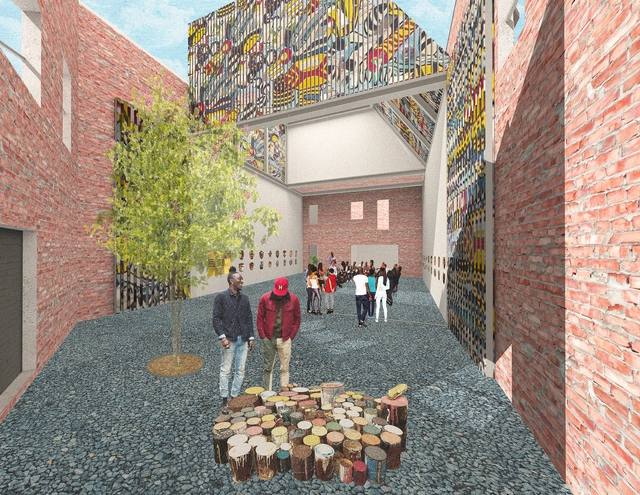
Lorcan O’Herlihy Architects (LOHA) has unveiled its plans for the renovation and master plan of the MBAD African Bead Museum, an arts and cultural complex in Detroit centered around African art.
Located on a major boulevard in a series of townhouses, the Museum is currently in a state of disrepair with the roof on its corner building having collapsed. This main corner building, although heavily damaged, still features wall murals by artist Olayami Dabls, and thus needs to be preserved.
The Republic of Seychelles will make their debut at the upcoming Venice Biennale with an exhibition titled Between Two Waters, Searching for Expression in the Seychelles. Curated by Andrés F. Ramírez, and featuring the work of local firm ADD.locus, the exhibition faces the Grand Canal and “transports visitors to the 115-island archipelago—the least populated nation in Africa,” exploring the identity of this nation while also investigating the architecture of every day life in the paradise islands.





.jpg?1464273616 "© Laurian Ghinitoiu")
.jpg?1464273639 "© Laurian Ghinitoiu")
.jpg?1464273508 "© Laurian Ghinitoiu")
.jpg?1464273743 "© Laurian Ghinitoiu")
.jpg?1464273296)







.jpg?1464190381&format=webp&width=640&height=580)
.jpg?1464190570 "© Martin Rijpstra")
.jpg?1464189206 "© Martin Rijpstra")
.jpg?1464189350 "Courtesy of MVRDV")

.jpg?1464190381)
_NAARO.jpg?1463781566&format=webp&width=640&height=580)





.gif?1461689986)