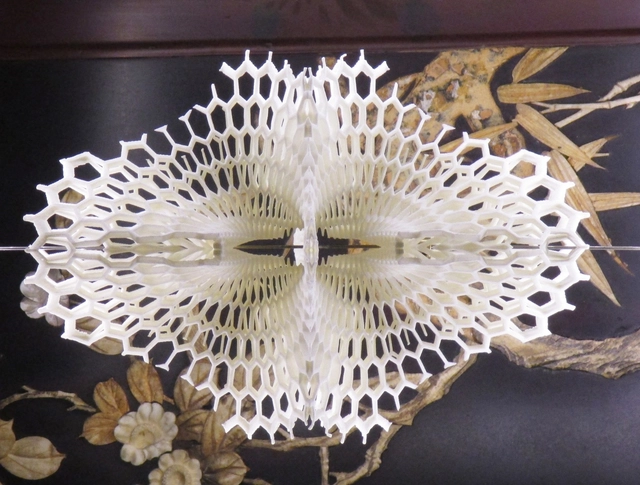
In somewhat of a departure from its usual parametric, experimental work, Margot Krasojević Architects has created a recycled, 3D printed LED light, in an investigation of the importance of reappropriating plastics. The project—Lace LED—however, aligns with the firm’s exploration of renewable energy and environmental issues within architecture and product design.
Printed with post-consumer plastics like synthetic polymer packaging from takeout food containers and 3D printer off-cuts, Lace LED is a light diffuser with fractal pattern configurations resembling a piece of woven lace.
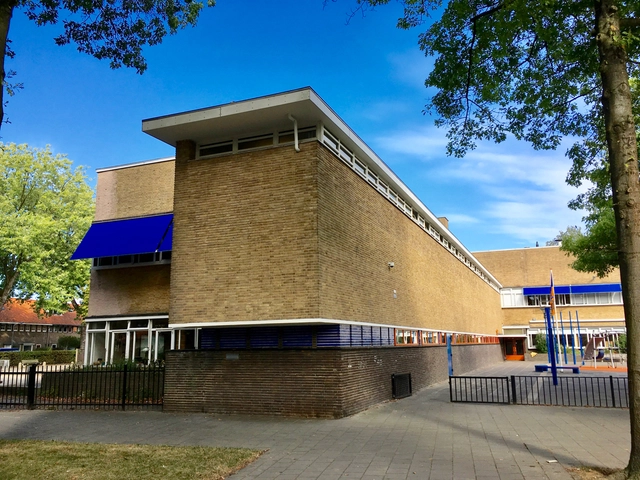
Dutch journalist Peter Veenendaal has completed a website that features all 136 built works by modernist Willem Marinus Dudok. Dudok, who was formally trained as an engineer, has been hailed as one of the Netherlands’ most influential architects, boasting a prolific career beginning with military barracks and encompassing numerous municipal buildings throughout Europe. Influenced by Frank Lloyd Wright, Dudok is remembered for his form-driven modernism, leaving his legacy in the work of later architects from the United Kingdom and the Netherlands.
Veenendaal has dedicated a substantial portion of his career to documenting Dudok’s work, including a documentary of his most significant projects entitled “City of Light.” Continue on to Veenendaal’s new website here to explore Dudok’s full portfolio.
We have previously published the best apps for architects, many of which try to boost creativity and productivity for project design. Now, we’ve put together a series of helpful apps for the development and management of construction projects. From digital measuring tools to instant software-generated reports of work progress, we hope this new construction technology will be most useful to you.
Following last year’s introduction of MultiFab, a multi-material 3D printer, researchers at MIT’s Computer Science and Artificial Intelligence Laboratory has pioneered a system for designing multi-material objects. The new interface, Foundry, is meant to be accessible to non-programmers, whereas multi-material 3D printing technology has historically been prohibitive both with respect to cost and user-friendliness.
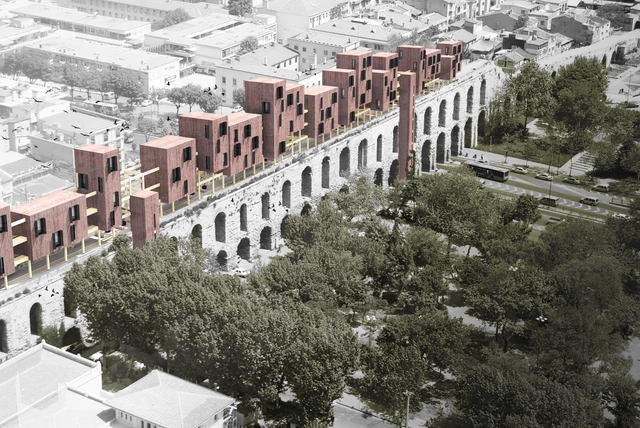
Sinan Günay and Nurhayat Oz of Superspace have won second prize in the MetsäWood competition, The City Above the City, which called for architects to design wooden extensions to city centers. With their project, Colliding Lines and Lives, the team designed a series wooden housing modules to be appended to a fourth-century Roman aqueduct archway in Istanbul.
Built by the Roman emperor Valens, the archway was an important water supply for the Romans and Ottomans but later lost its significance and functionality with technological and infrastructural advancements, leaving it an unutilized landmark in the city.
In the first installment of her series, “Cities and Memory - the Architecture and the City," architect Marta Vilarinho de Freitas created a set of intricately rendered architectural fantasy worlds that straddled the line between realism and abstraction.
Now Vilarinho de Freitas has returned with an additional 7 illustrations, this time experimenting with planimetrics and new cityscape scenes.
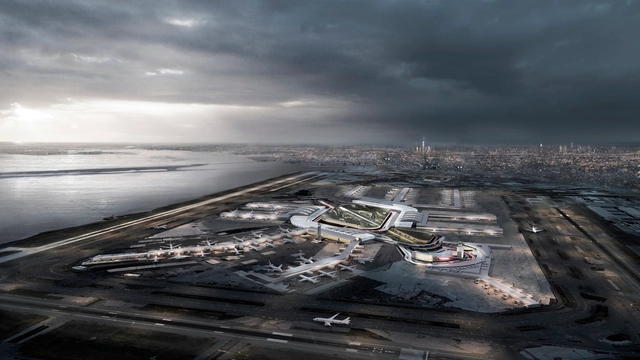
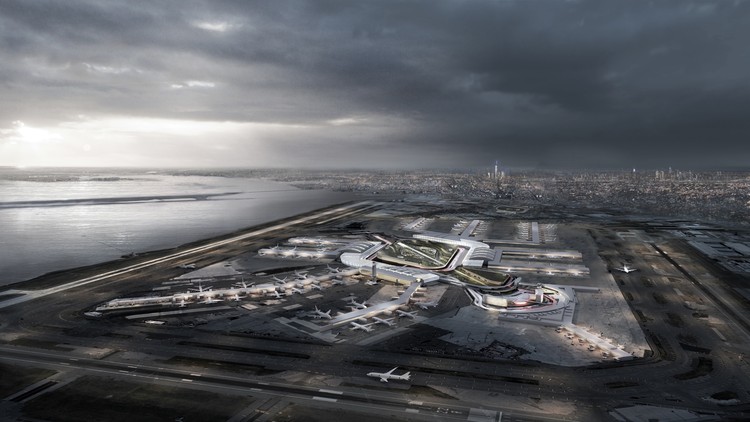
New York City’s busiest airport is about to receive a major overhaul.
Proposed by New York governor Andrew Cuomo, the plan calls for a $10 billion renovation to New York City’s busiest airport, transforming the facility into a “a unified, interconnected, world-class’ complex.”
HKS Architects has been selected to design a new Major League Baseball stadium for the Texas Rangers, to be built in Arlington, Texas. As part of a new multipurpose sports and entertainment venue, the stadium will feature a retractable roof for climate control and shelter during the hot Texan summers.
via Laterza's Interview with Leonardo Benevolo (https://www.youtube.com/watch?v=hzto2DOcTpk)
Italian media have reported that Leonardo Benevolo, one of Italy's foremost architects, critics, and historians, passed away yesterday at his home in Brescia following a long illness. Benevolo was an enormously influential figure in the field of architectural history who was continuously examining the problems and possibilities of our cities.
His writings—in particular the book History of Modern Architecture—have been widely circulated, translated and taught, and contribute to his legacy as one of the profession's most distinguished architects and educators.
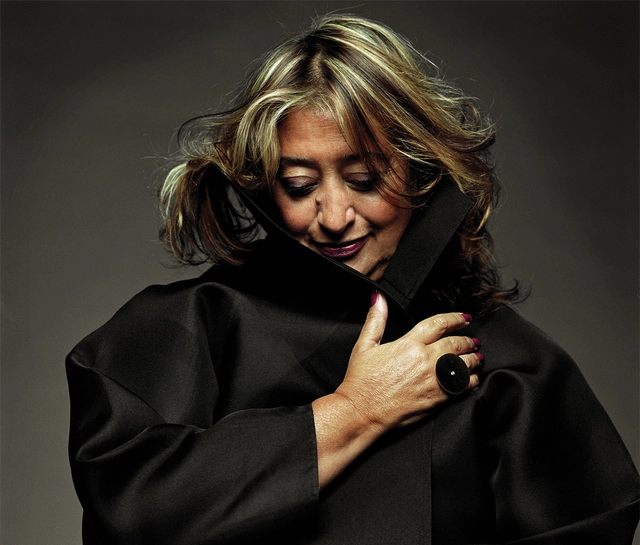
As we open to a new year, we would like to take a moment and remember one of the most significant lives lost in 2016: Iraqi-born British Pritzker Prize winner Zaha Hadid. While the narrative of Zaha’s trailblazing accomplishments are well-known, architect Rana Hadid celebrates her aunt’s memory from a uniquely poignant perspective in this new piece for the Guardian. Recounting Zaha’s early artistic prowess, fierce ambition, and earnest personality, Rana describes her as “the incredibly warm and generous Zaha who showed us we could do anything we wanted if we worked at it hard enough.”
Entitled “Architecture for the Search for Knowledge,” the lecture is named for Ábalos’ mantra by the same words, which is an aphorism written by Friedrich Nietzsche.
Throughout the event, Ábalos delved into various mixed-use typologies, each of which is in some way related to the basic typology of the medieval monastery.
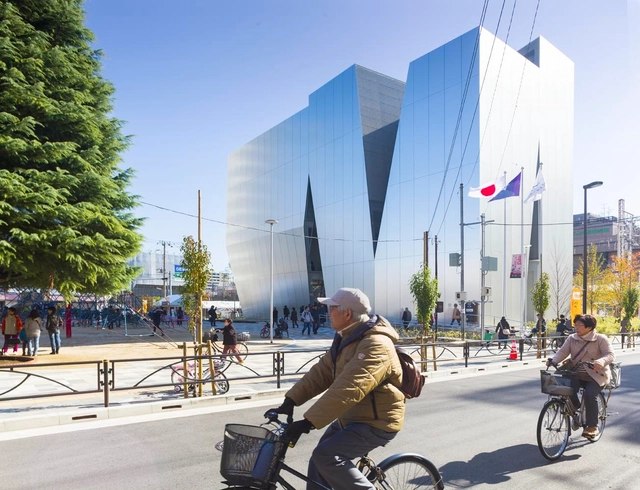
In this photoset, Vincent Hecht takes his lens into the recently completed Sumida Hokusai Museum, designed by pritzker prize winner Kazuyo Sejima, one half of the acclaimed international firm SANAA. Located in the Tokyo neighborhood of Sumida, the 4-story, angular structure will house a collection of over 1800 works by world-renowned ukiyo-e woodblock painter Katsushika Hokusai, who lived in Sumida over 200 years ago.
For U.S. architects, working abroad will now be easier than ever, as the National Council of Architectural Registration Boards (NCARB) has announced a new mutual recognition arrangement with the licensing authorities of Australia and New Zealand. Effective as of January 1, 2017, the agreement allows architects to earn reciprocal licenses that authorize architects to work in the two countries.
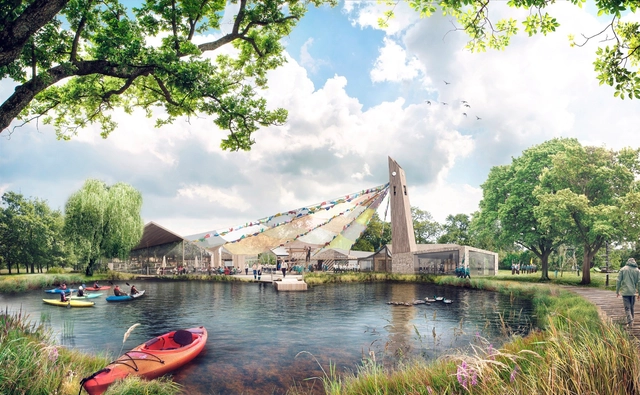
London-based firm Tate Harmer has won a competition to design a new £6 million ($7.4 million USD) museum for The Scout Association (TSA) at the group’s headquarters in Chingford, east London. Their proposal takes the form of a big, colorful tent that will tell the story of the Scouting movement within a fun, environmentally conscious structure.
Earlier this year, Chilean architects and professors Luis Pablo Barros and Gustavo Sarabia from the Federico Santa María University released a book (in Spanish) titled "Sistemas Constructivos Básicos" (Basic Construction Systems)." The book aims to be a tool to help architects translate their plan diagrams into tangible architectural works, as well as to help students learn the knowledge necessary to build what they plan.
https://www.archdaily.com/802593/17-templates-for-common-construction-systems-to-help-you-materialize-your-projectsPola Mora
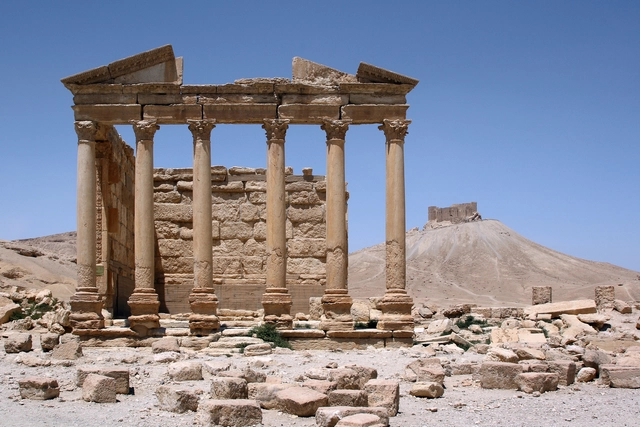
The Aggregate Architectural History Collaborative has organized a collection of essays, entitled The Destruction of Cultural Heritage: From Napoléon to ISIS, which examines several centuries of the demolition of monuments in the Middle East. With world events like ISIS and the protection of architectural heritage growing to be more and more topical, this collection is a useful tool in considering the role of violence, how ancient architecture is perceived as a cultural entity, what role the media has to play, and beyond.
In an exclusive half-hour episode focusing on the life and legacy of Jane Jacobs, "one of the most influential urban thinkers and city activists of our time." Featuring interviews with a carefully selected range of city planners, historians and activists, alongside recordings of Jacobs herself, this special episode of Monocle 24's The Urbanist examines why Jacobs was—and remains—so influential when considering the contemporary city.
https://www.archdaily.com/802951/cities-need-change-the-durability-of-jane-jacobs-legacyAD Editorial Team
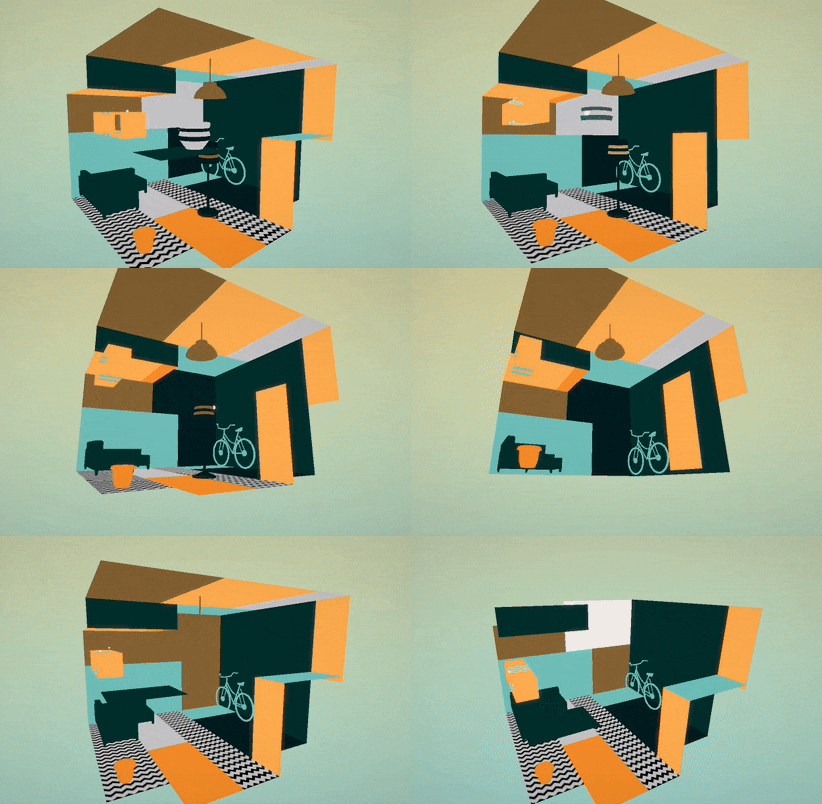
Looking for a challenging new diversion that will keep your architectural mind humming? A new puzzle game from developers Dusty Road, Empty, may just fit the bill.
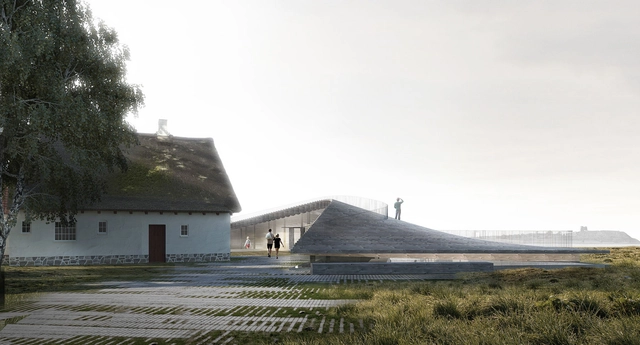
North Perspective. Image Courtesy of Arkitema Architects
Arkitema Architects has unveiled their winning proposal for a new visitors center at Mols Bjerge National Park in Denmark. To be located adjacent to the historic Kalø Castle Ruins, the design draws inspiration from the surrounding landscape, taking the form of a softly sloping hill.
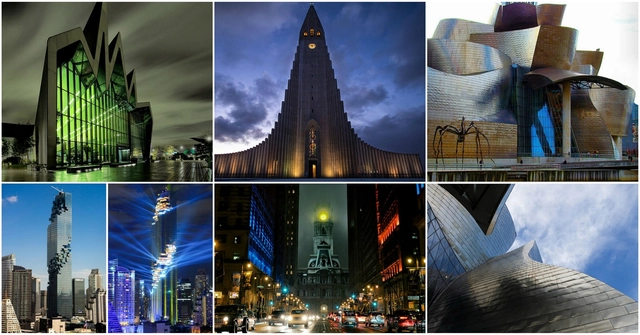
Compiled on sites such as Reddit and BoredPanda, lists of ‘Evil Buildings’ tend to feature structures that feel sterile to non-architects, photographed in dramatic lighting or surrounded in fog. Projects by Zaha Hadid Architects, Frank Gehry and Ole Scheeren are among those represented. But what exactly makes these buildings feel evil?
At its best, architecture has the power to confront the world’s most urgent social and environmental issues. The Los Angeles River sits at the center of many of these issues, thanks to the long-overdue plans to convert it from a concrete canal back into a social space and an ecological corridor; and thanks to its position as a symbol of the drought in California. In this serene video by filmmaker Chang Kim, the full length of the river is put on display, exploring a resource that is the topic of much debate in the Los Angeles area.
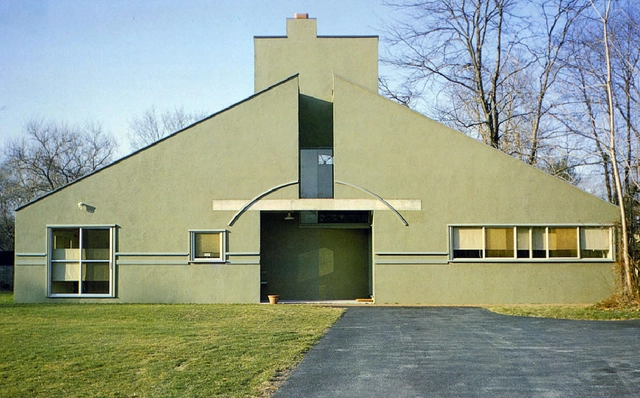
The Architectural Review has recently published an article celebrating the 50th anniversary of Robert Venturi’s book, Complexity and Contradiction in Architecture, which is regarded as one of the most important writings about architecture since Le Corbusier’s Vers une Architecture. In the article, Martino Stierli—Chief Curator of Architecture and Design at the Museum of Modern Art—delves into the significance of Venturi’s work, the motivation behind it, its continuing impact, and more. Read the full article at the Architectural Review, here.
I see it a bit as my mission to document things in Hong Kong which are vanishing, which are disappearing, primarily through urban renewal
In this short film from Yitiao Video, photographer Michael Wolf explains the vision behind his momentous photo series, “Architecture of Density,” in which he captures the immense scale and incredible intricacies of the city of Hong Kong.
After living in city for 9 years and travelling abroad to work, Wolf describes the somewhat unpleasant circumstances which led him to turn his attention to his own environment.
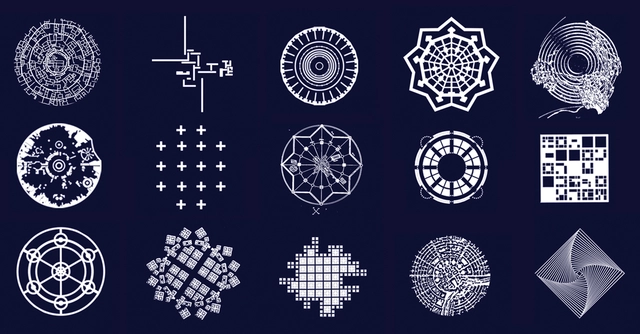
Much like snowflakes, the most beautiful architectural plans consist of complex relationships between geometries – and no two are exactly alike. In this spirit, KOSMOS Architects has created a series of planimetric graphics of some of the most notable architectural projects to have disappeared from our world in celebration of the New Year.




.jpg?1483528220 "© Peter Veenendaal")





.jpg?1483734839 "© Marta Vilarinho de Freitas")
.jpg?1483734922 "© Marta Vilarinho de Freitas")