BUILDING: Louis I. Kahn at Roosevelt Island / Barney Kulok
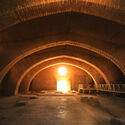
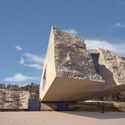
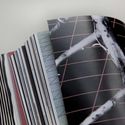
In September 2011 Barney Kulok was granted special permission to create photographs at the construction site of Louis I. Kahnʼs Four Freedoms Park in New York City, commissioned in 1970 as a memorial to Franklin D. Roosevelt. The last design Kahn completed before his untimely death in 1974, Four Freedoms Park became widely regarded as one of the great unbuilt masterpieces of twentieth-century architecture. Almost forty years after having been commissioned, it is finally being completed this year, as originally intended.
LE CORBUSIER REDRAWN: The Houses / Steven Park
Le Corbusier (1887-1965) was the most significant architect of the twentieth century. Every architecture student examines the Swiss master’s work. Yet, all too frequently, they rely on reproductions of faded drawings of uneven size and quality. Le Corbusier Redrawn presents the only collection of consistently rendered original drawings (at 1:200 scale) of all twenty-six of Le Corbusier’s residential works. Using the original drawings from the Le Corbusier Foundation’s digital archives, architect Steven Park has beautifully redrawn 130 perspectival sections, as well as plans, sections, and elevations of exterior forms and interior spaces.
Adaptation: Architecture, Technology, and The City / INABA

Adaptation: Architecture, Technology and the City is a publication that is a result of the collaboration between INABA and Free that brings interviews and art works into a conversation about the advancement of digital technology and its place in the built environment. The publication is a fascinating study into the dialogue between technological advancements in transportation and communications and the tangible environment with which is inextricably linked.
Encounters 2 – Architectural Essays / Juhani Pallasmaa

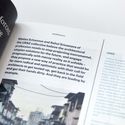
Architecture is fundamentally existential in its very essence, and it arises from existential experience and wisdom rather than intellectualized and formalized theories. We can only prepare ourselves for our work in architecture by developing a distinct sensitivity and awareness for architectural phenomena.” With these declarative words, Finnish architect, educator and critic Juhani Pallasmaa resounds the call of his 2005 volume, Encounters: Architectural Essays, in this second volume of essays, Encounters 2.
Thanks for the View, Mr. Mies: Lafayette Park Detroit

Lafayette Park, an affordable middle-class residential area in downtown Detroit, is home to the largest collection of buildings designed by Ludwig Mies van der Rohe in the world. Today, it is one of Detroit’s most racially integrated and economically stable neighborhoods, although it is surrounded by evidence of a city in financial distress. Through interviews with and essays by residents; reproductions of archival material; and new photographs by Karin Jobst, Vasco Roma, and Corine Vermeulen, and previously unpublished photographs by documentary filmmaker Janine Debanné, Thanks for the View, Mr. Mies examines the way that Lafayette Park residents confront and interact with this unique modernist environment.
Eduardo Souto de Moura Sketchbook No.76

Sketchbook No. 76 is the reproduction of a sketchbook of the renowned Portuguese architect and last year’s Pritzker Prize laureate, Eduardo Souto de Moura. The sketchbook was in use between September 2011 and January 2012 and records first ideas, fleeting sketches, studies, and spontaneous jottings that offer a starting point for every project but also function as a working resource. One can quite litterally experience the architectural design process and how developing existing ideas are further developed in different variants. Sketchbook No. 76 is a homage to the medium of drawing and manifests that this working method remains an essential element of the creative process.
Bijoy JAIN-Spirit of Nature Wood Architecture Award 2012
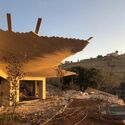
Rakennustieto is publishing now for the seventh time a monograph on the work of the architect awarded the international Spirit of Nature Wood Architecture Award. The 2012 winner is Indian architect Bijoy Jain, who together with his office Studio Mumbai Architects combine excellently traditional craftwork and architecture using meagre resources.