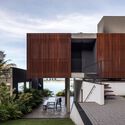
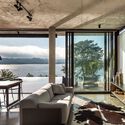
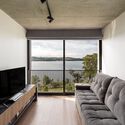
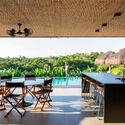
Q / Oscar Niemeyer

Check out this delicious design by Brazilian architect Oscar Niemeyer. The edible curvaceous chocolate is part of Q – the recently launched company by Samantha Aquim, chef and head of the chocolate division at her family’s restaurant business. As chef, Aquim has developed a process to extract only the purest and richest flavors from the cocoa beans, and choosing Niemeyer’s design creates an instantly recognizable form for her work. Perhaps, Niemeyer found inspiration in his Auditório Ibirapuera? Now, imagine if that were chocolate?
Compare the chocolate to the Audiotório after the break.
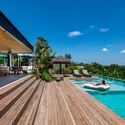
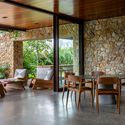
JE House / Humberto Hermeto

Architect: Humberto Hermeto
Location: Nova Lima, MG, Brazil
Collaborator: André Gabrich
Model: Luciana Vasconcellos
Structural Engineer: Márcio Gonçalves
Engeneering: Projelet Ltda.
Builder: PHM Engenharia
Site Area: 3,160.00 sqm
Built Area: 1,240.00 sqm
Project Year: 2007
Construction Year: 2009
Photographs: Jomar Bragança
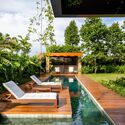
Paraty House / Marcio Kogan

Architect: Marcio Kogan
Location: Paraty, RJ, Brazil
Co-Author: Suzana Glogowski
Interior Design: Diana Radomysler, Carolina Castroviejo
Project Team: Beatriz Meyer, Eduardo Chalabi, Eduardo Glycerio, Gabriel Kogan, Lair Reis, Luciana Antunes, Maria Cristina Motta, Mariana Simas, Oswaldo Pessano, Renata Furlanetto, Samanta Cafardo
Landscape Architect: Gil Fialho
General Contractor: Lock Engenharia
Structural Engineering: SF Engenharia
Site Area: 50,000 sqm
Project Area: 840 sqm
Project Year: 2008-2009
Photographs: Nelson Kon
OM House / Studio Guilherme Torres

Architects: Studio Guilherme Torres
Location: Londrina, Brazil
Client: OM
Floor Area: 250 sqm
Project Year: 2009
Photographs: MCA Studio
Eucaliptus House / Andre Eisenlohr

Architect: Andre Eisenlohr
Location: Campos do Jordão, São Paulo, Brazil
Colaborator Architect: Cyssa Martins
Consulting structural engineers: João Carlos R. Neto
Contractor: Luciano Silva dos Santos
Client: Rancho Santo Antonio
Project year: 2008
Photographs: Andre Eisenlohr
Juranda House / Apiacás Arquitetos

Architects: Apiacás Arquitetos
Location: Vila Beatriz, Sao Paulo, Brazil
Project Architects: Anderson Freitas, Juliana de Araujo Antunes
Collaborators: Acácia Furuya, Bibiana Ferreira, Pedro Mauger
Structural Engineering: Eng. Maria de Lourdes Mesquita
Project Area: 150 sqm
Project Year: 2007-2008
Photographs: Pregnolato & Kusuki Estúdio Fotográfico
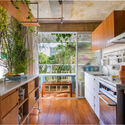
BL House / Studio Guilherme Torres
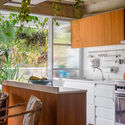
Architects: Studio Guilherme Torres
Location: Londrina, Brazil
Client: BL
Floor Area: 485 sqm
Project Year: 2007
Photographs: Beto Consorte
Natura House / Epigram + Forte, Gimenes & Marcondes Ferraz Arquitetos

Architects: Epigram + Forte, Gimenes & Marcondes Ferraz Arquitetos
Location: Santo André, SP, Brazil
Directors in Charge: Marcelo Bicudo, Daniel Lifschitz, Fernando Forte, Lourenço Gimenes, Rodrigo Marcondes Ferraz
Collaborators: Tatiana Machado, Ana Paula Barbosa (coordination); Naya Adam, Juliana Nohara, Paola Bianchi (architects); Flavio Faggion, Alexandre Martins (trainee)
Construction: BR Construções
Project Area: 350 sqm
Project Year: 2009-2010
Photographs: Fran Parente
Patriarca Square / Paulo Mendes da Rocha
Architecture photographer Pedro Kok shared with us this really nice video of a wonderful structure in a public square by Pritzker laureate Paulo Mendes da Rocha. You can see some more videos from Kok over here.
House in Ubatuba / SPBR Arquitetos

Architects: SPBR Arquitetos
Location: Ubatuba, Brazil
Principal in charge: Angelo Bucci
Project team: Ciro Miguel, Juliana Braga, João Paulo Meirelles de Faria, Flávia Parodi Costa, Tatiana Ozzetti, Lucas Nobre, Nilton Suenaga
Client: Antônio Carlos Onofre / Regina Silveira Onofre
Structural engineer: Ibsen Puleo Uvo
Landscape architect: Raul Pereira
Lightning design: Ricardo Heder
Construction: Bremenkamp Engenharia e Construção Ltda.
Total floor area: 340 sqm
Design year: 2005-2006
Construction Year: 2007-2009
Photographs: Nelson Kon
IFHP International Student Competition 2010
Morro Santa Teresa, an area of 87 hectares in Porto Alegre, Brazil, is knitted into the urban fabric of the city. At present, the area contains media installations, a social reintegration institution for young people, a home for elderly poor and a football sports center. It is an urban area subject to constant social tension due to these buildings, facilities and upper class residences being closely located to low income neighbourhoods.
The proximity to Guaíba Lake provides the site a physical and visual landmark, which makes it one of the most significant areas of the city of Porto Alegre. The view of the historic center of the city along with the rich landscape that opens up from the highest point of the area makes Morro Santa Teresa a strategic spot for formulating innovative proposals that take into consideration urban scales at the street, neighbourhood and city levels.
It is expected that the projects submitted for the International Student Competition will propose answers to the complex reality described above. For complete details please go to the competition’s official website. Seen at Death by Architecture.
Lompreta Nolte Arquitetos Proposal for the Environment Museum Annex Competition, Rio de Janeiro

Earlier this week we presented you an interesting proposal for the Environment Museum Annex Competition and now we received an honorable mention winner, from Lompreta Nolte Arquitetos - Daniel Feldman and Elizabeth Añaños.
The Botanical Garden, one of the oldest institutions in all Brazil, is a space of great relevance for the city of Rio de Janeiro. With around 600 thousand visitants each year, it is an important touristic spot, orientated to environmental and scientific education as well as leisure, and recently also cultural program.
Entry proposal for the Environment Museum Annex Competition, Rio de Janeiro

Antonio Pedro Coutinho shared with us the entry he designed with Estelle Dugachard, Fabiana Araújo, Nanda Eskes, Ricardo Caruana for the competition regarding the expansion of the Environment Museum in Rio de Janeiro, Brazil. The main challenge dealt in this competition was finding a way where the architecture would be inserted on the ecosystem where it was being planned; the magnificent Botanical Garden of the city of Rio de Janeiro.
More images and description after the break.
House 6 / Marcio Kogan

Architect: Marcio Kogan
Location: São Paulo, SP, Brazil
Co-author: Diana Radomysler
Interior Design Co-authors: Diana Radomysler, Mariana Simas
Project Team: Beatriz Meyer, Carolina Castroviejo, Eduardo Chalabi, Eduardo Glycerio, Gabriel Kogan, Lair Reis, Maria Cristina Motta, Oswaldo Pessano, Renata Furlanetto, Samanta Cafardo, Suzana Glogowski
Landscape Architect: Renata Tilli
General Contractor: Lock Engenharia
Structure Engineer: Leão & Associados
Site Area: 890 sqm
Built Area: 995 sqm
Project Year: 2009-2010
Photographs & Video: Pedro Kok
Ingels + Nakazawa on Rio

In the August-July 2010 edition of The Economist, Bjarke Ingels and Paul Nakazawa examined Brazil’s potential to undergo a “new urban revolution” with the 2014 World Cup and 2016 Olympics Games. With these two major events being hosted by the same country, Brazil will need to implement long term strategies for properly equipping the areas. Yet, the real solution lies in the country’s “improvements for the large local population rather than merely servicing the temporary needs of the global tourists and the world press.”
More about the article after the break.
Mirante do Horto House / Flavio Castro

Architect: Flavio Castro
Location: Mirante do Horto Condominium, Horto Florestal, São Paulo, Brazil
Construction: Flavio Castro, José Claudio Magalhaes
Project Year: 2009
Construction Date: 2010
Land area: 226 sqm
Built area: 300 sqm
Photos: Nelson Kon
Paulo Mendes da Rocha discusses soccer and architecture
These days, everything seems to be about soccer. Our friends from abitare knew this, so some months ago they conducted a series of short interviews with four Brazilian architects so they could share their ideas about soccer and architecture.
This week, Pritzker Prize winner Paulo Mendes de Rocha explains his project for Serra Dorada Stadium as an interesting solution where popular entertainment and social comfort coexist.
GB House / MMEB Architects

Architects: MMEB Architects
Location: Alphaville, Cuiabá/MT, Brazil
Authors: Márcia Miranda & Éder Bispo Architects
Light designer: Michele Acosta
Structural Engeneering: Paulo Pozzobom
Total Foor Area: 531,00 sqm
Year of the project: 2007
Year of manufacture: 2009
Photographs: Rai Reis & Éder Bispo
Favela Painting
Jeroen Koolhas and Dre Urhahn are two artist from Netherlands who started working together in 2005. In 2006, they started developing the idea of creating community-driven art interventions in Brazil. Their efforts yielded two murals which were painted in Vila Cruzeiro, Rio’s most notorious slum, in collaboration with local youth. After both murals were finished, they started their third stage of their project, ‘O Morro’.
The initial idea of the Favela Painting project was always to paint an entire hillside favela in the center of Rio, visible to all inhabitants and visitors. As the portuguese translation for ‘the hill’; ‘o morro’ is also used as a synonym for slum or favela, the artists chose to use this name for the third stage of the Favela Painting project. ‘O Morro’ started early in 2010 and was recently finished.
You can find more on the projects in their official website and their Facebook Page. See more images of ‘O Morro’ after the break.
SALC House / Frederico Zanelato | Architects
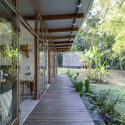
Architects: Frederico Zanelato | Architects
Location: Mogi das Cruzes, São Paulo, Brazil
Authors: Frederico Zanelato, Fernanda Kano and Regina Sesoko
Contributor: Regina Santos
Students: Guilherme Bravin and Nayara Mendes
Structure: Wagner Garcia de Oliveira
Land area: 360 sqm
Building area: 250 sqm
Project Year: 2008-2009
Photographs: Bebete Viégas
House in Santa Teresa / SPBR Arquitetos

Architects: SPBR Arquitetos
Location: Santa Teresa, Rio de Janeiro, Brazil
Director in Charge: Angelo Bucci
Project Team: Ciro Miguel, João Paulo Meirelles de Faria, Juliana Braga, Suzana Jeque, Tatiana Ozzetti
Structural Engineer: Jorge Zaven Kurkdjian
Landscape Architect: Fernando Magalhães Chacel
Lighting: Ricardo Heder
Services: Alberto Chagas Barreto
Site Area: 4,488.65 sqm
Constructed Area: 481.41 sqm
Design Year: 2004
Construction Year: 2005–2008
Photographs: Nelson Kon