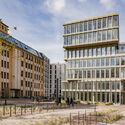
David Chipperfield’s Neues Museum Receives 2011 Mies van der Rohe Award

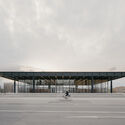
Announced today, the Berlin Neues Museum designed by David Chipperfield is the recipient of this years prestigious EU Prize for Contemporary Architecture – Mies van der Rohe Award. The Neues Museum is the result of blending old and new; the original Museum was designed by Friedrich August Stüler in the mid-19th century. Substantially damaged in the Second World War reconstruction of the Museum began in 2003.
Jury Chair Mohsen Mostafavi, shared the following about the building, “The rebuilding of the Neues Museum is an extraordinary achievement. Rarely have an architect and client succeeded in undertaking a work of such historic importance and complexity; especially one that involves both preservation and new building. The project raises and addresses many aesthetic, ethical, and technical issues. It is an exemplary demonstration of what collaboration can achieve in the context of contemporary European architectural practice.”
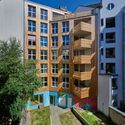
Also announced today was the recipient of ‘The Emerging Architect Special Mention’ award, given to Ramon Bosch and Bet Capdeferro for the Collage House in Girona, Spain.
The awards will be presented in a ceremony at the Mies van der Rohe Pavilion in Barcelona on June 20th.
More details about this announcement following the break.
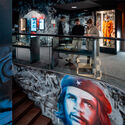
Transmediale In Berlin / SAQ
Architects: SAQ
Project leader: Drew Seskunas
Location: Berlin, Germany
Project team: Tibor Bartholomä, Joel Dunmore Florian Lippe, Irene Per
Photographs: Brice Dellastrada, Laura Gianetti
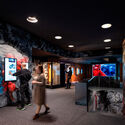
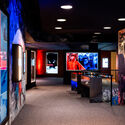
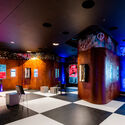
MTV Networks Headquarters / Dan Pearlman

Architects: dan pearlman Markenarchitektur GmbH
Location: Berlin, Germany
Client: MTV Networks
Project year: 2010
Photographs: diephotodesigner.de
Cognitive Cities Conference in Berlin
The Cognitive Cities Conference (#CoCities) aims to bring the vibrant global conversation about the future of cities to Germany. We believe that collaboration and diversity lead to the best results. By inviting bright minds with different perspectives, it is our ambition to enable not only an in-depth exchange about the current state of affairs, but also to foster new projects and contribute to the ongoing global discussion.
We see CoCities as a platform for exchange and mutual inspiration. We invite urban planners, designers, technology geeks, environmental experts, public officials, urban gardening enthusiasts and cultural influencers to be part of the conversation. We can only make our cities more livable if we work together to improve them.
CoCities is a two-day event: Day 1 is a full-on conference (ticket required), Day 2 is dedicated to exploring the city through workshops, guided tours and exhibitions (free entry).
For more information click here.
Plus-Energy House with Electromobility / ILEK

ILEK at the University of Stuttgart has shared with us their winning proposal for the “Plus-Energy House with Electromobility” competition run by the German Federal Ministry of Transport. Learn more about this winning design and the ILEK after the break.
Nhow Hotel / NPS Tchoban Voss

Photographer Patricia Parinejad just shared with us the photographs she took to the Nhow Hotel in Berlin designed by NPS Tchoban Voss, with a huge cantilever and some colorful interiors by Karim Rashid.
Take a look at the complete photoset after the break.
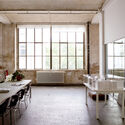
Wilhelminian Apartment / BERLINRODEO

BERLINRODEO, a Berlin-based interior concepts office shared with us their renovation and conversion of a Wilhelminian apartment. More images and architect’s description after the break.
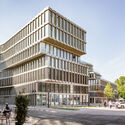
Labels Berlin 2 / HHF Architects

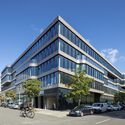
In response to the large demand of the fashion industry for showroom space, the client conducted an external expert evaluation with an international architectural competition in the spring of 2007 for a new building Labels Berlin 2. In September 2007 the expert commission awarded first prize to the design by HHF Architects.
The new center for fashion, Labels Berlin 2, was conceived to provide showroom space for approximately thirty different international fashion labels. A large event area and small restaurant are located on the ground floor. The design concept responds to the architecture of the adjacent building. The interior spaces of this historical building are strongly characterized by the repetition of arched windows used in the façade. This motif became one of the starting points for the design of the project.
After the break you will find more photographs of Labels Berlin 2, along with a more detailed description about the design.
Architects: HHF Architects
Location: Osthafen, Berlin
Client: Labels Projektmanagment GmbH & Co KG
Project Area: 1,537 sqm
Project Year: 2007-2010
Photographs: Iwan Baan
BIG’s proposal for the Audi Urban Future Award
“(Driver)less is more”, BIG’s proposal for the Audi Urban Future Award was one of the five finalists of the competition won by J. Mayer H. More images and architect’s description after the break.
Berlin Laboratory International Workshop
Post-wall Berlin has emerged as a major player in contemporary cultural production. As a laboratory of lifestyles and modes of production, it attracts an influential community of highly creative people from around the globe. The AA Berlin Laboratory explores the role of experimentation, harvesting this exceptional energy. This intense workshop organised by the Architectural Association School of Architecture explores tools and systems of experimentation, focusing on the idea of dwelling.
No other city has been as enthusiastic as Berlin in experimenting with modes of living. From mass housing to highly individualistic visions of living and extreme communal regimes, Berlin has long pushed the boundaries of what it means to live together. New organisational forms of dwelling, combined with alternative implementation methods, are currently challenging the roles of both architect and local authority in the process of delivering dwellings for the city.
During this intense workshop participants will work both in the laboratory/studio and the field/city, revisiting existing experiments in dwelling and the social ideals that shape them. In search of new logics of living, students will use emerging computational and rule-based design systems to develop prototypical forms of dwelling relevant to the city of Berlin. The workshop will be led by AA and Berlin-based tutors and hosted by Aedes Network Campus Berlin (ANCB). In addition, a public programme of visits, lectures and seminars with speakers from different disciplines will provide a stage for debate.
The workshop will take place between September 3-12. For more information, click here.
Shock Control Regression Adaptation / Raurouw

An installation designed by Raurouw (Arnd-Benedikt Willert-Klasing, Filippo Lodi, Jörg Petri, and Kyriakos Chatziparaskevas), a group of young architects experimenting with ideas of a continuously changing atmosphere, has just opened at the Program Gallery in Berlin. Entitled ‘Shock Control Regression Adaptation’, the laser-installation developed by Raurouw transforms the exhibition space into a place of continuously changing atmospheric conditions.
More about the installation, including more images after the break.
The Unbuilt Berlin

An exhibit on display at Café Moskau in Berlin, a historic building from the early 1960s, is currently showing hundreds of unbuilt past visions for the city. Collected by architect Carsten Krohn, the unbuilt Berlin projects showcase architects’ relentless fascination with the city that has such a rich history. The projects, which were designed between 1907 and 1997, exemplify different theories and design approaches of the era. The proposals, although all different, share the common desire to re-conceptualize and challenge the accepted architectural ways of the time. The projects were a way for the architects to create a new identity for the city with dramatically cutting edge ideas – such as Mies van der Rohe’s plans for a skyscraper on Friedrich Strasse in 1921.
autoR / Carsten Nicolai / Temporäre Kunsthalle

In the center of Berlin, an amazing institution known as the Temporäre Kunsthalle is a great venue for contemporary art as exhibits are housed not only within Adolf Krischanitz’s free plan interior, but also on the exterior. As each new artist brings his own personality to the building’s exterior, the 11 meter high building, which covers a ground surface of 20 by 56.25 meters, becomes the artist’s blank canvas, patiently waiting for its new treatment. The most recent exterior exhibition, autoR by Carsten Nicolai, is the third project to be realized on the façade.
More images and more about the exhibit after the break.
UdK Berlin Bookshop 2010

Each year UdK Berlin organizes a small competition among the students for the concept of a Bookshop inside the School. This year’s winning proposal for the shop was designed by Dalia Butvidaite, Leonard Steidle, Johannes Drechsler and the all participating students then helped manufacturing the structure.
Cardboard as the main material was chosen because of its flexibility in shape, stability, cheapness, temporary feeling, lightness, mobility and last but not least its recyclability.
RE.FLECKS exhibition
The RE.FLECKS exhibition presents panels J. MAYER H. has derived from data-protection patterns. Developed by chance in print shops around 1900, the patterns were used as an envelope lining to protect the confidential content inside.
One of these many patterns was selected and interpreted spatially in the form of various art objects. Like the inkblot pictures by Rorschach, an early 20th century psychoanalyst, the RE.FLECKS panels support the viewer’s own interpretation and reading.
Exhibition will open June 11 at 6pm at Magnusmuller, Weydingerstrasse 10/12, 10178 Berlin.
Schindler Award 2010 Competition

The Schindler Award has the goal of improving access and overall mobility for all city dwellers, irrespective of their age, status or physical capabilities. To that end, it challenges young architects to think beyond form, light and materials and to focus on the needs of the people who will eventually inhabit the structures and spaces that they design.

The task this year is aimed at transforming a somewhat neglected area of the 1936 Olympic grounds into a pleasing, functional and fully accessible sport and leisure compound. Projects must be submitted by July 30. For more information visit the competition’s official website. Seen at bdonline.
BBI Info-Tower / Kusus + Kusus Architekten

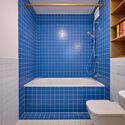
Kusus + Kusus architekten’s BBI-Info Tower at the Capital Airport in Berlin is designed to be a recognizable element for the airport that will “serve the whole region and far beyond the boundaries of the construction site beyond.” Rising 31 meters, the tower is a welcoming sight for visitors approaching by land or passengers on plane. Programmatically, the building is a observation tower that provides views of the “growing” new airport complex which is currently being developed. By ascending to the top, the visitor is then roughly at the level of the surrounding construction cranes and gains new insight into the construction activities.
More images and more about the tower after the break.
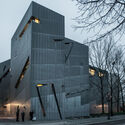
Daniel Libeskind to design Jewish Museum Berlin Academy

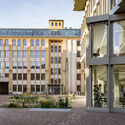
The Jewish Museum Berlin held a press conference yesterday to reveal the design by Daniel Libeskind for the Jewish Museum Berlin Academy. Mr. Libeskind designed both the Jewish Museum Berlin (completed 2001) and the Glass Courtyard (completed 2007) which is an extension to the original building.
More images and complete press release after the break.