ORDOS 100 #45: Efrat‐Kowalsky Architects

1250626249-eka-45-6

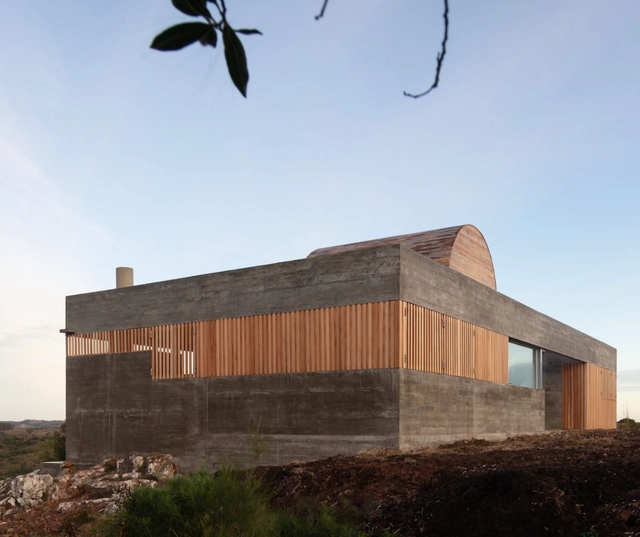
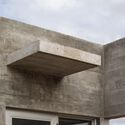
This villa is located in plot #45 of the ORDOS project.

Architects:
Project team: Meira Kowalsky, Zvi Efrat, Ariel Noyman, Keren Avni, Carmit Harnik‐Saar, Yonatan Cohen, Anna Smorodinsky, Charlotte Mutahada
Location: Ordos, Inner Mongolia,
Design year: 2008
Construction year: 2009-2010
Curator: Ai Weiwei, Beijing, China
Client: Jiang Yuan Water Engineering Ltd, Inner Mongolia, China
Constructed Area: 1,000 sqm aprox

From our Facebook Page: Emergent architects according to the architects

1251327644-portada

A week ago, through our Facebook Fan Page we asked which emergent local architect would you recommend us. We received 60 comments in which architects all over the world recommended great offices, many of who we had never heard before.

We decided to put together some of them so you can check them out as well. And in case you are still not a fan, go to our Facebook Fan Page and become one today! We have many more surprises coming. The full list after the break.
Savannah house / LAM Architects

1250862784-lam-architects--john-lewis-unfinished

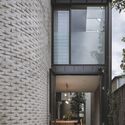
Architects: LAM Architects
Location: Rotterdam,
Program: Giraffe-house and visitor centre
Structural Engineer: CAE Nederland
Wooden Frames: Heko Spanten
Building Contractor: Dura Vermeer Heyma Rotterdam
E-Contractor: Electro-Four
Client: Stichting Koninklijke Rotterdamse Diergaarde, Rotterdam
Constructed Area: 570 sqm
Project year: 2008-2009
Photographs: Franken Architecturalphotography

1250862688-05-lam-architects-interior 1250862705-05-lam-architects--giraffes-inside-2 1250862759-lam-architects--exterior-4 savannahhouse-3

Ordos Restaurant / Yazdani Studio of Cannon Design

Yazdani Studio shared with us the Ordos Restaurant they are building in the Mongolian Desert. As I told you before on our interview with Mehrdad Yazdani, was one of the first practices working on the new city, with one villa finishing construction  and also a Concert Hall and this restaurant (also nearing completion), public programs required by this huge development.

During the interview, Mehrdad told us about the importance of the central courtyard for passive cooling, required on this harsh climate. More details about the project after the break:

Global Ministries Headquarters / Bittoni Design Studio

Print

Once completed in 2010, the Global Ministries’ headquarters in Nei-hu, Taipei will be the largest church in Taiwan. Totaling over 12,000 square meters, the structure will be complete with commercial space, offices, cafe, roof deck, and of course, prayer rooms.  Only in the early conceptual stages, Bittoni Design Studio is looking to better the design with constructive criticism from people outside the design team, and who better than you!

After a little more about the project, critique their start after the break.

AD Interviews: Craig Hartman / SOM

Anyone who has taken an Architecture History class already knows SOM: Skidmore & Owings & Merrill. This practice played a key role during the so-called “International Style”, in a time where the modernism was being consolidated around the world. The practice, which opened in 1936, is behind the centers of the most important cities of the USA and now the rest of the world. One day I was walking by San Francisco´s Downtown with a friend, and he was pointing buildings: “SOM, SOM, SOM, SOM… and that one I think is also by SOM”.

Currently the practice has become one of the largest AEC firms in the world, with over 10,000 projects dealing with architecture, engineering and design. They have offices in , New York City, San Francisco, Washington, D.C., London, Brussels, Hong Kong, and Shanghai.

But back to their beginnings, SOM was behind several iconic buildings and other projects, such as the Lever House in Manhattan, or the Air Force Chapel in Colorado Springs.

But what is interesting is how the firm grew over the years, becoming one of the largest AEC practices in the world with over 10,000 projects. But don´t think about this practice as a building generating machine… what is interesting is how they have managed to keep innovating over the years. A hard task, specially when becoming a large corporate practice with a complex structure. But SOM has been up to the challenge. The Burj Dubai will soon become a case study in terms of structural engineering, the Cathedral of Christ The Light in Oakland has an innovative design, materialized using digital tools to fasten the design/building process, and their award winning detailed model of San Francisco has become a strategic tool to work within the city. And that’s just to name a few.

Recently, Fast Company named SOM among the 50 Most Innovative Companies, and Architect Magazine recently awarded five SOM projects with their R+D Award: The San Francisco Digital Model, the Oasis Generator, the Pine-Fuse Joint system, the Active Phytoremediation Wall System, and the Sustainable Form-Inclusion System. After these projects you can see that SOM is not a typical corporate practice, always researching and pushing architecture forward.

And well, we wanted to know more about the ideas and the process behind a corporate practice always innovating, and we had the chance to sat down with Craig Hartman (FAIA), Design Partner at SOM working at the San Francisco office.

Craig has been behind the award winning Treasure Island Master Plan, the Cathedral of Christ the Light (where the interview was conducted), the SFO International Terminal… and more projects.

I hope you like this interview, specially the young architects that are starting their own firms.

Råholt School / Kristin Jarmund Architects

1250799921-raholt-by-stian-wiik

Architects: Kristin Jarmund Architects
Location: Eidsvoll,
Main architects: Kristin Jarmund siv. ark. MNAL with Leif Daniel Houck, siv. ark. MNAL, Kjell Kristian Karlsen, siv. ark. MNAL. Per-Olav Haugen siv. ark. MNAL, Trine Hjelle, int. ark. MNIL
Building type: Lower Secondary school, 13-15 yers, 420 students
Project scope: Invited competition, 1st prize, full contract
Client: Eidsvoll County
Size: 5,200 sqm
Budget: 120 mill NOK
SProject year: 2004
Photographs: Per Maning & Stian Wiik

1250799908-raholt-by-per-maning-3 1250799910-raholt-by-per-maning-4 1250799913-raholt-by-stian-wiik-2 1250799917-raholt-by-stian-wiik-3

London 2012 Olympic Stadium / Populous

1251302752-approach-small

The Beijing 2008 Olympics happened less than a year ago, but the preparations for the next games in already started. Beijing’s Bird’s Nest made quite an impression for everyone who enjoyed the 2008 Olympics so Populous faced a difficult challenge in designing the Olympic Stadium for London 2012. The new stadium will be complete summer 2011 and will host 80,000 spectators during the Games. More images and architect’s description, after the break.

InfoWash / The Design Workshop

1250780686-ic02177-r01-024

Architects: The Design Workshop, Parsons The New School for Design
Location: Delisle, Mississippi,
Spring Studio Instructor: David J. Lewis
Summer Studio Instructor: Terry Erickson
Summer Staff: Joel Stoehr
Students: Huy Bui, Ivan Chabra, Sarah Coffin, Christian Eusubio, Dominique Gonfard, Kailin Gregga, Dominic Griffin, Parker B. Lee, Laura Lyon, Kip Katich, Nora Meehan, Shana Sandberg, Emily Wetherbee
Architect of record: ShoP Architects
Client: Mississippi Katrina Fund, with special thanks to Martha Murphy, Kathi Heinzel, Bill Heinzel, and Loretta Lizana
Consulting Structural engineering: Dunne & Markis Consulting Structural Engineers
Engineer of Record: Goeffrey Clemens / Compton Engineering P.A. (Bay St. Louis, MS)
Constructed Area: 185.8 sqm
Photographs: Laura Lyon & Ivan Chabra

1250780776-img-0340 1250780764-img-0293 1250780738-img-0277 1250780661-ic02175-r01-033a

Beth El / Stanley Saitowitz | Natoma Architects

1250785175-26

Architects: Stanley Saitowitz | Natoma Architects
Location: La Jolla, CA,
Client: Congregation Beth Sholom
Project team: Stanley Saitowitz, John Winder, Michael Luke, Charles Shin, Benny Ho
Structural Engineering: KPFF Consulting Engineers
Mechanical, Electrical, Lighting & Plumbing Engineering: Randall Lamb Associates
Landscaping: David Reed Landscape Architects
General Contractor: DPR Construction Inc.
Project year: 2000
Photographs: Rien van Rijthoven

1250785190-35 1250785276-71 1250785301-101 1250785324-122

National Library in Astana, Kazakhstan / BIG

1251251527-anl-rendering-07

BIG was recently awarded with the first prize on an open international design competition for  ’s new National Library in Astana.

The new building has an area of  33.000 sqm, arranged as a continuous circulation on a Möbius Strip, as the result of 2 interlocking structures: the perfect circle and the public spiral. The sections (see below) clearly show how the horizontal program shifts to a vertical configuration,  combining vertical hierarchy, horizontal connectivity and diagonal view lines. The skin, which changes from wall to roof as the strip develops. It sounds a bit complicated, but the sections and diagrams explain this pretty well, and you can get the idea on how the spaces and diagonal views relate on the renderings. In short words, a clear lineal organization (ideal for an archive, library) is mixed with an infinite loop.

“What is a library but an efficient archive of books… and a path for the public to reach them” (Thomas Christoffersen, Project Leader)

This shape also looks forward to become a symbol for the nation: “the circle, the rotunda, the arch and the yurt are merged into the form of a Moebius strip. The clarity of the circle, the courtyard of the rotunda, the gateway of the arch and the soft silhouette of the yurt are combined to create a new national monument appearing local and universal, contemporary and timeless, unique and archetypal at the same time” (Bjarke Ingels).

But once again, BIG diagram´s are way better to explain this than my words. See the diagrams, sections and renderings after the break:

AD Round Up: Shanghai Pavillions Part II

Shanghai World Expo 2010 is closer every day, and new pavillions from all over the world have arrived to ArchDaily. So to start this week of Round Up, we bring you our second part (see the first one here), of previously featured pavillions for Shanghai.

1251214433-115 Pavillion
chilean government presented the design for the Chilean Pavilion at the Shanghai Expo 2010. The 2000sqm pavilion, named “Sprout of a New City” was designed by Sabbagh Arquitectos. This was the first Latin American country to sign their participation on the Expo with their own pavilion. The government emphasized that this pavilion will strength the relation between both countries (read more…)

1251214434-26Italy Pavillion
The project, from Iodeci Architetti, proposes a building which integrates a typical model of the Italian urban building, with the architectural structure of the Chinese construction game called Shanghai. More images and architect’s description after the break. The pavilion covers an area of 3.600 square metres and is 18 metres high. Inside it is divided into irregular sections (read more…)

1251214436-35Brazil Pavillion
AsBEA (Brazilian Association of the Offices of Architecture) and APEX (Brazilian Agency of Promotion of Exports and Investments) have announced the winning project to represent Brazil in the Shanghai World Expo 2010. Architect Fernando Brandão won with a design based on the “Pulsing Cities” of Brazil. The inverted parenthesis on the facade represent that pulsation (read more…)

1251214438-45Poland Pavillion
WWA Architects have created a conceptual design for Shanghai Expo 2010. With the exhibition housing pavilions from countries all over the world, each pavilion must provide a strong aesthetic message to attract visitors and then provide insight to the country. WWA’s pavilion creates a distinct stylistic motif taken from the folk-art paper cut-out to create a “memorable cultural ideogram” (read more…)

1251214440-55Canada Pavillion
The 6,000-square-meter Canada Pavilion, among the biggest at the site, will feature an exhibition themed “The Living City: Inclusive, Sustainable, Creative.” It is expected to welcome up to 5.5 million people or 30,000 visitors per day during the six-month Expo period. The pavilion will be anchored by an open public place and surrounded by three large structures (read more…)

Visa section of Swiss Embassy in Beijing / EXH Design

© Shu He
© Shu He

Architect: EXH Design – (Erich Diserens, Xi Zhang, Peter Becker, Kenan Liu)
Location: , China
Constructor: Beijing Shouhua Construction Group
Existing area: 104 sqm
Extension area: 213 sqm
Project year: 2007 – 2009
Photography: Shu He

© Shu He © Shu He © Shu He © Shu He

Sports Hall / Substance

1251149397-majori-p

When the City Council asked Substance to build a sports venue for the popular Latvian sea resort, the firm designed a structure that could be open all year long in any weather.  Inspired by the amber – crystallised resin of pine typically washed up on the Baltic coast, the venue’s form incorporates translucent polycarbonate cladding inside a structural framework to accentuate the building’s varying height.

More about the sports venue after the break.

Architects’ Book Collections Featured in Unpacking My Library

Steven Holl's library © Carlos Solis

Through February 2010, ’s Urban Center Books is exploring the relationship between architecture and print with Unpacking My Library, an exhibition of the collections of prominent architects such as Steven Holl and Michael Sorkin.

Social Condenser for Superior / Blank Studio

1250700448-sc-a

Architects: Blank Studio
Location: Superior, AZ,
Principal in Charge: Matthew G Trzebiatowski, AIA
Project Team: Michael Powell + Stefan Richter
Client: Alan + Christine Benoit; Superior C O A L, LLC
Structural Engineer: BDA Engineers
Electrical Engineer: Don Witt Engineering
Mechanical + Plumbing: Kunka Engineering
Constructed Area: 120 sqm + 42 sqm of outdoor dining terrace
Project year: 2007
Photography: Bill Timmerman

1250700549-sc-e 1250700574-sc-g 1250700653-sc-j 1250700717-sc-n

Maisonette / Studio Gang Architects

1250715367-maisonette-credit-stevehallhedrichblessing-2

Architect: Studio Gang Architects
Location: , IL,
Owner: Private
Completion: 2008
Photographs: Steve Hall @ Hedrich Blessing

Burnham Pavilion / Zaha Hadid

Images courtesy of Zaha Hadid Architects © Michelle Litvin
Images courtesy of © Michelle Litvin

The figure of Daniel Burnham has been very important for the city of as we currently know it,  as he was one of the authors of the Plan of Chicago, also known as the Burnham Plan,  which reshaped Chicago’s central area starting in 1909.  To celebrate the centennial of this plan several events have been held during this year, such as the Union Station 2020 competition and the Burnham Memorial competition. Also, two pavilions by UN Studio and Zaha Hadid have been temporally  installed at the Millenium Park (read our previous article about this), hosting multimedia exhibits on the future of Chicago. The pavilions will be opened to the public until Oct 31st, 2009.

Zaha Hadid Architects´s pavilion merges new formal concepts with the memory of Burnham’s bold, historic urban planning. Superimpositions of spatial structures with hidden traces of Burnham’s Plan are overlaid and inscribed within the structure to create a dynamic form.

Read Zaha´s statement on the design after the break:

House in Minami Boso / Kiyonobu Nakagame & Associates

1251146738-minami-boso-p

Kiyonobu Nakagame & Associates designed a villa on the Boso Peninsula, east of .  Even though the residence is less that two hours from the city, the natural setting surrounding the home could not be any more different from the chaotic streets of the downtown area.  The secluded setting allows the home to take full advantage of the landscape and provide a great space for relaxation.  The minimalistic design creates wide spacious areas to sit and become lost in the panoramic views of the Pacific Ocean to the front, and magnificent views of the mountain ranges in the back.  “Having these [the views] in our mind, we came up with the design concept to provide the one continuous wall folded in different directions setting up the various views,” explained the architects.  This continuous wall does not create a bulky structure that is intrusive on the landscape, but rather, the folded wall creates an elegant residence that embraces the surroundings by making the users focus on the natural instead of the built.

More images of the home after the break.

300C – Linear Plank Ceilings / Hunter Douglas Contract

LinearBrochure

have the power to increase design potential for architects by defining, maximizing and even dramatizing interior space. For decades, Hunter Douglas has engineered its ceiling systems for design versatility, as well as ease-of-installation, with industry-leading sizes, options, and colors, as well as an exclusive universal carrier system that lets architects mix and match widths and panel depths.

One of the most versatile, consistent ceilings in the industry, 300C metal panels, creates a distinct, smooth look for any interior. These panels offer a subtle, long span design featuring a butt-joint, “bevel edge” that moderates panel-to-panel connections for an orderly, finished design. Hunter Douglas experience in designing and manufacturing ceilings is shown in every detail of their products.

Ventolera Winery / Francisco Izquierdo

© Cristobal Palma
©

Architect: Francisco Izquierdo
Location: San Juan de Huinca, Leyda, Chile
Collaborators: Claudio Tapia, María José Varas
Client: Viña El Litoral S.A
Structural Engineer: Enzo Valladares P.
Contractor: Boetsch, Lira y Cox empresa constructora
Laminated wood: Ingelam S.A
Built Area: 1,360 sqm
Proyect year: 2008
Construction year: 2008-2009
Photography: Cristobal Palma

© Cristobal Palma © Cristobal Palma © Cristobal Palma © Cristobal Palma