-
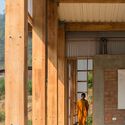
Architects: Sam Crawford Architects
- Area: 143 m²
- Year: 2023
-
Professionals: Partridge Hydraulic, GeoEnviro Consultancy, Day Design, Gallagher Studio, Z & L Consulting Pty Ltd, +1


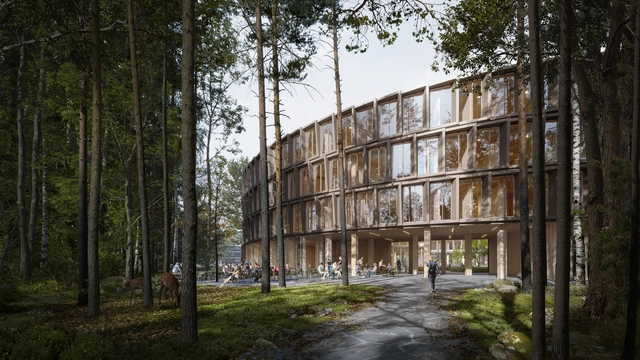
Henning Larsen and Ramboll have won the competition to design the new campus for the prestigious scientific research center, CERN. Designed to integrate science and nature, the B777 building uses biogenic materials and low-carbon methods to reimagine traditional laboratory settings. Situated on the border of France and Switzerland, in CERN’s Prévessin Campus, the scheme aims to foster a sense of community, collaboration, and well-being.


Any historiography of architecture is inherently implicated and incomplete by definition: implicated because it demonstrates the interpretation and curation of examples by the one who writes it, and incomplete because, in this selection, divergent examples often fall outside the "official" timeline. However, the ability to trace forms, their application, and repetition over historical periods separated by centuries is always a good indication of genealogy. This lineage situates examples and broadens repertoire.
A historiography of architecture can bridge past-century elements and movements considered 'outdated' with contemporary forms and applications, establishing a nexus of relationships that offer conceptual and design insights. By categorizing specific styles, notable features are emphasized, often resonating with present-day scenarios as suggested by bibliographical sources, which holds even for seemingly distant connections, as exemplified by the Rococo.
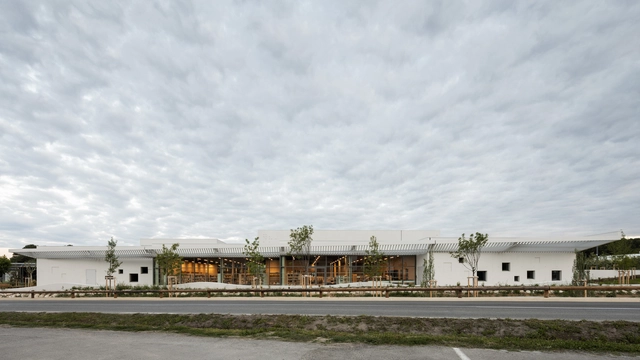


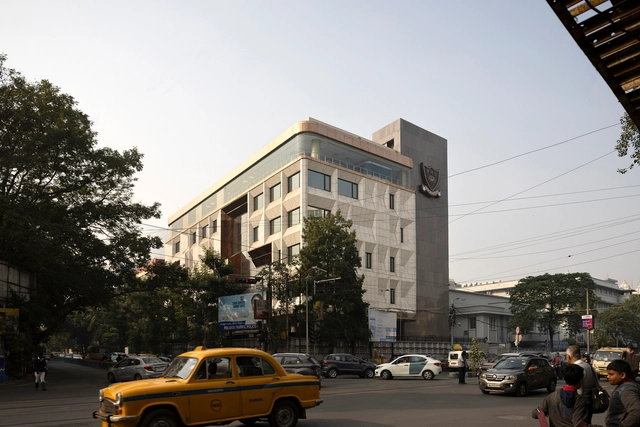


We invite you to participate in the ArchDaily Building of the Year Awards. We ask you to recognize and reward the projects that you feel are creating the largest impact in the built environment, that ArchDaily has published on our projects database in 2023. By voting, you form part of an interdependent, impartial, distributed network of jurors and peers that has consistently helped us celebrate architecture of every scale, purpose, and condition, from countries large and small, and architects of all descriptions. Already 4000 projects have been filtered down to just 75 finalists – representing the best in each project category on ArchDaily.
Remember, registered users will be able to vote for their favorite project for each of the 15 categories included in the Awards. One vote per category. Voting ends on February 22nd, 2024 at 12:01 AM (EST). Thank you once again for helping us continue to democratize architectural excellence across the world.
The ArchDaily Building of the Year Awards is brought to you thanks to Dornbracht, renowned for leading designs for architecture, which can be found internationally in bathrooms and kitchens.
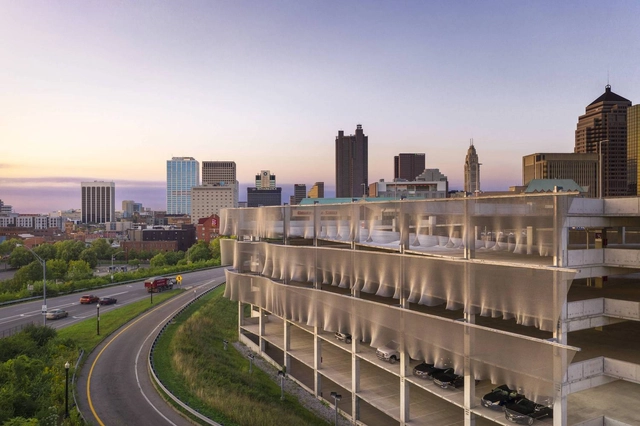
Urban mobility in the United States has seen a radical transformation with the introduction of ridesharing services in the late 2000s. The widespread adoption of services such as Uber and Lyft has altered the way citizens move around cities, offering convenience, flexibility, and accessibility like never before. The innovative business model that excels at designing for individual users failed to foresee larger implications at the scale of the city - congestion, public transit systems, and car ownership. While European countries such as Brussels have pledged to encourage public transportation to curb traffic congestion issues, American cities hunt for solutions of their own.
Sumaya Dabbagh, the founder of Dabbagh Architects, based in the UAE, stands at the forefront of architectural innovation with a focus on identity and connection to place. Her recent participation in the Sharjah Architecture Triennial’s second edition “Earth to Earth" is a showcase of cumulative ideas that Dabbagh Architects has been fostering through their projects. Onsite in Sharjah, ArchDaily had the chance to speak to the architect about her exploration at the Triennial, as well as her broader architecture practice and its impact on the Global South.