


-
Architects: Placement
- Area: 120 m²
- Year: 2002
-
Manufacturers: Artemide, Bradford, Brodware, De Fazio Tiles and Stone, Kethy, +4
-
Professionals: Inner North Carpentry, Treespace Solutions, Growing Designs




This article was originally published on May 25, 2015. To read the stories behind other celebrated architecture projects, visit our AD Classics section.
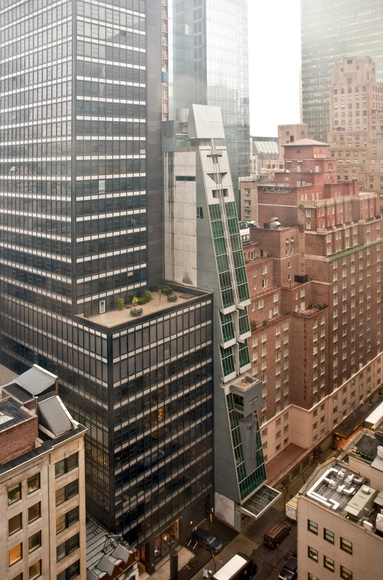
Before the impossibly “super-thin” tower became ubiquitous on the Midtown Manhattan skyline, Raimund Abraham’s Austrian Cultural Forum challenged the limits of what could be built on the slenderest of urban lots. Working with a footprint no bigger than a townhouse (indeed, one occupied the site before the present tower), Abraham erected a daring twenty-four story high-rise only twenty-five feet across. Instantly recognizable by its profile, a symmetrical, blade-like curtain wall cascading violently toward the sidewalk, ACFNY was heralded by Kenneth Frampton as “the most significant modern piece of architecture to be realized in Manhattan since the Seagram Building and the Guggenheim Museum of 1959.” [1]
This article was originally published on May 9, 2016. To read the stories behind other celebrated architecture projects, visit our AD Classics section.
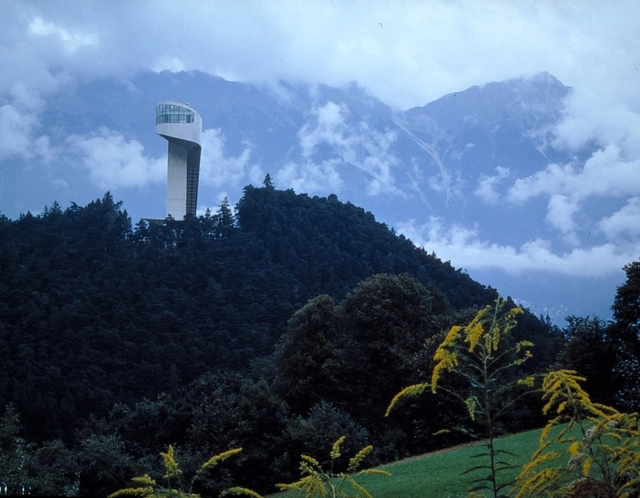
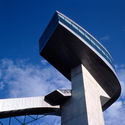
Situated on the peak of Bergisel Mountain above the picturesque alpine city of Innsbruck, Austria, the Bergisel Ski Jump represents the contemporary incarnation of a historic landmark. Designed by Zaha Hadid between 1999 and 2002, the Ski Jump is a study in formal expression: its sweeping lines and minimalist aesthetic create a sense of graceful, high-speed motion, reflecting the dynamic sensation of a ski jump in a monumental structure that stands above the historic center of Innsbruck and the mountain slopes around.
This article was originally published on ArchDaily in 2014.
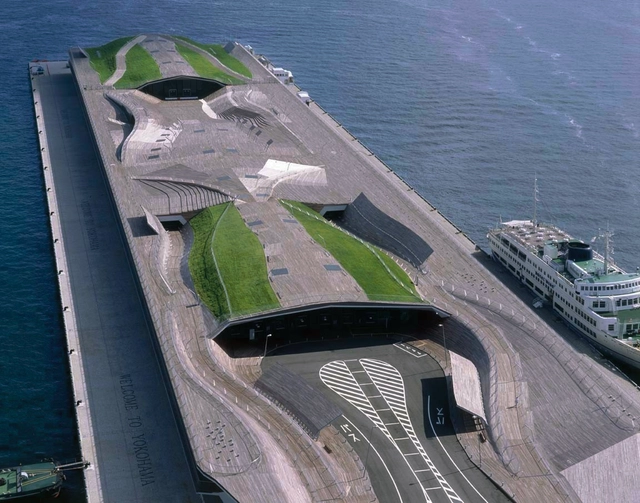
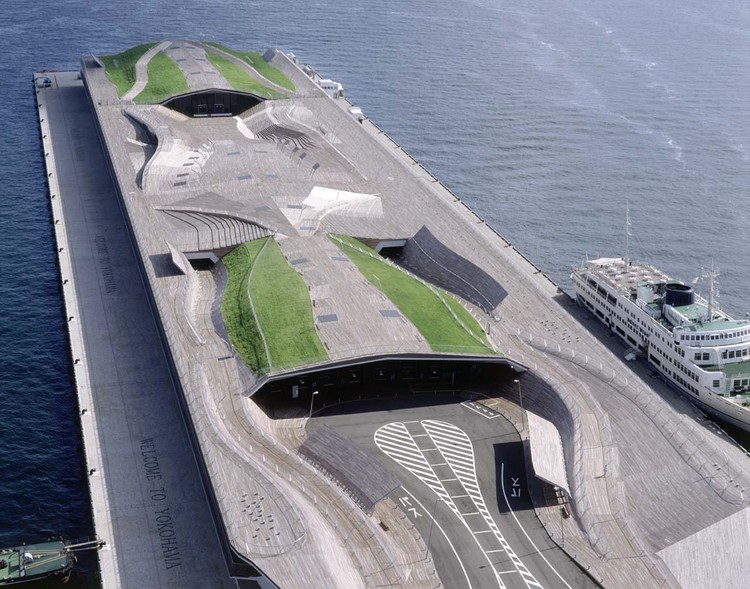
The triumphant critical reception of the Yokohama International Passenger Terminal was the product of inventive architectural methodology and socially conscious thinking. Designed by Foreign Office Architects (FOA) in 1995, the futuristic terminal represented an emergent typology of transportation infrastructure. Its radical, hyper-technological design explored new frontiers of architectural form and simultaneously provoked a powerful discourse on the social responsibility of large-scale projects to enrich shared urban spaces.








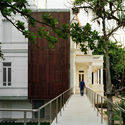


.jpg?1431981450 "The director's office that occupies the box-like protrusion on the southern facade. Image © Photo by David Plakke, davidplakke.com; Courtesy of Austrian Cultural Forum New York")

















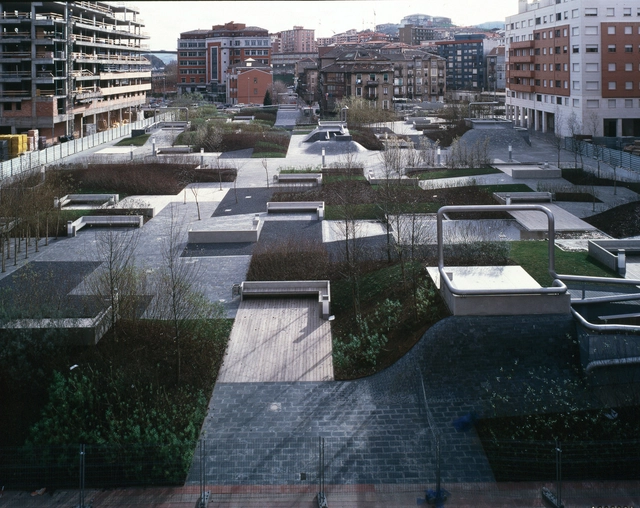
.jpg?1392947622 "© César San Millán")
.jpg?1392947648 "© César San Millán")