Buildings are static. They serve the purpose they have been designed for. But when cities grow and the needs of the community change, this becomes a problem. Modular construction with engineered wood products like Kerto LVL are the solution, because they enable adaptable, sustainable and cost competitive designs. It is time to provide solutions to the changing needs of our cities. Time to create an urban adaptation.
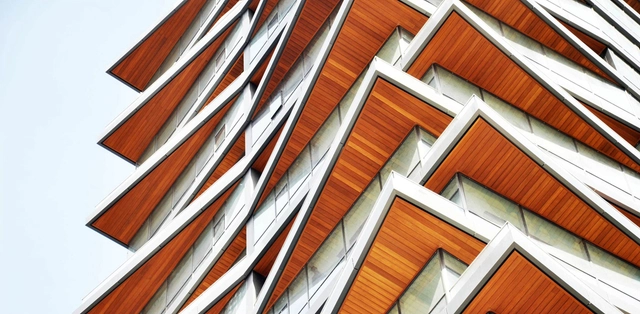
Modern timber construction is nothing short of breathtaking. The wooden arches and unique curves delight even the most creative architects. The scale and perception of a wooden building make it blend in with the decor while still remaining noticeable. The inspiration and the possibility of achieving this type of construction are now trending upward, but who has the knowledge and expertise for these projects? The province of Quebec does, a world leader in mass timber construction.
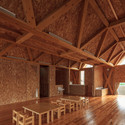
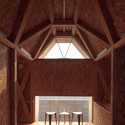
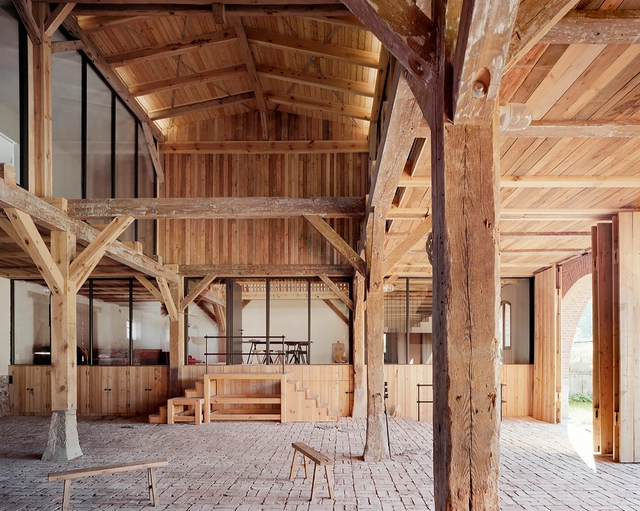
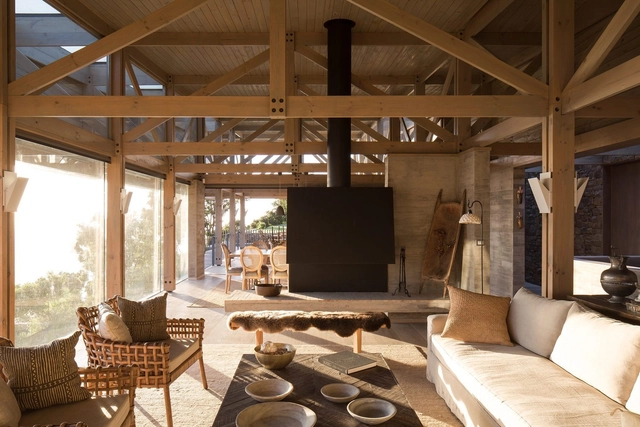
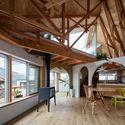
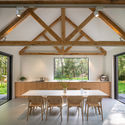
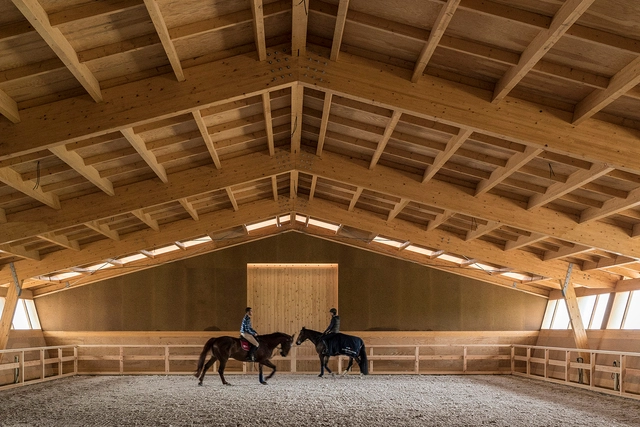
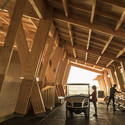
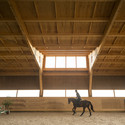
Timber trusses are wooden structural frameworks used to support roofs or other heavy structures. Fabricated from a series of triangles linked by a ridge beam and purlins, wooden trusses are structurally advantageous due to their high strength-to-weight ratios and corresponding ability to support long spans. However, these structural components can also be used for aesthetic ends, and when left exposed, can complexify, beautify, and open an interior space.
https://www.archdaily.com/948955/the-beauty-of-exposed-wooden-trussesLilly Cao
For many, the aesthetics of wood are powerfully enchanting. With a huge diversity of species and innumerable variations in colors, weights, and textures, wood is one of the most highly appreciated materials of all time. But the unrestrained logging of forests for use in construction has had and will continue to have enormous environmental impacts if precautions such as sustainable management, legitimate certification, or reforestation are not taken. Being an organic material, when used for construction, wood tends to morph under conditions of humidity, heat, and loads, and its fibers eventually deform over time. In addition, wood is a material that does not respond well to environments where it is soaked and dried repeatedly, which can cause it to rot after some time if it is not adequately waterproofed. Therefore, there are some situations where using wood may not be a good idea.
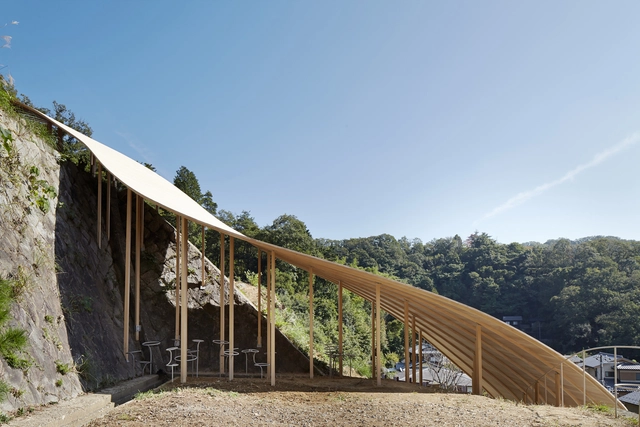
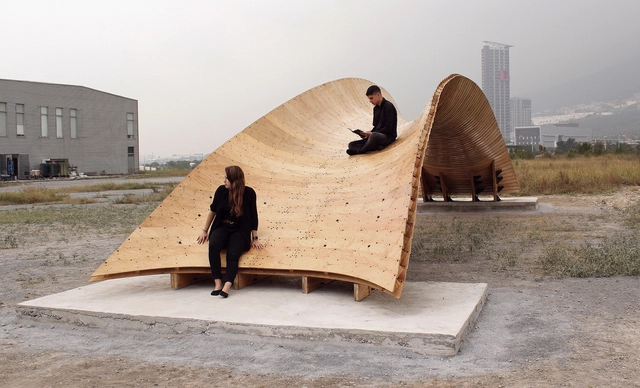
From its starting to point as a tree to its product form as a beam or piece of furniture, wood used in architecture and interior design goes through several stages and processes. A renewable resource and popular traditional building material, wood is also often cited as a promising construction material of the future, one that is suitable for the new demands of sustainability. But unlike concrete, whose molds can create even the most complex curves, wooden architecture most commonly uses straight beams and panels. In this article, we will cover some techniques that allow for the creation of curved pieces of wood at different scales, some of which are handmade and others of which seek to make the process more efficient and intelligent at a larger scale.
Earlier this month, Steven Holl Architects designed and created their project Obolin, a sculpture made locally from a single panel of cross-laminated timber, or CLT. It was made for and is now exhibited in the Art Omi Sculpture and Architecture Park, an art center that seeks to explore the intersection of architecture and art through the production of pavilions, installations, landscape interventions, and built environments designed by architects.
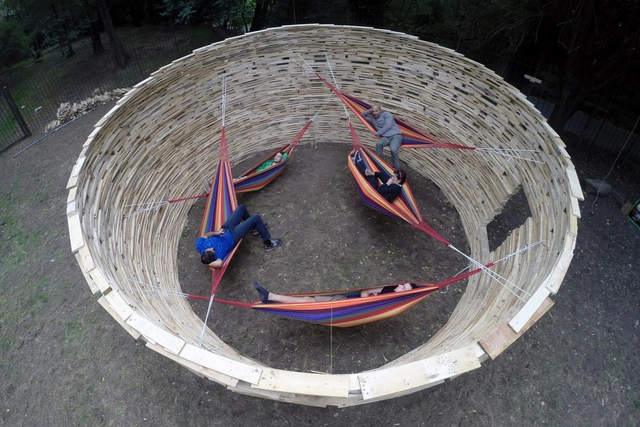
Commonly used as storage support for products in supermarket stocks and fairs, pallets are versatile. After their primary function has been discarded, the reuse of pallets for other purposes is increasingly common, collaborating to the reduction of the amount of waste discarded, especially as raw material for the creation of furniture and decks. However, going beyond the commonly highlighted DIY furniture tutorials on youtube, these structures are gaining ground as the main element in the construction of ephemeral architecture, such as small pavilions and urban installations. In fact, these small pieces can be stacked and united together in different ways and patterns.
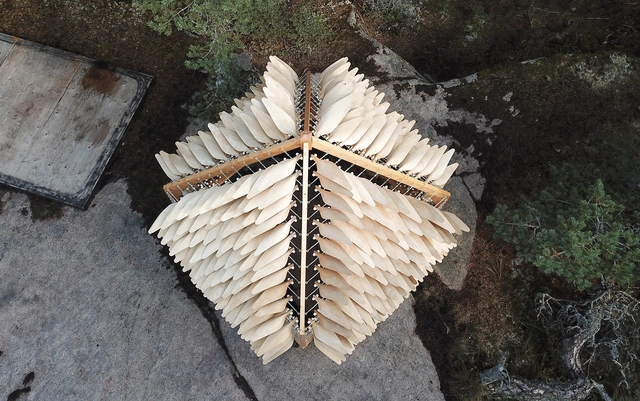
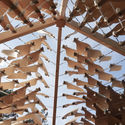
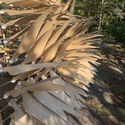
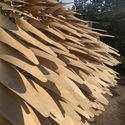
Designed by NEON, the Shiver House is a radical reinvention of the common Finnish Hut (mökki). The project is a kinetic "animal-like" structure which moves and adapts in response to surrounding natural forces. Shiver House is an exploration into the idea that architecture can be used as a means to create a closer emotional link between its inhabitants and the natural world it sits within. In addition, the project explores the idea that architecture can be made to seem "alive" with the intention that this will engender a deeper and longer-lasting emotional relationship between people and the structures they inhabit.
Conceptually, the piece thus suggests that architecture, rather than static and function-led, can be a poetic, living, and dynamic element that changes the way we relate to the landscape that surrounds us.
https://www.archdaily.com/942956/functional-shelter-and-experiential-device-600-kinetic-shingles-shape-neons-shiver-houseLilly Cao
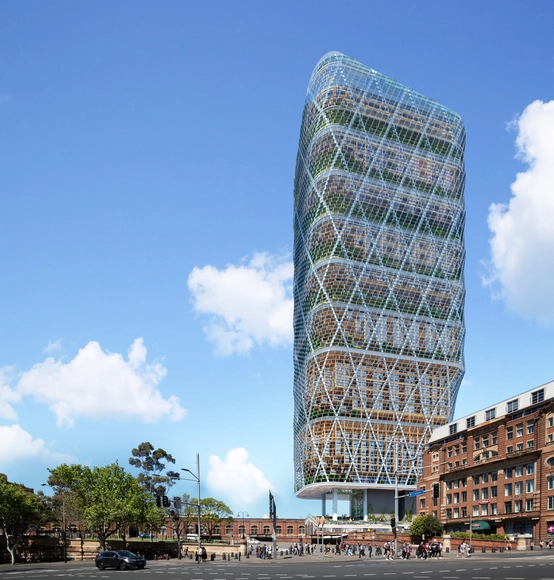
The Atlassian Sydney Headquarters, the soon to be “world’s tallest hybrid timber building” is being built in Sydney, Australia. Designed by SHoP in partnership with BVN, the 40-story high tower will provide, once completed in 2025, a new and innovative space for technology giant Atlassian.
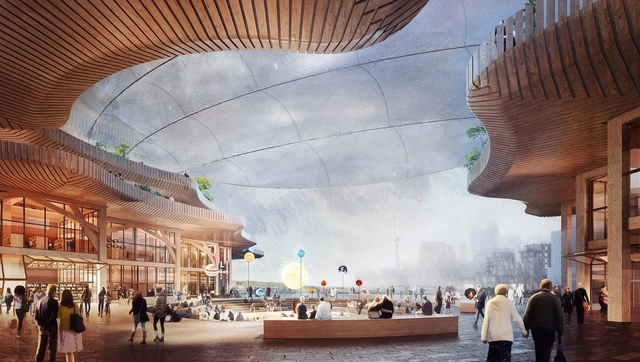
A now-scrapped redevelopment vision for the Toronto lakefront was heavy on timber construction and concern-prompting tech solutions. (Courtesy Sidewalk Labs)
In May, Alphabet’s Sidewalk Labs announced that it would cancel its high-profile Quayside project because of “unprecedented economic uncertainty.” The statement marked the end of a three-year initiative to create a living, urban “testbed for emerging technologies, materials, and processes.”
Reversing the traditional order of city planning, Sidewalk Labs imagined building a new urban district on Toronto’s waterfront from the internet up, with sensors and other data collection infrastructure embedded in the fabric of a large city block. The ambitious development—with an area of 2.65 million square feet, including 1.78 million square feet of residential space—was to be built entirely from mass timber; indeed, the extensive use of modular cross-laminated timber (CLT) and glue-laminated timber (glulam) was a chief selling point of the design (by Heatherwick Studio and Snøhetta, using a kit-of-parts developed by Michael Green Architecture).














.jpg?1595011758&format=webp&width=640&height=580)
.jpg?1595011817 "© Steven Holl Architects")
.jpg?1595011785 "© Steven Holl Architects")
.jpg?1595011840 "© Steven Holl Architects")
.jpg?1595011828 "© Steven Holl Architects")
.jpg?1595011758)