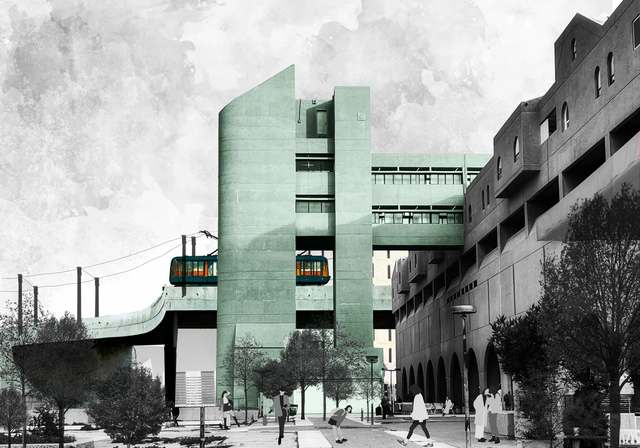
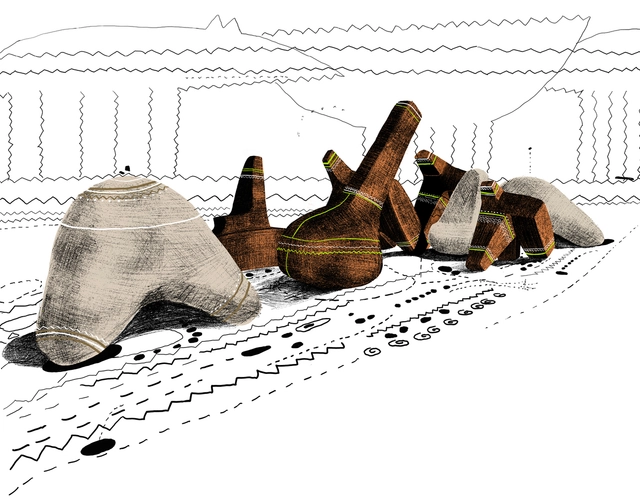
Rabab Raes Kazem, Envisioning the future of Kuwait, 2023. Collage, Print on Mylar, 42cmx29.7cm. Image Courtesy of NCCAL
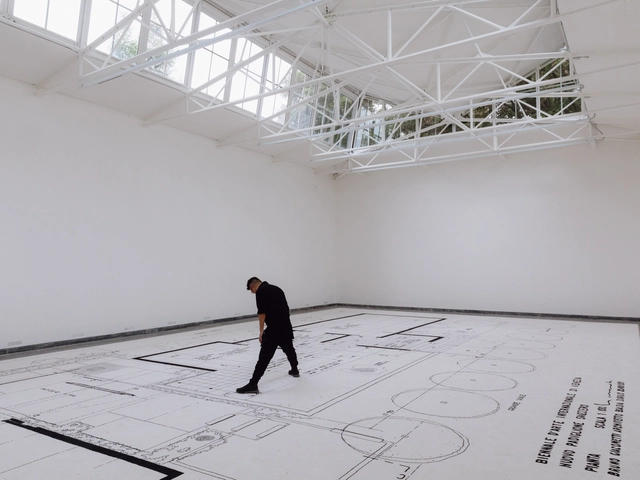
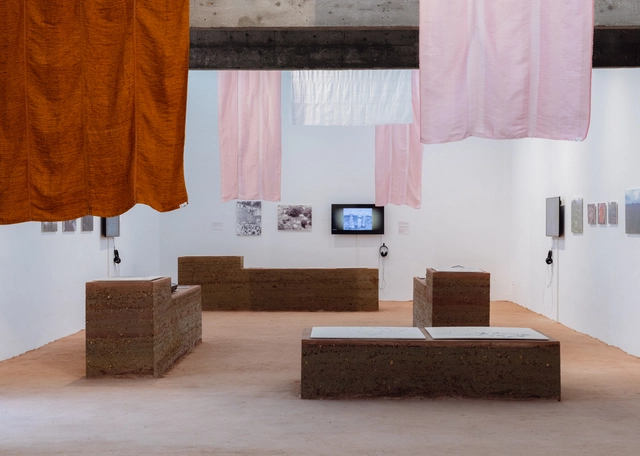
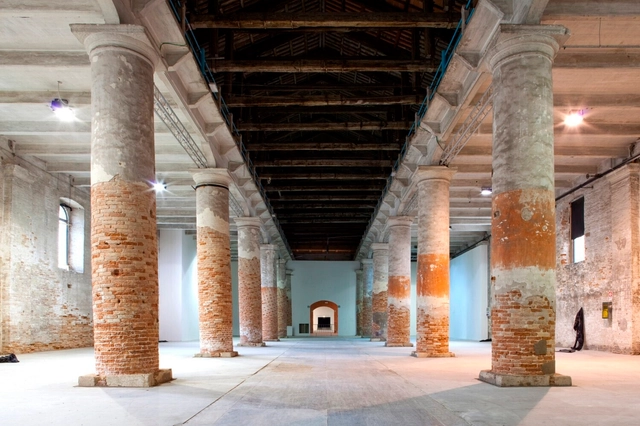
The Kuwait Pavilion, titled 'Rethinking Rethinking Kuwait,' at the 18th International Architecture Exhibition — La Biennale di Venezia, delves into innovative architectural and urban design methods arising from space and time. The project is an ongoing exploration addressing the consequences of modernist urban planning, which erased much of Kuwait's historic built environment.
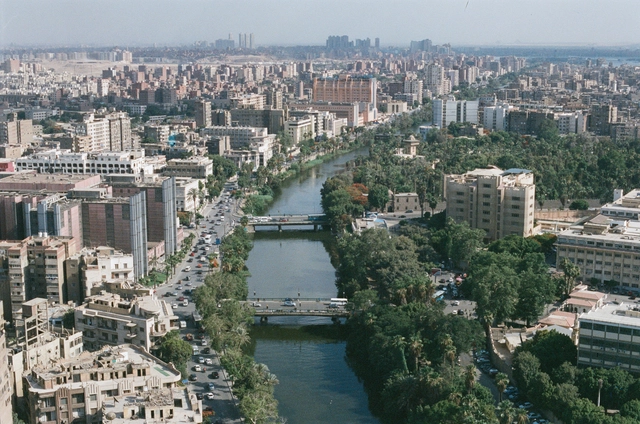
In the center of Cairo, The Nile River, one of the world's most iconic waterways, has shaped the course of civilization for thousands of years. Serving as a vibrant lifeline, connecting neighborhoods, and providing a bustling hub for transportation, the Nile River is an essential natural resource for arid Cairo. Throughout the country’s history, it has often been regarded as the source of life in fertility in its annual flooding, bringing richness to the surrounding lands. Interestingly, this year's edition of La Biennale di Venezia, the Pavilion of Egypt "NiLab" focused on exploring this layered water source and unfolding its effects on the built environment.
The often difficult relationship between art or artists and algorithms will be at the center of an exhibition at the Venice Architecture Biennale, entitled "CHAOS//LOOP 2023". Developed by Christof Babinsky, CEO of ASB GlassFloor, the exhibition will include ten works of art using digital technology and exhibited on LED panels called "Digital Wallpaper," which also extend the scope of architectural design and are now being put into a new context in Venice.
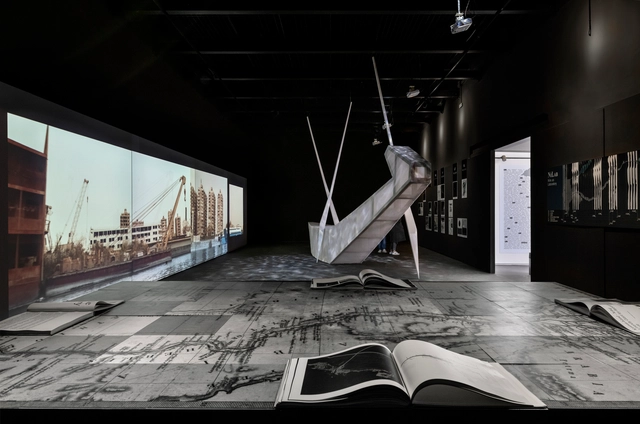
Installation at La Biennale di Venezia. Image Courtesy of NiLab
Along the longest river in the world, the Nile River, various landscapes and natural environments have been negatively impacted by interventions that do not consider the context or respect local cultures. In response, NiLab the Egyptian Pavilion at the 18th International Architecture Exhibition of La Biennale di Venezia, aims to revisit these places and highlight the value of architectural design in promoting more sustainable and culturally aware development along the river. The exhibition titled "NiLab: Nile as Laboratory", recognizes the Nile's exceptional geographical size, historical significance, and impact on natural and human landscapes, making it an ideal backdrop for reflection on contemporary issues.
The Office for Political Innovation, led by Andrés Jaque, collaborated with a network of activists and community representatives from Xholobeni (South Africa), experts in seismographs and transduction from Poland, researchers, sound editors, and prop makers to bring a research-based installation at the Arsenale of the 18th Venice Architecture Biennale. Titled ‘XHOLOBENI YARDS. Titanium and the Planetary Making of SHININESS / DUSTINESS,’ the intervention addresses architecture’s problematic fascination with shininess.
As Venice Architecture Biennale presents its 18th edition titled "The Laboratory of the Future", it centers on Africa as a place of exploration that will offer a template for solutions to the world. According to its curator Lesley Lokko, the Biennale explores entrenched concepts such as climate, land rights, decolonization, and cultures. It challenges us to question how Africa's history can be a radical tool for imagination and reminds us of Stephen Covey's statement: “Live out of your imagination, not just your history.” The biennale's title is probably the most ambitious question in years. It forces us to revisit all boundaries of the continent's historical societies, explore the influence of imposed colonial borders on them, and examine the dual identities they gave birth to. We must consider how these identities can be instruments of creativity, and, more importantly, recognize that every African society has a unique point of view. This viewpoint yearns for cross-cultural collaboration as a powerful tool for imagination.
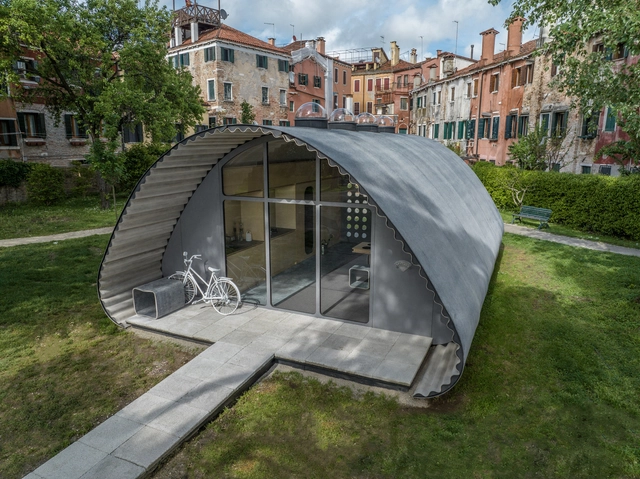
Currently at 103 million, the number of people forcibly displaced from their homes is continuously growing. Many seek shelter in settlements that are meant to be temporary, but where displaced people end up living years, even decades.
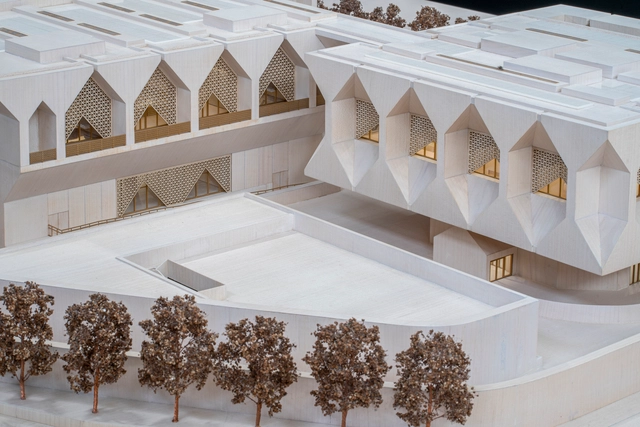
Architectural model of the new KNMA New Delhi. Image Courtesy of Adjaye Associates and KNMA
The Kiran Nadar Museum of Art (KNMA) has revealed an architectural model of its new building during the 18th International Architecture Exhibition - La Biennale di Venezia, as part of the Curator’s Special Projects, titled Mnemonic, presented at the Arsenale - Artiglierie in Venice. The building, designed by Ghanian-British architect Sir David Adjaye in collaboration with S. Ghosh & Associates as the local architect of record, is set to become India’s largest cultural center. The project is scheduled to open in Delhi in 2026.
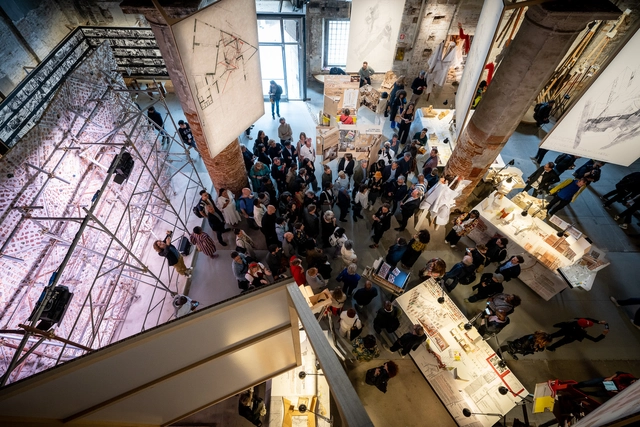
As one of the most important and visited contemporary architecture exhibitions worldwide, the Venice Architecture Biennale extends beyond the grounds of the Giardini and the Arsenale, and at Forte Marghera to engage the whole city in discussing relevant issues, challenges, and opportunities of the architectural profession. To explore more diverse perspectives of the overarching theme, “Africa: The Laboratory of the Future,” 9 collateral events have been officially announced as part of the 18th International Architecture Exhibition of La Biennale di Venezia.
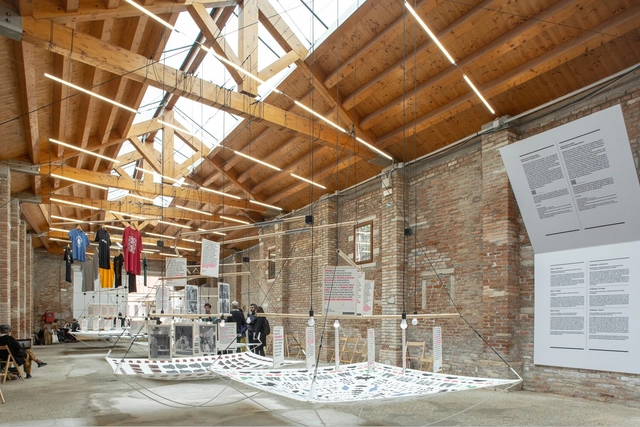
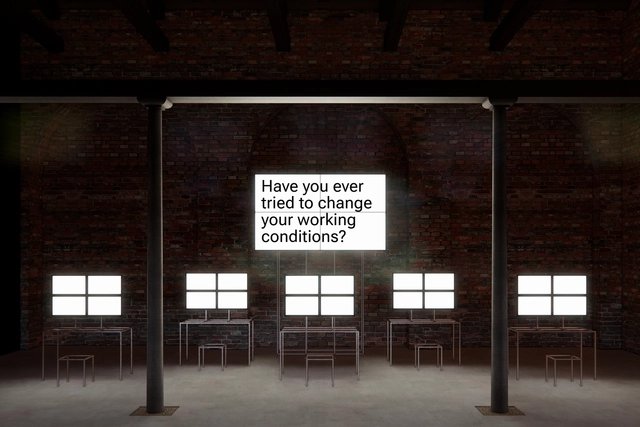
The National Pavilion of the Czech Republic presents the exhibition “The Office for a Non-Precarious Future” at the 18th International Architecture Exhibition of La Biennale di Venezia. The exhibition investigates current pressing issues faced by the architectural profession and especially by young practitioners by asking the initial question: ”How can architects design a better world if they themselves work in a toxic working system?.” The pavilion is commissioned by Helena Huber-Doudová and will present the works of exhibitors Eliška Havla Pomyjová, David Neuhäusl, and Jan Netušil. As the Czech ad Slovak Pavilion at the Giardini della Biennale is under reconstruction, the Czech Republic will exceptionally use the Arsenale in the Artiglierie section as its exhibition space. The Czech and Slovak Pavilion in Giardini will serve only as a digital hub to complement the main presentation.
Courtesy of the South African Pavilion at Biennale Architettura 2023
For the 18th International Architecture Exhibition – La Biennale di Venezia, the South African Pavilion explores the architectural representation of social structures through an exhibition titled “The Structure of a People.” Prior to the exhibition, the pavilion curators, Mr. Stephen Steyn, Dr. Emmanuel Nkambule, and Dr. Sechaba Maape, conducted a national architecture competition titled “Political Animals,” aimed at gathering artifacts crafted by lecturers and architecture students to represent the structures of their schools or universities. The resulting models and miniature architectures, produced by ModelArt, will be exhibited within Zone III, Political Animals, as part of the South African Pavilion.
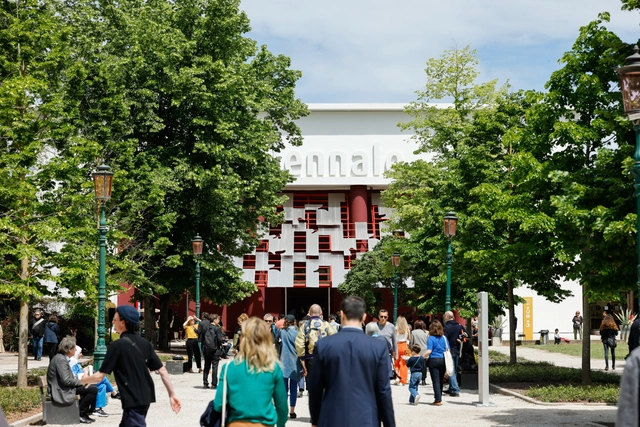
Titled The Laboratory of the Future and curated by Lesley Lokko, the 2023 Venice Architecture Biennale will be holding the 18° International Architecture Exhibition from May 20 to November 26, 2023.
"The taste of the apple lies in the contact of the fruit with the palate, not in the fruit itself," Jorge Luis Borges once said. The taste is not something inherent in itself; its experience is the result of an encounter. Similarly, emotions are not contained within architecture, but are only felt through the encounter of the body with the space, when it becomes a place. How does the environment affect how we feel? This is the question that drives the duo of artists and filmmakers Ila Bêka and Louise Lemoine in their latest endeavor, the book "The Emotional Power of Space," which will be released on May 17th in an event preceding the opening of the Venice Architecture Biennale 2023.