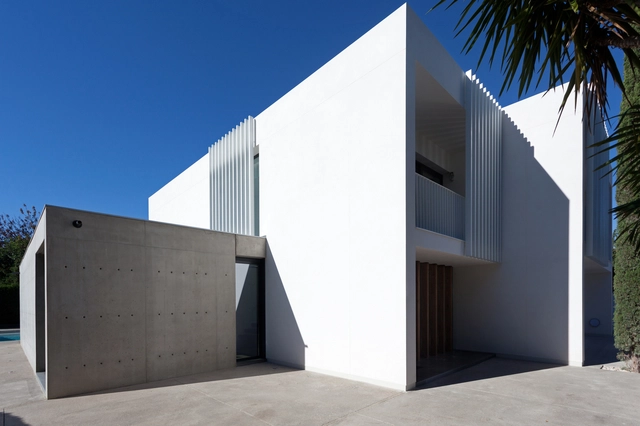




-
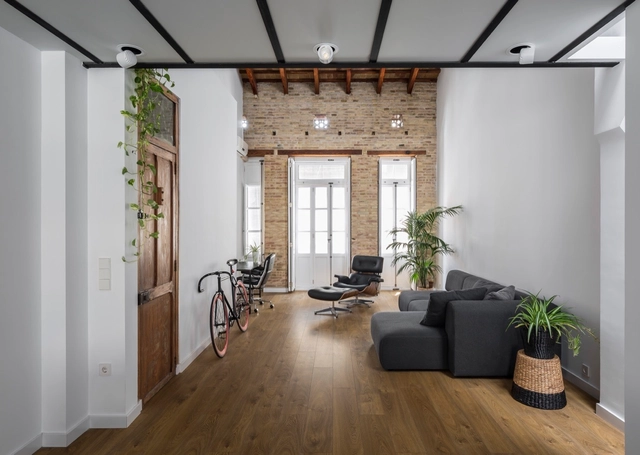
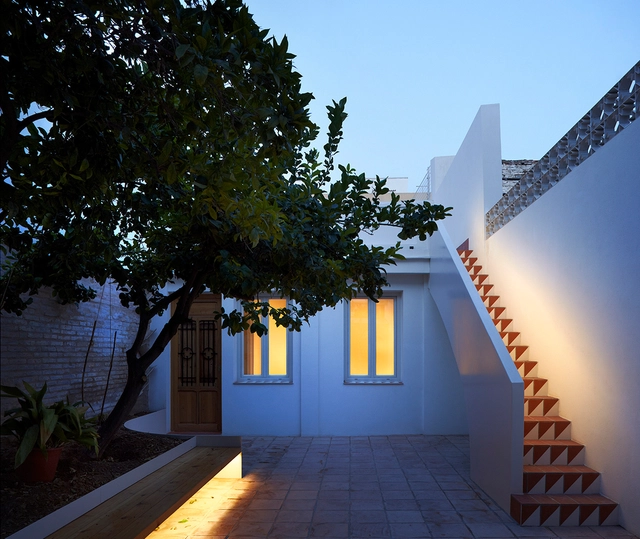
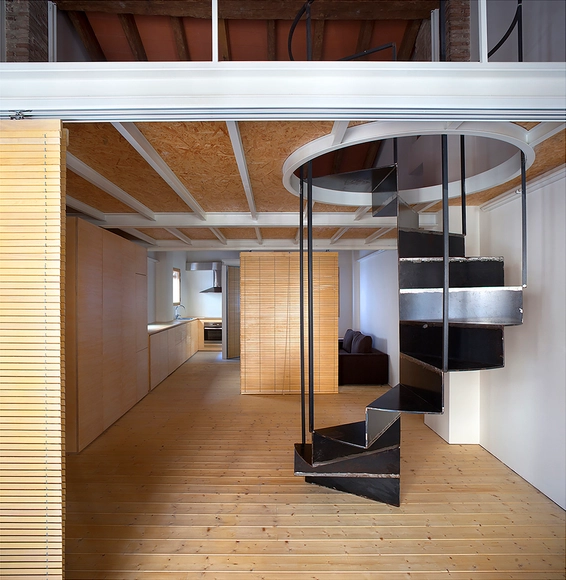
Architects: Mano de Santo
- Area: 402 m²
- Year: 2015
-
Manufacturers: Holcim, Saint-Gobain, AQUAPANEL, Gecol, Knauf, +1
-
Professionals: Ensecon Obras y Servicios, MGF diseño Interior



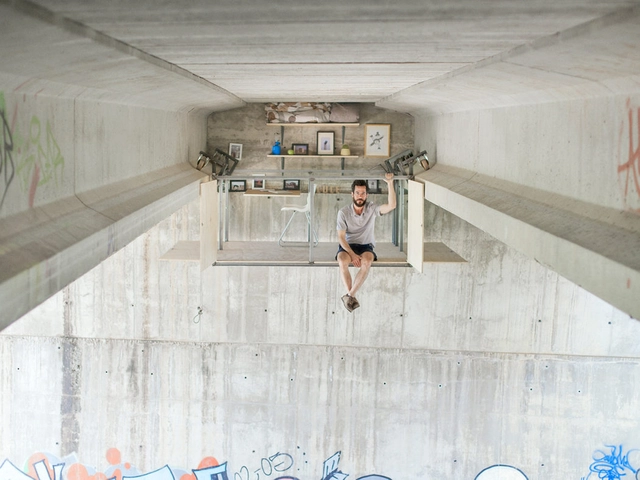
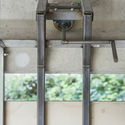
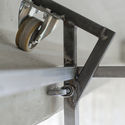
As urban environments become denser, more expensive and, on occasion, less desirable, creative minds are creating novel ways to escape the hustle, bustle, and tumult of the city. Fernando Abellanas, a designer based in Valencia, has gone to new extremes in his search for solitude. Positioned beneath a traffic bridge somewhere in the Spanish city, a hidden studio comprises a shelf, a chair, and a small desk – all anchored to the concrete undercarriage of the bridge by means of rails and rollers. Movable, the "room" becomes both impenetrable and isolated by the turn of a hand crank.


MArch. Architecture and Design.
MArch Valencia originates as a cultural meeting point for professional architects and designers, students and companies with a same set of values; with the aim of bringing together and sharing all different experiences that arise during creative processes.
A nexus between the academical, professional and enterprise worlds, which is vital nowadays.

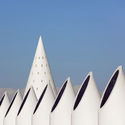
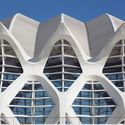
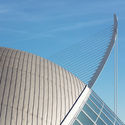
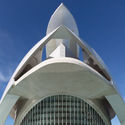
As a young boy, Santiago Calatrava's fascination with light in his native Valencia fueled his determination to draw, design, and eventually build. His Ciudad de Artes y Ciencias (City of Arts and Sciences) is a perfect example of the influence of the Valencian sun on the architect's work. The seven cultural buildings define a formal vocabulary all their own, with a dynamism between blanched curves and rhythmic visual patterns. So bright it almost glows on clear days, the materiality of the structures emphasizes the ability of light to outline the spatial relationships between Calatrava's shapes, and shift them as the sun moves through the sky.
In his most recent photo series, Sebastian Weiss has captured the tendency of the shapes of the City of Arts and Sciences to "complement each other and even merge to a harmonic unity," as the photographer himself puts it. The photos were originally featured on his Instagram, @le_blanc, and develop a new way of looking at the oft-photographed tourist spot. His images imagine the complex as a pulsating "light-space installation" of equally systematic and creature-like forms in constant conversation with one another. The series gives the sense of looking at different sections of a particularly beautiful beast—its ribs, underbelly, horns, etc.—captured within the complex's shallow pools.
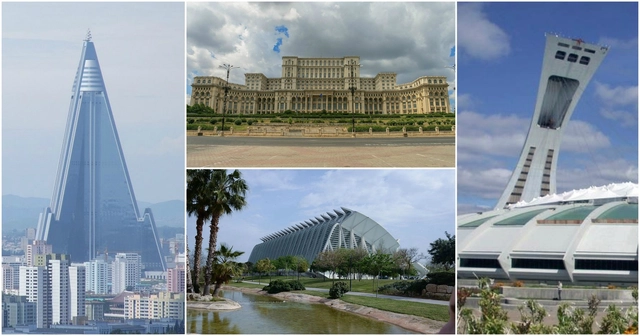
Not every piece of architecture can be an economic and social success. But there is one dreaded term reserved for only the mot wasteful of projects: "white elephants." The term comes from a story of the kings of Siam, now Thailand, who would reportedly gift sacred albino elephants to courtiers they didn't like. Refusing the gift from the king would have been unacceptable, but being sacred, these animals were forbidden from work, leading the courtier to financial ruin—a fact the kings knew all too well.
Of course, in architecture the term "white elephant" is used frequently to disparage certain projects, and whether a project is deserving of such infamy is usually a matter of perspective. Often eyesores or reminders of poorly spent funds, these projects refuse to be forgotten despite few wanting to remember them. Dotted around the world and across history, they all have the same thing in common: although they may (or may not) have once looked good on paper, they probably should have just stayed on paper.

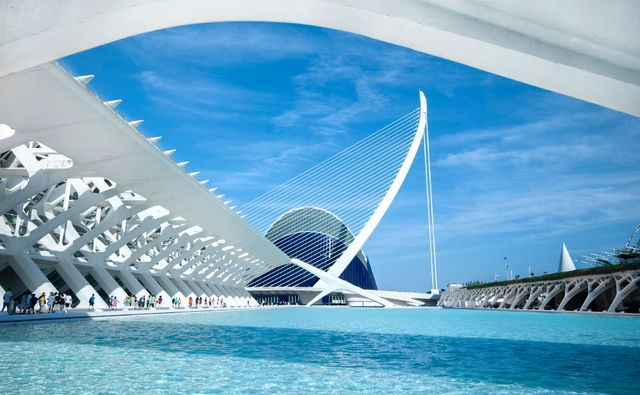
Santiago Calatrava's City of Arts and Sciences has taken a starring role in Tomorrowland, Disney's latest blockbuster. Located in the former riverbed of the Turia in Valencia, Spain, the City of Arts and Sciences comprises a cinema (L'Hemisfèric), a landscaped walk and sculpture garden (L'Umbracle), the Príncipe Felipe Science Museum, the largest aquarium in Europe (L'Oceanográfico), and the renowned Palau de les Arts Reina Sofia. The complex was constructed in stages commencing in July 1996, and opened to the public in October 2005. Unique and strikingly futuristic, the iconic group of buildings caught the eye of Tomorrowland producer Jeffrey Chernov, who spoke effusively of the building at a recent press conference for the film.
"Calatrava's architecture is just phenomenal and inventive and exciting. It's very skeletal, like you're looking at the vertebrae of a dinosaur or prehistoric fish," said Chernov. "You walk into that place and you never want to leave. That's the vibe we wanted for Tomorrowland."