HAO's counter proposal seeks to adaptively reuse the existing factory buildings, including the iconic Civil War-era Domino Sugar Refinery — which has defiantly held its ground amidst heavy redevelopment in surrounding areas. Not unlike SHoP's proposal, HAO aims to regenerate these spaces into a "world-class cultural destination" that combines public and private programs.
https://www.archdaily.com/451552/hao-makes-counter-proposal-to-save-sugar-factory-and-stop-luxury-apartments-in-brooklyn-s-waterfrontJose Luis Gabriel Cruz
The BMW Guggenheim Lab, a mobile think-tank focused on the study of urban life, has returned to New York City for its homecoming exhibition currently on view at the Guggenheim Museum till January 5, 2014. After two years of research and touring Berlin and Mumbai, the lab aims to present major urban themes in art, architecture, education, science, sustainability and technology."100 Urban Trends: A Glossary of Ideas" is a compilation of definitions of the most pressing issues in urban centers today, contextualized to reflect how different cities interpret them. Architects, planners and students take note: From street facades to bailouts, gentrification to trash mapping, this resource archives years of discussion into one user-friendly interface. Explore the glossary, here.
https://www.archdaily.com/441064/100-urban-trends-a-glossary-of-ideasJose Luis Gabriel Cruz
Last year interdisciplinary architecture firm Höweler + Yoon Architecture were announced the winners of the Audi Urban Future Award for the project Boswash:Shareway 2030. The City Dossier in Boston, held this May, was organized as a series of workshops between Höweler + Yoon Architecture and Audi experts in developing steps to realize aspects of the Boswash: Shareway vision. Part research project, part feasibility study, part road map to the future of mobility - the focus of the workshops is to propose a pilot project that can be tested in the proposed region of Boston - Washington.
We featured the project last year as it highlights how the landscape of urban development has changed. The focus of "Shareway" is the string of high-density metropolitan areas, their suburbs and ex-urbs along I-95 between Boston, MA and Washington, DC. The I-95 corridor caters to some fifty million inhabitants, many of whom commute into metropolitan areas for work. Mobility and transportation are critical to the economic vitality of these urban areas; "Shareway" proposes an intentionally re-engineered "highly orchestrated and deliberately produced platform from which we might imagine alternate paths, different trajectories, or new cultural dreams" whereby imagining an "alternate life for the road" is imagining a new American Dream.
Read on for more on the progress of this project after the break.
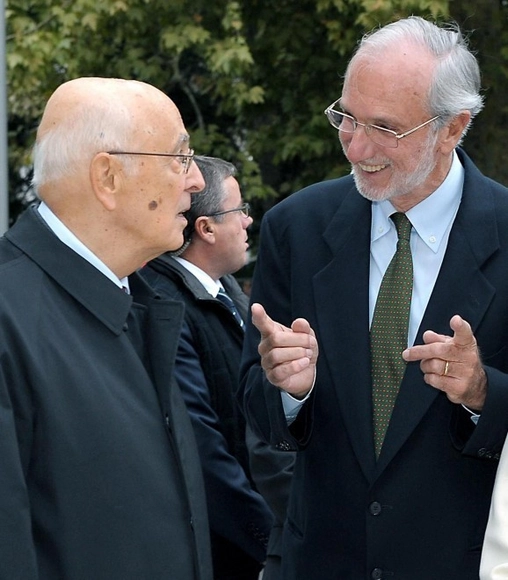
"The Community" might be the most frequently used term over the last 50 years of Architectural and Urban discourse. For decades, "the community" has served as a legitimization for anything from Team X to New Urbanism, from Celebration to "vancouverism". But what is "the community"? Where should we look for the proper definition? How did communities appear in the past and how do they form today? Can 'the community" influence the design of its own space, territoiry or context? If yes, what could be the relationship between the community and architecture in the future?
In his Strelka talk Reinier de Graaf is trying to answer these and other, even more complex questions.
A new Kickstarter campaign is hoping to raise a goal of $3,500 to fund the second annual MAPEO Borderless Workshop - a workshop that focuses on community mapping and brings diverse people and minds together to think about cities within the US-Mexican border region. By rallying individuals from different disciplines with different backgrounds, MAPEO aims to "learn more about our own cities, evaluate urban challenges and come up with ideas on how to improve our life in cities in a very quick and meaningful exercise."
Ever since the New Republic published Lydia DePillis's piece entitled "If you Rebuild it, They Might Not Come" - a criticism of the progress of Brad Pitt's Make It Right Foundation - numerous blogs and journals have been in a uproar, defending Make It Right's efforts at rebuilding the vastly devastated Lower Ninth Ward and presenting a much more forgiving perspective on the progress of the neighborhood since the engineering disaster that exacerbated the effects of Hurricane Katrina in 2005. To date, 86 LEED Platinum homes have been designed and constructed by world-renowned architects including Frank Gehry and Morphosis, at a cost of approximately $24 million. Make It Right has promised to build up to 150 such homes, but DePillis's article points out how amenities in the neighborhood are low and how the number of residents returning to the neighborhood is dwindling. Make It Right has made a commitment and the debate that ensues questions whether it is going far enough in delivering its promise to rebuilding community.
Mayor Bloomberg's controversial plans to rezone midtown New York, allowing for bigger and bolder skyscrapers, has found an unlikely ally in the form of environmentalists.
Re-zoning midtown would ultimately lead to the demolition of the corporate steel and glass skyscrapers, which preservationists argue are emblematic of the cutting edge modernism that swept 1950's America. However, landlords contest that - for the most part - they are poorly built copycats of seminal landmarks such as the Seagram and Lever buildings and are not particularly significant or suited for modern needs.
As a city, Hong Kong doesn't have it easy; impossibly dense and smothered by unsympathetic hilly terrain, the gymnastics that it performs to survive has lead to the growth of unique urban spaces. Cities Without Ground deconstructs the unfathomable spaghetti of pedestrian bridges, tunnels and walkways, which make up pedestrian Hong Kong. The book, created by motley trio of architects and academics: Jonathan Solomon, Ciara Wong and Adam Frampton, graphically dissects this labyrinth in a series of snappy axonometric drawings of 32 various routes through the city.
Read more about the story of Hong Kong's pedestrian maze after the break...
The new issue of MAS Context, a quarterly publication released by MAS Studio, explores the actual and perceived divisions of space. MAS Context #17: Boundary contains varying in discussions of urban development, forced and naturally occurring segregation, the politics of such separations and ultimately, breaking the boundaries that frame our engagement. Of particular interest in this issue is the philosophical divisions between designers and non-designers and the specialized world that architecture school and the architectural profession construct to define themselves. Through a series of essays, projects, personal accounts and photographs, MAS Context crafts an argument around the boundaries exist in our built and un-built environment - and ways in which we choose to transgress them.
Throughout history, people have spent a great deal of time pondering what the future holds. Scientific discovery, technological innovation - along with rebellious androids, zombies, flying cars, hover crafts, visiting aliens - have been consistently used as stereotypes that emerge in predictions for our imagined future. And while Hollywood was busy exploring dystopian scenarios of this near-future, architects were composing utopian images of an optimistic vision for cities. Architects have built careers upon predicting what cities can potentially become - developing forms, functions, plans and visions of possibilities in the social, political, economic and cultural realms through architecture. In 1962, Mayor Robert Wagner of NYC predicted a culturally diverse, economically viable, global city for New York in 2012. In 1988, Los Angeles Times Magazine gave its 25-year forecast for Los Angeles in 2013, predicting what a life for a family would be like, filled with robots, electric cars, smart houses and an abundance of video-conferencing. Find out how their predictions fared after the break.
Courtesy of Department of Parks and Recreation - Draft Master Plan
Every natural disaster has an "aftershock" in which we realize the fragility of our planet and the vulnerability of what we have built and created. We realize the threat to our lifestyles and the flaws in our design choices. The response to Hurricane Sandy in October 2012 was no different than the response to every other hurricane, earthquake, tornado , tsunami or monsoon that has wrought devastation in different parts of the world. We recognize our impact on the climate and promise to address how our development has caused severe disruptions in the planet's self-regulating processes. We acknowledge how outdated our systems of design have become in light of these damaging weather patterns and promise to change the way we design cities, coastlines and parks. We gradually learn from our mistakes and attempt to redress them with smarter choices for more sustainable and resilient design. Most importantly, we realize that we must learn from how natural processes self-regulate and apply these conditions to the way in which we design and build our urban spaces.
Since Hurricane Sandy, early considerations of environmentalists, planners and designers have entered the colloquiol vocabulary of politicians in addressing the issues of the United States' North Atlantic Coast. There are many issues that need to be tackled in regards to environmental development and urban design. One of the most prominent forces of Hurricane Sandy was the storm surge that pushed an enormous amount of ocean salt water far inland, flooding whole neighborhoods in New Jersey, submerging most of Manhattan's southern half, destroying coastal homes along Long Island, and the Rockaways and sweeping away parts of Staten Island. Yet, despite the tremendous damage, there was a lot that we learned from the areas that resisted the hurricane's forces and within those areas are the applications that we must address for the rehabilitation and future development of these vulnerable conditions. Ironically, one of the answers lies within Fresh Kills - Staten Island's out-of-commission landfill - the largest landfill in the United States until it was shutdown in 2001. Find out how after the break.
Fresh Kills Landfill was opened in 1947 along the western coast of Staten Island as a temporary solution for New York City's waste just in time to accommodate an exponential rise in consumption in the post-World War II United States. Three years later, and the landfill continued to operate until it became the principal landfill for New York City, collecting the solid waste from all five boroughs in the "age of disposability". It is no wonder then, that the temporary solution swiftly became a 50-year one.
American Institute of Architects (AIA) and Massachusetts Institute of Technology’s (MIT) Center for Advanced Urbanism have announced a research collaboration to support AIA efforts through the Clinton Global Initiative (CGI), Decade of Design, a measure focused on improving the health of urban communities. As the global population continues to shift toward urban environments, urban conditions of the past century have become too outdated to address the increase in population and pollution. In order to advance the state of city liveability, professionals in the design and planning fields must reconsider how urban environments need to be designed to work optimally in regards to social, economic and health challenges. MIT's collaboration with the profession-based organization of the AIA allows the research of the school to reach the professional world for application and development.
How can a small 420 square foot apartment transform into eight comfortable rooms? It takes smart design solutions that incorporates modulation and interior planning that conforms to everyday needs in an increasingly competitive environment of living space. Founder of Treehugger.com, Graham Hill takes the viewer on a tour of his "Life Edited" apartment that provides a sustainable living solution to compact apartments in urban environments like New York City. This apartment provides all the amenities necessary with some additional effort of converting rooms to fit everyday needs. Interested in seeing this apartment transform into a living room, bedroom, kitchen, dining room and guest room? Join us after the break to find out.
The Getty Trust is partnering with Pacific Standard Time to present 11 individual exhibitions throughout LA's museums that will explore the history and heritage of the city's modern architecture and its influential designers. As musician, photographer and architectural blogger Moby boasts that "LA has the most diverse architecture of any city on the planet". Pacific Standard Time Presents: Modern Architecture in LA will explore this diversity that covers post World War II architecture through today through specific points of view ranging in architectural style, influence and decade. The exhibitions, which will run from April through July 2013, are a follow-up to last year's Pacific Standard Time: Art in LA, 1945-1980. The focus of the exhibitions will range in scale and cover the monumental and everyday architectural moments that make LA unique. Exhibitions will present iconic modernist homes and cultural landmarks as well as coffee shops, car washes, and the freeways in addition to the un-built architectural fantasies of modernism and post-modernism.
The new issue of MAS Context, a quarterly publication released by MAS Studio takes on the daunting issue of production and consumption impacting cities through the lens of a handful companies operating out of Chicago. Production and consumption have a negative connotation in today's atmosphere of sustainability and conservation but architecture is fundamentally a celebration of the craft of inventing, designing and making. MAS Studio, in collaboration with Chicago-based collective The Post Family, looks critically at the social, environmental, and political implications of consumer culture while celebrating the excellence of production.
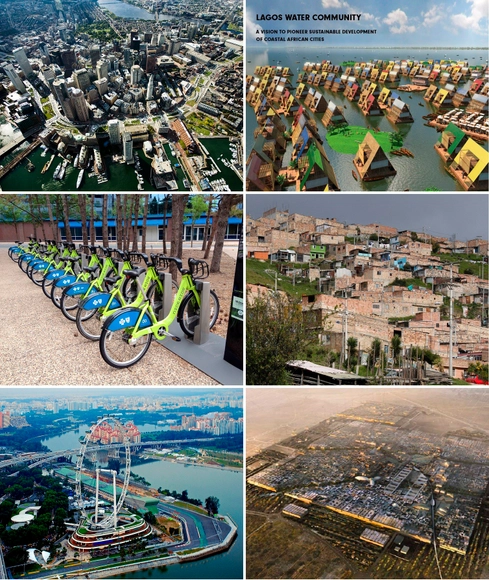
Slums, shanty-towns, favelas - they are all products of an exploding migration from rural to urban areas. Over the last half century, people living in or near metropolises has risen in proportion to the global population. Migrations from rural areas to urban areas have grown exponentially as cities have developed into hubs of economic activity and job growth promising new opportunities for social mobility and education. Yet, with all these perceptions holding fast, many people who choose to migrate find themselves in the difficult circumstances of integrating into an environment without the proper resources to accommodate the growing population. Cities, for example, like Mumbai, India's largest city and 11th on the list as of 2012 with a population of an estimated 20.5 million. According to a New York Times article from 2011, about 60% of that number live in the makeshift dwellings that now occupy lucrative land for Mumbai's developers.
As most New Yorkers know, people are willing to shell out a hefty sum to live in a place where work and play are right around the corner from each other. But as the article by Ken Layne in The Awl points out, the west coast is a somewhat different place. UNLIKE New York City, which is crowded with restaurants, bars, and entertainment, as well as offices, design firms and businesses; Silicon Valley, which caters to programmers and tech companies that hire at $100k a year, offers few of the amenities that a nearby town like San Francisco does. So, Layne concludes, residents are willing to spend hours of their day making their way into the fortressed office parks of Silicon Valley, flanked by parking lots and boulevards, just to have a cultural reprieve to call home.