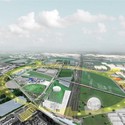
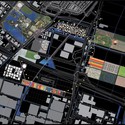
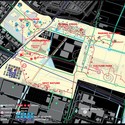
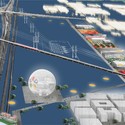
Copenhagen based architecture firm Tredje Natur recently presented their plans to develop Denmark’s first climate adapted neighborhood, which transforms Saint Kjeld’s Quarter into Copenhagen’s greenest neighborhood. The comprehensive urban development project seeks to demonstrate how the city can be arranged so rainwater can be managed in the streets in a more natural and effective way. Their project offers a wide range of pragmatic strategies to meet the many expectations in the area. As a key principle the architects reclaim 20% of the street area by optimizing the infrastructure and parking lots according to current standard. More images and architects’ description after the break.
The Danish Pavilion for the 2012 Venice Biennale will feature a collaboration between Greenlandic and Danish Architects called “Possible Greenland”. The exhibition will address the current development of the Arctic Region as Greenland undergoes a shift towards political independence and business development in the midst of dramatic climate changes. “Possible Greenland” attempts to look optimistically at the climate changes that are causing ice melts throughout Greenland. The shifting planes result in the exposure of vast mineral resources that can kickstart new industries and allow new urban cultures to emerge. The team of architects that designed “Possible Greenland” were led by internationally renowned Professor in geology at the University of Copenhagen, Minik Rosing and the young Danish architect firm NORD Architectsof Copenhagen.
Explore the possibilities with us after the break.
In an article published by The Wall Street Journal called For Creative Cities, the Sky Has Its Limit, Richard Florida discusses the development of urban environments and their relative successes. As human migrations are trending towards big cities, the design and appropriation of space within these cities is increasingly important. Florida cites that trends indicate that by 2050 cities will make up 70% of the global population. With so many people, elevate density within cities will be unavoidable, but what Florida emphasizes is that it isn’t just density that makes a vibrant and thriving city. Citing Shanghai and New York City as examples of dense urban environments, Florida explains the differences in their relative architectural and urban developments and the prosperity that follows. The fundamental difference? The prevalence of mixed-use neighborhoods in New York City that overpower the innovation of strictly financial districts of either New York or Shanghai.
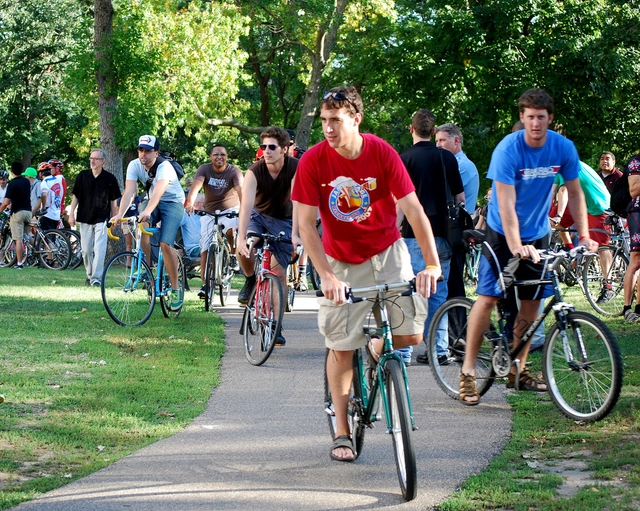
Loring Park, Minneapolis. Image via Flickr User Waiting Line; Licensed via Creative Commons
The American College of Sports Medicine (ACSM) released a new report, “American Fitness Index" (AFI), ranking 50 of the largest US metropolitan areas by fitness and health. ACSM gathered information that identified population, health and the built environment and found what most of us can assume: that the physical built and planned environment of our cities has a profound impact on our physical health. "Cities near the top of the index," the executive summary reads, '" have more strengths that support healthy living and fewer challenges that hinder it... the opposite is true for cities near the bottom." Most of the metropolitan areas identified in the top ten are cities in the north, including areas of Washington, Minnesotta, Colorado, and cities within New England. California ranked the most metropolitan areas in the top ten. Cities near the bottom of the list were concentrated in the south, many of which are located in Texas. The report is the first step of the AFI to work towards its goal of promoting active lifestyles by identifying and supporting programming of sustainable, healthy community culture.
More details from the report and what tells us about our built environment.
The city of Sydney has launched an international design competition as part of the the Green Square Development Project for a new Library Centre and Plaza at the heart of a 278 hectare area south of the city centre. The Green Square Development project is an initiative to redevelop a 278 hectare area south of the city centre of Sydney, Australia by bringing in diverse functions of housing, open spaces, offices and facilities that contribute to a vibrant, sustainable community. The library will be designed as a community centre and hub and used as an educational and creative resource, as well as a lounge. The project is allotting $40 million for the design and construction of the new facility and should be an integrated whole between the library and plaza which will also be a host to public arts, community events and markets. Stage one entries close on August 21st. Visit the official Green Square Library website to learn more.
More details on the competition and the project after the break.
OMA has released their 60-hectare master plan proposal for Floriade 2022 – the next occurrence of Europe’s largest horticultural expo that attracts an average of two million international visitors every ten years since it was established in 1960, which is currently open in Venlo. As part of a team that includes the province of South Holland, eight local municipalities and ARCADIS, OMA is helping Holland Central compete against three other cities within the Netherlands to become the next Floriade host.
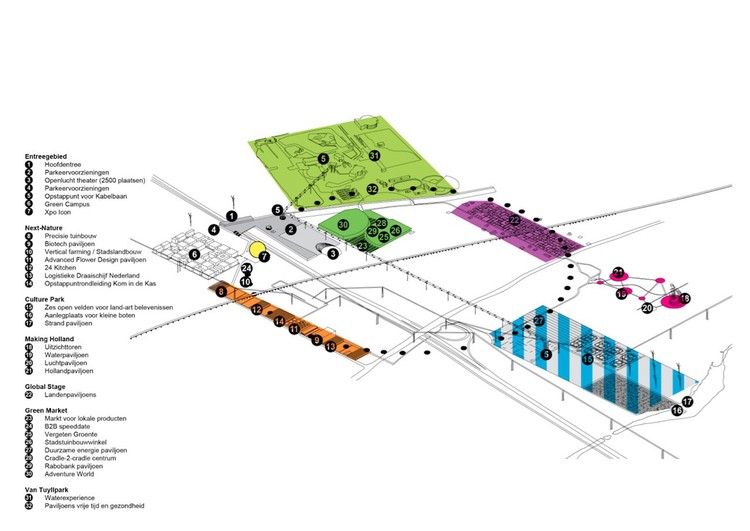
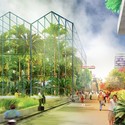
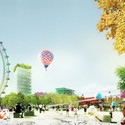
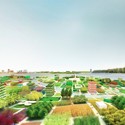
The City of Almere has revealed it’s MVRDV-designed proposal for the Floriade 2022 candidature! Almere is one of four Dutch cities competing to be the next location of the prestigious horticultural Expo, which takes place once every ten years in the Netherlands and is currently open in Venlo.
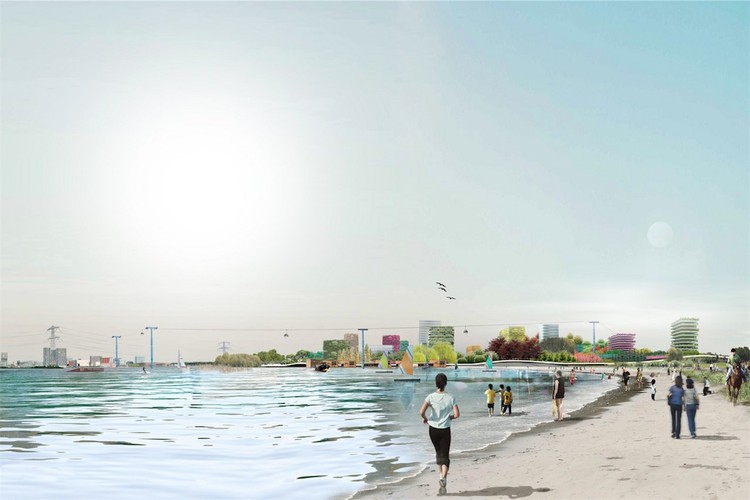
Rather than creating a temporary expo site, MVRDV has designed a lasting Cité Idéale, which would serve as a green extension to Almere’s city center. Drawing upon research from the radical DIY urbanism plan for Almere Oosterwold and the Almere 2030 master plan, MVRDV has designed an ambitious sustainable city that strives to be a 300% greener exhibition than the current standard.
Continue reading for more on this potential, exemplary green city!
Archipelago Mobile, a master plan proposal by Kyung Jae Kim, Gregory Haley, Suah Na, Heejoo Shi, and Halley Tsai, attempts to address and enhance the city of Helsinki. Known as a city ‘in-between’, their design envisions a revitalized South Harbor district, configured to mediate between land and water uses, resident and tourist amenities, port traffic and pedestrian space. By weaving these often competing requirements together in ways that not only allow but enhance their co-existence, they present an integrated model for postindustrial waterfront development in general, and a unique vision for a dynamic cultural district in the heart of the city. More images and architects’ description after the break.
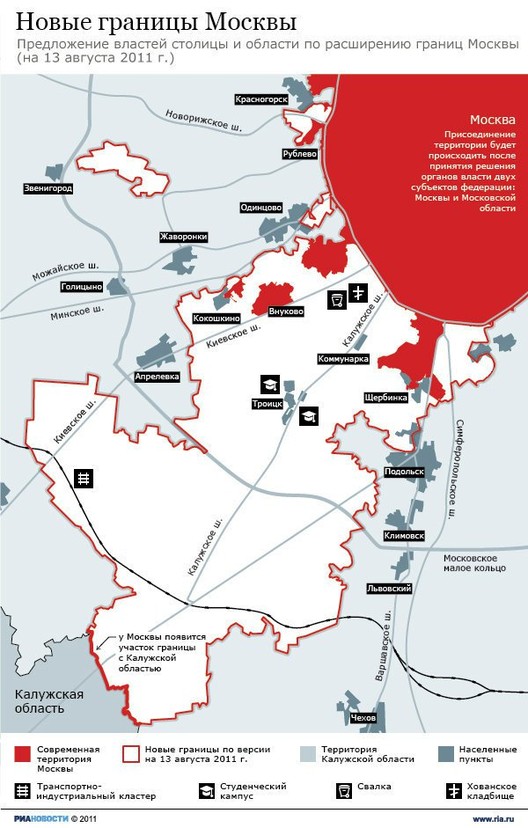
The international team, lead by well-known Russian urbanist Andrey Chernikhov, and including McAdam Architects, Tower 151, Georgi Stanishev and Ginsburg Architects placed first in round two of the Moscow City Agglomeration Development Concept competition. The winning consortium sparked debate by suggesting Moscow officials should consider redeveloping the abundant brown field sites and other available infill spaces within the existing city boundaries before proposing new development. They highlighted vast areas occupied by goods railways and disused industrial sites from Soviet times as prime areas for regeneration and expansion, as well as a re-thinking of transport networks to alleviate pressure on existing systems.
In an effort to make New York City’s built environment “more livable and hospitable” the Department of Design and Construction (DDC), Health and Mental Hygiene, Transportation (DOT), and City Planning have developed the Active Design Guidelines: Promoting Physical Activity and Health in Design to be referenced in conjunction with the DOT’s Street Design Manual and other guidelines produced by NYC. The guidelines are written for urban planners, designers and architects and are driven by the need to address health concerns such as obesity and diabetes through intelligent design. Our built environments give us cues as to how to inhabit them and have tremendous effects, sometimes subconscious, on our lifestyles. Do you walk, drive, or bike to work? Do you take the stairs or the elevator? We make these types of decisions, which are largely based on comfort, on a daily basis. But the guidelines established in this manual are intended to give designers the tools to encourage healthy lifestyle choices to address the social concerns of NYC. So, what can planners, architects and designers do to create an active and healthy city? Find out after the break.
The Green Building Council of Australia has released Green Star – a new comprehensive rating system that can assess the degree to which communities, as a whole, succeed in creating livable and sustainable environments. This is a new and dynamic way to look at the culture of sustainability. “Green building” is not only reflected in individual buildings; it is the accumulation of the buildings, the infrastructure, the urban planning and design, the amenities of the community and the lifestyles that communities live. Projects such as DIY Urbanism in the Netherlands by MVRDV and “e_co_llectiva” by Athanasios Polyzoidis & Katerina Petsiou have this kind of regard for the development of holistic community.
The New York Economic Development Corporation and Mayor Bloomberg of NYC announced the completion of the final plan for Willets Point - a peninsula on the Flushing River in Northern Queens, New York. The development of Willets Point is part of the urban renewal project associated with Citi Field – the Mets’ new stadium. Nicknamed the Iron Triangle, the project will include housing for mixed incomes, retail and entertainment amenities, a hotel, a convention center, office space, parks and open space, and a new public school, all of which falls under the umbrella of LEED-certified buildings and infrastructure. As with every redevelopment plan, there are positives and negatives to restructuring the community.
Well known for their visionary architecture that people love to visit and go back to time and again, The Jerde Partnership has set out to attract more people through a realistic framework by transforming Atlantic City into the preferred coastal resort destination of the Northeastern United States. By creating a clean, green, safe city that pays homage to its storied history and takes advantage of its unique island setting, the new Atlantic City Tourism District master plan will offer a wide range of attractions and experiences for all ages. By promoting a strategy for redevelopment, phasing, and district-wide improvements, the master plan will serve as a catalyst for Atlantic City’s economic and social uplift. More images and architects’ description after the break.
Grimshaw Architects recently announced that they have been selected to masterplan a large expansion to Albania’s capital city, Tirana. Grimshaw proposed a robust sequence of public spaces threaded along the boulevard that responded geometrically to existing patterns of land ownership. Tirana is a Mediterranean city with an outdoor culture. Each space or ‘living room’ was presented with a different use and character; a new ‘symphony of squares’. More images and architects’ description after the break.
Everyday, in the city of London, 30 million meals are served. That’s millions of trucks arriving to millions of stores and restaurants in a complex, tightly scheduled orchestration of production, transportation, and distribution.
We take it for granted that this system will never fail. But what would happen if these trucks were stopped? As unrealistic as it sounds, it’s happened – and not so long ago.
In 1989, over 57% of Cuba’s caloric intake was imported from the Soviet Union. When it collapsed, Cuba became, virtually overnight, solely responsible for feeding its population – including the 2.2 million in the city of Havana. [1] What happened next is an incredible story of resilience and innovation.
As our world becomes increasingly urbanized, our farms increasingly endangered, and our reliance upon fossil fuels increasingly undesirable, the question of how we will feed billions of future city dwellers is no mere thought experiment – it’s an urgent reality.
The story of Cuba offers us an interesting question: What would our cities look like if we began to place food production/distribution as the primary focus of urban design? And what will it take to make this vision a reality?
More on how Food can shape our cities, after the break…
Christopher Hawthorne’s article “Atlantic on the Move“, published in the Los Angeles Times, covers the transitions taking place along LA’s boulevards and one in particular: the 5600 block of Atlantic Avenue. Hawthorne reveals the changes taking place that are “reversing decades of neglect” among LA’s roadways. Among those that have promoted a cultural association with Los Angeles: traffic, congestion and miles of roadways. The article covers the small steps that take place over time via minor interventions that combine to change the face of the boulevards to more pedestrian and bike-friendly spaces for alternative modes of transportation.
The masterplan for the National Creative Cluster by Sasaki Associates integrates the urban form with the surrounding landscape by creating a series of green wedges, interspersed within the urban clusters and forming a series of community parks. Located near Songzhuang, a quiet village on the outskirts of Beijing, the success of the district is tied to its openness, where people can interact in both structured and spontaneous ways to exchange ideas and have constructive dialogue. More images and architects’ description after the break.