Benoy has released its latest designs for the China International Travel Service (CITS) Sanya Enot development scheme, which will be located on the reclaimed Hexin Island in Hainan, and is the second phase of a large-scale plan. Connected to the first phase of development by a pedestrian bridge, the project will be surrounded by the area’s luxury international hotels and natural attractions.
The 32,000-square-meter mixed-use, retail-led space features a “porous and multi-layered environment,” with clusters of small-scale buildings that will create a series of indoor and outdoor spaces for entertainment and retail programming. Buildings will be connected by a succession of elevated walkways and bridges.
His RAIC Gold Medal, recognizing a significant and lasting contribution to Canadian Architecture, will be accepted by his widow Sheila du Toit and two sons at the RAIC/OAA Festival of Architecture in Ottawa in May.
Quebec-based practice Lemay has won the global bid to redesign Morocco’sCasablanca Coast, which will include the new seaside promenade of the Hassan II Mosque and the Ain Diab corniche.
With modernity, sustainability, and innovation in mind, the urban and landscape design will promote mobility along the length of the corniche (a coastal, cliffside road) and aims to reinforce the appeal of the coast.
Launched in December, the project will feature an urban park and corniche along the El Hank embankment that will include rest areas, walkways, outdoor sports, and more. As an extension of the Hassan II Mosque, the promenade is expected to become a new Moroccan landmark.
Woods Bagot’sShenzhen Hazens Longgang Longteng Mixed-Use project has been rated by the Shenzhen Government as one of the city’s most important projects of 2016. Located in Shenzhen’s Longgang District, the 393,000 square meter site will feature 1,500,000 square meters of gross floor area subdivided into office space, retail space, a shopping mall, residential communities and facilities, and over 90,000 square meters of green and public space.
As a part of the design, the development will rejuvenate a river park area running through the existing site, with the northern bank becoming a commercial and leisure focal point, and the southern bank featuring a community of residential towers connected by retail podiums and green spaces.
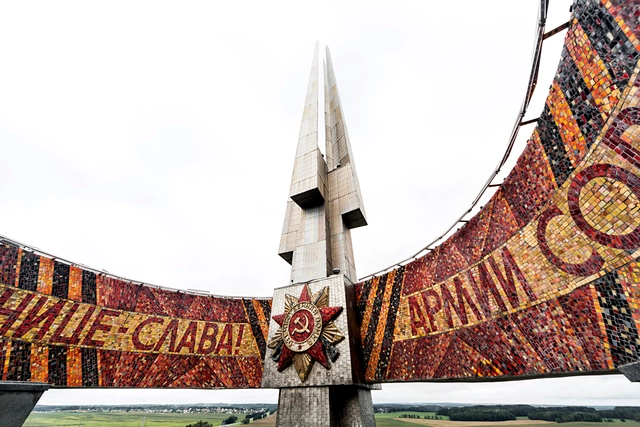
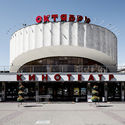
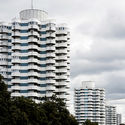
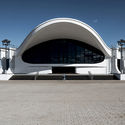
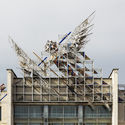
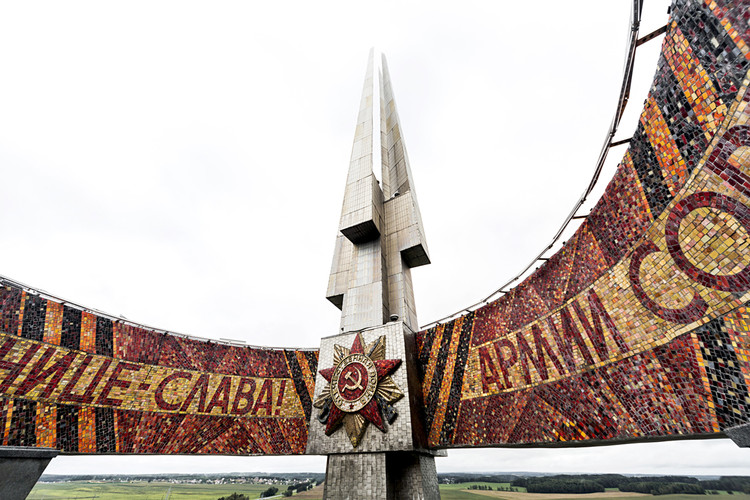
The history of what is now the Republic of Belarus is a turbulent one. It has been part of the Russian Empire, occupied by the Germans during both World Wars, divided between Poland and the Soviet Union, and finally declared its independence in 1991. Although Belarus is now an independent nation, it is also an isolated dictatorship that has in some ways remained unchanged since the 1990s, and is largely seen both culturally and architecturally as a sort of time warp, Europe's most vivid window into life in the Soviet Union.
Photographer Stefano Perego recently documented the postwar Soviet legacy of Belarus' architecture from the 1960s-80s, and has shared the photos from his 2016 cross-country drive with ArchDaily.
The Glasgow City Council has selected a multidisciplinary team lead by MVRDV and Glasgow-based Austin-Smith:Lord to transform downtown Glasgow into a “more livable, attractive, competitive and sustainable center.” Titled (Y)our City Center, the strategy calls for a regeneration of the 400 hectare city center that would reorganize circulation and infrastructure while providing new residential options to support Scotland’s economic center.
In a letter sent a few weeks ago to India’s Council of Architecture, principal Fumihiko Maki has questioned the motivations of the Andhra Pradesh government committee, alleging unfair practice, lack of transparency and his firm’s ‘fraudulent’ removal from the project.
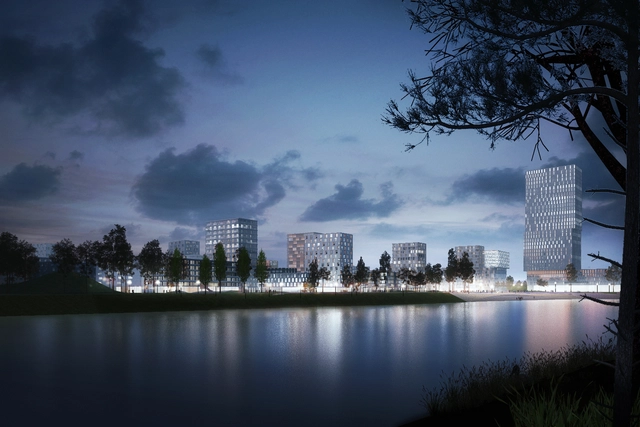
ADEPT Architects has won the commission to design a new masterplan for the Budapart neighborhood of Budapest, a project that will become the largest singular urban development in the city for nearly 30 years. Based on a distorted grid structure, the design will reference both historic and modern parts of the city, and will encompass 54 hectares of mixed-use space.
Located on the [‘Buda’] bank of the Danube River, the Budapart masterplan aims to create a green and human scaled neighborhood rather than just another new modern development. The fantastic location on the waterfront, the existing characteristic landscape qualities and the close vicinity to the central city are the main attractions that each generate huge potential to make the new neighborhood an epicenter of its own, described the architects in a recent press release.
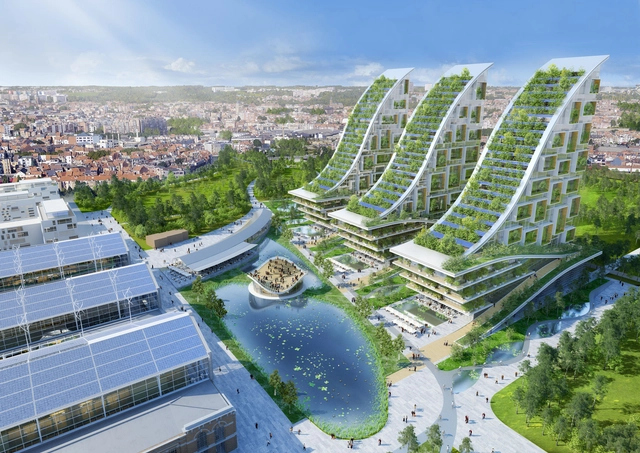
Vincent Callebaut Architectures has released plans for the development of a radical eco-neighborhood at Tour & Taxis, Brussels, Belgium. Covering an area of 135,000 square meters, the proposal will see the redevelopment of the early twentieth-century Gare Maritime, and the construction of three residential “vertical forests” reaching 100 meters in height. The architect’s ultimate vision is a neighborhood which embraces technological progress, sustainable building principles, and renewal of the built heritage.
Situated northwest of Brussels city center, and constructed in 1907, the industrial park at Tour & Taxis originally operated as a shipping and customs complex. Whilst the lifting of European customs borders has rendered its original function obsolete, the Gare Maritime (Marine Terminal) still embodies the architecture of the industrial era.
Foster + Partners has been selected as the winners of an international competition to design a new £500 million capital for the state of Andhra Pradesh in southeastern India. The brief calls for a new 365 hectare masterplan that will serve as a new municipal capital for India’s eighth largest state, which lost its previous capital, Hyderabad, when state lines were redrawn two years ago.
The John S. and James L. Knight Foundation has announced the names of the 144 finalists in the 2017 edition of the Knight Cities Challenge, a nationwide call for innovative ideas aimed at transforming the organizations’ 26 member communities into more vibrant places to live and work. Open to innovators and designers from any field, the challenge requested submissions that responded to a simple prompt: What’s your best idea to make cities more successful?
Courtesy of Schauman & Nordgren Architects + Mandaworks
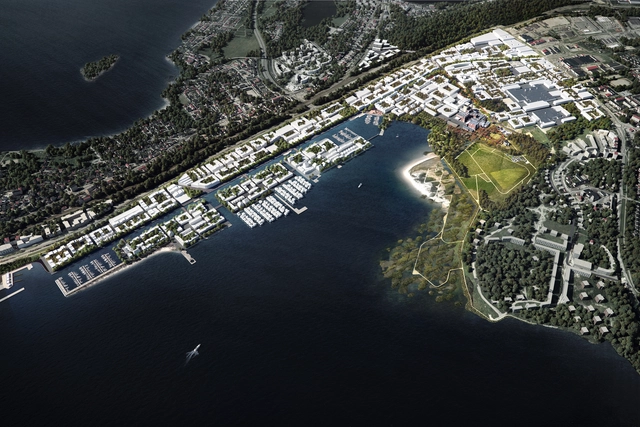
The City of Tampere, Finland has announced the proposal by Schauman & Nordgren Architects and Mandaworks as the winner of an open international competition for Hiedanranta Bay's new master plan. The design, entitled "Hiedanranta Innovation Bay," responds to the rapid growth of Tampere's central region. Over the next 20 years, the Innovation Bay will see the transformation of the former industrial district into an innovation hub for sustainable economic development, creating 10,000 new jobs, and housing over 25,000 new residents.
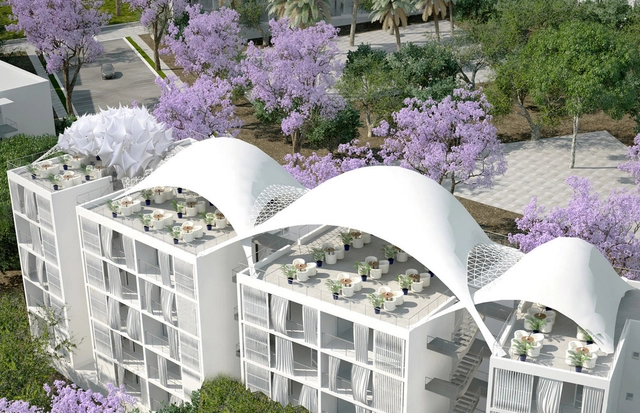
Philippe Barrière Collective (PB+Co) has created the urban plan for a new semi-rural/semi-urban development in Manouba, Tunisia. Utilizing an existing olive grove estate, the environmentally driven project includes collective housing pavilions among its ecological design composed of 4,475 salvaged olive trees, newly planted taller trees, and a wild botanical garden that fosters local biodiversity.
Pritzker Prize winner Thom Mayne has completed a three-semester–long study of Houston’s future, given its current sprawling urban conditions and rapid growth. The project, conducted alongside 21 University of Houston students and faculty members Matt Johnson, Peter Zweig, and Jason Logan, focused on ways of addressing the problems that arise from Houston’s historical lack of zoning in conjunction with the largely unregulated growth of industry and capitalism. These approaches include reinventing the current energy infrastructure, changing real estate and density, and leveraging the lack of zoning to generate new ideas.
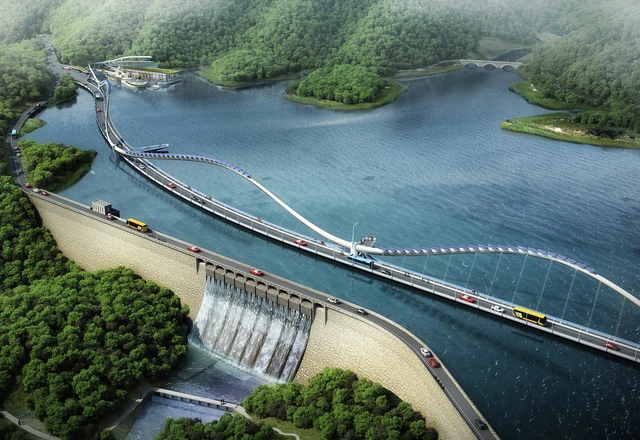
M CO Design has released its designs for “Dragon’s Link,” a new dragon-inspired, mixed-use infrastructure on the south side of Hong Kong Island “that will serve a large part of the community and will enhance a local historic monument,” the Tai Tam Dam, which will celebrate its 100th anniversary this coming February.
Drawing inspiration from local traditions and the natural topography of Hong Kong, the project will create new connections within an existing network of roads and hiking trails in Tai Tam Country Park in “a juxtaposition of old and new,” in order to improve user experience and infrastructure.
If starchitecture isn’t dead, then it has surely been rendered irrelevant in a world struggling to provide decent living conditions to at least a quarter of the world’s population. A growing network of architects and urban planners are busy tackling the challenges posed by realities like unprecedented urban growth, climate change and conflict as opportunities to build a more just and sustainable future. As such, resilience, sustainable urban development, the effects of mass migration on cities, community participation, post-disaster response and disaster risk reduction are key issues within our master program that deserve a spotlight beyond the classroom and that today, more than ever, resonate with urban practitioners and the general public.
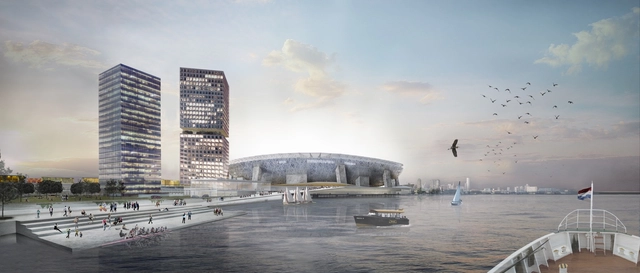
OMA has released images of their masterplan for Feyenoord City, Rotterdam, after the plan was approved by city’s mayor and alderman. Developed for the Feyenoord football club, the project will consist of a redeveloped mixed-use district centered around a new 63,000 seat stadium for the team located along the Maas River.


_LR.jpg?1488254837&format=webp&width=640&height=580)
_LR.jpg?1488254858 "Courtesy of Benoy")
_LR.jpg?1488254914 "Courtesy of Benoy")
_LR.jpg?1488254868 "Courtesy of Benoy")
_LR.jpg?1488254904 "Courtesy of Benoy")
_LR.jpg?1488254837)




.jpg?1487736608)
.jpg?1487736570 "Courtesy of Woods Bagot")
.jpg?1487736532 "Courtesy of Woods Bagot")
.jpg?1487736650 "Courtesy of Woods Bagot")
.jpg?1487736441 "Courtesy of Woods Bagot")
.jpg?1487736608)
our_city_centre_map.jpg?1487608906&format=webp&width=640&height=580)
our_vibrant_Broomielaw.jpg?1487608889 "(Y)our Vibrant Broomielaw. Image Courtesy of MVRDV")
our_river_park_projects.jpg?1487608968 "(Y)our River Park Projects. Image Courtesy of MVRDV")
our_great_streets_and_spaces.jpg?1487609037 "(Y)our Great Streets and Spaces. Image Courtesy of MVRDV")
our_great_buildings.jpg?1487609017 "(Y)our Great Buildings. Image Courtesy of MVRDV")
our_city_centre_map.jpg?1487608906)