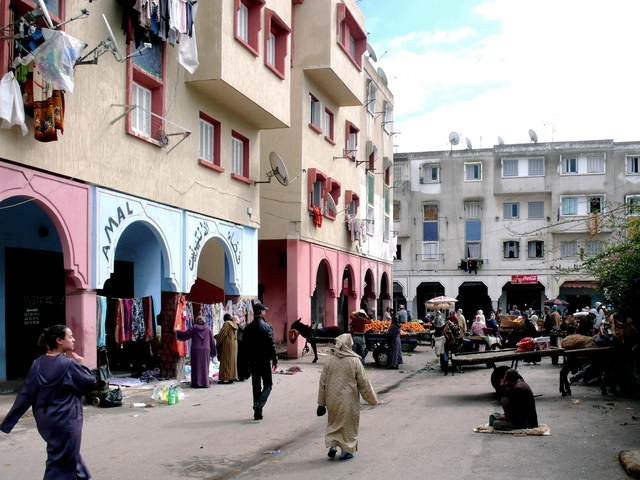
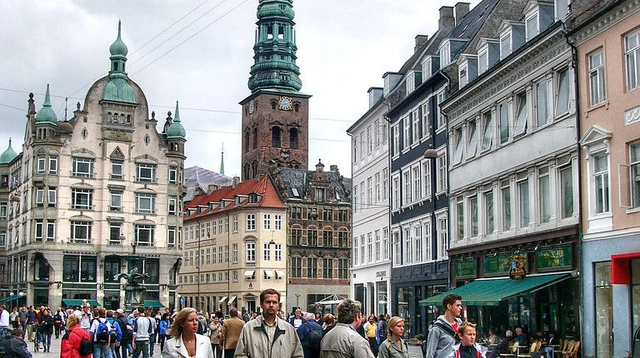
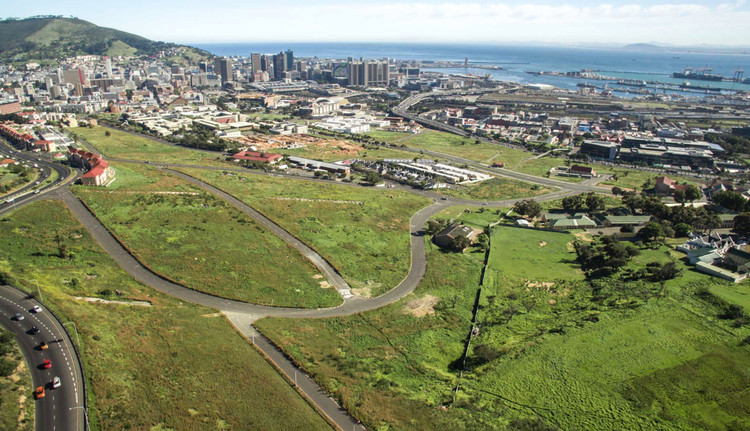
In urban design, suburbs can be a contentious topic. That is in part because the term lends itself to nebulous and ever-changing definitions. In its simplest form, the suburbs are residential communities within commuting distance, located a fair bit away from the heart of metropolitan areas. The American context sees suburbs viewed with some hostility, with racist ‘redlining’ practices a dark legacy to particular suburbs in the country. In a more superficial sense, American suburbs have often been criticised for their uniformity in appearance – portrayed as soulless dwellings absent of a sense of community.
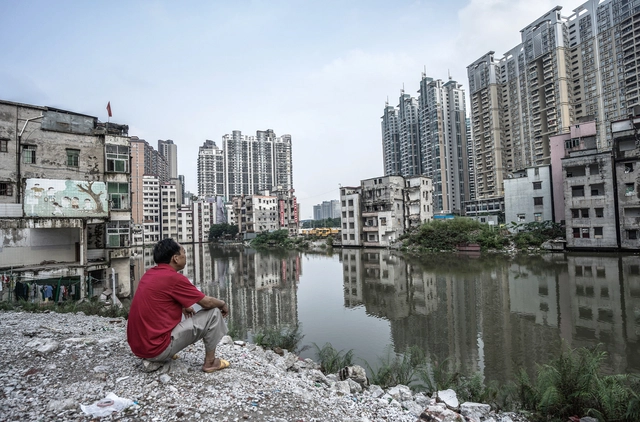
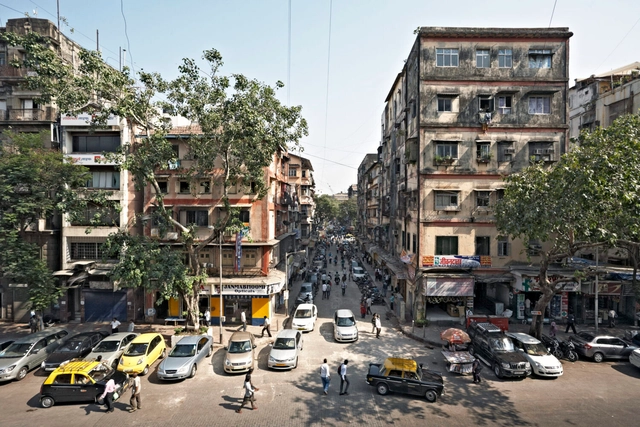
As is obvious to anyone with even a passing interest in demographics, cities are becoming denser—much denser. Rural life continues its steady emptying-out as urban life accelerates its explosive filling-in. The tilt has been apparent at least since the middle of the last century when the French geographer Jean Gottmann invented the word “megalopolis” to describe the continuous urbanization from Boston to Washington, D.C., then containing one-fifth of the United States’ population. But nowhere has the shift from countryside to city been more dramatic than in present-day Asia.
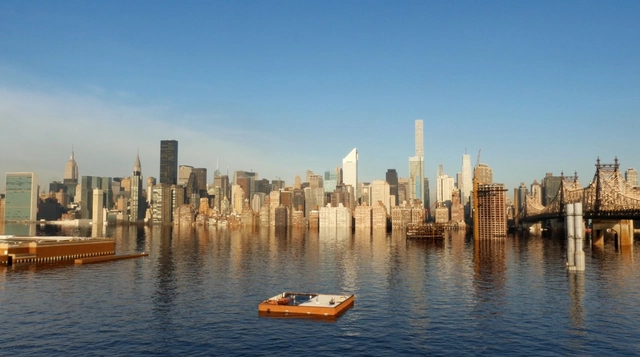
Courtesy of Menilmonde via screenshot from 2°C New York City video
Following an extensive report on the impacts of climate change last year, the second installment of the Intergovernmental Panel on Climate Change (IPCC), the United Nation's body for assessing the science related to climate change, addresses the current and anticipated impacts of climate change on ecosystems, biodiversity, and human communities across the globe, along with action plans on how the natural world and human societies could adapt to these changes before reaching an "irreversible" state.
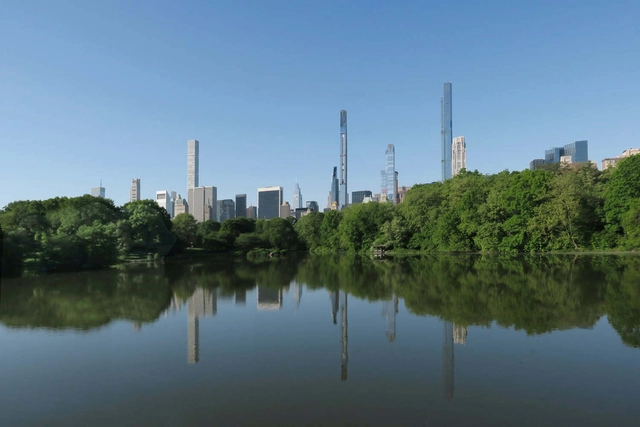
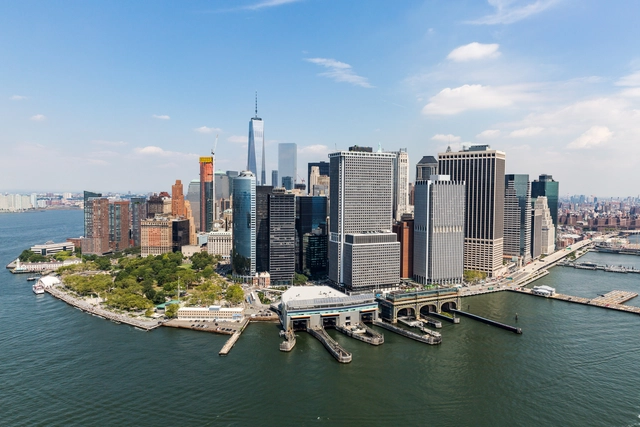
Recently, the Nobel laureate economist Paul Krugman wrote in the New York Times about the causes of unaffordable housing in New York City. He blamed the crisis on a few things, including a powerful financial “monoculture” in the city, NIMBYs, and the city itself blocking new construction. That last element, however—that the city blocks new construction—is an increasingly popular myth that needs examination.
In a tour of the layout of Buenos Aires, around 500 passages are distributed throughout the city. Regardless of the neighbourhood in which they are located, they represent postcards of contemporary urban architecture with a tinge of improvisation. However, they bear witness to the organisation of Buenos Aires, which aspired to a checkerboard regularity.
On many occasions, it is difficult to tell the difference between the passage, the cut-off and the dead-end street, but they are all part of the urban space, that place of exchange, of encounter, of signs, symbols and words where people live, play and learn at the same time.
Kinetic Cities, courtesy RMA Architects. Image Courtesy of RMA Architects
Rahul Mehrotra is an urbanist, educator, and founding principal of Mumbai- and Boston-based Rahul Mehrotra Architects (RMA Architects). Across India, Mehrotra has designed projects that range from master plans to weekend houses, factories, social institutes, and office buildings. Over decades, his endeavors in urban activism have culminated in the founding of the firm’s Architecture Foundation, which focuses on creating “awareness of architecture in India” through research, publication, exhibitions, and inclusive public dialogue surrounding architectural ethics and values.
Cities face much criticism with how they handle their car population, but have you ever thought about how much land use is dedicated to surface parking lots? In fact, it may be one of the most prominent features of the postwar city in the United States. Housing, community facilities, highway infrastructure, often garner much attention, but the amount of land dedicated just to park cars is astounding.
Helsinki seeks to transform the Makasiiniranta area into an extension of its pedestrian city centre through a competition that will reshape a significant part of its maritime façade. The two-phase competition has shortlisted nine international groups whose proposals were made available for public feedback under anonymity. As most of the former industrial areas of the city have been redeveloped, Makasiinirantais is the last part of the old harbour waiting to undergo transformation and the most significant one, as it is considered a nationally valuable environment.
Videos
The Digital Twin . Image via Shutterstock/Videoflow
The emergence of the Digital Twin phenomenon has heralded a great change in terms of urban planning. It essentially presents the city as dynamic, in virtual form. Ensuring every element from the historic fabric, new construction, and public transit is accounted for in one three-dimensional model. Not only does it present key elements in terms of the landscape, but it also encompasses often overlooked conditions such as the presence of light throughout the day, shadows, and the presence of vegetation and trees. All of which contribute to a better preliminary process of site analysis.
New Orleans was designed by its early settlers in 1721 as a Cartesian grid. You know it as the famous French Quarter or Vieux Carré. Such grids are named for the Cartesian coordinate system we learned to use in algebra or geometry class, perpendicular X and Y axes, used to measure units of distance on a plane. The invention of René Descartes (1596–1650), these grids reflect his rationalism, the view that reason, not embodied or empirical experience, is the only source and certain test of knowledge. William Penn used a similar grid in 1682 in selling Philadelphia as an urban paradise where industry would thrive in the newly settled wilderness. And just as the massive buildings of Italian Rationalist (i.e., Fascist) architecture express authoritarian control, so, too, Cartesian grids implicitly say: Someone is in charge here. We’ve got this. Trust us.
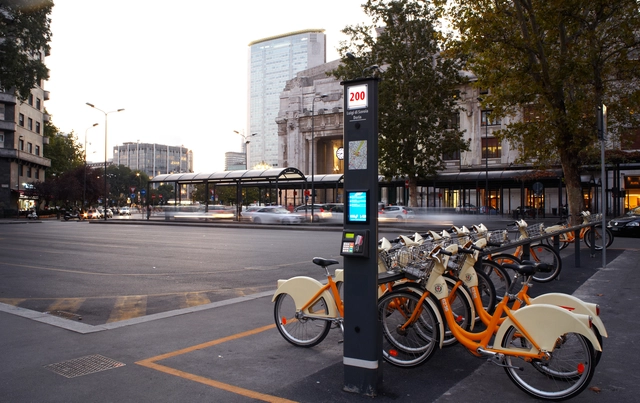
As part of Milan's ongoing vision of bicycle-friendly highways, the Metropolitan Council of Milanhas approved its Biciplan “Cambio” project, a new transportation system that introduces "super-cycle" corridors across the urban fabric, prioritizing cycling, environmental protection, safety, and wellbeing. The project aims to compliment existing cycle paths with 750 kilometers of new corridors that will connect the city's 133 communes with its wider metropolitan area, and increase the amount of bicycle trips and reach by 10% internally and 20% on a greater scale.
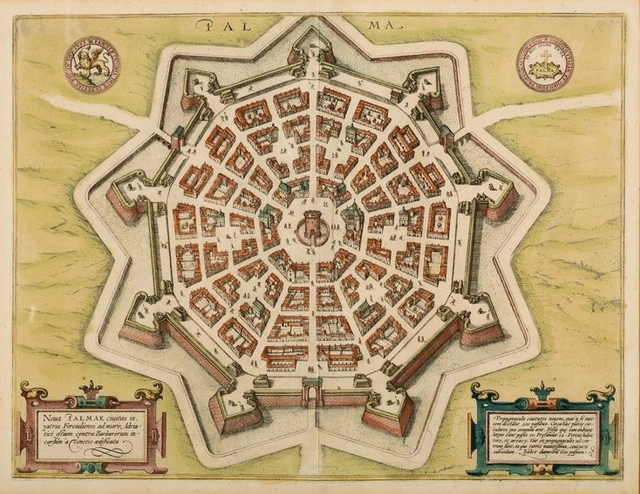
The concept of an “ideal city” is something that is often talked about today, as we look towards the future and think about what aspects of urban life we feel are most important for residents to thrive in a healthy community. However, ideal cities were conceived during the Italian Renaissance, as planners and architects prioritized rationale in their designs focusing on human values, urban capacities, and the recursive waves of cultural and artistic revolutions that influenced large-scale planning schemes.
Biodiversity has become ubiquitous in project descriptions as yet another mark of the design's environmental accomplishments. The increasing focus on sustainability, the standard inspired by the UN Sustainable Development Goals, prompts a deeper understanding of what biodiversity in urban environments means and how can architecture and urban design actively contribute to it. With species extinction rates soaring and urbanization over natural land continuing, cities become an essential factor in sustaining biodiversity, and the following explores how the built environment can foster multi-species habitats.
The year 2021 has been a turbulent one –coronavirus rages on, and the design and construction industries have been forced to keep adapting two years into a global pandemic. As virtual methods of working and communicating continue to be tweaked and honed, a plethora of virtual events has meant that architectural discourse outside the western canon and Eurocentric gaze, in a small way, has been able to claim space front and center in the global architectural conversation.
The city of Budapest, though Budapest Development Agency (BFK), launched an international design competition this autumn for the comprehensive renewal of the Budapest Nyugati Railway Station and its surroundings. The initiative seeks to expand the train station's capacity in order to reach Budapest's railway transport goals of doubling the number of trains on the suburban and metropolitan network. After an initial phase that attracted 36 participants, 12 practices were shortlisted for the second round of the competition, among which are Benthem Crouwel Architects, Grimshaw Architects, Zaha Hadid Architects, Foster + Partners, Kengo Kuma & Associates and Sweco.
Czech practices UNIT Architekti, A69 - Architekti, and British firm Marko & Placemakersproposetransforming the largest brownfield site neighbouring Prague's historic city centre into a dynamic urban hub. The masterplan, selected within a 2-stage international competition comprising 57 entries, envisions "a multifunctional urban framework" that mediates the infrastructural complexity of the site, establishing a new identity for the area.