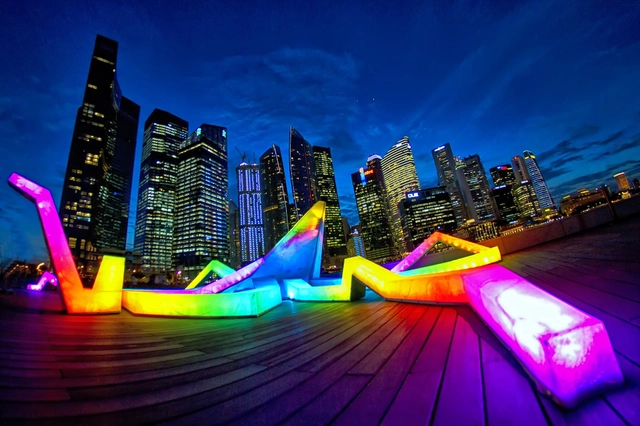
In mid autumn, when the nights get longer in the northern hemisphere, we encounter numerous light festivals. And indeed, within the last ten years, more and more light festivals have globally emerged. The reason for the success of light festivals is simple, as the German curator Bettina Pelz concludes: “It’s actually fairly easy, because whenever you do something with light in cities in the night, then people do come. If you do it good, they come twice.”
As Pelz points out, light is an apt medium for evening events, since it easily attracts people. Communities have discovered the potential of lighting for city marketing, and the closer they plan their date to Christmas, the more they merge their illumination with the festive blinking lights of commercial Christmas markets.
Join us on a tour through some of the leading light festivals in Europe. Read more about their different backgrounds, artistic concepts and future trends after the break...
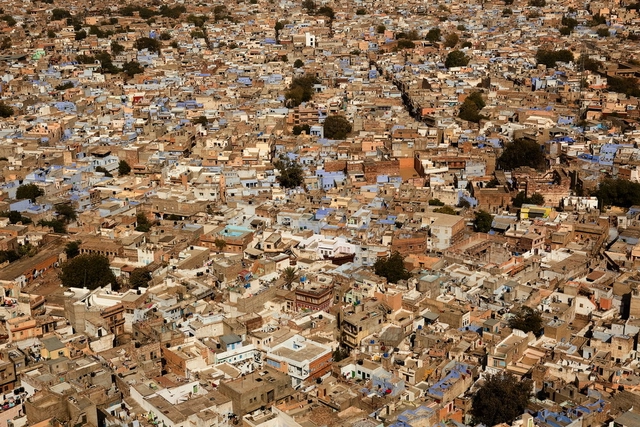
Ekistics is the science of human settlements. Students in the Ekistics Department of Jamia Millia Islamia study settlements across India, including cities like Jodhpur (pictured above). Image Courtesy of shutterstock.com
With its current total population over 1.2 billion people, India is the second most populous nation in the world. What’s more, current demographics show that, rather than being concentrated, India’s population is spread throughout its states. In demographic and statistical terms, then, India is ideally situated to provide architecture students with new insights into Ekistics, or the science of human settlements.
Founded in 2001 in response to the ongoing shifts in the urban landscape, the Faculty of Architecture and Ekistics at Jamia Millia Islamia, a Central University, grounds students in the ways that nature interacts with human needs/ethics in order to produce professionals instrumental in advancing a better built environment.
"People tend to forget that play is serious." - David Hockney
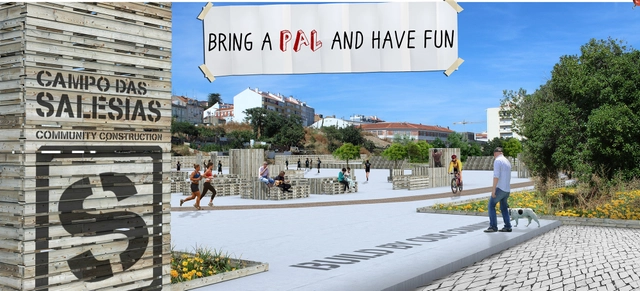
PLAYscapes, an international design competition launched earlier this year asking people to "submit a plan or proposal to turn a neglected forgotten part of your city into a playscape," has announced their winning entries. Set up by Building Trust International, the competition called for "professional and student architects and designers from cities around the world to propose ideas which encouraged public interaction and turned redundant city spaces into fun creative places."
Find out more about the winning professional entry from the City of Cape Town, entitled Cape Town Gardens Skatepark, along with the winning student entry from the Lusiada University of Lisbon, entitled Bring a Pal and Have Fun, after the break...
Architecture researchers in Edinburgh have completed a breakthrough study on brain activity recorded in situ by using mobile electroencephalography (EEG) technology, which records live neural impressions of subjects moving through a city. Excitingly, this technology could help us define how different urban environments affect us, a discovery that could have provocative implications for architecture. Read the full story on Salon. Also, check out this article from Fast Company about how a similar mobile technology could show us the effects of urban design - not on our brains, but on our bodies.
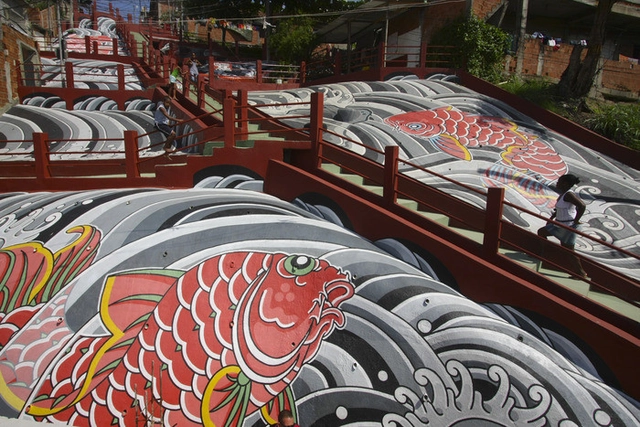
Favela Painting: Rio Cruzeiro, realized in 2008. Image Courtesy of Favela Painting's Kickstarter Page
Dutch duo Haas and Hahn gained fame in 2005 for painting a few houses of Rio Janeiro’s favelas in a palate of bright hues. Now they’re back again, this time with a Kickstarter Campaign to raise the funds to paint the rest of the favela in the hopes of further transforming this crime-ridden community.
Powerful video projectors at an affordable price have opened the path for a young, impressive art form: 3D video mapping, a means of projection that uses the architecture itself as the screen. Artists and researchers initiated the movement, developing a new visual language to interpret architecture. Later, marketing adopted this technique for branding, with large-scale projections on skyscrapers; political activists have also initiated dialogues, turning ephemeral light interventions into eye-catching ways to point out and address urban design issues.
More on the ways artists and groups develop this visual language for urban storytelling, after the break…
In this article, originally published in Metropolis Magazine as "A Time-Out," Carl Robinson reminisces about the architecture of the Ho Chi Minh City he remembers from the 1960s and discusses how the urban landscape has changed in subsequent years. As Vietnam grapples with economic downturn, he asks, how might the city to develop?
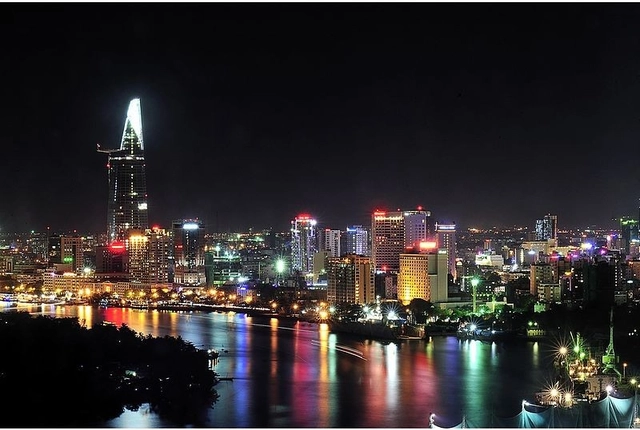
Over the past 15 years, as Vietnam finally left its long years of war behind, the former capital of South Vietnam—Saigon—became the country’s economic powerhouse. Until fairly recently, Ho Chi Minh City (HCMC) was a boomtown. Even before touching down at its busy international airport, I see new buildings rising up through the sprawling and tightly packed suburbs, splayed across the city’s surrounding delta landscape and muddy meandering rivers.
Off in the distance along the wide Saigon River, where the spires of the city’s French Colonial Roman Catholic cathedral once dominated downtown, an impressive silhouette of high-rises reach to the tropical sky. The city’s twenty-first-century feel continues through its sweeping new terminal (designed by GWA) and then down a wide boulevard past contemporary office buildings and shops. Eventually I reach the intimate tree-lined streets of old Saigon, the residential quarter created by the French more than 150 years ago.
https://www.archdaily.com/429027/could-ho-chi-minh-city-s-architecture-be-saved-by-its-economic-rutKatherine Allen
Last monday, Columbia University's Avery Hall was buzzing.
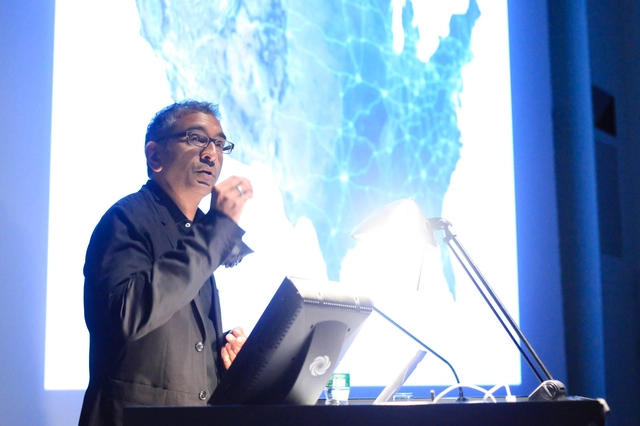
The Graduate School of Architecture, Planning and Preservation (GSAPP) hosted a highly attended event that welcomed respected academics and professionals from architecture and real estate to what the dean, Mark Wigley, warned might take the form a a celebrity roast. Vishaan Chakrabarti, a partner at SHoP Architects and director of the Center for Urban Real Estate at Columbia, was on deck to deliver an abridged, more "urban version" of a longer lecture on his new book, A Country of Cities: A Manifesto for an Urban America. Proceeding the twenty minute lecture, an "A-list" panel of architects and historians - that included Kenneth Frampton, Gwendolyn Wright, Bernard Tschumi, Laurie Hawkinson and Reinhold Martin - lined up to discuss Chakrabarti's work.
https://www.archdaily.com/430538/a-country-of-cities-a-manifesto-for-an-urban-americaJose Luis Gabriel Cruz
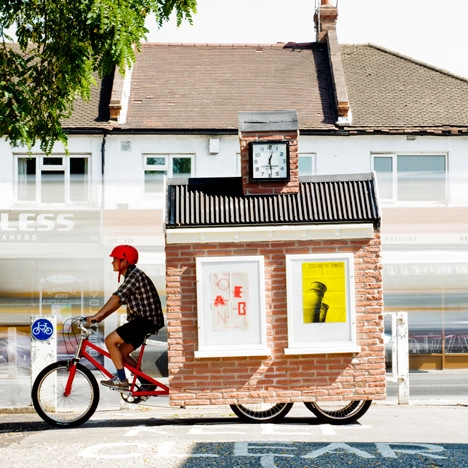
A Mobile town square designed for Cricklewood, by Studio Harto and Studio Kieren Jones. Image Courtesy of http://cricklewoodtownsquare.com/
Cricklewood, a North London suburb devoid of public space, is finding a new lease of life through a series of pop-up interventions - including a mobile town square designed by Studio Hato and Studio Kieren Jones - put together by civic design agency Spacemakers. While the project might have a bit further to go before any benefits are truly felt by the local residents, the project is part of a wider scheme financed by the Mayor’s Outer London Fund which will hopefully lead to the rejuvenation of more of the capital's suburbs. Read Liam O'Brien's full article in The Independenthere.
In this article, originally published in Metropolis Magazine's Point of View blog as "The Real Problem with China's Ghost Towns" , author Peter Calthorpe explains the problems of these cities, predicts their grim future, and explores how the thoughtful planning behind the city of Chenggong could provide a more sustainable alternative.
We’ve all seen the reports on “ghost town” developments in China, showing acres of empty high-rise apartments and vacant shopping malls. These barren towns seem particularly ironic in a country planning to move 250 million people from the countryside to cities in the next 20 years. But this massive, unprecedented demand has been distorted by a number of factors unique to China. Flawed financial incentives for cities and developers, along with the poor phasing of services, amenities, and jobs create most of the problems. In addition, China’s emerging middle class is very comfortable (perhaps too comfortable) investing in real estate, so people often buy apartments in incomplete communities but don't move in, expecting that values will rise, or that they will live there someday. The result is a string of large, empty developments that remain speculative investments rather than real homes and communities. [See-through buildings are the worry now, but the real problems may come when they are full.]
While it’s hard to get data on vacancy levels in China, there are certainly many anecdotal examples across the country. An all-too-typical example is Chenggong, the new town planned for 1.5 million just outside of Kunming in the west. This freshly minted city boasts the growing Yunnan University, currently with 170,000 students and faculty; a new government center; and an emerging light industrial area. Under construction are the city’s new high-speed rail station and two metro lines connecting the historic city center.
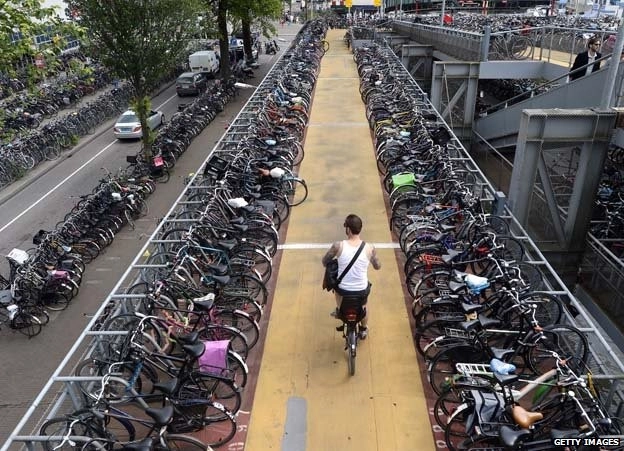
Did you know that there are more bicycles than residents in The Netherlands? You may be shocked to learn that up to 70% of all journeys are made by bike in cities like Amsterdam and The Hague. To accommodate such a huge number of bike-enthusiasts, bike parking facilities can be found everywhere - outside schools, office buildings and shops. Not to mention the fact that many Dutch cities even have special bike paths that are completely segregated from motorized traffic with signs that read "Bike Street: Cars are guests." Ever wondered why the Dutch are so bike crazy and how bicycles came to be such an important part of everyday life in The Netherlands? Click here to read all about it and look here for our story on Why Cycle Cities Are the Future!
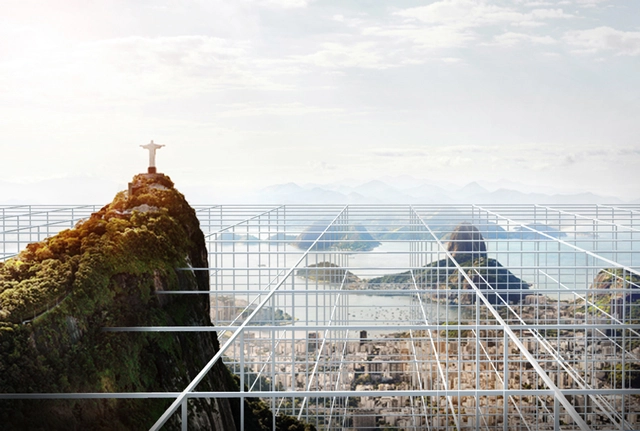
Designed by Buro AD and SPECTACLE for this year’s CityVision Competition, their Rio de Inverso proposal critically addresses the historically cyclical attempts by urban planners to impose order post ex-facto on Rio de Janeiro's informally created, complex and spatially rich urban fabric. With the theme of the competition ‘sick and wonder (wonder and disgust),’ the architects demonstrate how the city was the arena for a continuous struggle. More images and architects’ description after the break.
Located in the intersection of the pedestrian axis of Festival Street within the heart of Magok city in Seoul, the competition winning proposal by Wooridongin Architects for the Magok Central Plaza weaves itself into the surrounding city. The plaza is a great traffic node since it is where the subway lines 5, 9 and Incheon Airport train cross. Its close location to Han River greenery and ecosystem aligning with the River, Jungang Park and Green Area Connectors makes it to be part of a continuous open space system. More images and architects’ description after the break.
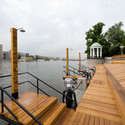
A conceptual framework for the development of the city of Medellin, the Urban Current[s] competition proposal by L+CC (Land+Civilization Compositions), Taller 301, andopenfabric considers it important to think of the river territory beyond a simple design of public space. Instead, this is seen as the opportunity to re-structure and establish a framework for the future development of Medellín. Their approach creates new principles for the development of the city by using all available resources (natural, social, economic, political, and cultural) to link the city with its history, its ecology, and the movement of people in the territory. More images and architects' description after the break.

















![Urban Current[s] Competition Entry / L+CC + Taller 301 + openfabric - Urban Design](https://snoopy.archdaily.com/images/archdaily/media/images/520e/a997/e8e4/4e4b/f900/013e/slideshow/1-AERIAL_CONCEPT.jpg?1376692625&format=webp&width=640&height=580)
.jpg?1376532490&format=webp&width=640&height=580)
.jpg?1376532564 "© Tran Ngoc Phuong")
.jpg?1376532302 "© Tran Ngoc Phuong")
.jpg?1376532832 "© Tran Tuan Trung")
.jpg?1376532772 "© Tran Tuan Trung")
.jpg?1376532490)