

Did you know Millenium Park in Chicago, Illinois was actually a desolate industrial wasteland until the turn of the century? The 24.5 acre public park, host to a state-of-the-art collection of architecture, landscape design, and art, is now a popular destination for residents and tourists alike -- all thanks to an unprecedented public-private partnership pioneered by former Mayor Richard Daley. To learn more about how Daley made Millenium Park a reality, with the help of famous designers like Frank Gehry, check out the video above.
Urban Design: The Latest Architecture and News
Video: A 3-Minute History of Chicago's Millenium Park
https://www.archdaily.com/529455/video-a-3-minute-history-of-chicago-s-millenium-parkJennifer Whelan
Four Freedoms Park: Louis Kahn's "Ancient Temple Precinct" in NYC
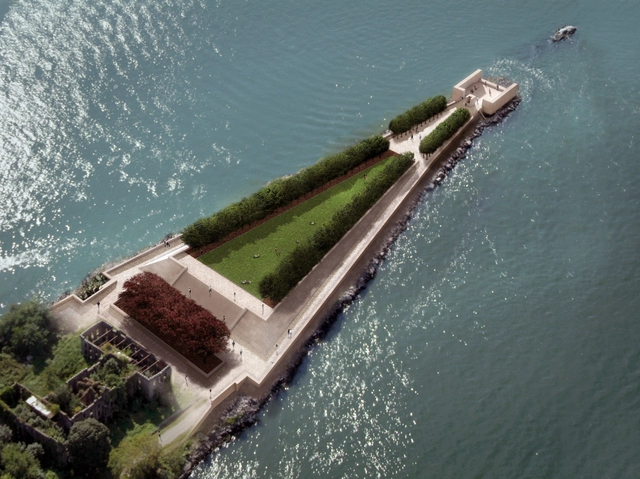
Built four decades after Louis Kahn's death, New York City's Four Freedoms Park - the architect's posthumous memorial to Franklin D. Roosevelt and his policies - is becoming one of the architect's most popular urban spaces. In a recent article for the Guardian, Oliver Wainwright investigates what he describes as perhaps Kahn's "best project". Wainwright's spatial description of the monument is interweaved by fragments of Kahn's personal history, building up a picture of a space with "the feel of an ancient temple precinct" and "a finely nuanced landscape". Although Gina Pollara, who ultimately realised the plans in 2005, argues that Four Freedoms Park "stands as a memorial not only to FDR and the New Deal, but to Kahn himself", can a posthumous project ever be considered as an architect's best? Read the article in full here.
https://www.archdaily.com/524049/four-freedoms-park-louis-kahn-s-ancient-temple-precinct-in-nycJames Taylor-Foster
Tamarama Kiosk / Lahznimmo Architects

-
Architects: Lahznimmo Architects
- Year: 2013
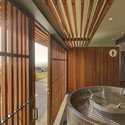
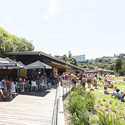
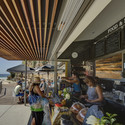
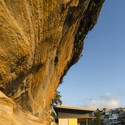

https://www.archdaily.com/511780/tamarama-kiosk-lahznimmo-architectsKaren Valenzuela
Happy Cities and Stranger Danger: An Interview with DIALOG's Bruce Haden

In this article, first published by Indochino as “What makes some buildings happy?” architect Bruce Haden, principal at DIALOG in Vancouver, discusses why some places feel good to be in and why some just have that awkward, quiet feeling.
Award-winning architect and urban planner. Dad. Researcher on happy vs. lonely cities. We talked to Bruce Haden about why some places feel good to be in, and some just have that awwwkward, quiet feeling.
Bruce Haden has only been an architect and a bartender. So ask him what he likes about it, and his answer is he doesn’t really know anything else. In high school, he didn’t want to pick between calculus and woodshop, so he ended up in a profession that’s part art, part engineering (and a fair amount of politics). Now, he works on a lot of large, public buildings. But he also spends a lot of time thinking about happy and lonely cities. He talks about how working with a client is like dating, why some buildings are worth being in and others are just empty, and whether adventure or luxury wins.
https://www.archdaily.com/509129/happy-cities-and-stranger-danger-an-interview-with-dialog-s-bruce-hadenVanessa Richmond
Cape Town Adopts Re-Blocking Strategy for Informal Settlements
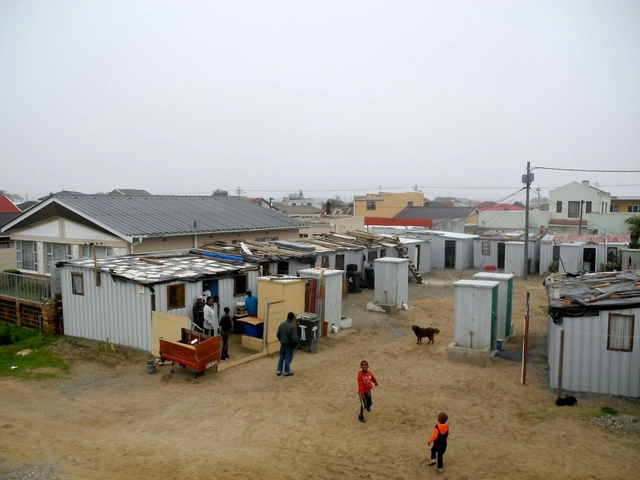
The city of Cape Town has adopted a new strategy for improving informal settlements - re-blocking, "the reconfiguration and repositioning of shacks in very dense informal settlements in accordance to a community-drafted spatial framework." Re-blocking serves to create communal spaces, make neighborhoods safer, and improve dwelling structures - among many other things. To see how it has been implemented and where, head to Future Cape Town and continue reading here.
https://www.archdaily.com/509017/cape-town-adopts-re-blocking-strategy-for-informal-settlementsJennifer Whelan
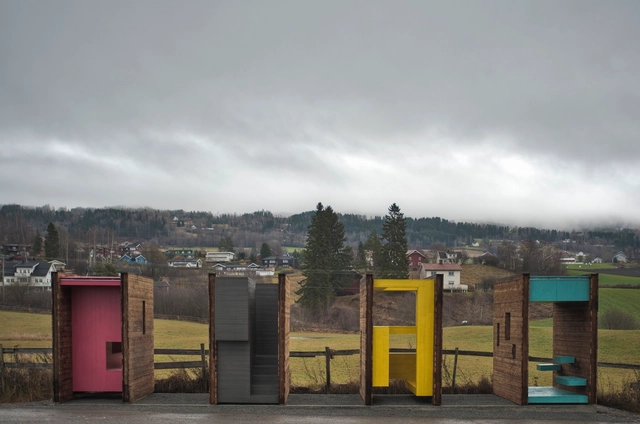
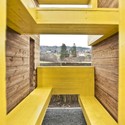
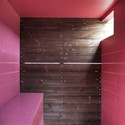
Barnetraakk / Rintala Eggertsson Architects + TYIN Tegnestue



-
Architects: Rintala Eggertsson Architects, TYIN Tegnestue
- Area: 20 m²
- Year: 2013
https://www.archdaily.com/500684/barnetraakk-tyin-tegnestueCristian Aguilar
Anhembi Space / Terra e Tuma Arquitetos Associados
.jpg?1398657346&format=webp&width=640&height=580)
.jpg?1398657317 "© Pedro Kok")
.jpg?1398657135 "© Pedro Kok")
.jpg?1398657236 "© Pedro Kok")
.jpg?1398657209 "© Pedro Kok")
.jpg?1398657346)
-
Architects: Terra e Tuma Arquitetos Associados
- Area: 5079 m²
- Year: 2012
-
Professionals: Jz Engenharia, MINUANO ENGENHARIA
https://www.archdaily.com/500650/anhembi-space-terra-e-tuma-arquitetosCristian Aguilar
2014 Canadian Urban Design Award Winners
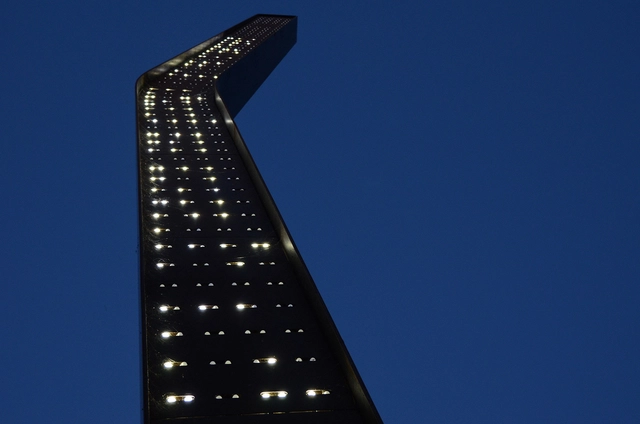
The winners of the 2014 Canadian Urban Design Awards, a biennial competition recognizing projects that contribute to the vitality and sustainability of Canadian cities, were recently announced by the Royal Institute of Canada (RAIC), Canadian Institute of Planners, and Canadian Society of Landscape Architects. Eight individuals, organizations, and firms - including Perkins + Will for a masterplan in Edmonton - were recognized for their urban design efforts in categories such as Community Initiatives and Civic Design. For information and images on the winning entries, read on after the break.
https://www.archdaily.com/497848/2014-canadian-urban-design-award-winnersJennifer Whelan
The Architecture of Kowloon Walled City: An Excerpt from 'City of Darkness Revisited'
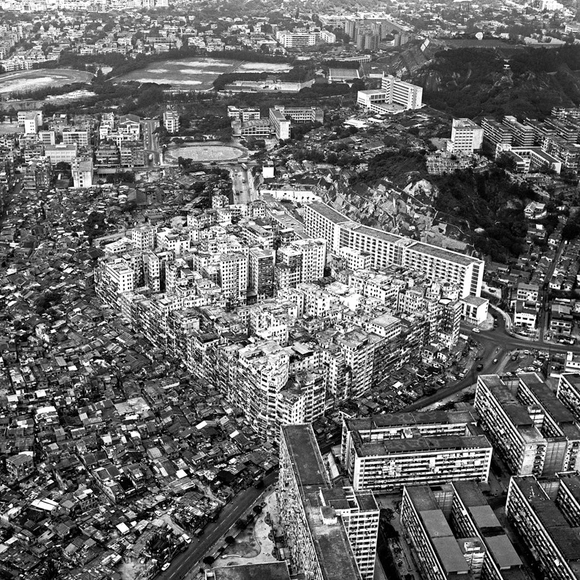
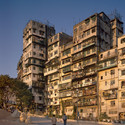
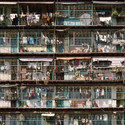
In light of the release of a second, revised edition of City of Darkness -- the authoritative text on Kowloon Walled City, which you can help Kickstart here -- authors Greg Girard and Ian Lambot have shared an excerpt from City of Darkness Revisited.
The early phases of the Walled City were characterised by predictable building typologies and the buildings were constructed on the principle of squatters’ rights, with random construction on spots of available land by whoever got there first. Alleyways and passages evolved – unplanned – into the established ‘map’ of the City, which would remain until it came down. A basic electric supply existed, increasingly burdened by illegal connections that frequently overloaded the system, and the few standpipes supplied the only water. As the need to accommodate the ever growing residential and commercial populations forced it to in the 1960s, the building typology of the Walled City made the leap from two- to three-storey residential structures to taller, six- to seven-storey ones. This represented an important threshold, because at these greater heights the buildings unavoidably became more complex and required greater labour to realise, reinforced concrete, more investment, and so on. They also required a different way of living. Water had to be transported up to the higher floors by hand. Likewise the propane gas canisters that furnished fuel to cook or heat water.


https://www.archdaily.com/493900/the-architecture-of-kowloon-walled-city-an-excerpt-from-city-of-darkness-revisitedJames Saywell
Brooks + Scarpa Designs Park-And-Ride Plaza for Seattle Rail Station

Brooks + Scarpa has won a competition to design a new park-and-ride plaza for the future Angle Lake light rail station in Seattle. As part of the 1.6-mile South 200th Link Extension, which will connect Angle Lake to the airport and downtown area by 2016, the $30 million complex will provide the station’s anticipated 5,400 passengers with a pedestrianized plaza, drop-off and retail area, as well as a 1,050-stall parking garage and 35,000 square feet of reserved space for future transit-oriented development.
https://www.archdaily.com/494478/brooks-scarpa-designs-park-and-ride-plaza-for-seattle-rail-stationKarissa Rosenfield
AD Classics: Kresge Auditorium / Eero Saarinen and Associates
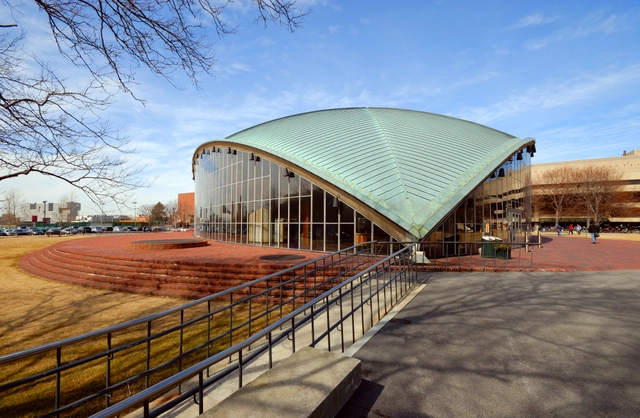
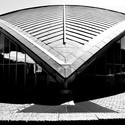
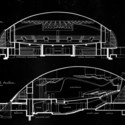
Kresge Auditorium, designed by Finnish American architect Eero Saarinen, was an experiment in architectural form and construction befitting the Massachusetts Institute of Technology’s focus on technology and innovation. This feat of sculptural engineering serves as a meeting house and is part of the cultural, social, and spiritual core of MIT’s campus. Kresge Auditorium is one of Saarinen’s numerous daring, egalitarian designs that captured the optimistic zeitgeist of Post-war America.



https://www.archdaily.com/492176/ad-classics-kresge-auditorium-eero-saarinen-and-associatesMichelle Miller
Construction Begins on the Vast Platform for New York's Hudson Yards
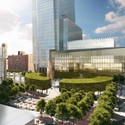
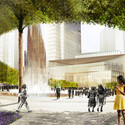
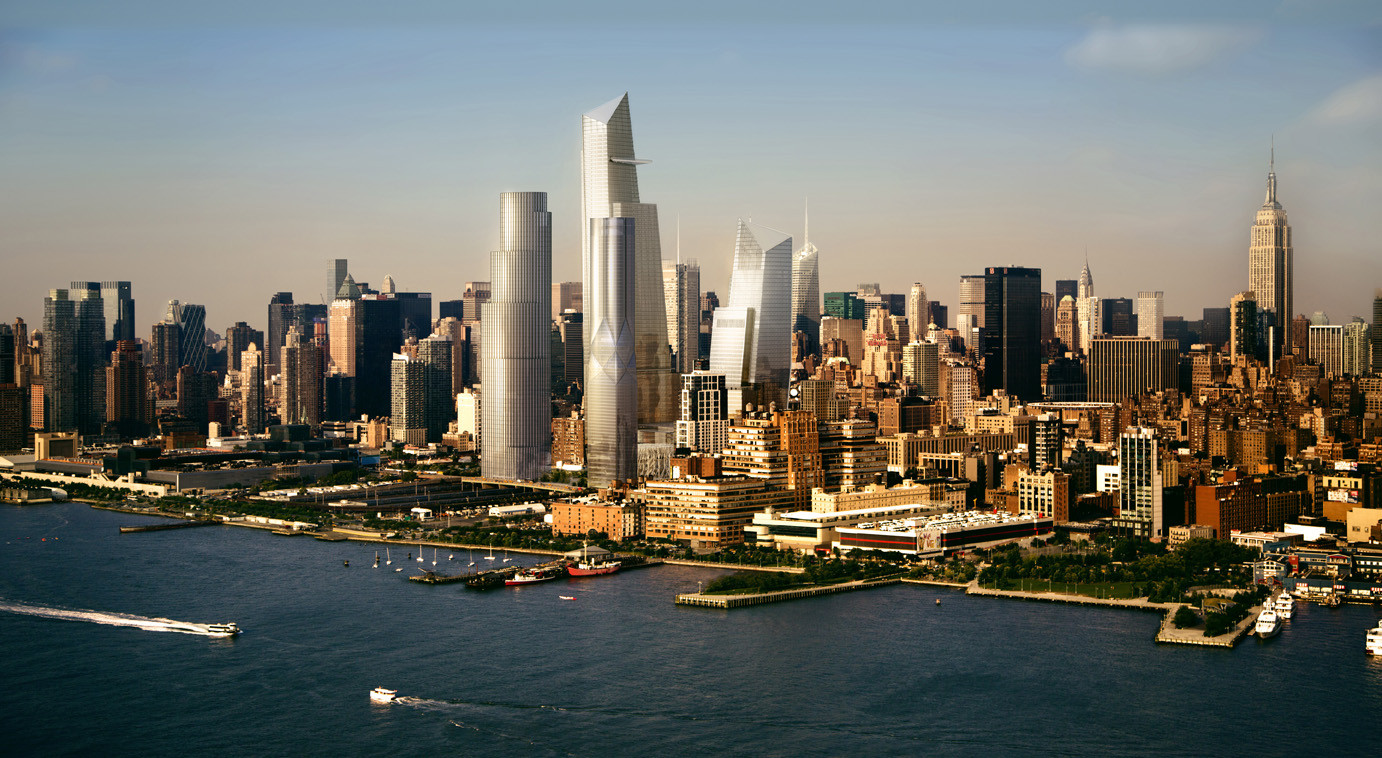
The construction of Hudson Yards, the biggest private real estate development in the history of the United States and currently the largest development in New York City since the Rockefeller Center, is gaining momentum. The vast infrastructural project in the heart of the city is set to enclose an active rail yard with an expansive platform, paving the way for 28 acres (and 17 million square feet) of commercial and residential space. Housing over 100 commercial units, 5000 residences, 14 acres of open public space, an enormous school and luxury hotel all on top of a working train depot, the project will directly connect to a new subway station and meet with the High Line.


https://www.archdaily.com/488903/construction-begins-on-the-vast-platform-for-new-york-s-hudson-yardsJames Taylor-Foster
Playfully Reimagining Madrid's Urban Realm
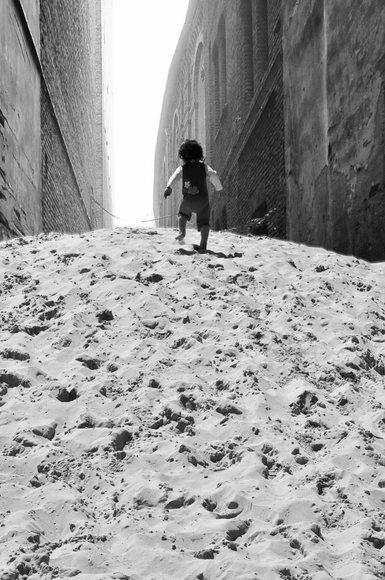
How often are spontaneous, primitive, radical actions implemented in large urban centres? Siempre Fiesta (or Always Party) by Andrés Carretero and Carolina Klocker was recently voted by the We-Traders community as their favourite in the recent Open Call Madrid competition. Viewing the city through children's eyes, where the order of the day is primarily playing or making, and using the concept of "free movement of our body in space" as a key driver, Carretero and Klocker developed a playful scheme that proposed filling a niche in Madrid's urban grid with sand as a way of managing the environment to create "comfortable space."
https://www.archdaily.com/487114/playfully-reimagining-madrid-s-urban-realmJames Taylor-Foster
Freya and Robin / Studio Weave



https://www.archdaily.com/487799/freya-and-robin-studio-weaveDaniel Sánchez
Energy Carousel Dordrecht / Ecosistema Urbano Architects






-
Architects: Ecosistema Urbano Architects
-
Professionals: Elger Blitz, AST engineering
https://www.archdaily.com/486943/energy-carousel-dordrecht-ecosistema-urbano-architectsDaniel Sánchez
Pilar de la Horadada Promenade / Joaquín Alvado Bañón

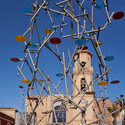
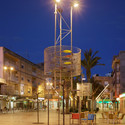
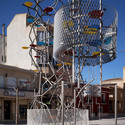
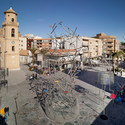

-
Architects: Joaquín Alvado Bañón
- Year: 2013
-
Professionals: Guia Consultores
https://www.archdaily.com/485068/pilar-de-la-horadada-promenade-joaquin-alvado-banonCristian Aguilar
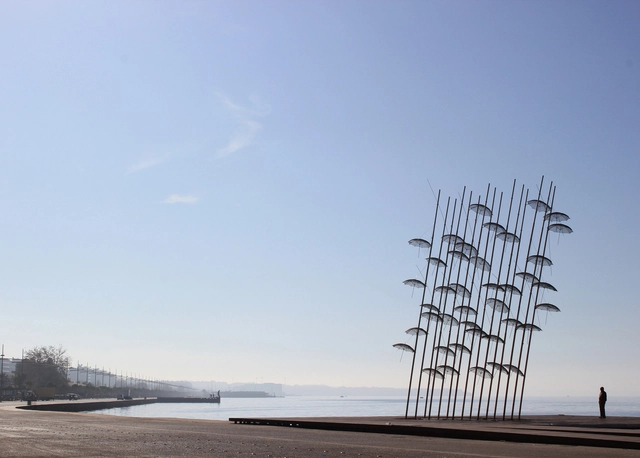
New Waterfront of Thessaloniki / Nikiforidis-Cuomo Architects



-
Architects: Nikiforidis-Cuomo Architects
- Area: 238800 m²
- Year: 2014
-
Manufacturers: SIMES
https://www.archdaily.com/484899/new-waterfront-of-thessaloniki-nikiforidis-cuomo-architectsDaniel Sánchez
Familistere Guise / h2o architectes


-
Architects: h2o architectes
- Area: 40000 m²
- Year: 2014
-
Professionals: France Aires, HDA, Michel Desvigne Paysagiste
https://www.archdaily.com/484268/familistere-guise-h2o-architectesCristian Aguilar