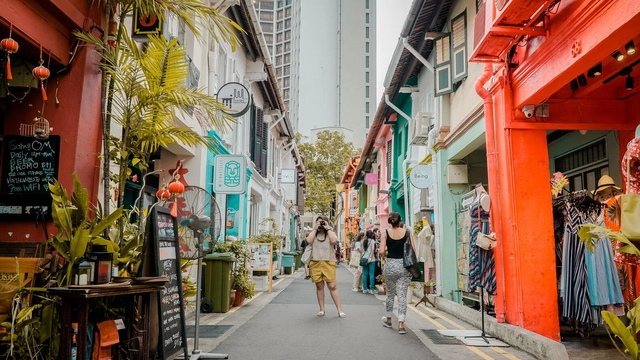
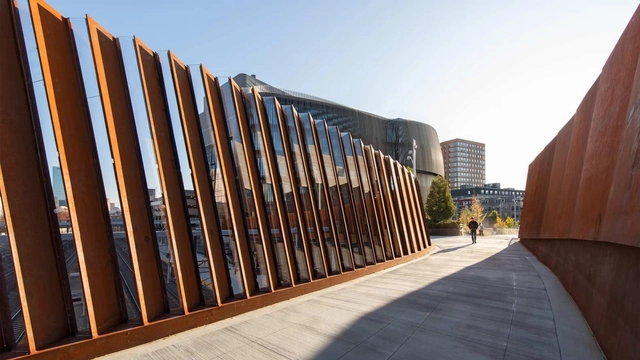
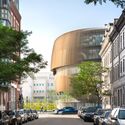
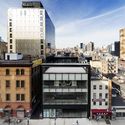
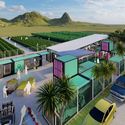
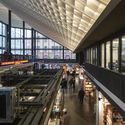
Haji Lane, Singapore. Photograph by Bna Ignacio, via Unsplash
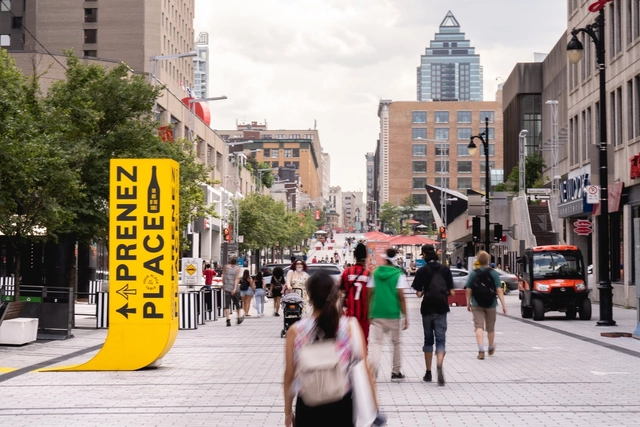
Time Out, an online platform for urban culture that looks for the most vibrant locations around the globe, has recently ranked the 30 coolest streets in the world. The website, which usually focuses on cities as a whole, having already ranked the coolest neighborhoods, is now taking a more local approach due to the Covid-19 pandemic.
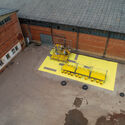
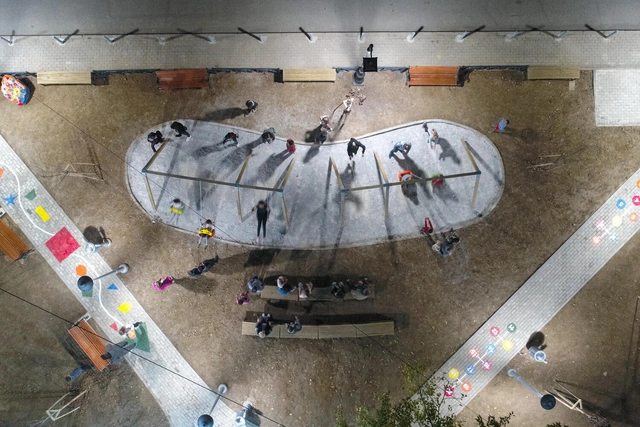
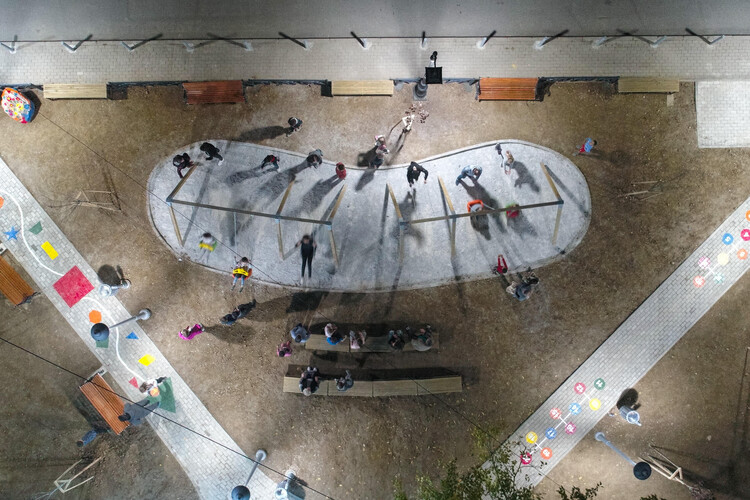
In a piece, originally published on Metropolis, author Lauren Gallow highlights an urban transformation in California, led by a group of local organizations and designers. The project "replaces a previously hazardous alley with play areas, public art, and native plantings", in order to reveal the untapped potential of the overlooked public realm.
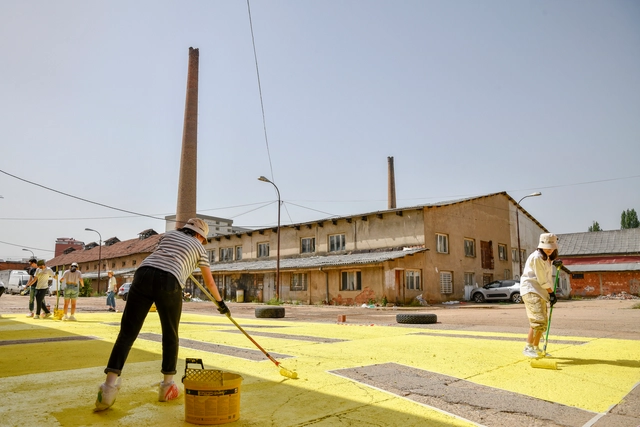
Manifesta 14 recently announced that the 2022 edition of the European Biennial of Contemporary Art will take place in Prishtina, Kosovo. In preparation for the event, Carlo Ratti Associati has been commissioned to create an urban vision for the host city, focusing on sustainable solutions attuned to its current realities. The urban interventions showcase CRA's newly defined participatory urbanism methodology and explore how Prishtina could be transformed by the citizens' act of reclaiming public space.
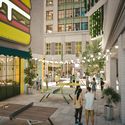
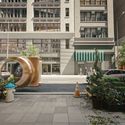
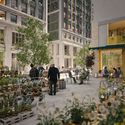
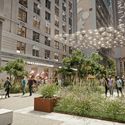
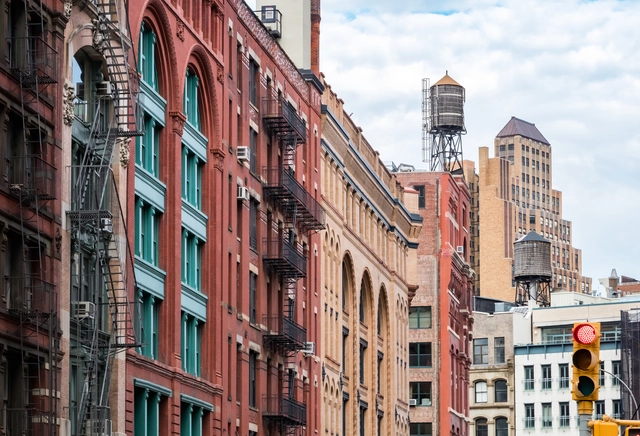
ODA has just launched its latest project, an urban vision for the future of the streets of New York. The project titled Beyond the street- Reimagining the flower district proposes to transform a city block from the outside in, altering the pedestrian experience and introducing new zoning changes that would give landowners air rights or tax credits in exchange for handing over their inner courtyards to be transformed into public/private spaces.
ArchDaily had the chance to talk with Eran Chen, founding principal and executive director of ODA, about the firm’s very special proposal that seeks to improve our urban environment. Check the interview and watch ODA’s explanatory movie.
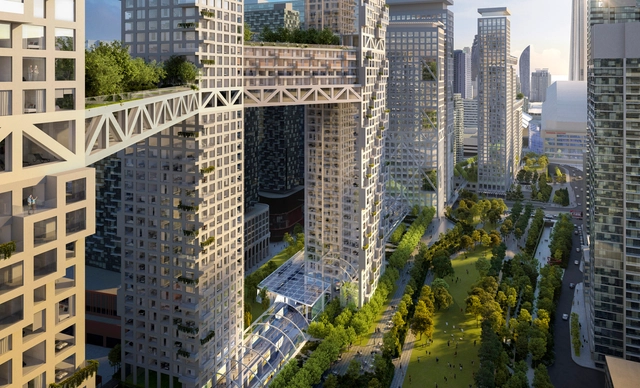
Safdie Architects have released the images of 'ORCA Toronto', a mixed-use urban development with an integrated park in the heart of downtown Toronto. The project covers 6.5 hectares (65,000 sqm) west of the CN Tower, 4.5 hectares (45,000 sqm) of which are dedicated to the publicly-accessible urban park, while 2 hectares (20,000 sqm) are for residential, commercial, retail, and transit facilities. The proposed project reconnects the downtown area to the city’s waterfront, promising to become a vital hub that animates the underutilized parts of the city.
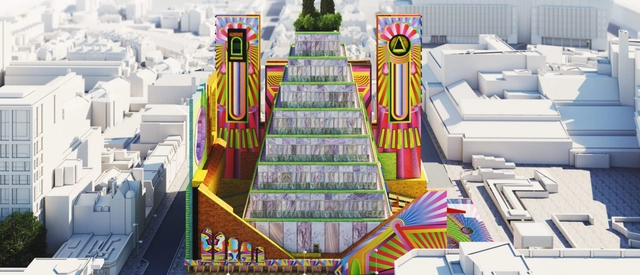
Stefan Fuchs & Raphael Dillhof interview Adam Nathaniel Furman and discuss the role and importance of facades in today's urban fabric, "in the context of a broader range of social, economic, and political issues". Part of a more in-depth study examining the role of facades in the 21st century, this discussion also raises the question of why buildings always embody the values of their creators.
https://www.archdaily.com/963168/adam-nathaniel-furman-buildings-always-embody-the-values-of-their-creatorsRaphael Dillhof, Stefan Fuchs
For this month, The Dirt and author Jared Green share with us a study about urban heat islands, exploring new approaches that have been designed to both reduce urban temperatures and help communities adapt to a hotter world, In three cities: New York City, Copenhagen, and Abu Dhabi.
https://www.archdaily.com/962913/urban-heat-islands-are-increasingly-dangerous-but-planners-and-designers-have-solutionsJared Green
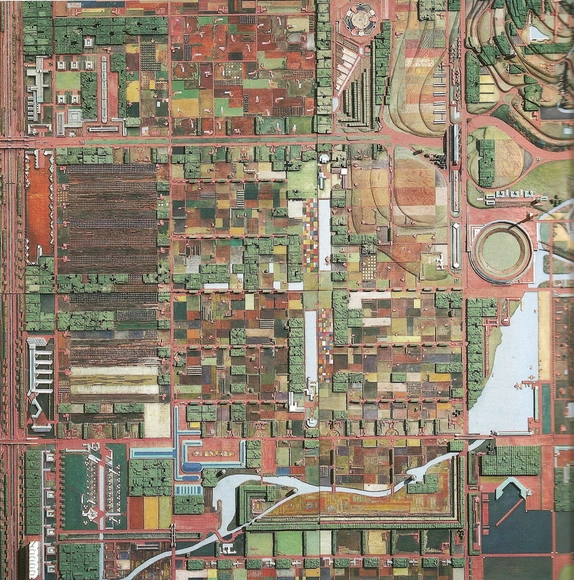
Broadacre City by Frank Lloyd Wright. Image Courtesy of Juan Miró
Juan Miró, co-founder of Miró Rivera Architects reflects in an opinion piece on the value of American cities. Stating that "when we idealize cities like Copenhagen, we risk losing focus of the fundamental historical differences between the urban trajectories of European and American cities", the architect and educator draws a timeline of events and urban transformations, in order to explain why it would be more relevant to look on the inside when planning U.S cities, rather than taking examples from the outside.
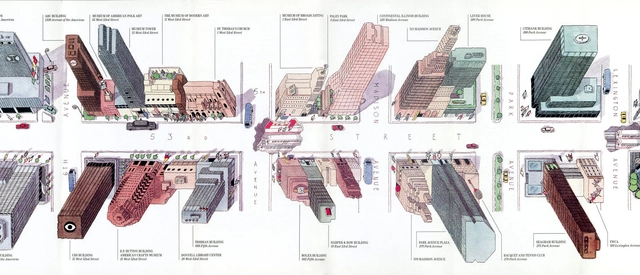
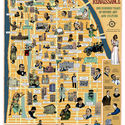
Martin Pederson interviewed this week Antonis Antoniou and Steven Heller, author of Decoding Manhattan, a new book that compiles over 250 architectural maps, diagrams, and graphics of the island of Manhattan in New York City, talking about the origin story of the book, the process of research, and the collaboration.
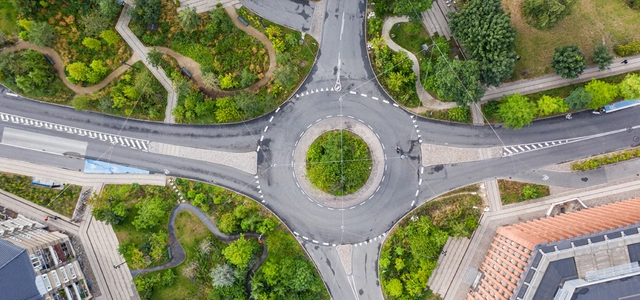
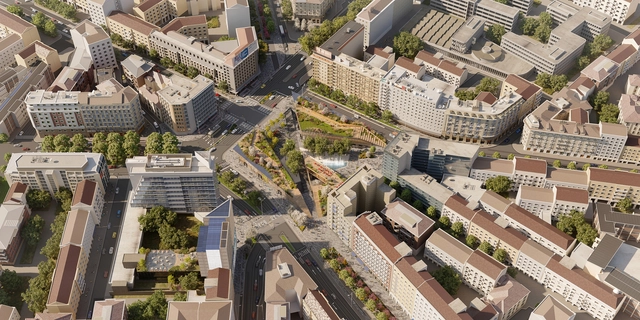
The Loreto Open Community project is the winning proposal of the competition organized by the Municipality of Milan to redesign Piazzale Loreto, now a crowded traffic junction. Designed by Metrogramma, together with Mobility in Chain, Studio Andrea Caputo, LAND, Temporiuso, Squadrati and developed by Ceetrus Nhood, the project envisions a layered system of architectural objects and public spaces that would foster a wide array of activities while also shaping a new green area for the city.
Transformation of the brownfield area in Náchod city. Image Courtesy of LETO Architects
Urban design is increasingly striving for more inclusive, sustainable environments, bringing together various groups and activities, and fostering social interaction. This week's curated selection of the Best Unbuilt Architecture focuses on urban designs, large-scale urban development projects and masterplans submitted by the ArchDaily Community, showcasing how architects around the world work with and shape the urban fabric of highly diverse environments.
From the transformation of a brownfield into a lively neighbourhood in the Czech Republic to the redevelopment of Bergamo's city centre around new spatial and collective values, the following projects showcase the ideas shaping urban design, from functional diversity and notions of proximity to a focus on outdoor spaces. The common denominators of the following projects are their collective focus and the strong connection with the existing urban fabric.
Dozens of neighborhoods in New York City have been upzoned based on contrived, and even false claims made by the city, which promised more diversity, affordable housing, minimum displacement, and other worthy goals. None of those projections materialized, but this is never acknowledged. Worse, the upzoning created the opposite conditions: less diversity, fewer affordable units, and whiter, wealthier neighborhoods. This, too, is never acknowledged. But the damage is done—and developers are having their way—following the new zoning. Then it’s onto the next neighborhood, with the same approach. Roberta Brandes Gratz explores in her article city planning and city promises in New Tork City, disclosing zoning regulations that lead to the opposite of what they preach.
Jennifer Toole, ASLA, is the founder and President of Toole Design and has over 30 years of experience planning and designing multimodal transportation systems. A certified planner with a degree in landscape architecture, Toole has a strong background in urban design. She has been involved in numerous projects of national significance for the Federal Highway Administration, American Association of State Highway and Transportation Officials (AASHTO), and National Highway Traffic Safety Administration (NHTSA).
https://www.archdaily.com/960917/jennifer-toole-makes-the-case-for-better-bike-networksJared Green
Kosovo - Implementation during Covid-19. Image Courtesy of UN-Habitat, Global Public Space Programme
The Un-Habitat or the United Nations agency for human settlements and sustainable urban development, whose primary focus is to deal with the challenges of rapid urbanization, has been developing innovative approaches in the urban design field, centered on the active participation of the community. ArchDaily has teamed up with UN-Habitat to bring you weekly news, article, and interviews that highlight this work, with content straight from the source, developed by our editors.
As the fight against coronavirus keeps on bringing many cities around the world to a standstill, the need to support urban entities and local governments is greater than ever. Although the pandemic has drastically changed our relationship with the public realm, due to all the imposed but necessary restrictions, from physical distancing to limiting access, the demand for public space has not decreased. People still need to go outside, commute, work, study, play, socialize, and maintain a healthy mental state. Discover in this article UN-Habitat’s key areas of focus for an effective urban response for COVID-19 that local and national governments should focus on to prevent the spread of the virus and to develop resilience to and preparedness for events of a similar nature.
The City Prosperity Index, CPI, set by UN-Habitat, evaluates urban prosperity according to five parameters as productivity, infrastructure development, environmental sustainability, quality of life, and equity/social inclusion. To a greater or lesser extent, these five factors are represented in the street pattern of every city in the world. Streets have multiple functions as the mobility of people and goods, the supply of energy, water, and information, the collection of waste, the growth of trees, plants, insects or birds, the shadow and sun radiation, the bench where to sit, the place to salute and talk with your neighbors, a playground, or the access to the bakery where you buy the bread. In this sense, streets are public and vibrant spaces, which can perform multiple functions and activities.
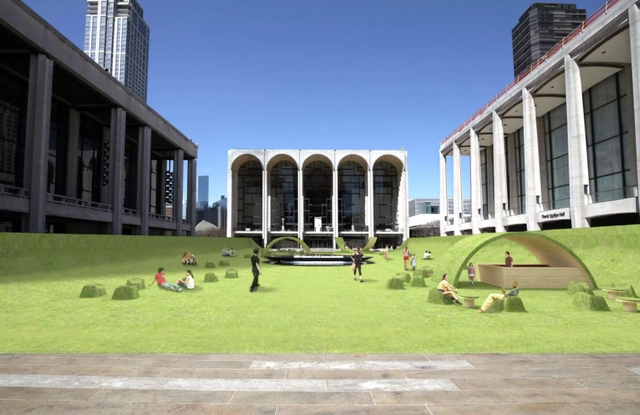
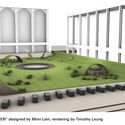
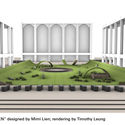
The Green. Image Courtesy of Mimi Lien/Rendering by Timothy Leung
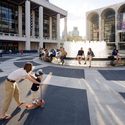
After several event cancellations due to the pandemic, Manhattan’s Lincoln Center for the Performing Arts complex have transformed their outdoor plaza into a green park and outdoor performance venue called The Green. As of May 10, the Restart Stagesinitiative will add fake grass across the 14,000-square-foot (1,300 sqm) Josie Robertson Plaza. The plaza, which was originally designed by Philip Johnson, Wallace K. Harrison, and Max Abramovitz, and renovated by award-winning architecture firm DS+R in 2010, will transform into a public urban space of gathering, leisure, and entertainment.
Northeastern University Interdisciplinary Science and Engineering Complex by Payette. Image Courtesy of The American Institute of Architects
The American Institute of Architects (AIA) has announced five projects recognized with its 2021 Regional and Urban Design Awards. As the Institute notes, the best planning accounts for the entire built environment, local culture, and available resources. The Regional & Urban Design program recognizes the best in urban design, regional and city planning, and community development.