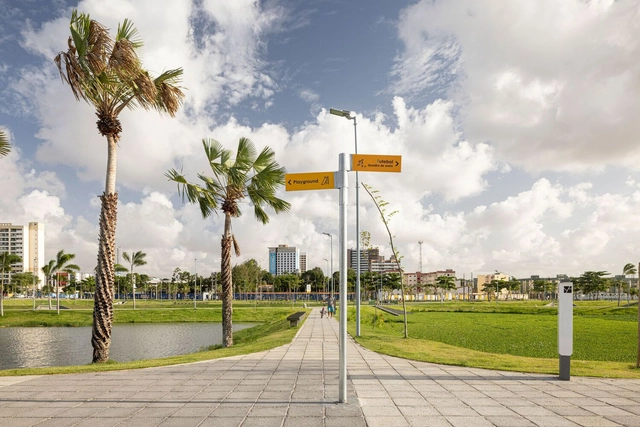
It’s easy to feel lost and anxious in a new environment. Even with the satellite-accurate quality of modern map apps in our back pockets, modern humans still get stressed when their internal map of the immediate area draws a blank.
While digital maps help us to find the fastest route through streets, when our need for direction is most urgent – such as finding the right department in a vast hospital campus, the relief of a toilet in a foreign airport, or the right platform 30 seconds before a train departs – even with innovative IPS technology, digital interfaces still come a distant second to well-placed signs or other, more intuitive, solutions.
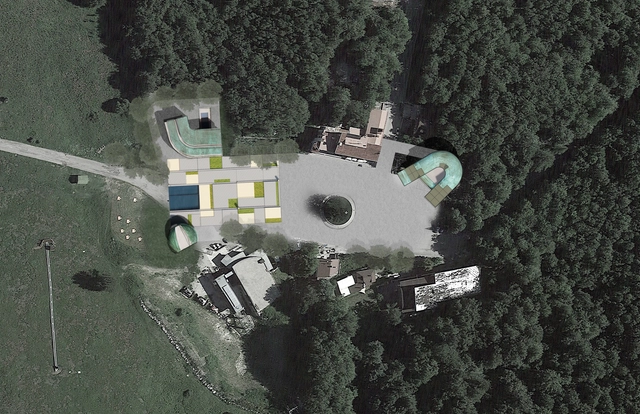
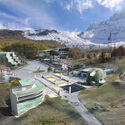
rati di Tivo Piazza at Gran Sasso . Image Courtesy of Steven Holl Architects
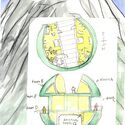
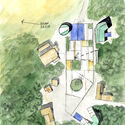
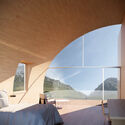
Steven Holl Architects has revealed a plan for the Gran Sasso area in Abruzzo, Italy, specifically in Prati di Tivo. The project aims to develop an area dedicated to tourists and mountaineers, complete with accommodation spaces, pools, spas, a restaurant, and a public plaza with views toward the mountain range. The designs and models of the project, along with the initial watercolor sketches, are presented at the Antonia Jannone Disegni di Architettura exhibition titled "Steven Holl: Half Earth," which will be available for viewing from May 26 to July 14.
Cities are a canvas for architectural creativity and the dynamism of urban life. In recent years, they have taken on an additional role: that of living laboratories for innovative architecture and urban design. International cities have become experimental grounds for architectural technology, sustainable practices, and human-centered design principles to be tested and refined. This paradigm shift has not only transformed the physical aspects of urban environments but has also redefined the relationship between architecture, community, and the built environment.
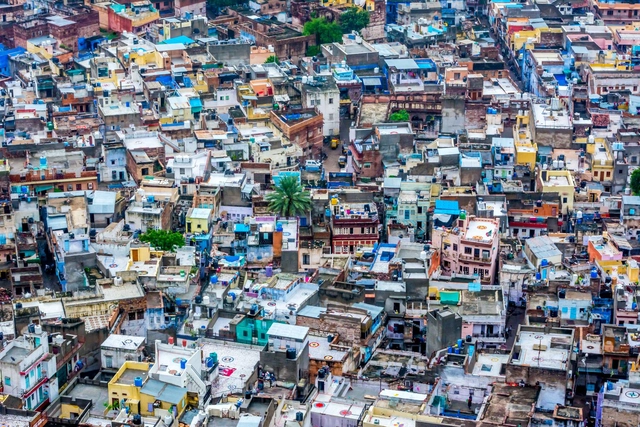
In April 2023, India achieved a significant milestone that will shape the trajectory of its urbanization going forward. According to data from the United Nations, the South Asian subcontinent is now home to over 1.4286 billion people, overtaking the former leader China’s count of 1.4257 billion. With a population boom that is estimated to grow at a 0.7% rate annually, India faces several challenges and opportunities in its path to becoming a global power.How will India’s rising demography influence its built environment?
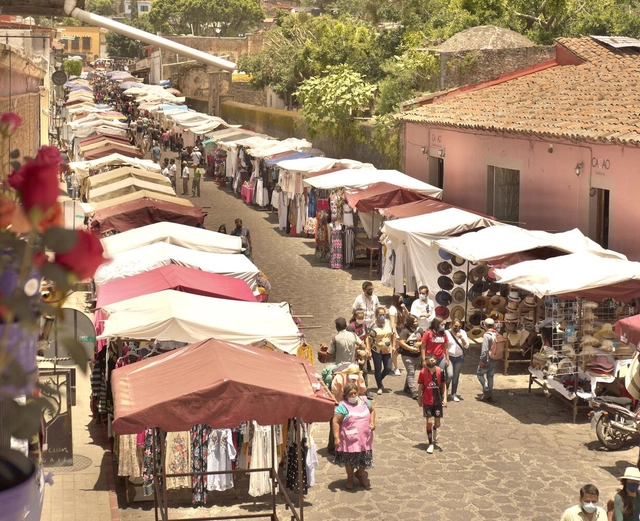
Street fair in Tepoztlán, Mexico. Photo by Karo Kujanpaa, via Unsplash
Commerce is a human activity practiced by societies since the beginning of evolution. Exchanges were made between products negotiated by entire communities at first. They began to be based on a common currency and practiced individually over time, from family to family. In one way or another, this activity is a characteristic of civilization and even influences our territorial organization. Historically practiced in outdoor spaces, commercial activity defined many spatial configurations.
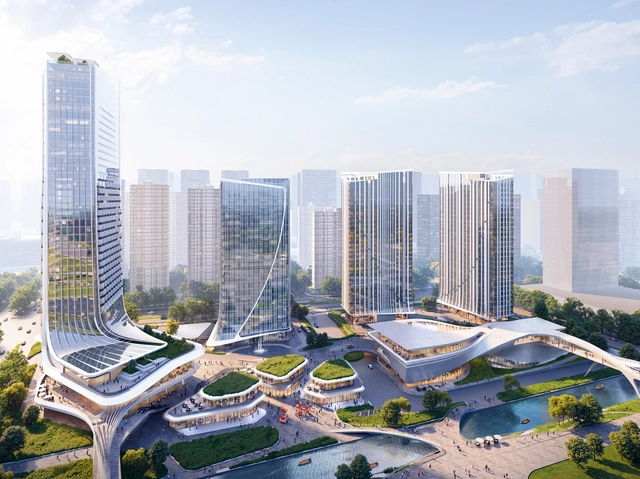
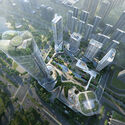
Nanjing K.Wah G72 / UNStudio. Image Courtesy of K.Wah
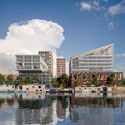
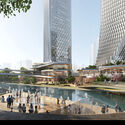
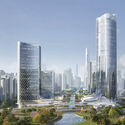
UNStudio has been commissioned to create a human-centric mixed-use destination on the waterfront of Nanjing, China. Developed by K.Wah Group, the new complex aims to enhance the working-living environment for the local community while contributing as a hub for culture and finance. The project, set along the central axis of the Hexi New District, introduces high-rise office towers, commercial and cultural functions, two serviced apartment buildings, a headquarters tower, a hotel, and various public amenities.
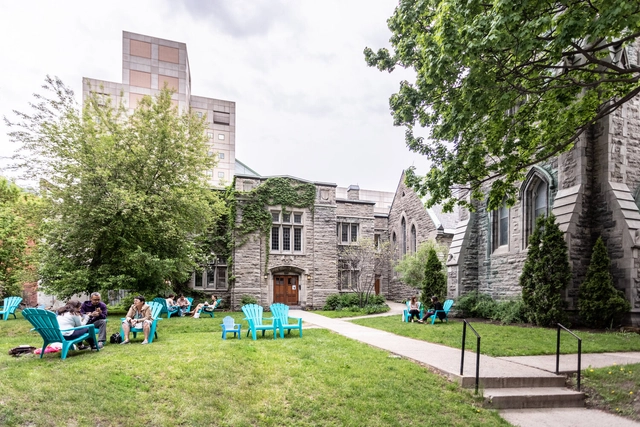
Cities need to prepare for a wave of declining houses of worship. While faith institutions, at least the Christian ones, have been asking WWJD (What would Jesus do?), municipalities need to get them to ask another question: WWJJD (What would Jane Jacobs do?). Doing so might lead to a new model for true community houses of worship.
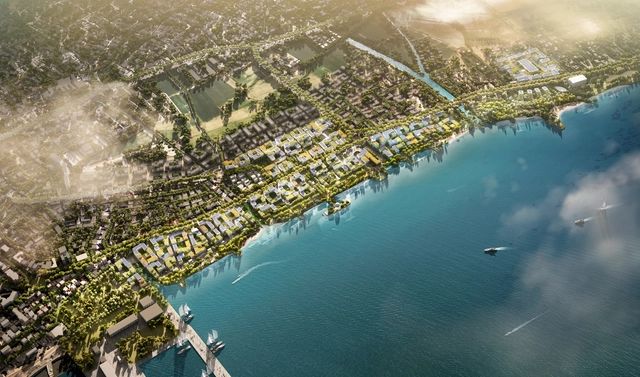
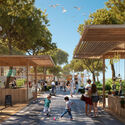
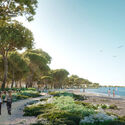
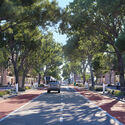
Foster + Partners, working in collaboration with Petrolina Group, has revealed the design of a new master plan to transform the seafront of Larnaca, Cyprus, into a sustainable and enjoyable area for the city residents, future generations, and new visitors. The resort town of Larnaca aims to redesign one of its main arteries, the Larnaca-Dhekelia Road, to become more pedestrian-friendly, along with its seafront. Foster’s proposal aims to enhance the land’s ecological value and to double the length of the waterfront accessible to the public.
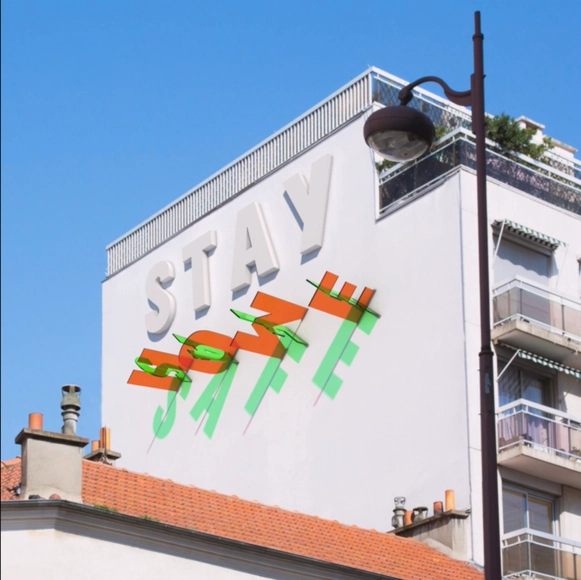
When transparent facade elements deliberately evolve from the course of the sun, we can explore a fascinating slow movement in stark contrast to the hectic urban street life on the ground. Especially the French designer Pierre Brault has responded to the accelerated rhythm of our society with facade installations that combine the principle of the sundial with colorful pop design. His three-dimensional works made of recycled colored plexiglass mesmerize through simple but dramatic movements of colored shadows. In the interview, Brault explains his inspiration, the experimental approach and his interest in working responsibly with material.
In each region of the globe, vernacular constructions of the most varied kind emerged, whether buried underground, inside caves or even built with stones, wood and fabrics. Shelter solutions were based on available materials and weather conditions. The architecture arises from the development of these shelters, built to protect people from predators and the weather.
The construction solutions employed thousands of years ago have evolved and become increasingly complex but kept a common goal: dealing with the weather.
Besides reflecting the aspirations of a society, public spaces also configure the scenarios in which new ideas of coexistence and the collective can emerge from their qualities. Thinking about the streets, squares, parks, and even nature is a way of dealing with common ideals and ensuring the social dynamics in the relationship between bodies and the environment.
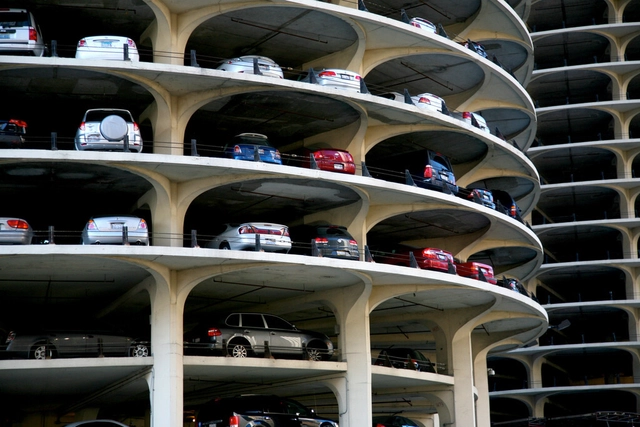
For every car that drives on the road, we need to find a place to put it- but are parking garages the answer? Parking garages are often seen as the antithesis of people-friendly urban planning. Large gray boxes are used solely to store cars that make temporary visits and seem like a poor use of space, especially in cities where land comes at a premium. Because of these garages, urban cores have quickly been transformed into parking districts, where vehicle storage dominates the aesthetic of a business district. Building codes only contribute to the problem, where the number of spaces is passed down as a mandate, even spreading out into suburban areas. Parking garages are everywhere- flanking shopping malls, connecting to residential towers, and surrounding sporting venues.
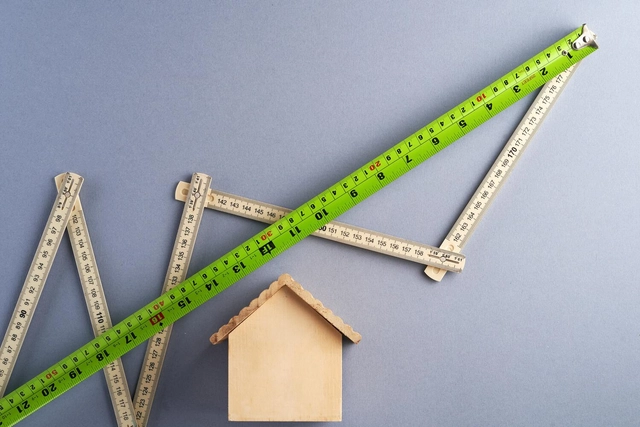
Animals measure distances and weight for their survival. On the other hand, stemming from their need to communicate to live in society, humans created languages and, later, established the standards of measuring. Whether for moving around, portioning food, making tools, or calculating the weight of objects and animals, measurement standards arise from this need that was already present in human activities in the age of chipped stone and has been with us ever since. Nowadays, most of the world's population uses meters and centimeters to measure distances. These standards come from the need to establish comparisons that allow trade between peoples and also from political and social disputes.
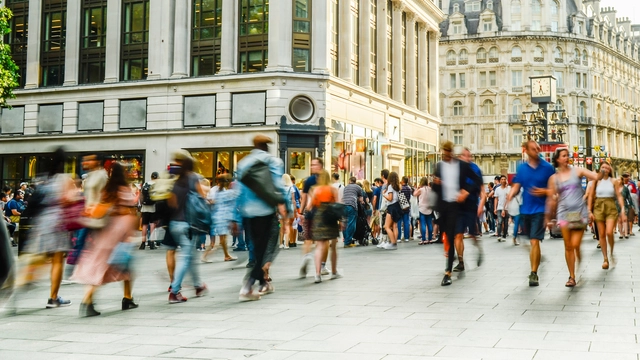
What is the 15-Minute City? It’s every city ever built by humans on this planet until a century ago, but with a catchy new name. If a city’s old parts haven’t been destroyed in the past century, it’s the areas that attract the most tourists. And people will travel across continents and oceans to experience the best of them.
Forty years ago, a few pioneers decided to start building 15-Minute Cities again. Actually, they built 5-minute cities because they didn’t think people would walk for 15 minutes—and, in the early 1980s, they were right, because people were so conditioned to driving everywhere back then. Seaside, Florida, is where it all began. Time magazine called it “the little town that changed the world.” For the first time in the modern history of sprawl, people could toss their car keys in a drawer or hang them on the wall and leave them there for days. When people returned from Seaside vacations, they came back asking, “Why can’t we build this way at home?” And soon, the New Urbanism was born.
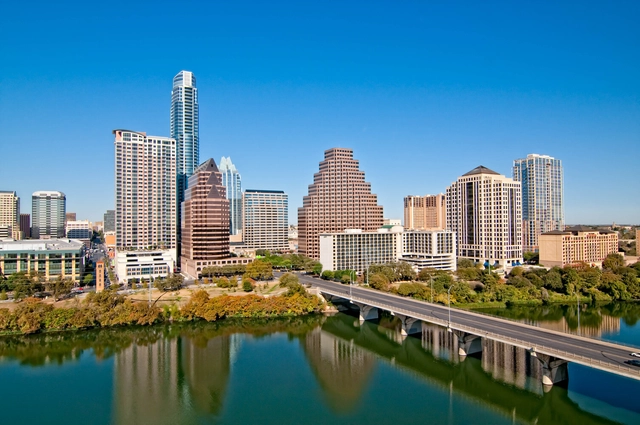
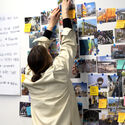
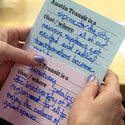
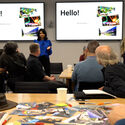
The Austin Transit Partnership has selected UNStudio, HKS, and Gehl to lead the architecture and urban design of Project Connect, a major expansion of the public transportation system in Austin, Texas, in the United States. The project is set to become a transformative investment, including and integrating the light rail system, expanded bus routes, and connectivity with more services across the city. The initiative is also voter-approved. In November 2020, Austin citizens approved Project Connect, leading to the creation of the independent entity Austin Transit Partnership charged with implementing the project. The citizens of Austin are invited to continue to get involved and provide feedback.
With many high streets hollowing out and the National Health Services Association pushed to its limits, Heatherwick Studio is calling for a new kind of health space in metropolitan cities. The Health Street initiative is placed right at the heart of urban communities, reimagining the way we look at well-being and the holistic health of complete localities. Moreover, this radical approach to health creation is based on integrating community-led facilities into the local high streets.
As farmers water crops by moonlight, undocumented children head to school and villagers scan the sky for surveillance airplanes—these are glimpses of a complex culture that emerges in south Lebanon after dark. In collecting some of these nightly practices, Mohamad Nahleh—lecturer in architecture and urbanism at MIT—journeyed across the landscapes of Jabal ‘Amil hoping to build a new alliance between architecture and the night. His "Path of Nightrise" research has turned into a construction to revive a forgotten river path and was published by Places Journal. The interview with Nahleh argues for a new nocturnal imagination in design and reveals, not only how the night has changed in Lebanon over time, but also how he has changed alongside it.
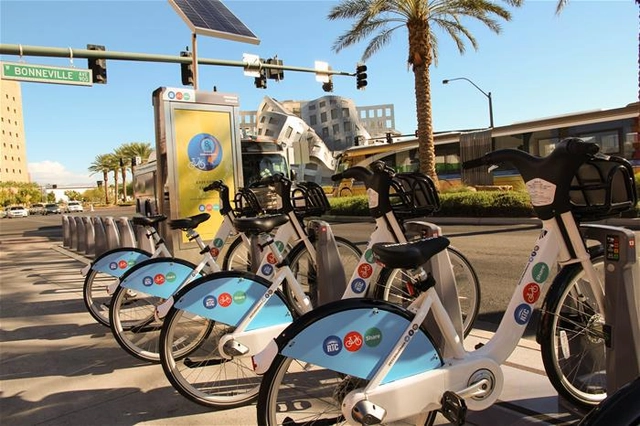
Over the last few years, bike share systems experienced a renaissance as the pandemic forced a hard decline in other forms of public transportation like trains and commercial flights where people wanted to avoid close contact with strangers. While ridership is now on a slow decline, since much of the “normal life” aspects have returned, many people continue to see bike shares as a viable means of transportation, lured by the ease and affordability of getting from place to place.