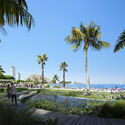
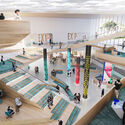
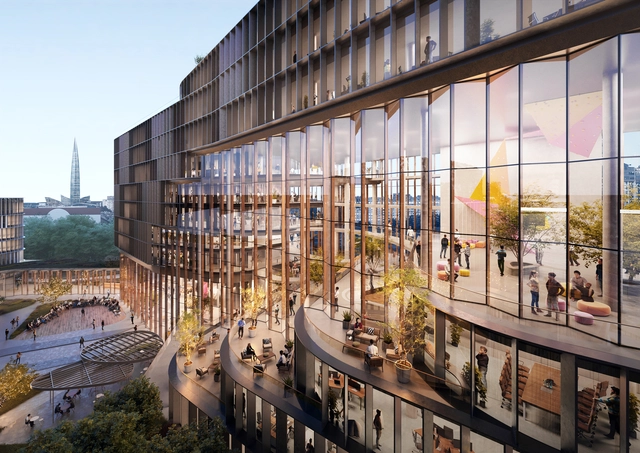
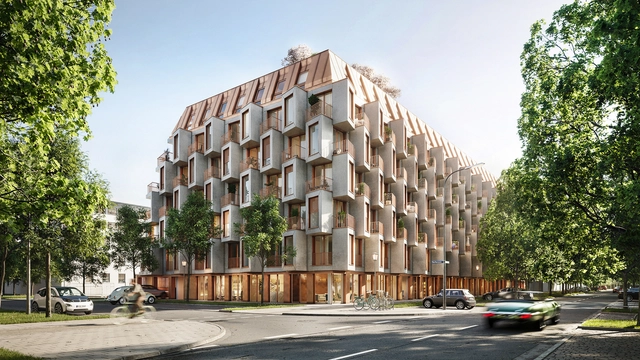
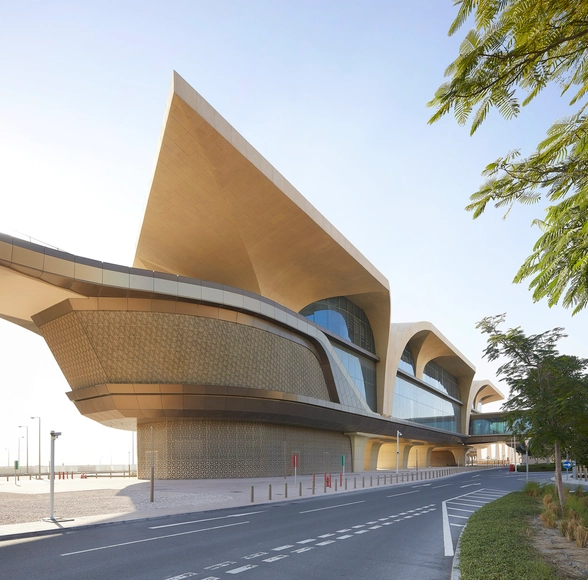
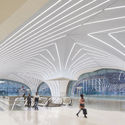
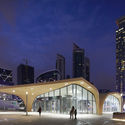
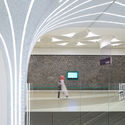
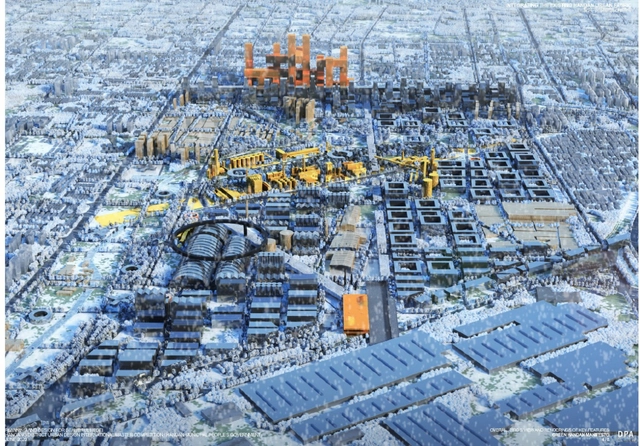
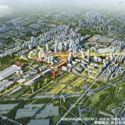
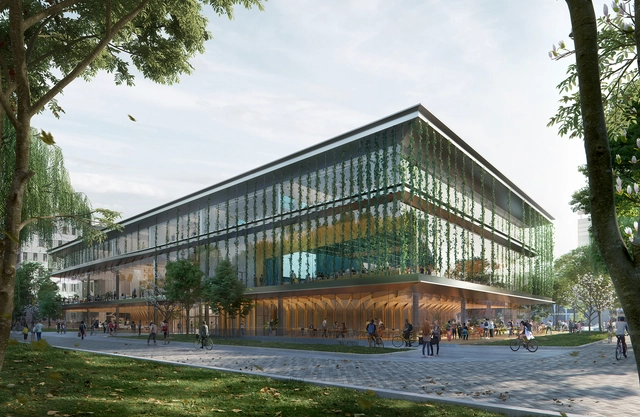
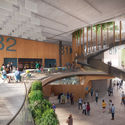
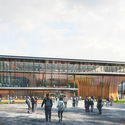
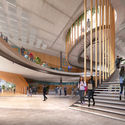
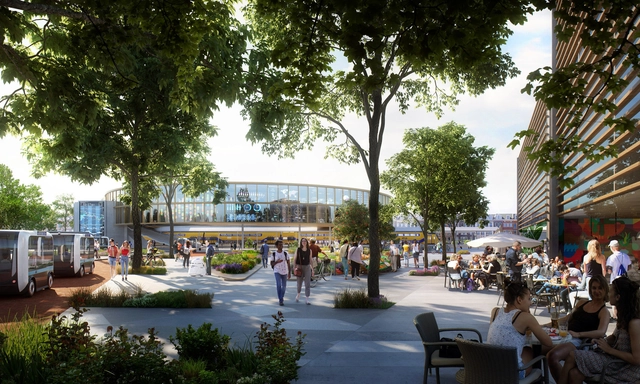
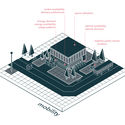
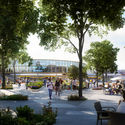
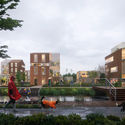
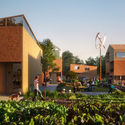
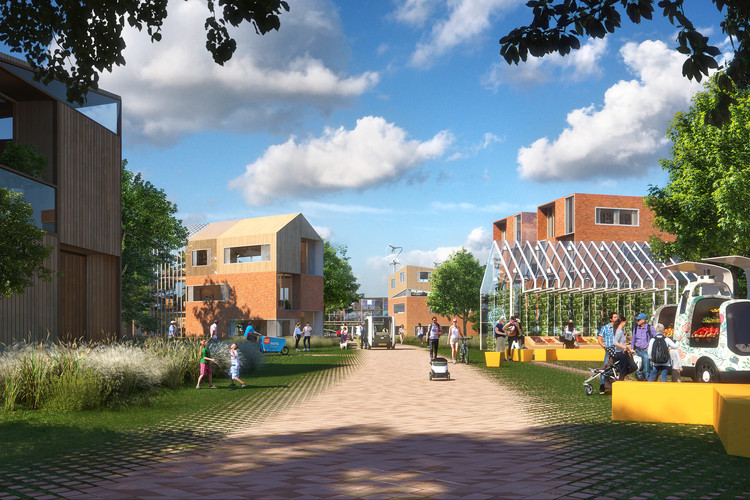
Dominique Perrault Architecture - The City of Tomorrow. Image Courtesy of Hangang District Urban Design International Master Competition
Dominique Perrault’s proposal has won “the transformation and revival of industrial heritages” or the Hangang district urban design international competition, in Handan, China. Six teams from world-renowned architectural firms, including Coop Himmelb(l)au and UNStudio Team, were invited to participate in the contest and envision the future of the city, through their creative designs.

Our cities, vulnerable by nature and design, have generated the biggest challenge that humankind has to face. With the vast majority of the population expected to settle in urban agglomerations, rapid urbanization is going to raise the issue of adaptability with future social, environmental, technological and economic transformations.
In fact, the main problematic of the decade questions how our cities will cope with fast-changing factors. It also looks into the main aspects to consider in order to ensure long-term growth. In this article, we highlight major points that help future-proof our cities and create a livable, inclusive and competitive fabric that adapts to any unexpected future transformation.
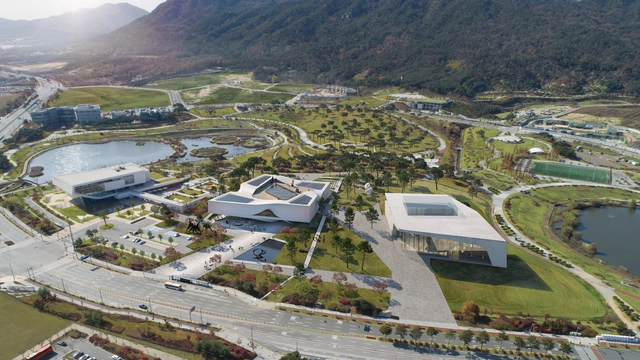
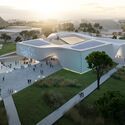
UNStudio in collaboration with Johan Cruijff ArenA designed a winning plan for the Korean National Football Centre in Seoul. Focusing on health, wellness, science, technology, education, and promoting a healthy lifestyle, the project was selected as the winning design in an international closed competition that took place in March this year.
Part of Delft University of Technology (TU Delft), in the Netherlands, Echo is a new multifunctional and flexible inter-faculty building, now under construction and due for completion in Dec 2021. Designed by UNStudio, in collaboration with Arup and BBN, the future-proof facility meets the needs of the ever-increasing numbers of students.
Today’s cities face many rapidly rising challenges and opportunities. Smart cities, urbanization, new mobility, sharing economy, affordable living and many more (r)evolutions cause for lifecycle and cross-generational thinking, and a vision for a liveable, sustainable, affordable and futureproof city development.
The digital revolution is driving change in every part of our lives. The construction and design industry is rapidly discovering the potential of increased computational power to generate and fabricate buildings and objects, impacting the core principles of architecture and all involved materials. At the same time all levels of technology are used to create smarter cities that are safe, healthy and futureproof. Learn more about the future being built, today.
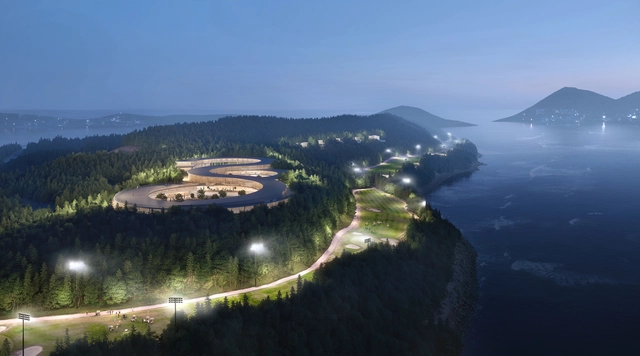
UNStudio has recently designed the masterplan for Gyeongdo Island, a new sustainable leisure destination in South Korea. Driven by nature, the 470,000 m2 buildings and public spaces are centered on the qualities of a green environment.
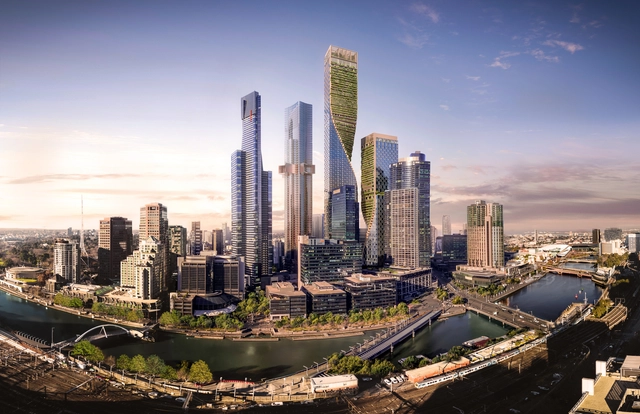
The Victorian State Government has given official approval for the Southbank project, in Melbourne, with construction scheduled for next year. Set to become Australia’s tallest tower, the building is conceived by Dutch firm UNStudio and local firm Cox Architecture.
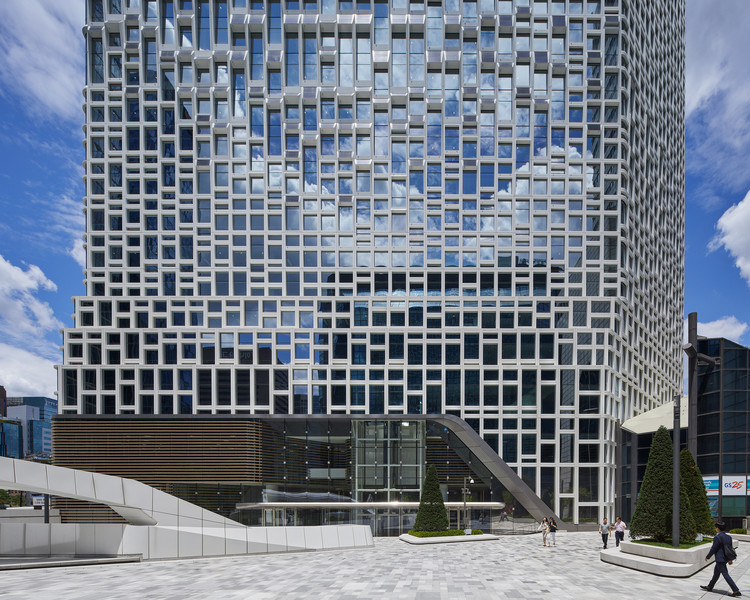
UNStudio has just completed the remodeling works of the Hanwha headquarters building in Seoul, while the building remained fully occupied. The refurbishment operations have created a modern establishment that meets the current sustainability requirements.
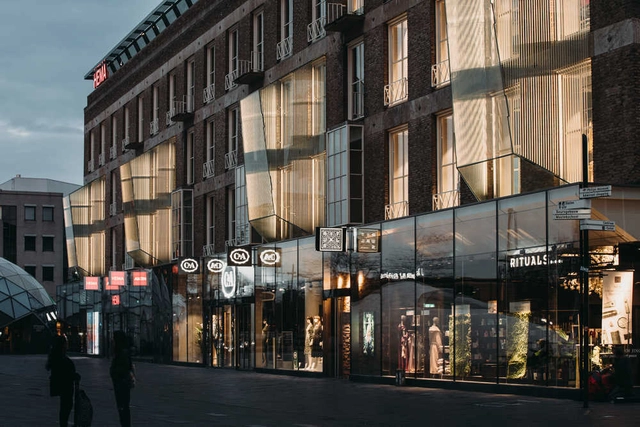
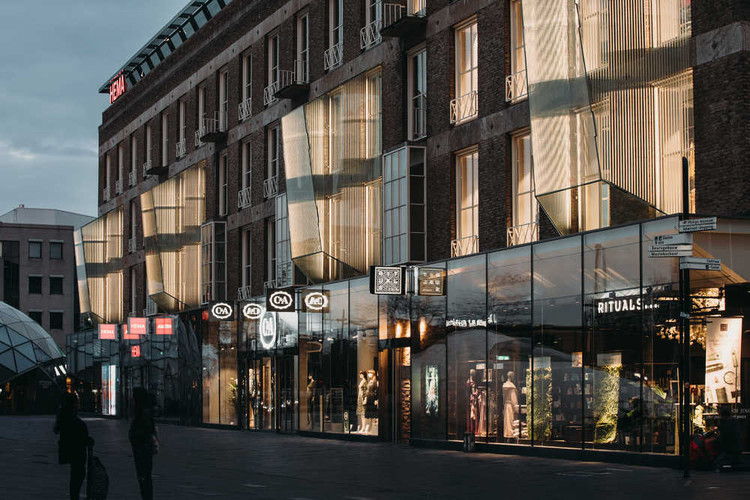
UNStudio completed two remodel projects in the Netherlands rethinking traditional glazing techniques. Located in Eindhoven and on the P.C Hooftstraat in Amsterdam, the projects each draw from their context and take inspiration from local history and culture. Made to restore and connect the two existing structures to their respective cityscapes, the projects are designed to restore the urban fabric as they connect to passerby.
Design and the City is a podcast by reSITE, raising questions and proposing solutions for the city of the future. In the sixth episode, Marianthi Tatari, Associate Director and Senior Architect at UNStudio, talks about creating inclusive spaces to connect people and generating 24/7 activity within their projects.
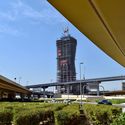
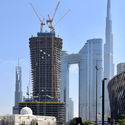
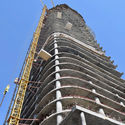
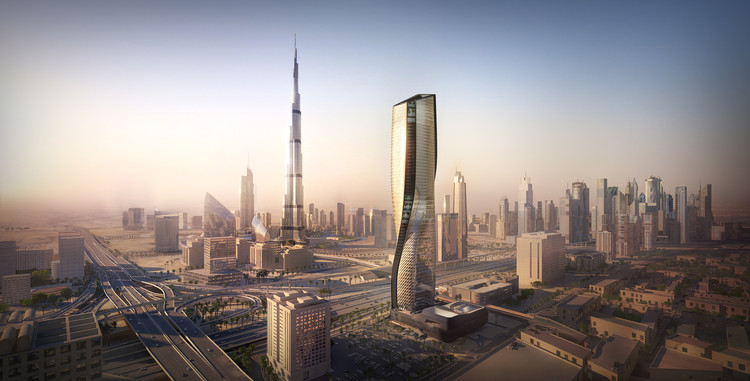
UNStudio, in collaboration with Werner Sobek, had designed a new high-rise for Dubai, expected to become one of the world’s tallest ceramic facades, once completed. Created for the wasl Development Group, the project is located along the famous Sheikh Zayed’s Road and directly opposite to Burj Khalifa.
UNSense, the arch-tech company founded by UNStudio, is one step closer to the realization of the "100 Homes Project" after a successful feasibility study. Commissioned by the Brainport Smart District Foundation, the project is a collaboration between many different actors.
Follow along during the twelfth edition of the World Architecture Festival through ArchDaily's Live Stream. As the world’s biggest architectural awards program, WAF brings together more than 2,000 architects and designers to Amsterdam for three days of conference programs, awards, and exhibition events from December 4-6. Tune in to our Facebook live streams for a selection of lectures.
For most of the history of architecture, interesting facades were achieved through materiality or ornamentation. From the elaborately painted friezes of the Parthenon to the glass exteriors of modern skyscrapers, architecture was primarily static, only ‘changing’ as the environment would change and affect the material of the façade in differing ways, be it rain, light, rust, etc.
UNStudio has designed a museum composed of immersive spheres in South Korea. Called the Challenge Museum, the building's massing and general site approach contrasts with urban conditions to provide restful and flexible outdoor spaces that encourage community engagement. The proposal was made to create a participatory experience for visitors where exhibition and architecture blend with nature.
Blagoveshchensk Cable Car. Image Courtesy of PYXID
UNStudio has won the competition to design the world's first cross-border cable car to carry passengers across the Amur River connecting Russia and China. The Cable Car Terminal is designed as an expression of the historic connection between the two cities of Blagoveshchensk and Heihe. The new cable car line aims to become an engine for creating social connections between the two cultures and will connect the cities in less than 10 minutes.
Business School for the Creative Industries at UCA Epsom. Image Courtesy of Flying Architecture
UNStudio has won the competition to design the new Business School for the Creative Industries at UCA Epsom in the UK. Selected from shortlisted teams including Wilkinson Eyre, Haworth Tompkins, Hall McKnight and Tate Harmer, the project is modeled on the concept of ‘Salons’ as theaters of conversation and exchange. The business school is designed to encourage interaction and collaboration throughout the campus and to blur the hierarchical boundary between faculty and students.
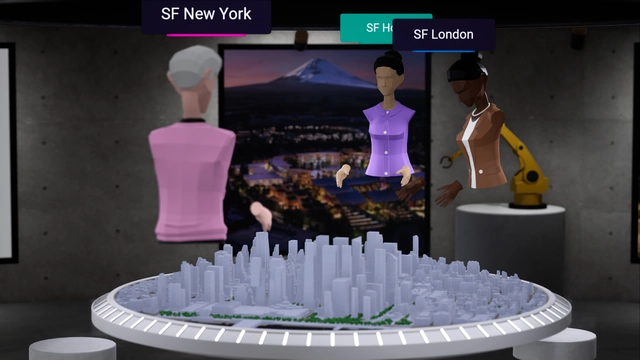
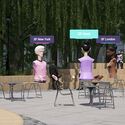
Squint/Opera, BIG, and UNStudio have collaborated in the design of Hyperform, a revolutionary data-driven design tool that allows architects across the world to collaborate in augmented reality. The tool allows designers to immerse themselves in a virtual 3D environment, where site images, maps, data, and 3D models can be uploaded, viewed and altered through collaboration.
https://www.archdaily.com/919404/big-unstudio-and-squint-opera-launch-ar-design-toolNiall Patrick Walsh