1. ArchDaily
  2. Temporary Housing

Temporary Housing: The Latest Architecture and News

On International Migrants Day: A Look at Architectural Responses to Displacement

December 18 marks the United Nations' International Migrants Day, which aims to highlight the need for safer, fairer, and more inclusive migration systems. Proclaimed on December 4, 2000, the day seeks to recognize the multiple dimensions of migration beyond its economic and humanitarian aspects. According to the UN, mounting evidence indicates that international migration is beneficial for both countries of origin and destination. In this sense, International Migrants Day offers an opportunity to spotlight the value of the possibility to migrate and the contributions of millions of migrants worldwide to the cities and cultures in which they are integrated.

Aligned with this perspective, the UN's 2025 theme, "My Great Story: Cultures and Development," emphasizes how human mobility drives growth, enriches societies, and helps communities connect, adapt, and support one another. At the same time, International Migrants Day also acknowledges the increasingly complex environment in which migration occurs. Conflicts, climate-related disasters, and economic pressures continue to force millions of people from their homes in search of safety or opportunity. From both perspectives, it is essential to recognize the role of architecture in building integrated, multicultural communities and in responding to the conditions that lead people to migrate from their territories in the first place.

On International Migrants Day: A Look at Architectural Responses to Displacement - Imagen 1 de 4On International Migrants Day: A Look at Architectural Responses to Displacement - Imagen 2 de 4On International Migrants Day: A Look at Architectural Responses to Displacement - Imagen 3 de 4On International Migrants Day: A Look at Architectural Responses to Displacement - Imagen 4 de 4On International Migrants Day: A Look at Architectural Responses to Displacement - More Images+ 6

Nigerian Architect Blossom Eromosele Designs Refugee Shelter Inspired by Traditional African Huts

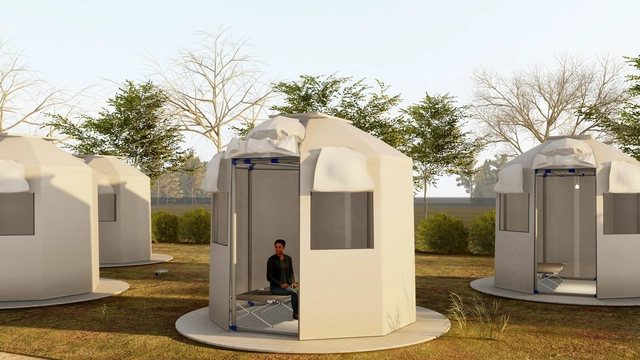
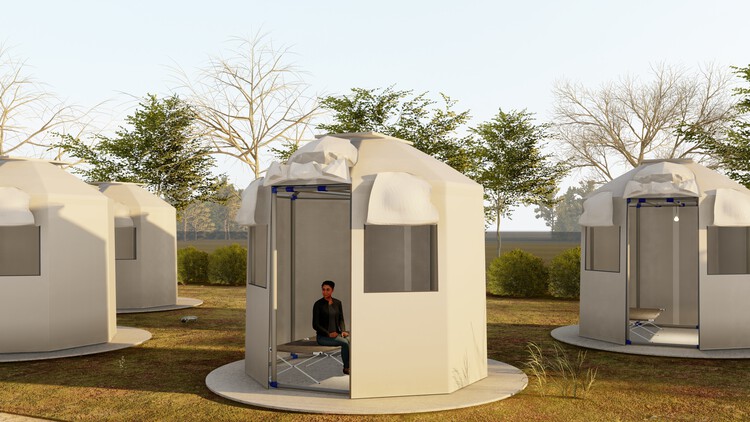
Nigerian-born architect Blossom Eromosele has developed AllSpace, a modular housing design inspired by traditional African architecture. The design was created as part of the Swarovski Foundation's fourth edition of the Creatives for Our Future global mentorship and grant program, developed in collaboration with the United Nations Office for Partnerships. Among the six selected projects, AllSpace seeks to respond to the current Nigerian refugee crisis with a low-cost, solar-powered housing solution for camps.

Nigerian Architect Blossom Eromosele Designs Refugee Shelter Inspired by Traditional African Huts - Featured ImageNigerian Architect Blossom Eromosele Designs Refugee Shelter Inspired by Traditional African Huts - Image 1 of 4Nigerian Architect Blossom Eromosele Designs Refugee Shelter Inspired by Traditional African Huts - Image 2 of 4Nigerian Architect Blossom Eromosele Designs Refugee Shelter Inspired by Traditional African Huts - Image 3 of 4Nigerian Architect Blossom Eromosele Designs Refugee Shelter Inspired by Traditional African Huts - More Images

Drozdov & Partners is Transforming Schools into Temporary Shelters for Internally Displaced People in Ukraine

One of the most urgent problems faced by Ukrainians today is the unsettled situation faced by displaced citizens, along with the challenge of returning to the cities they were forced to abandon earlier this year. Ukrainian president Volodymyr Zelenskiy has shared that efforts to rebuild Ukraine will require ‘colossal investments’, and as leaders gather to work out ‘Marshall plan’ to rebuild the country, local architects have already begun developing emergency housing, healthcare, and educational facilities in cities further away from the Russian border.

As a temporary solution to the displacement of north-eastern and eastern Ukrainians, Drozdov&Partners, together with Replus Bureau and Ponomarenko Bureau, have begun refurbishing shelters for internally displaced persons (IDPs) in Lviv and its region, using school campuses and other large-scale facilities as temporary housing.

Drozdov & Partners is Transforming Schools into Temporary Shelters for Internally Displaced People in Ukraine - Featured ImageDrozdov & Partners is Transforming Schools into Temporary Shelters for Internally Displaced People in Ukraine - Image 1 of 4Drozdov & Partners is Transforming Schools into Temporary Shelters for Internally Displaced People in Ukraine - Image 2 of 4Drozdov & Partners is Transforming Schools into Temporary Shelters for Internally Displaced People in Ukraine - Image 3 of 4Drozdov & Partners is Transforming Schools into Temporary Shelters for Internally Displaced People in Ukraine - More Images

Balbek Bureau Develops Temporary Housing Scheme for Displaced Ukrainians

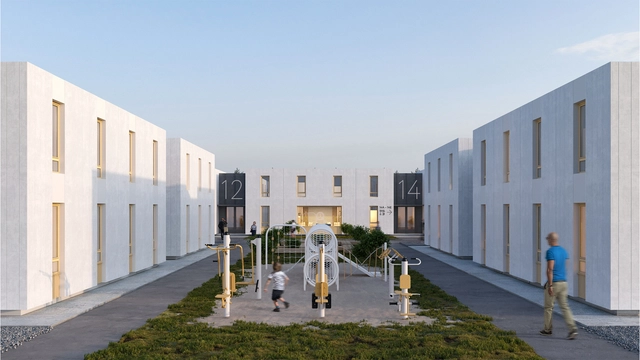
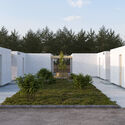
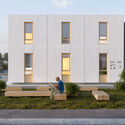
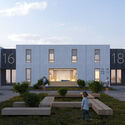
Since the beginning of the war, over 7.1 million people have been internally displaced within Ukraine. In response to this growing humanitarian crisis, Kyiv-based practice Balbek Bureau has developed a modular temporary housing system that aims to provide a dignified dwelling to internally displaced Ukrainians. RE:Ukraine is designed to adapt to different types of terrain and settlement density while being deployed in a short time frame. While the project was intended for areas of Ukraine that are not under fire, the framework can also accommodate refugees abroad.

 Balbek Bureau Develops Temporary Housing Scheme for Displaced Ukrainians - Image 1 of 4 Balbek Bureau Develops Temporary Housing Scheme for Displaced Ukrainians - Image 2 of 4 Balbek Bureau Develops Temporary Housing Scheme for Displaced Ukrainians - Image 3 of 4 Balbek Bureau Develops Temporary Housing Scheme for Displaced Ukrainians - Image 4 of 4 Balbek Bureau Develops Temporary Housing Scheme for Displaced Ukrainians - More Images+ 7

House Challenge 2019 Explores Temporary Dwellings in the Desert

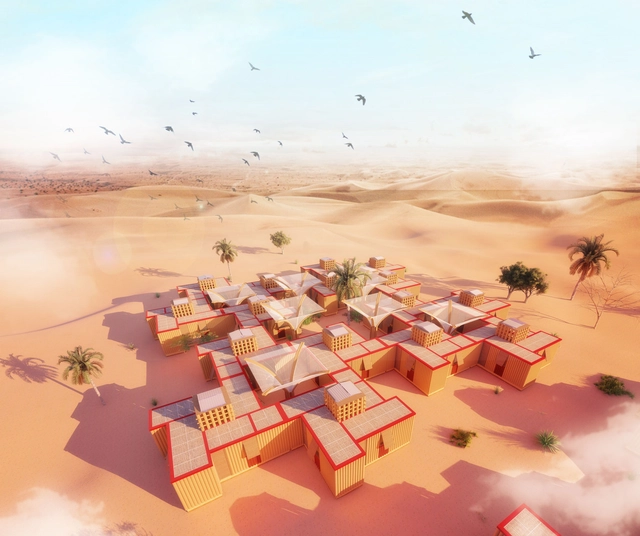
The House Challenge 2019 has released the results of this year’s competition that gathered entries from all over the world. With a theme focusing on the Desert House, applicants designed new and original concepts for temporary housing in this harsh environment.

DMOA's Maggie Shelter Provides Stable Facilities for Refugees

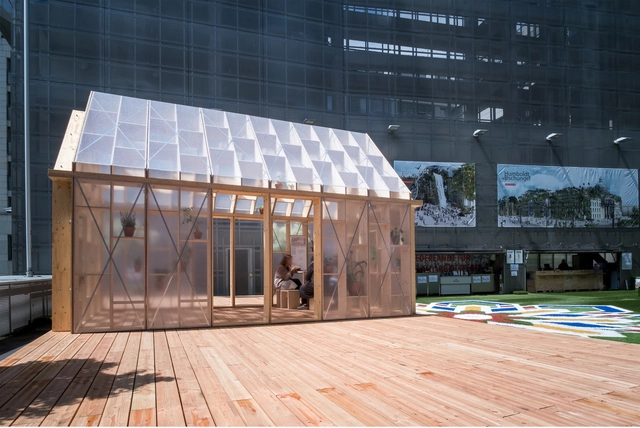
In light of recent refugee crises, Belgium-based architecture and engineering firm DMOA has become involved with The Maggie Program, an initiative to improve refugee shelter, education, and health through a new building concept.

Because most countries only allow for temporary settlements for refugees, the project centers around the Maggie Shelter, a temporary tent-like structure, that functions as a more substantial, fixed building. 

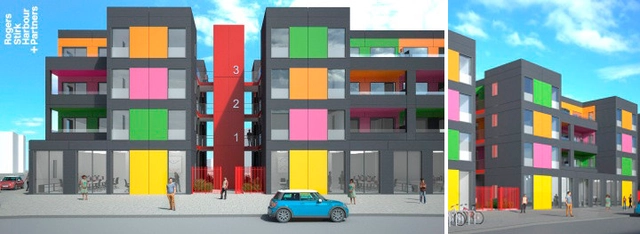
RSHP Reveals Plans for the "Ladywell Pop-Up Village" in Lewisham

Addressing increasing housing demands in the London Borough of Lewisham, Rogers Stirk Harbour + Partners (RSHP) has unveiled their plans for the "Ladywell Pop-Up Village," which is to become one of the UK's first temporary housing villages.

The short term housing will provide accommodation for 24 families, alongside community and commercial spaces at street level. Drawing its name from the site of the former Ladywell Leisure Centre upon which it is to be located, the Ladywell Pop-Up Village is fully demountable, thanks to its volumetric construction technology. It is envisioned that the housing units will remain at the Ladywell site for up to four years, after which point they can be relocated throughout the Borough as needed.