“Our planet is choking in plastic,” states the United Nations. While the man-made material has many valuable uses, our addiction to single-use plastic products has led to severe economic, health and environmental issues. Roughly one million plastic bottles are purchased every minute, and five trillion plastic bags are used every year worldwide –used just once, then thrown away. Plastics and microplastics have found their way into every corner of our natural environment, from the peaks of the highest mountains to the depths of the deepest oceans. So much so, that they have become part of the Earth’s fossil record and created an entirely new marine microbial habitat known as the “plastisphere.”
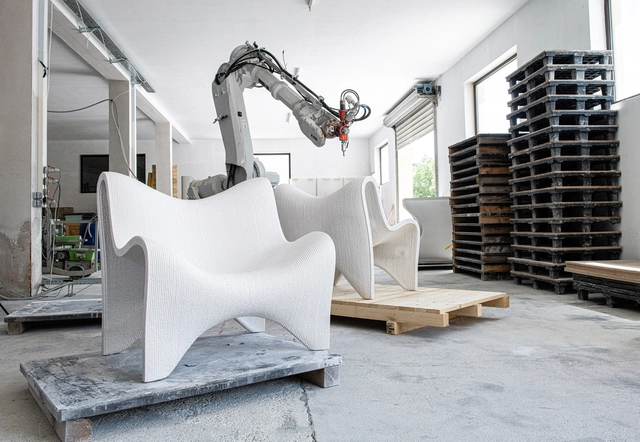
Can you imagine being able to prototype a piece of furniture at the touch of a button and testing it in just a few hours? This might become a common practice sooner than we may think. Fueled by material innovation, automation and cutting-edge technology, a new era in home decor is emerging; one where 3D printing opens up a world of creative possibilities that transcend the bounds of traditional design. Yes, furniture is still mass-produced using conventional methods –molding, cutting, bending–, but 3D printing continues to disrupt the industry. As the revolutionary technology evolves and becomes more accessible, it has unleashed an unparalleled level of creative expression and efficiency. The concept is simple: a digital design is created using 3D modeling software and then printed, layer by layer, in the form of a physical object, bringing complex geometries to life. It’s a whole new kind of digital craftsmanship.
Through shapes, colors, and the elements on their facades, many architects have sought to bring a sense of movement to works that are otherwise physically static. Santiago Calatrava, Jean Nouvel, and Frank Gehry are only a few of the masters who managed to provide a dynamic effect to motionless structures, highlighting the work in context using formal strategies borrowed from the plastic arts. In other cases, however, architects have also opted for physically kinetic structures that could bring a unique aesthetic or functional dimension to the work.
As the world slowly adjusts to the "new normal," so too does the architecture industry. Data related to market size and workloads shows that the profession continued to grow even after the pandemic struck. Other statistics show how architects are starting to be hit by the present crisis – such as the fall in full-time work and rising unemployment. While these statistics could take one down a road of despair (or enthusiasm), there is more to the numbers: Mobility, digital and managerial competencies are framing the profession in the 2020's. Not only as data for the sector to approach the market and retain talent but also as strategies in the face of crises and technologies to come.
Meta City Hall / CAA LAB. Image Courtesy of CAA LAB
The promise of the metaverse is proving to be a fertile ground for research and experimentation for architects. This new realm is currently undefined, consisting of many narratives, explorations, and opportunities for architects and designers to shape a new type of environment. Generative engines, such as AI image-generators, are contributing to the feeling of open possibilities. While they are not yet part of the standard practice, they bring the promise of a shift in the production of architecture. Conceptual projects such as the ones presented in this list serve little to no external purpose. Still, they are essential in conducting an understanding of the possibilities of the new technologies which are likely to have a significant effect on the profession.
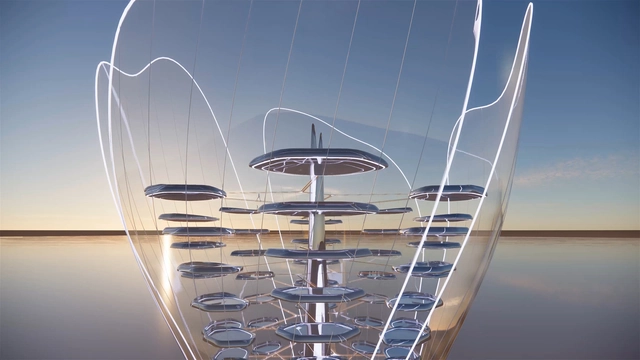
This week's curated selection of Best Unbuilt Architecture highlights projects submitted by the ArchDaily community that experiment with a new medium and integrate novel technologies. From abstract buildings created to be experienced through virtual reality in the metaverse to investigations into the ability of AI image generator engines to develop innovative architectural expressions and even research into planimetry, the following projects are pushing the boundary of what architecture could look like in the new age of technological developments.
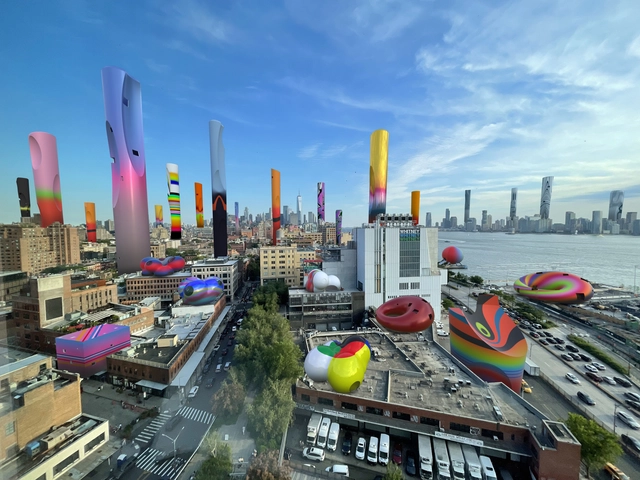
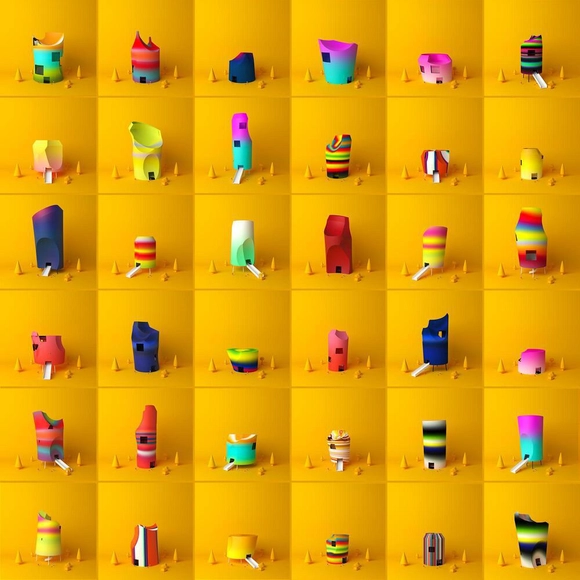
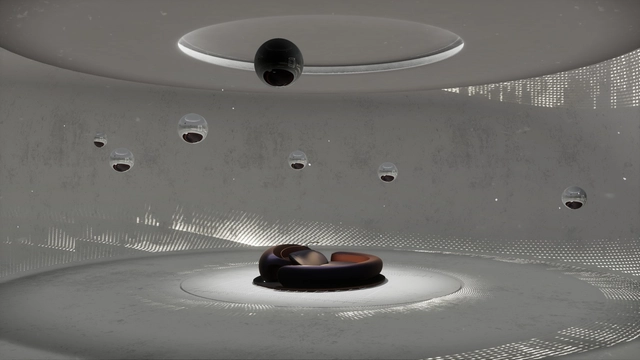
The promise of the metaverse, this new type of three-dimensional and immersive digital space, is proving to become more and more appealing to architects eager to explore the new realm of virtual creations. As it currently stands, the metaverse does not have a singular definition but is composed of many narratives and explorations. This unknown land is however fruitful ground for architects, who have to opportunity to shape not only the new environment but also the experiences of future users. The SOLIDS project represents one response to these conditions. Developed by FAR, an architect and engineer working with digital environments, SOLIDS uses a generative process to design unique, metaverse-compatible buildings.
The new technologies of the digital world caused changes in architecture and urbanism. New materials, new construction techniques, and new ways of manufacturing and building have changed how we design and think about construction. Besides, these technologies reveal possibilities of interaction between society and architecture, transforming the understanding of architecture and its purpose.
It is a great privilege to amplify the voice of architects and other built environment professionals. It is also an enormous challenge as it requires a lot of investigation and time from our content team. However, the effort is gratifying. It puts us in contact with some of the most prominent talents in our field who have been discussing subjects such as cities, metaverse, community, environment, democracy, sustainability, building technology and interiors, to mention just a few.
La torre de usos múltiples más alta de Decentraland con la plataforma de observación más alta del metaverso. Image via Crystal City
Felipe Escudero, founder, and principal of Quito-based Estudio Felipe Escudero (EFE), has unveiled Crystal City, his latest metaverse design for LEDY, one of the discipline's leading developers, and Decent Amusements, the district manager. In addition to a high-rise observation deck, an ice-covered marketplace, and a packed snow gallery, this new metaverse destination will feature Decentraland's tallest multi-purpose tower, Crystal Tower.
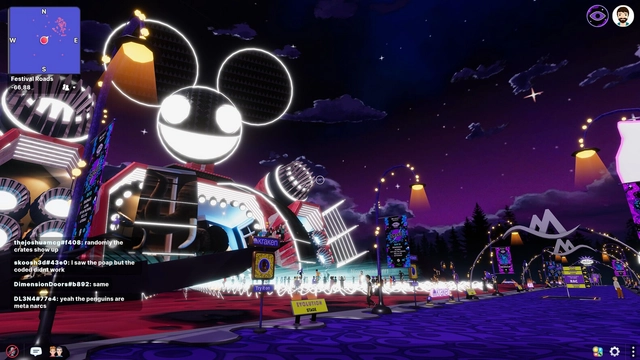
DEADMAU5 The Metaverse Festival. Image by Duncan Rawlinson flickr under Attribution-NonCommercial 2.0 Generic (CC BY-NC 2.0).
“All the physical spaces that we (architects) design – buildings, interiors and cities are born as metaspaces, and we call them 3D models”. With this statement Brian Jencek, director of planning at San Francisco-based architecture firm HOK, narrows the boundaries between the current way of designing and the future of architecture in the metaverse. According to him, we are not that far from this technology, since we already use the same tools that visual designers use to create realistic environments, such as Unity, Twin motion and Blender.
The undisputed protagonist of the last few years has been the Metaverse. The news is already flooding the world of video games and technology. Today, architects and designers are increasingly aware of the responsibility they have in leading this construction of the virtual environment. But what is the architecture of the Metaverse, how is it designed, how is it built?
Envision your ideal neighborhood. Maybe it’s on a cul-de-sac in the suburbs, where every neighbor has a well-manicured lawn, a two-car garage, and everyone gives each other a friendly wave on their way to work. Or maybe you live in a high-rise building in a dense urban center, where you take public transit to the office five days a week and say hello to your doorman on your way out. Whatever your neighborhood might look like, there’s always a sense of wanting to know the people who live around your- or at least an unspoken reliance on one another to ensure that your surroundings are safe. What happens when technology brings you and your neighbors together to report on local happenings? Is it a good thing, or does it create a vigilante situation gone awry?
There was a time when buildings wanted to be mountains, roofs wanted to be forests, and pillars wanted to be trees. As the world began to go into a state of alert with the melting of glaciers and the consequent rise of Earth’s temperature, architecture – from a general perspective – was concerned with imitating the shapes of nature. Something close to human-made “ecosystems”, seen by many as allegoric and decorative, in service of marketable images of “sustainable development”.
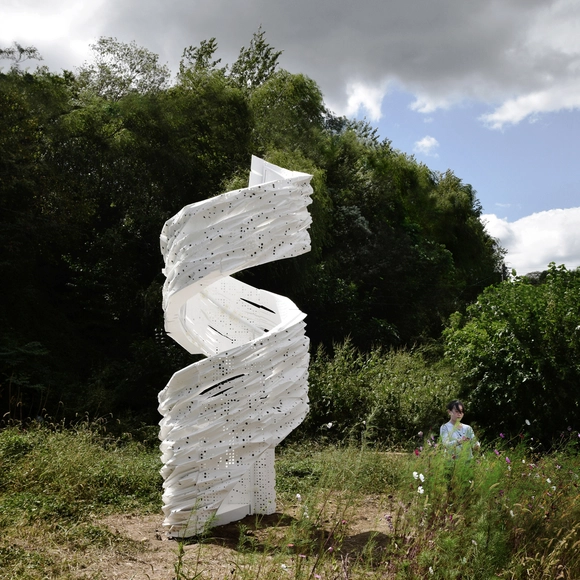
Expanded polystyrene (EPS) was discovered in 1839 in Berlin and became a widely used material in airplanes manufactured for World War II due to its extremely low density. It is this characteristic that makes it a suitable material for thermal and acoustic insulation, often specified in buildings, but also widely used in packaging. A rigid cellular plastic, it is the result of polymerizing styrene in water, whose end product are expandable beads that have a diameter of up to 3 millimeters. Unfortunately though, this material takes more than 500 years to decompose and, in the process, leaches harmful chemicals into the environment. Recycling is possible, but it is complex and costly. This means that most of the Styrofoam produced to date still remains on the planet, taking up valuable space in landfills, or worse, broken into tiny pieces and interfering with ocean life. "Decomposition Farm: Stairway" is a temporary installation that offers a possible solution to the environmental issues related to construction waste in the architectural field.
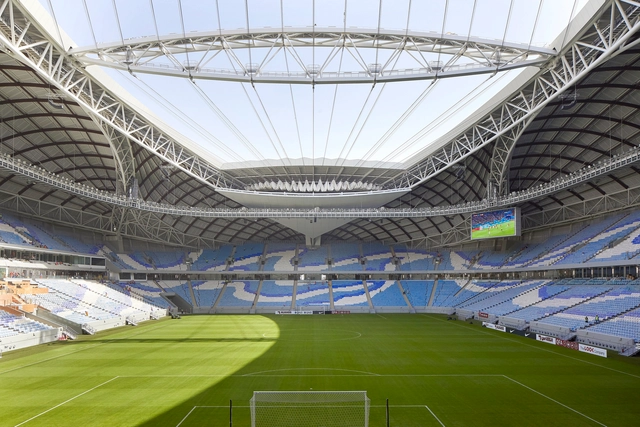
The World Cup will take place between November and December. This is due to the host country’s climate in June and July when Qatar can reach average temperatures of 40 to 50°C.
From smartphones to space rockets and self-driving cars, the power of technology in this modern digital era is enormous (and practically limitless). It has impacted every aspect of our lives and will continue to open up endless possibilities that today we cannot even begin to fathom. When applied in a socially and environmentally responsible way, technology has the power to enhance productivity, communication and sustainability, enabling global communities to function efficiently, addressing people’s everyday needs and improving their quality of life. Simply put, good technology serves humanity. And just as the healthcare or manufacturing industries have taken advantage of this, the architecture, design and construction world cannot fall behind.
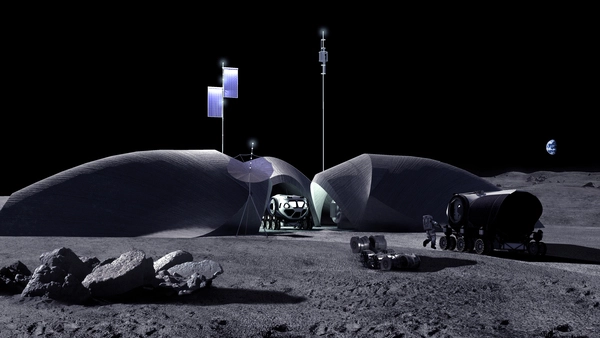
NASA and AI Space Factory developed LINA (Lunar Infrastructure Asset), an in-situ 3D-printed outpost to protect astronauts and critical missions on the Moon. The project is part of the Relevant Environment Additive Construction Technology (REACT), a multi-year collaboration to develop technologies for lunar surface constructions within the timeframe of the Artemis Mission: humankind’s return to the Moon. LINA is a step in the effort to expand civilization to Earth’s natural satellite and explore it in a sustainable way that minimizes human disturbance.
Generation Z comprises people born after 1995. They grew along with the popularization of the internet and interact with the world by integrating all forms of available technology.
The diversity of available media, the speed in information traffic, the interactivity in the virtual environment and the daily use of these technological assets common today, influence the behavior of individuals of this generation, inspiring versatility, agility and curiosity.