From bricks grown from bacteria to cement derived from the reef building process of coral, biomimicry has taken the world by storm. A collection of products inspired by this phenomenon are showcased in Bloomberg’s article “14 Smart Inventions Inspired by Nature: Biomimicry,” ranging from transportation breakthroughs to ingenious feats of engineering. Read on after the break for two highlighted architectural inventions inspired by the natural world.
Courtesy of Ohio University’s Online Masters in Civil Engineering program
With everything from beams, to trusses, to arches and more, bridge technology has informed advanced structural systems used in architecture for centuries. This infographic produced by Ohio University’s Online Masters in Civil Engineering programexamines five historic and contemporary examples of bridge technology, concisely revealing how different structural techniques for bridges have achieved radically different aesthetics - from stone slabs first laid over water in the middle ages to modern-day suspension bridges. To learn more about ten key examples of the five major bridge types, each with additional information on their origins and history, see the full infographic after the break.
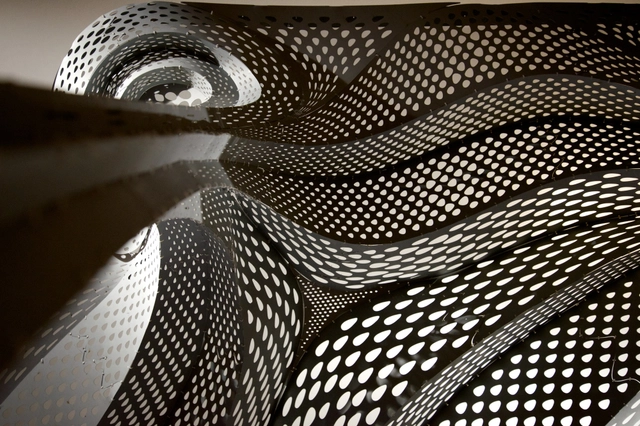
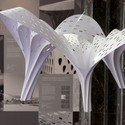
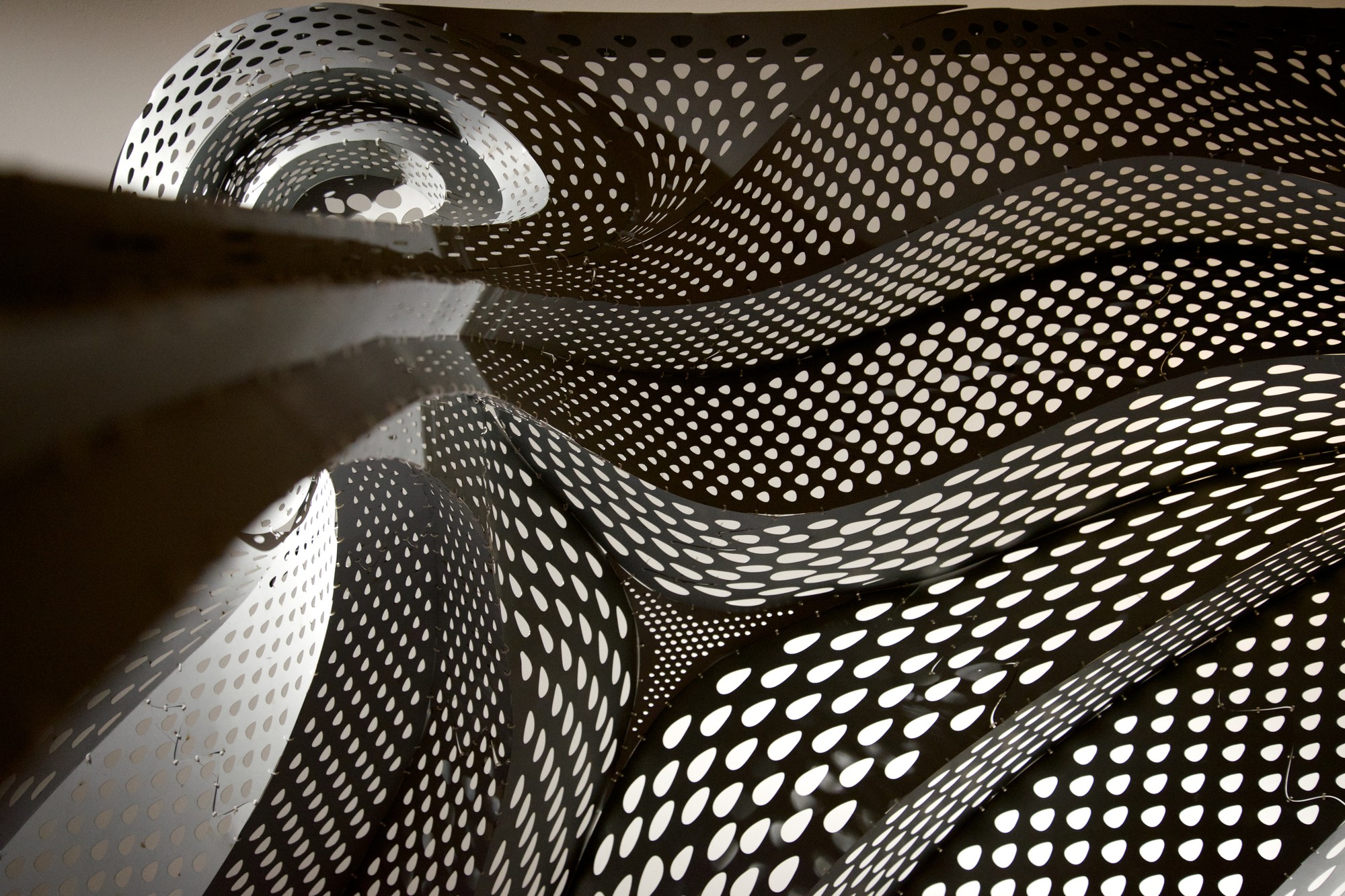
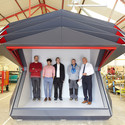
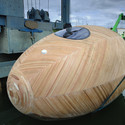
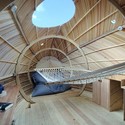
Continuing recent research trends in the ways nature can inspire new architectural methods and typologies, London-based architecture practice Tonkin Liu in collaboration with engineers at Arup, have developed a single-surface structural technique called Shell Lace Structure. The innovative technique takes advantage of advanced digital design, engineering analysis, and manufacturing tools. Read on to learn about their upcoming book and exhibition that reveals the process behind this nature-inspired material.
Arup Associates was founded in 1963 by the legendary engineer Ove Arup as a design practice in which engineers and architects worked on an equal footing; it later became a subsidiary of Arup (also founded by Arup as Arup and Partners in 1946). These early origins marked Arup Associates as a forward-thinking and revolutionary practice in an era where truly multi-disciplinary practices were almost unheard of.
In a world where people live more mobile lifestyles than they have for centuries, cities are facing a problem they rarely planned for: their citizens move away. When jobs and resources start to decline, modern cities, such as Detroit, suffer difficult and often wasteful processes of urban contraction. In contrast to this, Manuel Dominguez's "Very Large Structure," the result of his thesis project at ETSA Madrid, proposes a nomadic city that can move on caterpillar tracks to locations where work and resources are abundant.
Of course this is not the first time that the idea of a nomadic city has been proposed. Ron Herron's Walking City is one of the more recognizable Archigram designs from the 1960s, and has been influential to architectural theory ever since. However, the design for the "Very Large Structure" expands on the Walking City by including strong proposals for energy generation on board the city.
Read on to see more on this provocative project - including a full set of presentation boards in the image gallery.
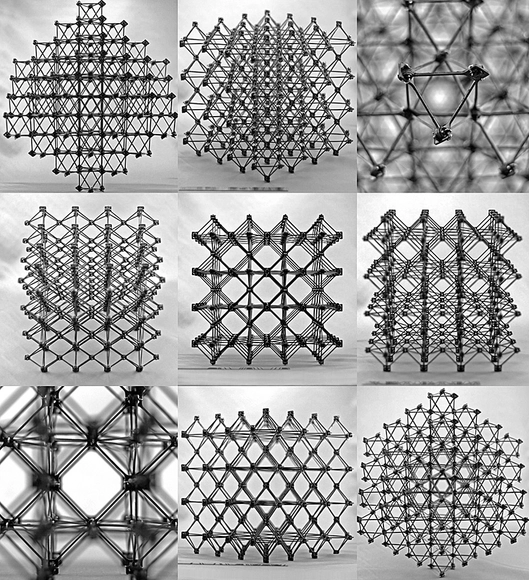
MIT researchers have developed a lightweight, interlocking composite component which can be snapped together to create airplanes, spacecraft and even larger structures. Likened to chain mail but based on a newly-developed geometry, the parts form a structure that is 10 times stiffer for a given weight than existing ultralight materials. The structure allows much less material to carry a given load and could revolutionize all moving vehicles, reducing their weight and the costs of construction while allowing greater design flexibility. To find out how it happens, read the full description here.
This article on io9 counts down the worst architectural disasters in recorded history, from the failure of Yarmouth Bridge back in 1845 to the horrific collapse of Rana Plaza in Savar, Bangladesh this April - revealing the latter as the most catastrophic structural failure in history. Read the article here.



.jpg?1416794800&format=webp&width=640&height=580)




















_1457021.jpg?1371218908&format=webp&width=640&height=580)

_1457005.jpg?1371220370 "© Nigel Rigden")
_1457021.jpg?1371218908)