Fundamental for the development of large metropolises as we know them today, cement is a material used historically, whose technological advances have revolutionized construction technique and technology of civil construction, enabling the verticalization of construction and the densification of urban centers. Cement, both added to water and sand to make mortar and combined with steel and aggregate to form concrete, performs different functions in a work, from structure to finish.
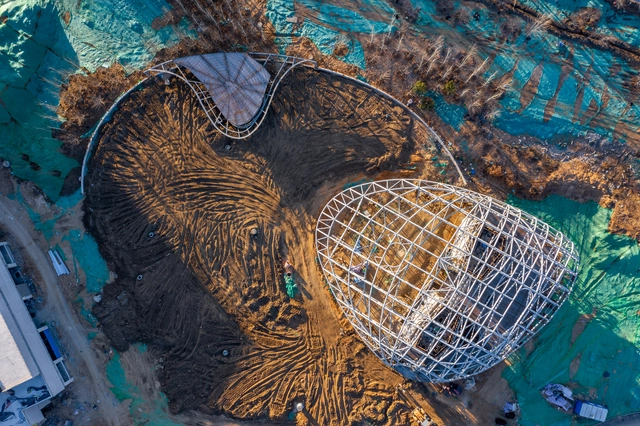
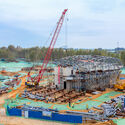
Cloud Center Under Construction. Image Courtesy of MAD
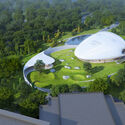
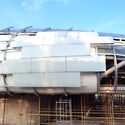
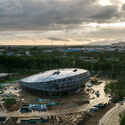
Nearly to be completed and opened in 2023, MAD Architects reveals the construction details that made it possible for the Aranya "Cloud Center" to appear floating above the rolling landscape surrounding it. Located in Qinhuangdao, 160 miles away from the east of Beijing, China, the 2,500-square meters Center will be a public art space for the vibrant artistic seaside community that, from the outside, will mark the center of a sculptural landscape that MAD had conceptualized as a "white stone garden."
The strategy of raising houses off the ground gained popularity in the 1920s when Le Corbusier announced structures on pilotis as one of the 5 points of modern architecture. A great contribution, especially in the urban issue, as it enables the creation of a free space with greater connection between the public sphere of the street and the private sphere of the building. His iconic Villa Savoye is a paradigmatic example of the use of pilotis that preserves the natural terrain and, as Le Corbusier himself said, places the house on the grass like an object, without disturbing anything. In addition, the pilotis also served as a strategy for the flow of vehicles, which can be seen in Lina Bo Bardi’s equally emblematic Casa de Vidro and its slender steel tubes. Arranged in a modulation of four modules in width by five in depth, they maintain the house as a transparent floating box in the midst of nature, respecting the terrain and assisting in the building's thermal comfort by allowing air circulation.
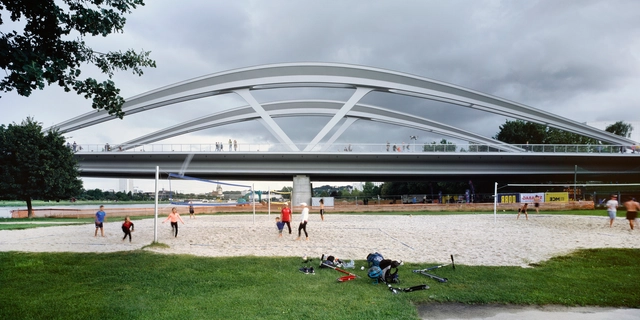
Whether figuratively or in an urban context, bridges are a strong symbol and often become iconic projects in cities. Building bridges can mean creating connections, new opportunities. But they are also fundamental pieces of infrastructure that solve specific issues in an urban context. As these involve highly technical equipment, with complex constructions and overwhelming bold structural requirements, they require projects that do not need full integration between architecture and engineering and, in many contexts, is a type of projects that architects are not so involved with. Marc Mimram Architecture & Engineering is a Paris-based office comprised of an architecture agency and a structural design office. In its project portfolio, there are several bridges, as well as various other project typologies. We spoke with Marc Mimram about his latest project in Austria, the bridge at Linz, photographed by Erieta Attali.
In honor of World Photography Day (August 19 ), Chilean architect Francisco Ibáñez Hantke offers a a perspective of urban transformation and the resulting instability caused by the regenerative processes and the constant real estate speculation that drive it. The photographs center on London, and reveal an exhausting array of construction and demolition and highlight the often blurry line between architecture and urban decay.
Briefly, structural masonry is a construction system in which the walls of the building perform a structural function, using masonry units arranged in a way that is self-supporting and load-bearing. The walls will evenly distribute the load to the foundation and later into the ground.
Stacked in layers, the bricks, blocks, or stones may or may not be connected by a binder (mortar) and steel reinforcements that heavily influence the mechanical properties of the wall, dimensioned to resist active forces.
Wood is a very easy-to-work material, allowing professional and amateur builders to manufacture simple objects and structures without major problems. However, when thinking about larger-scale housing or buildings, it's important to take certain precautions that ensure good quality and good construction behavior. To this end, it's essential to evaluate every project and analyze which connection system best suits its structural and aesthetic needs.
We spoke with the experts of Simpson Strong Tie, a leading company in structural connectors, anchors, and fastening systems, to learn more about these topics. Here are six important lessons and tips for building safer and more resistant wooden houses and buildings.
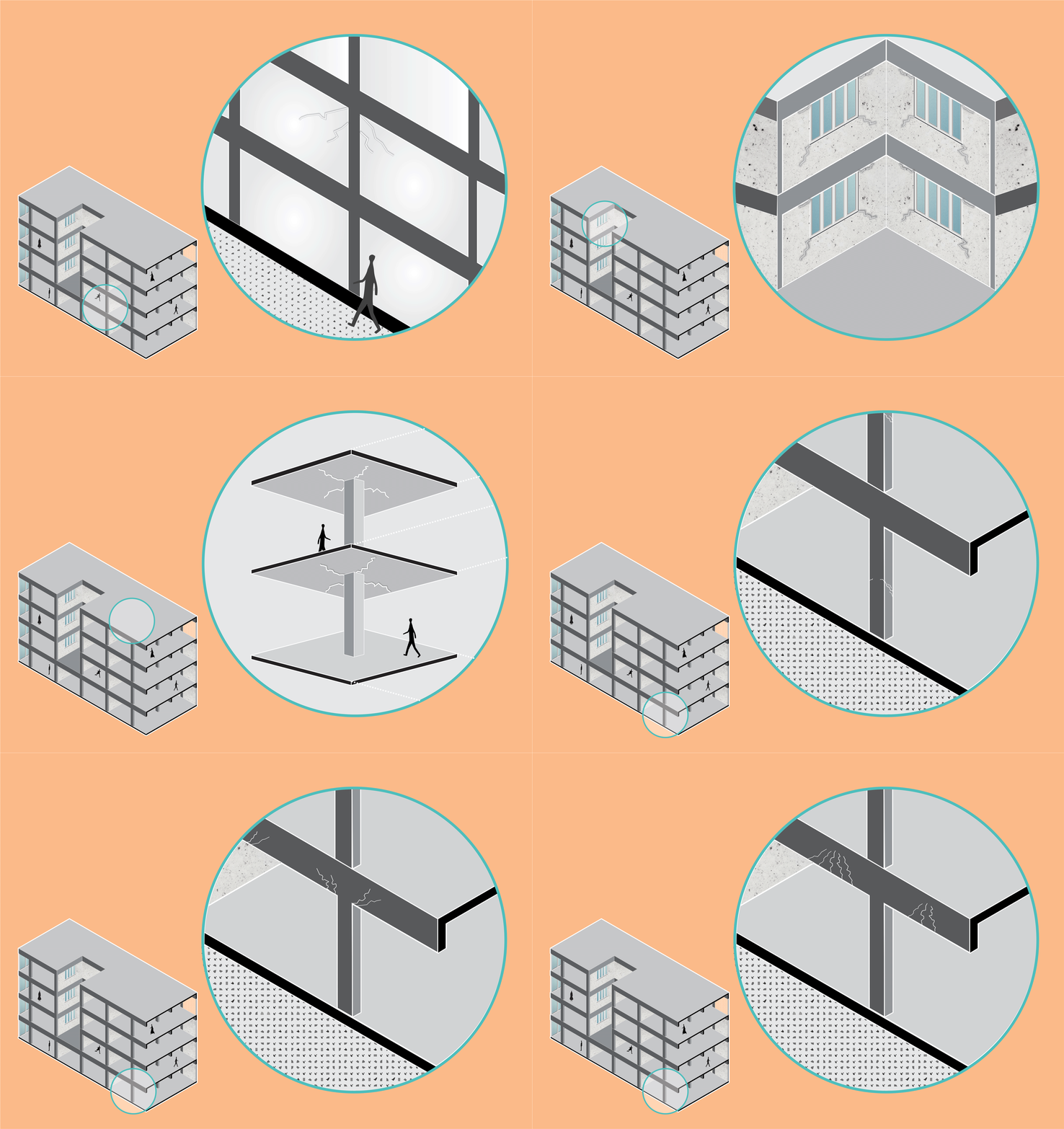
Cracks, which could be classified according to their thickness as fissures or fractures, are serious problems in the construction industry that can negatively affect aesthetics, durability and, most importantly, the structural characteristics of a project. They can happen anywhere, but occur especially in walls, beams, columns, and slabs, and usually, are caused by strains not considered in the design.
https://www.archdaily.com/879953/what-do-the-cracks-in-concrete-structures-meanJoão Carlos Souza
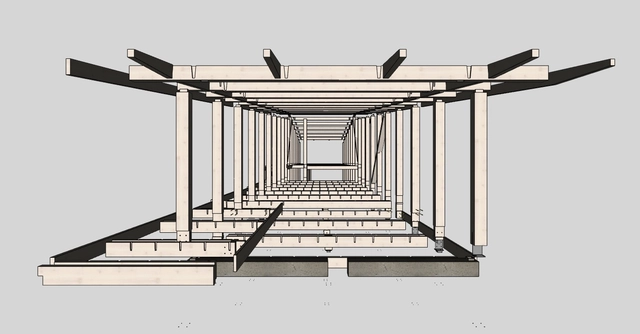
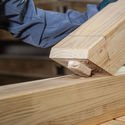
New technology in digital building, particularly Computer Numerical Control (CNC) systems, are changing the way that we design and build wooden structures. Their high level of precision allows us to design perfect assembles--without screws or visible metalwork--resulting in structures that are durable, easy-to-build, and extremely well-organized. We spoke with the experts at Timber to better understand the process of building a wooden structure and to compile a list of key tips in designing one.
The exhibition, presented by SOM and Fundación Arquitectura COAM spotlights SOM’s structural engineering practice and its integration with SOM’s architectural design.
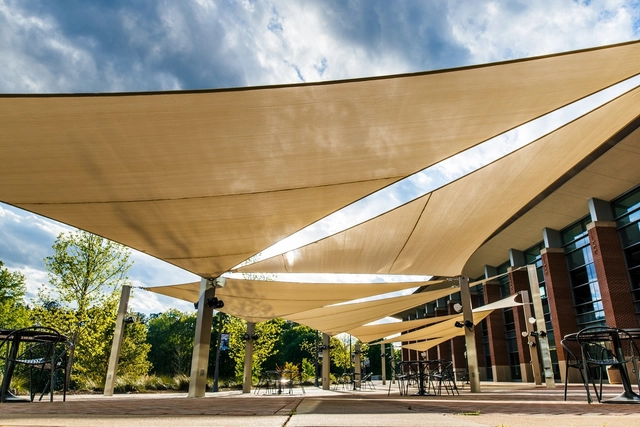
Superior Shade at University of West Georgia. Image Courtesy of Superior Recreational Products
In any successful architectural project, it is essential to provide users with a comfortable outdoor space. At any time of the year, modular shade structures can create spaces that protect from wind, dust, sun, rain, snow, and noise in a light, flexible and aesthetically pleasing way.
With this in mind, what should we look for when choosing shade structures for outdoor spaces? Below, we've provided you with Superior Recreational Products's top recommendations.
Videos
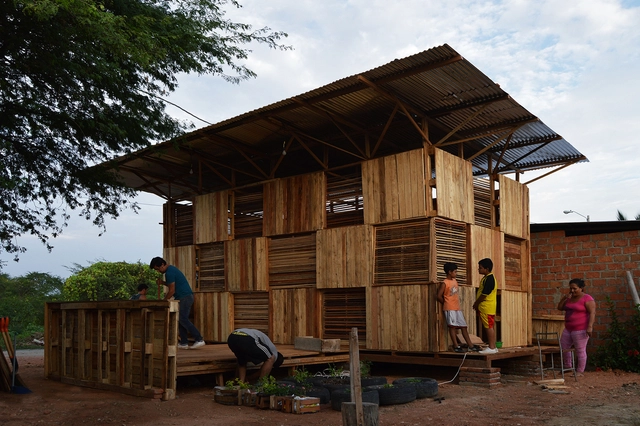
Proyecto Chacras / Natura Futura Arquitectura + Colectivo Cronopios. Image Cortesía de Eduardo Cruz y Natura Futura
Natural disasters continue to leave thousands of people homeless every year, forcing them to seek refuge without any alternatives. On many occasions, cities cannot cope with refugees, limiting their resources. In addition to this, the difficulties to sustain refugees in a dignified way, becomes increasingly complex, leading to the collapse of conventional strategies.
It is at this moment when innovation and creativity play an important role in construction practices, ultimately creating a quicker and more efficient construction model that can be replicated after natural disasters.
Undoubtedly, there are some principles that should be taken into account when designing a semi-permanent structure. Thus, we have gathered some tips and examples that you may find useful.
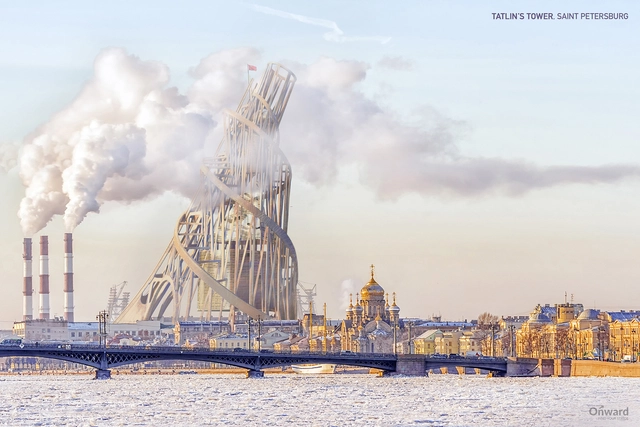
It only takes a pen, paper, and an innovative mind to create remarkable structures. Bringing these architectures to life, however, is where challenges arise. While some architects have shown their creativity and ambition by designing and constructing some of the craziest structures the world has ever seen, other architects were only left with an ambitious drawing. Whether due to financial limitations or designs that are way ahead of their time, some projects never saw the light of day.
Although you won’t be visiting these structures anytime soon—or ever, as far as we know—take a virtual tour of what could have been 7 of the world’s most iconic, innovative structures, courtesy of renders produced by Onward, the blog from Onstride Financial.
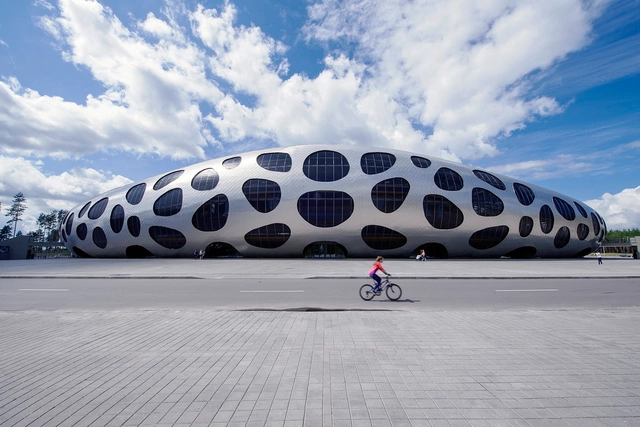
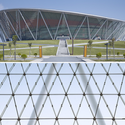
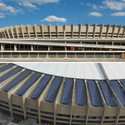
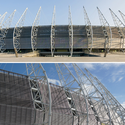
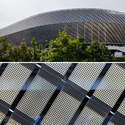
Stadiums —new or remodeled— provide excellent and innovative examples of architecture on a large scale; they are required to shelter thousands of people, including the athletes of the games they host. In addition to the technical aspects and considerations related to sports, these structures apply interesting cladding systems, with some stadiums even generating the energy needed to function.
Read on for more about stadiums and their structures in detail.
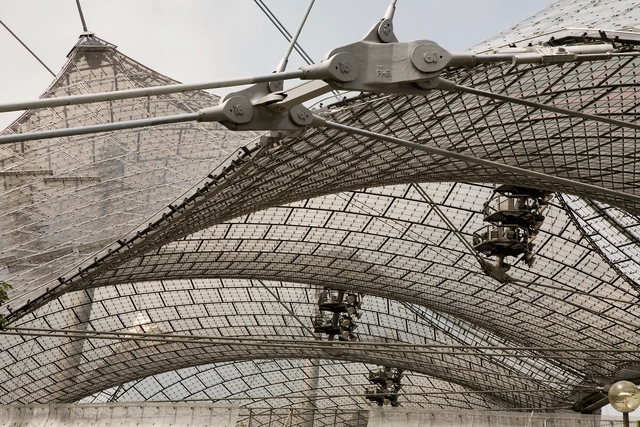
Historically inspired by some of the first man-made shelters—such as the black tents first developed using camel leather by the nomads of the Sahara Desert, Saudi Arabia, and Iran, as well as the structures used by Native American tribes—tensile structures offer a range of positive benefits compared to other structural models.
Tensile structure is the term usually used to refer to the construction of roofs using a membrane held in place on steel cables. Their main characteristics are the way in which they work under stress tensile, their ease of pre-fabrication, their ability to cover large spans, and their malleability. This structural system calls for a small amount of material thanks to the use of thin canvases, which when stretched using steel cables, create surfaces capable of overcoming the forces imposed upon them.
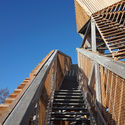
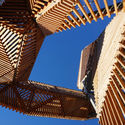
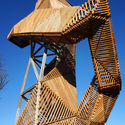
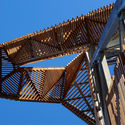
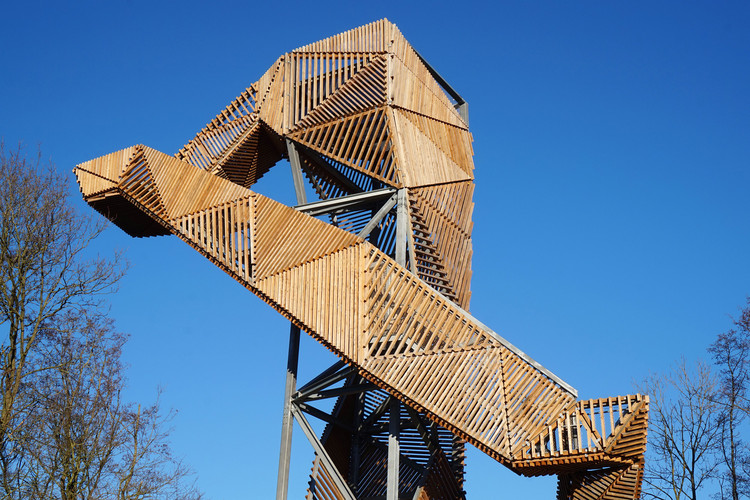
Ateliereen Architecten has proposed a metal and wood configuration for an observation tower in Peize, Netherlands. Their plan is to construct a resistant, permeable and playful structure.
The project is designed so that people climbing up the tower will have unique viewpoints. This tower is also easily assembled from screws and bolts.
On Thursday, July 29th, the Estadio Wanda Metropolitano's roof was officially completed. This new stadium, a renovation of the old Peineta athletics stadium, is the new home ground of Spanish football club Atlético Madrid.
In this video, FCC Construcción captures the intense work on the roof which was designed and constructed by engineers Schlaich Bergermann Partner. The milestone marks four months of intense work since the installation of the first of the 96 PTFE radial panels at the north end of the stadium.






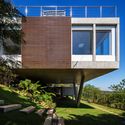
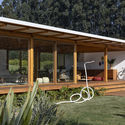
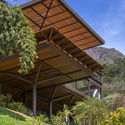
.jpg?1642689075 "Casa Redux / Studio MK27 - Marcio Kogan + Samanta Cafardo. © Fernando Guerra | FG+SG")



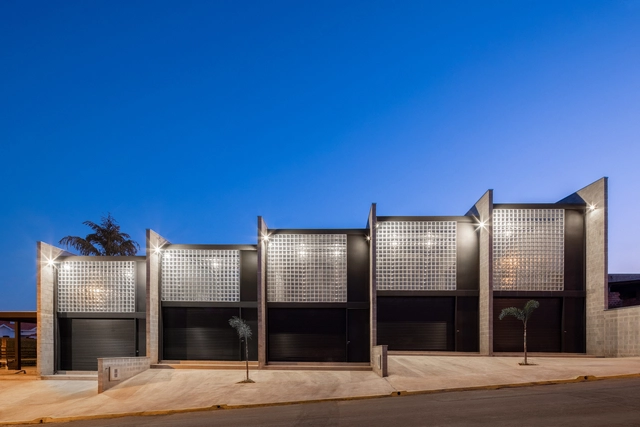




.jpg?1554305368 "El Galeno Horse Stables and Warehouse / Peñafiel & Valdivieso Arquitectos. Image © Francisco Croxatto Viviani")