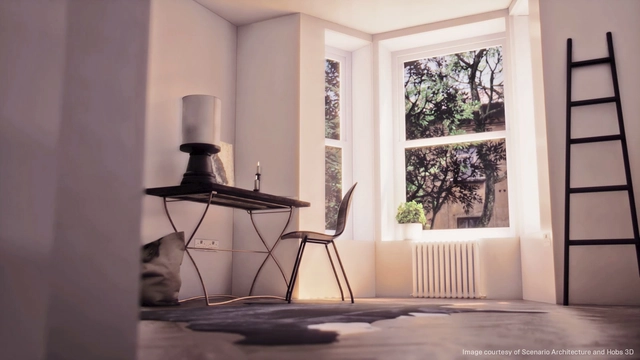
Real-time architectural visualization provides a compelling immediacy that helps stakeholders in architectural projects better understand unbuilt buildings. With the interactive architectural visualization tool Twinmotion, it’s now possible to transform BIM and CAD models into these convincing real-time experiences quickly and easily. Architectural designers benefit enormously from tools that are easy to learn and use, but they also want to create visualizations that provide a genuine sense of presence. Realism is the key to achieving this, a focus of the upcoming release of Twinmotion 2020.
In this article, we’ll provide a sneak peek at some of the new Twinmotion features.
Bjarke Ingels is one of the most well-known architects of our time. During a conversation in Copenhagen between Ingels and Sky-Frame, he discussed his point of view, creating reality, immense courage and the secret behind his unwavering pragmatism.
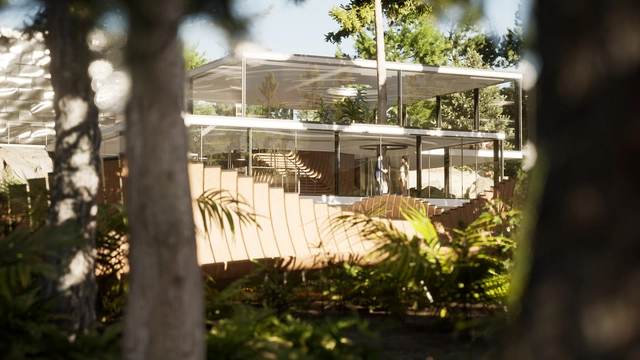
Land Art Generator Initiative and Burning Man Project have partnered to launch a multi-disciplinary design challenge—LAGI 2020 Fly Ranch—that will create the foundational infrastructure of Fly Ranch. The project is open to everyone everywhere and seeks creative solutions to systems of energy, water, food, shelter, and regeneration. You are invited to propose your regenerative artwork in this unique and stunning landscape. In 2021 selected design teams will be provided with an honorarium grant for the purpose of building a functional prototype on site.
Entries to the 6th International LafargeHolcim Awards for sustainable construction will close on February 25, 2020. The competition seeks projects by professionals as well as bold ideas from the Next Generation that combine sustainable construction solutions with architectural excellence. The Awards accept projects and concepts from architecture, engineering, urban planning, materials science, construction technology, and other related fields.
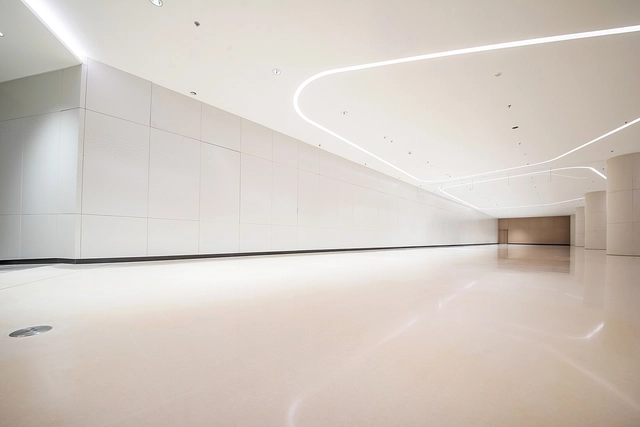
From hospitals and retail stores to large commercial facilities and school buildings, resilient flooring is a popular choice for its durability. Yet like any material, it is subject to human error and neglect; if not properly maintained, even resilient flooring may deteriorate (in aesthetics, function, or both) before its time.
Designing well, creating beautiful buildings as well as boosting revenue and making your firm profitable rank highly among the goals of architects around the world today. What are the most effective tools architects need to achieve those goals? At a recent Technology and Architecture panel, successful architects discussed answers to that very question. When you watch this panel discussion, recorded live at the prestigious Pritzker Military Museum and Library, you will hear inspiring approaches to design, coordination and project management - rooted in BIM and enabled by the design flexibility found in ARCHICAD.
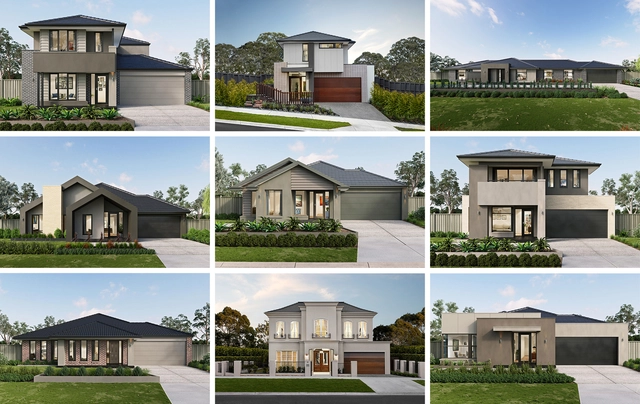
Use the term ‘volume builder’ in front of an architect, and there’s a fair chance they’ll shudder. Conjuring a vision of homogenous, mass-produced boxes squished together, ruining the look of leafy suburbs traditionally populated by impeccably designed homes, volume building is often seen as the poor cousin.
However, not all volume builders are cut from the same cloth.
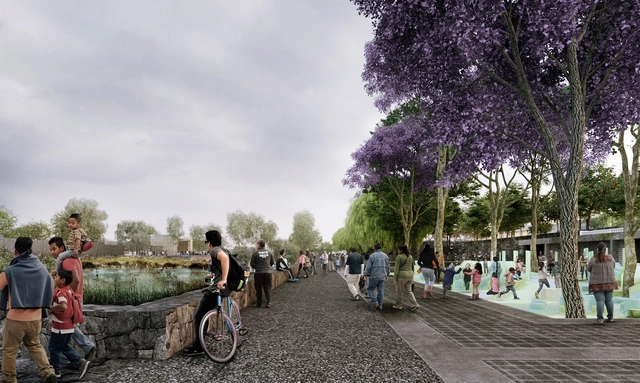
“Hydropuncture”, Global LafargeHolcim Awards Gold winning project 2018 in Mexico City. Image Courtesy of LafargeHolcim Foundation
Seeking international projects that combine sustainable construction practices with architectural excellence, the LafargeHolcim Awards are open for entries to their 6th cycle through February 25, 2020. The Awards offers a total of $2 million USD in prize money to projects and concepts from architecture, engineering, urban planning, materials and construction technology, and related fields.
Forward-thinking architectural firms, infrastructure consultancies, and interior design businesses are increasingly leaning on real-time architectural visualization to explore, evaluate, and present designs. By affording clients and project stakeholders the opportunity to experience future spaces in interactive and immersive environments, real-time technology provides a compelling immediacy that 2D drawings cannot.
Videos
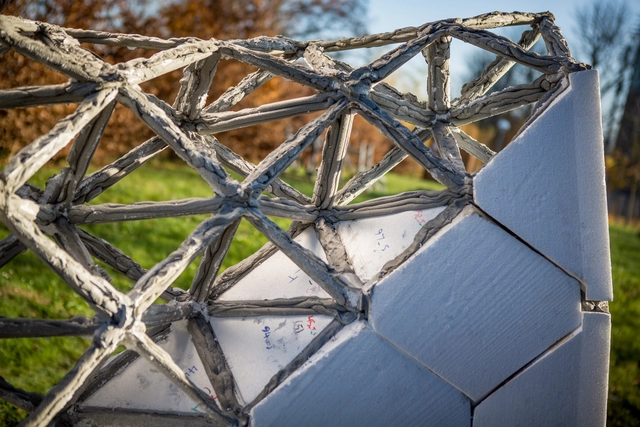
Mortar space truss wall with robotic extrusion (IASS 2019, Form and Forces) by Romain DUBALLET (Design by Data Research Studio Academic Director) with Mahan MOTAMEDI, Nicolas DUCOULOMBIER, Paul CARNEAU, Léo DEMONT, Romain MESNIL, Olivier BAVEREL, Jean-François CARON.
The Advanced Master “Design by Data” program in Computation Design & Robotics for Architecture and Construction was launched in 2016 and is one of the latest programs in innovative professional education at Ecole des Ponts ParisTech. The program was designed to meet the increasing need for the professional sectors of architecture and engineering to combine architectural skills with creative engineering. Design by Data trains professionals to master advanced design tools (coding, algorithmic approach, artificial intelligence) as well as digital manufacturing and design processes (robotics, 3D printing, electronics and mechatronics) and apply them to architectural and construction projects.
The leaves are still sprinkled with delicate drops of morning dew. Outside, in Hamburg, the bustling metropolis in northern Germany, the streets are already a hive of activity as another working day begins.
Time to savour a long, leisurely gaze over the Alster. To watch the seagulls glide silently across the sky. As you take in the great, boundless expanse, from a room flooded with natural light, the borders between indoors and outdoors begin to blur, as though the laws of physics no longer applied.
You feel the first rays of warm sunlight on your face. Aren’t these precisely the kind of moments which give you the energy you need for yet another hectic day? – A view, not a window.
V-Ray is an incredibly powerful renderer — but it’s also remarkably easy to use. The number-one* 3D renderer used in architectural visualization is battle-tested and industry-proven, used daily to realize world-class products, buildings and much more. And if you like to spend the majority of your time being creative but still crave the highest quality images possible, V-Ray can help you easily and speedily render everything from your quickest concepts to your largest and most detailed 3D models.
What’s more, it works seamlessly with SketchUp’s versatile 3D modeling tools while also being built with a full set of creative tools for lights and materials. The best part, perhaps, is that you don’t need to be a rendering expert to get great results with V-Ray. This collection of six, simple, quick-start tutorials will help you learn how to use V-Ray Next for SketchUp — and give your renders a boost in no time at all.
Most architects can agree that they would prefer to spend more time designing and less time managing. Management is a vital role architects play, yet increased efficiency is always valuable. Whether it involves coordinating consultants or ensuring a job site is progressing to meet the contract documents, architects are in charge of orchestrating many moving parts throughout the life of a project. With an app like Archireport, architects can keep track of projects in the office or on site, wherever the work day may lead.
Architectural design of a space and the furniture chosen to fill it can work together to define a room's function, set a certain vibe, and make a statement. While an architect or designer may want specific furniture to create a certain look at the time of design completion, versatility is also important over the course of a building's life. Not only do the needs of building programs and inhabitants shift over time, but owners of commercial and public spaces often want the ability to react to both aesthetic and social trends to keep up-to-date.
YAC - Young Architects Competitions and Cantiere delle Marche launch “Kiribati Floating Houses”, a competition of ideas aiming to design floating structures to tackle the challenges of the rise in ocean levels and climate change. A cash prize of € 15,000 will be awarded to winners. In addition, some projects will be selected to be part of an exhibition at Santa Maria della Vita in Bologna and some other projects will be selected to be part of an exhibition about the ocean exploration held by National Geographic at Palazzo Blu in Pisa. selected by a well-renowned jury made of, among the others, Kengo Kuma, Moon Hoon, Rocco Yim, Cristiana Favretto (Studiomobile), Simon Frommenwiler (HHF Architects), Fabio Roversi Monaco (Genus Bononiae), Giuseppe Zampieri (David Chipperfield Architects).
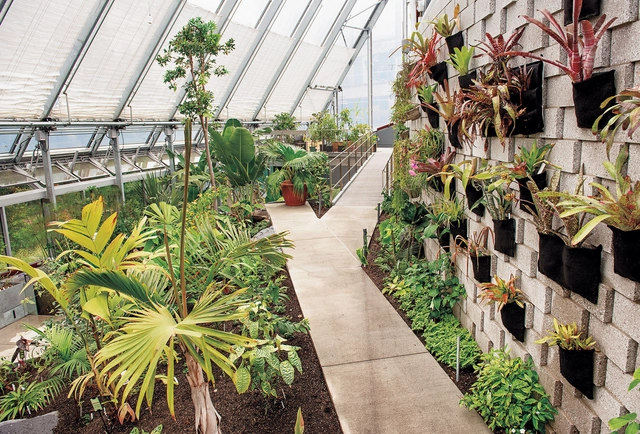
Biophilic design enhances occupant connectivity to the natural environment and continues to influence commercial architecture and interior design. Biophilia, the idea that humans innately seek connections to nature, can be reflected in a broad range of elements when it comes to design; daylighting, views of nature, and the use of organic patterns are examples of ways to include biophilic design in a space. A designer may also incorporate the careful use of natural materials such as wood products, stones, and leathers. This design aesthetic’s proven effects on building occupants’ wellbeing is evident in reduced stress for office workers, faster healing times for healthcare patients, and higher test scores for students.









.jpg?1571355421&format=webp&width=640&height=580)