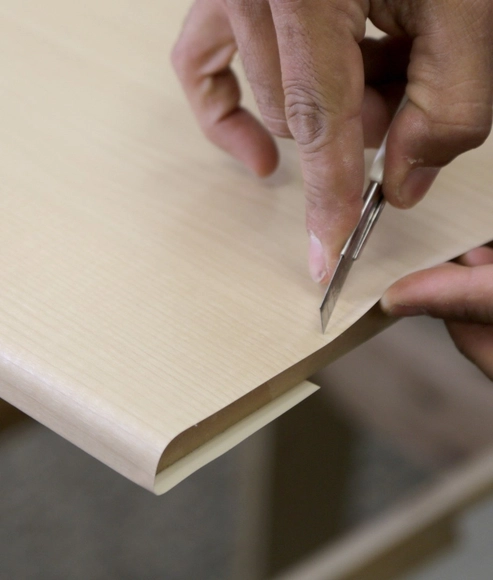
The outer layer of surfaces and buildings is the interface with the world and communicates much of its appearance, characteristics, and conditions. There are times that, whether due to budget constraints, difficulties, or lack of time, we need to look for quick and easy-to-install solutions. 3M™ DI-NOC™ Architectural Finishes are adhesive decorative films that offer a sustainable, cost-efficient option for refurbishing surfaces, providing less landfill waste, minimal downtime, noise, and dust for use on casework, doors, columns and internals walls. There is also a version for exterior solutions, the 3M™ DI-NOC™ Architectural Finishes Exterior EX Series product line. The finishes can be applied directly over existing façade material, providing high design along with other features. Below we will explore two examples that will highlight the possibilities with 3M surface finishes.
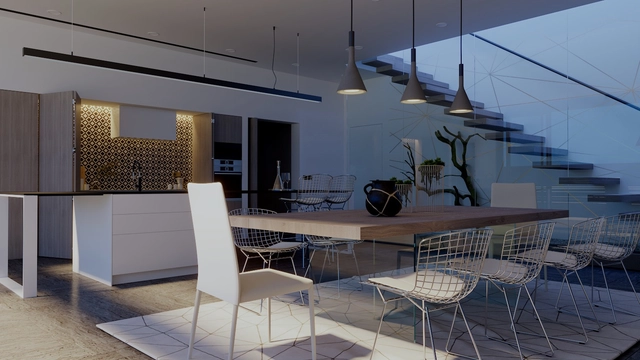
With V-Ray 5 for SketchUp, Update 2, Chaos has introduced intelligent new tools that make it easy for architects and arch-viz artists to create incredible renders. You can make use of the free models and materials provided in Chaos Cosmos, customize surfaces with V-Ray Decal, and tune your render with LightMix and post-processing.
In this tutorial, V-Ray Product Specialist Ricardo Ortiz uses an interior scene to demonstrate how these powerful new additions can accelerate your creative processes and add extra details for exceptional photorealism.
How many times have you heard the old claim that “Email is dead”? Surely, more than once. To the surprise of many, and despite the rise of new messaging tools like Slack and Microsoft Teams during the pandemic, Email remains by far the most widely used communication tool in many businesses. Every day, more than 300 billion emails are sent and received globally, and employees spend an average of 5 hours checking their online correspondence. This trend is only expected to rise in the upcoming years, especially within project and client-based industries – like architecture, engineering and construction – that heavily rely on this means of communication.
However, its consolidated use doesn’t always equal efficiency, particularly in companies that don’t set up the necessary internal processes to file emails in a central space. With the silent threat of poor mail management, many architecture firms and other businesses must face unnecessary risks, time and productivity costs, and increased stress among workers.
With the increase of extreme weather events due to climate change, sustainable architecture is only becoming more important. After all, to mitigate the impact of climate change, the International Energy Agency has recommended that industries aim for a net-zero energy system. For the construction sector, that means working to mitigate 11.4 Gt of CO2 emissions.
To help, architects should ensure their specifications are sustainable. External membranes, for instance, are often a go-to waterproofing method, but they come with many risks, including the tendency to fail frequently, and they are not environmentally friendly. In short, a better alternative is necessary.
Bringing the latest contemporary furniture from Milan Design Week straight to Shanghai, B&B Italia curated the setting at Villa 17 in Amanyangyun, an impressive Chinese antique architecture.
Videos
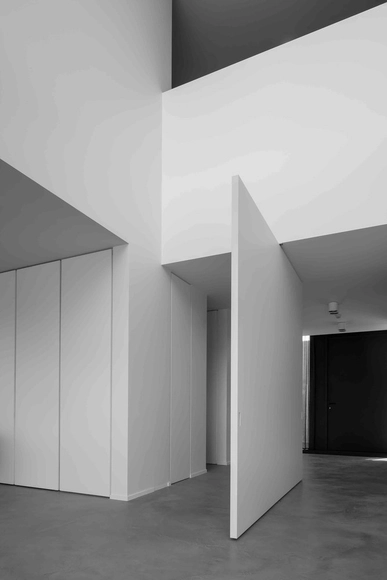
Tall and wide interior pivot door / Govaert & Vanhoutte. Image Courtesy of FritsJurgens
Among the many factors that can impact the character, style, and functionality of a living space, doors are certainly important in setting the tone. Besides their decorative function, they protect rooms from weather and noise, delimit spaces, define circulations, and provide privacy. As recent design trends continue to move towards clean, modern lines, the pivot door has never been more in style – being applied not only in main entrances, but also appearing more frequently in interior design. Apart from being bigger, heavier, and offering a dramatic contemporary look, pivot doors allow for a beautiful, elegant movement with nearly invisible hardware that rotates on a vertical axis, setting them apart from regular hinged doors.
This article was written by Julia Mingorance, Senior Workplace Consultant at CBRE and alumn from the Master in Strategic Interior Design at IE School of Architecture and Design.
More than 500 days ago, our whole world was turned upside down and our way of life changed overnight. We were forced to stay at home and work away from the physical office, in a purely virtual collaboration. In general, companies were surprised to maintain the same levels of productivity and results during these months—many even predicted the end of the office. As the health situation has started improving, a lot of companies have returned to the office, experimenting with different flexible models combining remote work and in-office days. The normalization of remote work means that many organizations see it as an opportunity to reduce office space and therefore, save costs.
The classic concept of estimating m2 for an office is being challenged completely. New variables are appearing in the equation and these are increasing uncertainty about just how much office space is needed.
As the effects of climate change intensify across the world, the AEC industry is shifting toward green building to effectively address the climate crisis. In 2020, members of The American Institute of Architects (AIA) overwhelmingly approved a resolution making environmental stewardship the organization’s top priority. Since then, steady progress has been achieved to develop a Climate Action Plan, evolve the Framework for Design Excellence, and increase participation in the 2030 Commitment. The building and construction sector is responsible for 36% of energy consumption, 38% of energy related carbon emissions, and 50% of resource consumption globally. These percentages are expected to double in total footprint by 2060, exacerbating the negative effects of climate change on the environment. The Intergovernmental Panel on Climate Change (IPCC) 2021 Report warns of increasingly extreme heatwaves, droughts and flooding, and a key temperature limit being broken in just over a decade. The world must act fast to avoid these catastrophic events, and decarbonizing the built environment is a major step in the right direction.
https://www.archdaily.com/972553/net-zero-energy-and-net-zero-carbon-design-strategies-to-reach-performance-goalsSponsored Post
Videos
‘Precision O-ring’ in EcoSmart hand showers: If the water pressure is high, the size of the opening decreases. If it is low, it expands.. Image Courtesy of Hansgrohe
Water scarcity will directly affect nearly 20% of the human population by 2025, according to several UN reports, and indirectly influence the rest of the planet’s inhabitants as well as economies and the whole ecosystems. Designing effective water management systems is an important process that encompasses the planning, developing, and managing of water resources, in terms of both water quantity and quality, across all water uses. It includes the institutions, infrastructure, incentives, and information systems that support and guide water management.
Videos
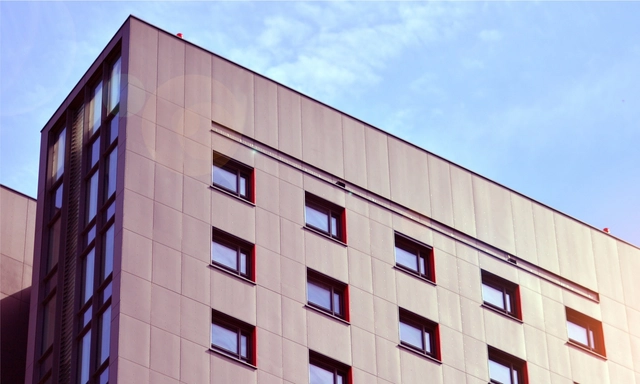
Hospital Mirdiff, Dubai, U.A.E. Image Courtesy of Equitone
Made of cement reinforced with cellulose fibers, fiber cement cladding is a building material used to cover the exterior of a wide range of buildings, including hotels, schools, office buildings, retail centers, hospitals, corporate centers, and residential buildings. Fibre cement panels are aesthetically pleasing, long-lasting, and highly resistant to fire and weathering.
Architect Diana Najib Hamad provides interesting case studies for the use of fiber cement in three recent Dubai-based commissions.
The NextGen International Taskforce is a collaboration between IE School of Architecture & Design and CPA NextGen, acting as a forum to exchange international talent and learn from discussions on the real estate industry and the built-environment. The group of NextGen professionals, which includes IE University alumni, meets bimonthly to discuss issues such as sustainability, inclusivity, technology, cities and wellbeing.
Textures play a leading role in an interior project. Metals bring integrity and sophistication. Stones and their variations in colors and designs can become focal points in spaces. Different wood types, with their fiber and knot designs, and their characteristic coloring, bring warmth and comfort. If we think about the combination of these, together with different types of surfaces and lighting, we have a universe of possibilities to try to bring pleasant sensations to the occupants of the spaces.
Concrete and sustainability are two words that are often considered incompatible. Used as early as the Roman era, concrete has shaped much of our built environment, being the most widely used manufactured material in the planet thanks to its resistance, versatility, cost-effectiveness, and accessibility, among other inherent benefits. Its popular use in buildings and infrastructure forms the foundations of cities, connects communities, and will continue to play a vital role in providing solutions to the challenges of the future – especially as cities must respond to a growing global population. But with cement as its key ingredient, it also comes with several environmental costs, being responsible for at least 8% of the world’s carbon emissions in a climate-change context. However, it doesn’t necessarily have to be that way. With the rise of innovative technologies and products, there are many ways to make concrete greener.
The building construction industry currently accounts for 40% of annual greenhouse gas emissions, due to its high carbon embodiment and carbonated energy demands. Building-integrated photovoltaics (BIPV) is a sustainable solution to address these concerns and to contribute to a net-positive world. This advanced technology can be utilized in solar building envelopes, skylights, windows, and balcony railings to produce green energy.
Since its inauguration in the 1960s, every year more than 10 million tourists visit the Hollywood Walk of Fame in hopes of experiencing the glitz and glamour of Los Angeles’ most famous attraction. To this day, its 18 blocks of terrazzo floors remain in a good state, revealing the longevity and durability of a material able to withstand heavy foot traffic over the course of the century.
Project conceptualization has the largest impact on the functionality, performance, and cost of a building - this is when key decisions about layout and aesthetics are being taken. Although the depth of data required to make these decisions is best served by BIM, it is understandable why architects are reluctant to use BIM tools in the creative process.
Westfield Mall of the Netherlands / MVSA Architects. Image Courtesy of Kriskadecor
In architecture and interior design, ceilings are fundamental elements that combine functionality with aesthetic features such as colors, textures, and materials. While providing quality and comfort, unique and well-thought ceilings can create a dramatic visual impact, defining a building’s tone and character. However, even though a room’s “fifth wall” is a crucial design component, it is not frequently emphasized in architectural projects – or not nearly as much as decor, furniture, wallpaper, or other elements that define interior ambiance. It is therefore important to explore the numerous creative opportunities that a ceiling can offer, beyond the typical plain white shade that continues to dominate in most interior spaces.
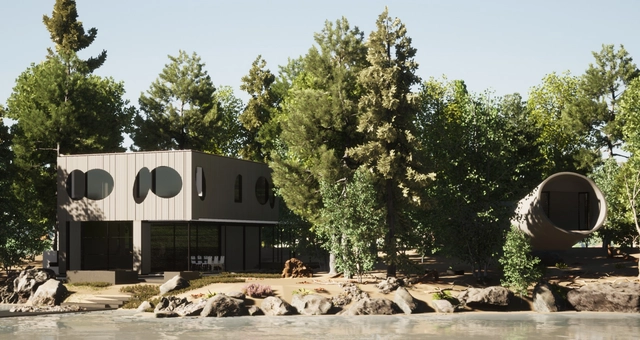
Overall Render. Image Courtesy of Alchemy Architects
Internationally recognized for their weeHouse® concept, Alchemy has been proving since 1992 that even the smallest of dwellings can have a huge impact. weeHouse®, a term that Alchemy trademarked in 2002, was conceived as a modular-friendly design system that emphasizes quality before quantity, and has been recognized by an ethos of “less is more.” The Minnesota-based firm, led by Geoffrey Warner FAIA, designs the structures to be modern and sleek with particular attention to using expressive local materials with environmental sensitivity.
The Squam Lake House in New Hampshire, although not technically a weeHouse, was required to strictly respect the floor area and volume of a dilapidated cabin 15’ from the shore. Fabricated mostly offsite by Bensonwood using 18” thick, pre-glazed wall panels and white oak timber framing, the panels were erected in only 4 days.
Eric Winter, AIA and architect at Alchemy, shared some valuable insights about the project’s design process.


_9.46.53_a._m..jpg?1640354929&format=webp&width=640&height=580)


.jpg?1639435789 "© Wen Studio")






.jpg?1636467268&format=webp&width=640&height=580)