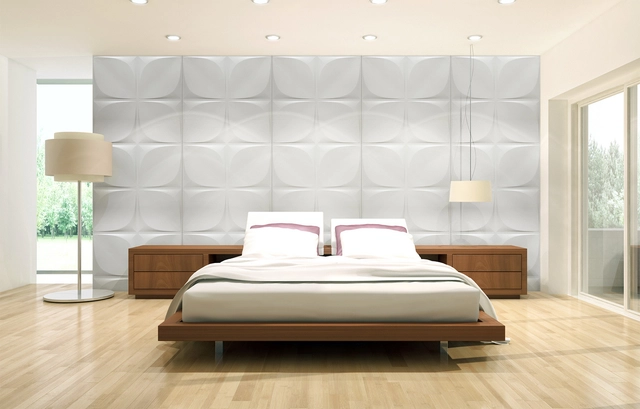
Textures can calm us, bring warmth or even guide us. They elicit our sense of touch and also affect us visually. This is because lights and shadows tend to form in relation to the irregularities and shapes that are present in some textures, which can in turn clearly differentiate these types of materials from other surfaces. For many, the idea of a space surrounded with white, smooth walls can be disturbing and monotonous. Embellishments such as paints, the inclusion of natural coatings or other elements can easily transform a space, emphasizing certain parts or creating new and attractive visuals. In interior design projects, textured walls have always been a popular way to add prominence to a space, either via the constructive system of building - such as brick or exposed concrete walls - or through different types of coatings that can be added later on.
Virtual reality has given architects alternative ways to work. Paired with real-time visualization software, it offers a robust tool with endless capabilities for your design workflow. It can help develop the design, address needs, and win over clients. Here are four key reasons why you need to implement VR into your design workflow.
Metal façades give buildings an air of sophistication and modernity. They also bring a cleanness to the façade, due to their precise fabrication and well-resolved connections between other materials and building elements. There are currently multiple product options available for coatings, offering extensive colour options, including metallics, with different levels of durability (natural aging and corrosion). One of the main issues when approaching metal façades is the risk of corrosion, which can create points of weakness in the material and interfere with the aesthetics of the building. So, with this in mind, what do architects need to focus on to ensure that building envelopes age gracefully, while maintaining aesthetics and performance over time?
Big data and hybrid working models are the future of the Architecture, Engineering, and Construction (AEC) industry, according to Álvaro González. Álvaro is a Global Master in Real Estate Development student and cofounder of Infinity Dimensions, a startup looking to accelerate digitalization in the sector.
Embodying IE University’s learning by doing philosophy, we spoke to him about how running a startup while earning a graduate degree is possible—with the right amount of entrepreneurial spirit.
A couple of years ago, MVRDV pioneered a system to involve the residents of Hamburg in an urban rejuvenation plan. The Grasbrook Maker was envisioned as an interactive, multi-user platform to democratize design. Architects set up the design framework within which participants could place public buildings.
Collecting inputs from multiple stakeholders is fundamental to architecture. In fact, architecture is one of the most collaborative disciplines in the world. Every project, from a residence to an urban masterplan, involves a team of clients, architects, engineers, contractors, financiers, and many more.
Cladding systems have important functions in buildings. They can confer thermal insulation, protect internal spaces from the weather and–just as important–give the building a "face", improving its appearance and clearly identifying the element of design. "Cladding" refers to the components that are linked to the structure of a building to form non-structural external surfaces. While in the past wooden cladding was the only option, there are currently multiple possibilities of materials, colors, weights, textures, anchoring systems, and many other variables available. Below, we outline some of the main materials used for façade cladding, and the projects that use them in a remarkable way:
What are your plans for this summer? If you like to test your passion for environmental design, one of the top summer programs could just change your life.
The College of Environmental Design at UC Berkeley is excited that its Summer Programs are back on campus this year. UC Berkeley faculty and leading innovators of the San Francisco Bay Area are looking forward to in-person and hands-on instruction.
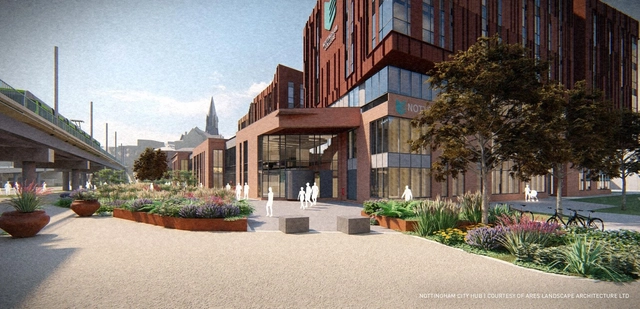
Nottingham City Hub. Image Courtesy of Ares Landscape Architects Ltd.
The noticeable shift from 2D CAD in landscape architecture is in part due to external pressures, such as the UK’s requirement for BIM level 2 framework on government-procured projects. Even where there’s no BIM mandate, there’s inherent pressure to deliver BIM files when working with consultants who’ve already matured their workflows with BIM.
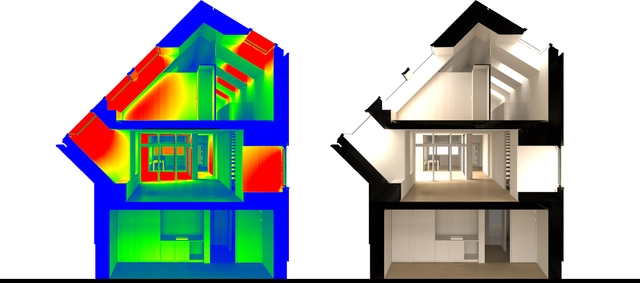
Luminance rendering from Daylight Visualizer. Image Courtesy of VELUX Group
Daylight shapes the experience of a space like no other material and is a fundamental aspect for designing healthy and sustainable buildings. Good daylighting design can improve the health, mood, cognitive abilities and productivity of the occupants at home, school or work while reducing the energy consumption of buildings.
Daylight Visualizer makes it easy to take informed decisions about architectural and daylighting strategies in your projects, and to evaluate compliance with requirements for daylight performance in building regulations and building rating systems.
Architectural renderings are a great way to showcase projects. They provide an impression of what your built environment will look like once completed. Thanks to real-time rendering software, you can now do more than present beautiful images.
We’ve highlighted five ways to optimize your design workflow by using real-time rendering.
With the kick-off theme "Precious Space", the Hansgrohe Group's design brand AXOR launched its new, digital platform AXOR Futures on November 9, 2021. The event series highlights new developments in architecture and design by bringing together renowned experts from various fields for an inspiring exchange on avant-garde topics. "With AXOR Futures, we offer exclusive insights into new ways of thinking about societal influences on interior design. The first edition on the topic of 'Precious Space' was very well received by the global architecture and design community. This is another reason why we are very much looking forward to 'The Long View' on April 20," says Anke Sohn, Head of Global Brand Marketing AXOR.
Pricing architectural project work is a complex issue that is not usually addressed during one's formative school years, and it usually takes time for professionals to develop a good system that works for them and their clients. Issues such as scope of work, hours worked, project area and project complexity will influence the final cost of a job. In addition, another thing that can keep project professionals awake at night is how to charge clients in a way that is sustainable for the business and comfortable for future users of the designed space.
The NextGen International Taskforce is a collaboration between IE School of Architecture & Design and CPA NextGen, bringing together international talent to exchange ideas on the real-estate industry and built environment. This group of NextGen professionals typically gathers on a bi-monthly basis to address topics such as sustainability, inclusivity, technology, cities and wellbeing.
These conversations look at the future of cities and how to build a better future for people and businesses. In this edition, held on January 25th, 2022, a group of 12 professionals came together to discuss the topic of sustainable mobility, also touching on the future of remote work and its impact on housing.
Ensuring that a project's construction team is working with the most up-to-date information is critical to its success; but this is not an easy task. Document management workflows are often disconnected or disjointed due to manual administrative processes and disparate systems. As a result, poor document management can result in schedule delays, quality issues, expensive rework, budget overruns, and litigation.
cove. tool's core mission is to fight climate change by helping architects, engineers, contractors, and developers use data-driven design through automation and cost optimization. Creating a competition premise that called attention to this critical issue was important. With the recently published landmark Intergovernmental Panel on Climate Change's (IPCC) 2021 report that warned of increased extreme heatwaves, droughts, and flooding, as well as a key temperature limit on track to be broken in just over a decade, it further highlighted the urgency. As climate change intensifies, housing stability will be increasingly under threat. These two inextricably linked issues had the potential to spark innovative ideas from the international design community and community-at-large. With the sizeable grand prize of $50k, the goal was to solicit entries from all over the world and help facilitate more conversations about carbon positive, affordable housing that could be replicated in multiple neighborhoods, cities, and countries. Sustainability and affordability are often two topics that are at odds. However, this competition proved that there are creative solutions to complex problems.
Climate change, the scarcity of resources, and urbanisation are hot topics in the building and construction industry. In this context, the importance of sustainability cannot be overemphasised: almost 40% of global CO2 emissions and 36% of global energy usage is associated with building and construction. These figures clearly illustrate the increasing need for more sustainable solutions in the industry.
Companies that play an active role in the building industry have a responsibility to pave the way toward a more sustainable future. This is why partners like Uponor, one of the leading international providers of solutions that move water for buildings and infrastructure, strive to help customers in Europe to choose the perfect solutions for greener building designs.
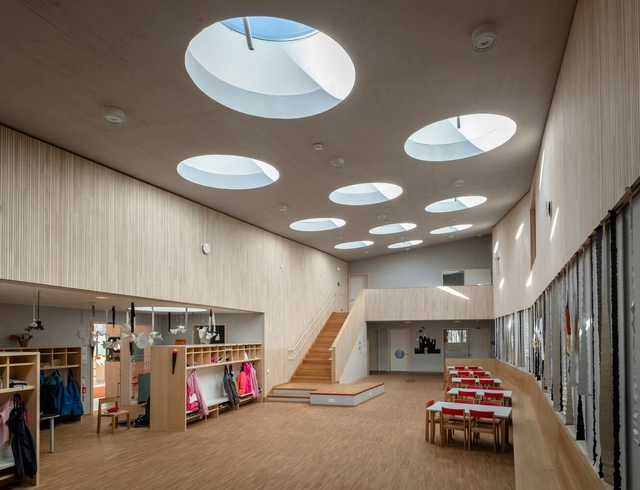
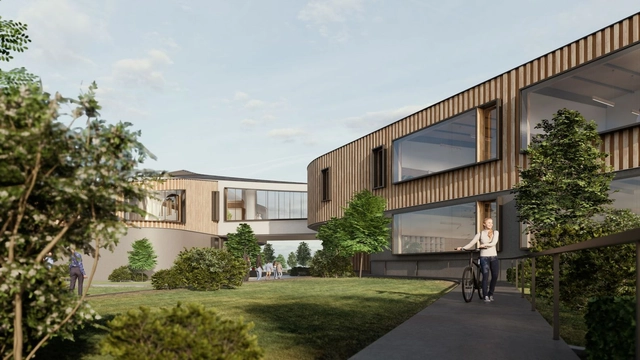
Kindergarten “St. Severin”, Garching. Image Courtesy of LAMILUX
Our environment influences how we feel; we have all experienced this. For students, it is easier to study in a bright place, artists look for inspiring atmospheres, and our mood can improve with the right color scheme. These aspects are also important for kindergartens, daycare centers and schools, because a child-friendly design can stimulate the curiosity and imagination of children, so that they learn in a playful way. The design of a room supports the learning and creativity of children. Daylight systems, for example, flood rooms with light, making them appear larger and friendlier.
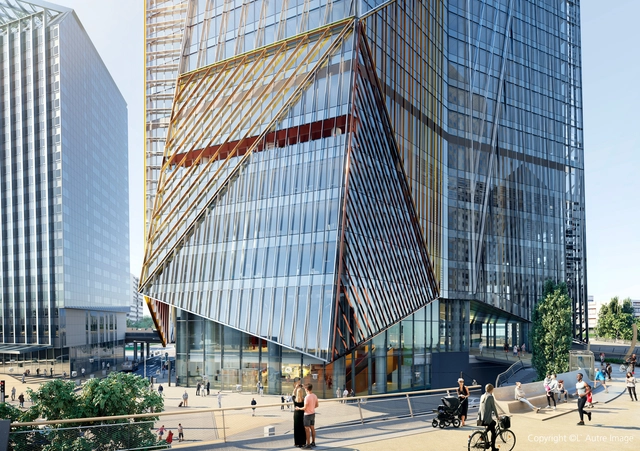
Overtaking the Tour Firstskyscraper, the 48-story, 220-meter HEKLA Tower will be the tallest building in Paris’s La Défense business district, as well as the second tallest building in all of France. Currently under construction and designed by Pritzker prize-winning Jean Nouvel, it is set to become a powerful architectural statement. Due to complete this 2022 in the midst of the sector’s redevelopment program, the futuristic skyscraper spreads over 76,000 sqm of floor area distributed in offices, services, lobbies, an amphitheater, projection rooms, performance halls, restaurants, bars, gyms and loggias. All of this with the aim of providing a unique user experience with vast, flexible workspaces that promote interaction and well-being.





.jpg?1647615056&format=webp&width=640&height=580)