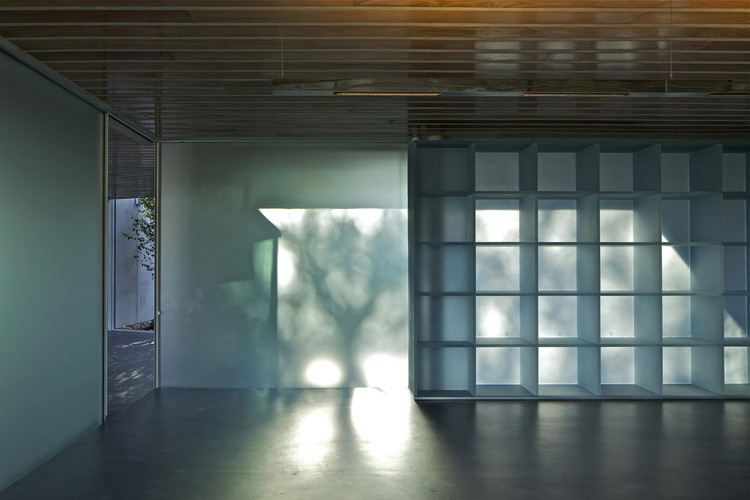
In honor of Rem Koolhaas' birthday today, we are printing a fascinating piece on his life and work written by Nicolai Ouroussoff, architecture critic for The New York Times from 2004-2011.
Rem Koolhaas has been causing trouble in the world of architecture since his student days in London in the early 1970s. Architects want to build, and as they age most are willing to tone down their work if it will land them a juicy commission. But Koolhaas, 67, has remained a first-rate provocateur who, even in our conservative times, just can’t seem to behave. His China Central Television headquarters building, completed this past May, was described by some critics as a cynical work of propaganda and by others (including this one) as a masterpiece. Earlier projects have alternately awed and infuriated those who have followed his career, including a proposal to transform part of the Museum of Modern Art into a kind of ministry of self-promotion called MoMA Inc. (rejected) and an addition to the Whitney Museum of American Art that would loom over the existing landmark building like a cat pawing a ball of yarn (dropped).
Koolhaas’ habit of shaking up established conventions has made him one of the most influential architects of his generation. A disproportionate number of the profession’s rising stars, including Winy Maas of the Dutch firm MVRDV and Bjarke Ingels of the Copenhagen-based BIG, did stints in his office. Architects dig through his books looking for ideas; students all over the world emulate him. The attraction lies, in part, in his ability to keep us off balance. Unlike other architects of his stature, such as Frank Gehry or Zaha Hadid, who have continued to refine their singular aesthetic visions over long careers, Koolhaas works like a conceptual artist—able to draw on a seemingly endless reservoir of ideas.
Pritzker-Prize Laureate Remment Lucas Koolhaas (you probably know him as "Rem") turns 68 today. The co-founder of one of the world's most renowned architecture firms, OMA, and an urban-planner/philosopher whose theories have provoked admiration (and ire) for over thirty years, Koolhaas is undeniably one of a kind.
In honor of Rem Koolhaas’ birthday today, we are bringing you all things Koolhaas: 14 Fun Koolhass quotes; a fabulous article by former New York Times critic, Nicolai Ouroussoff; this ArchDaily original editorial; and, later today, a Round-Up of all of OMA's latest works. Stay tuned!
Imagine London, but not the way you know it. Imagine it physically separated, much like Berlin once was, into two zones: one of pleasure and one of practicality. Consider how the city would eventually appear as inhabitants rushed to the pleasure zone; how the zone of practicality would eventually, inevitably become bereft.
This is the London of a young Rem Koolhaas’ imaginings, written for his Thesis at the Architectural Association School in London in the late 60s. Before Delirious New York, before OMA, and much before the CCTV Tower, Koolhaas was inspired by this idea of the divided city - and it’s a fitting image to start thinking about the ever provocative, often controversial Rem: a man who stands with one foot in the world of desire and the other, reluctantly, in that of practicality; a man who would perhaps prefer the title of urban thinker, despite clearly being one of architecture’s great masters.
It’s exactly this in-between-ness, this reluctance to fit into one supposed role, that has been Koolhaas’ greatest asset, that has allowed him to approach the profession from such unlikely angles. Using the city’s freedoms as his inspiration, and rejecting as given the expectations of what architecture is(even questioning its relevance at all), Koolhass, the “reluctant architect,” is also the most radical of our time, and the most vital for our future.
Could OMA's design of the Kunstahl Gallery be largely to blame for the art heist that occurred there this past Tuesday?
That's exactly what the Gallery's security expert, Ton Cremers, has suggested to Dutch newspaper De Volkskrant (as reported by Dezeen) in his attempt to explain how the thieves made off with millions of dollars worth of Picassos, Monets, and more.
More about the Kunsthal (including plans) and why it's supposedly "awful to protect," after the break...
Beginning on October 16th, 2012, Galeries Lafayette in Paris, France, will be celebrating the 100 year anniversary of the Dome designed by architect Ferdinand Chanut and glass artist Jacques Gruber in 1912. 100 years under the Dome will be held at the flagship store of the boulevard Haussmann, a true Parisian symbol. In addition, the gallery will launch an exhibition called 1912-2012. Chronicles of a Creative Itinerary by architect Rem Koolhaas and his studio OMA, along with a collaboration called Chrysalide between visual artist Yann Kersalé and Djuric Tardio – Architectes.
Join us after the break for more stunning images for the anticipated celebration.
Cinematographer Tomas Koolhaas, son of notorious Rem Koolhaas, has shared with us his latest clips from the feature length documentary film, REM. Set to debut in 2013, the motion picture breaks away from conventional approach to filming architecture and exposes the raw, human experience of Dutch architect’s most famous projects. As Tomas describes, REM gives the audience “a rare insight into the reality of the hidden internal life of the buildings”.
ArchDaily had the chance to discuss the film with Tomas. Continue after the break for the complete interview and another small preview of the film!
Hot on the heels of the Jencks Award, yet another accolade is rumored to be coming Rem Koolhaas‘ way. The claims are flying about the twitterverse: OMA’s Koolhaas will be the next Director of the Venice Biennale.
Every June 21st since 2003, Go Skateboarding Day has rallied skateboarders around the globe – in skateparks and public plazas, downtown nooks and parking lots – to grind, ollie, and kickflip it with the best of them.
If I didn’t lose you at “ollie,” you’re probably wondering: what the heck does this have to do with architecture?
Well, I could talk about the architectural challenge that a skate park, as an interactive public space with specific topological requisites and social implications, offers architects. I could show you some cool testaments to the fact, such as the Architecture for Humanity-sponsored projects in Afghanistan and Manhattan, opening today.
But, rather selfishly, I’m more interested in what skateboarding has to offer us beyond skateparks. A skater, unlike your typical pedestrian, experiences space just as intensely and consciously as an architect himself, albeit in a different way. He/she is alive to the possibility of space, not in its totality, as an architect would be, but as a collection of tactile surfaces to be jumped on, grinded, and conquered.
The skater offers a revolutionary perspective for the architect: one that allows you to see buildings beyond what they were intended to be, to see (and design) buildings as “building blocks for the open minded.”
Enjoy this interesting footage captured by Tomas Koolhaas – son of Rem Koolhaas – in February 2012 of the recently completed China Central Television (CCTV) Headquarters in Beijing. The monumental structure took eight years to complete and is OMA‘s first major building in China, as well as their largest project to date. The building is planned for occupancy later this year to broadcast the London 2012 Olympics. Check out our previous coverage for more building information.
Continue after the break to view a short clip inside the CCTV building during construction!
Created by Reiser + Umemoto for the Hong Kong & Shenzhen Bi-City Biennale, “Manhattan Memorious” explores what Manhattan could have been. The film visualizes several unrealized projects from Manhattan, including Buckminster Fuller’s dome over Midtown, Rem Koolhaas’ City of the Captive Globe, RUR’s East River Corridor, Paul Rudolph’s Eastside Redevelopment Corridor, Morphosis’ West Side Yard and others.
Rem Koolhaas and Ellen van Loon discuss their design of the Rothschild Bank headquarters in London. Viewing the bank as a “dynamic system”, the main task was to create an “always efficient and always pleasant” machine that will accommodate all of the Bank’s London staff and reunite its connections with the city, including the St. Stephen’s Walbrook. OMA’s design for the New Court is the fourth iteration of NM Rothschild & Sons’ headquarters, all of which have been built on the dense and narrow medieval alley of St. Swithin’s Lane.
De Rotterdam is a unique multifunctional building on the shores of the river Maas on the Wilhelminapier in Rotterdam designed by Office for Metropolitan Architecture (OMA) of Rem Koolhaas. Its remarkable mix of functions makes this building a true vertical city.
By following the construction for 4 years (January 2010 – end of 2013), Ruud Sies presents a photographic report on a very special project in the development of Rotterdam, one that also forms a link to the Wilhelminapier as a historic spot. The full report can be viewed here. More images after the break.
The annual AIASFORUM meeting for 2011 will take a break from the snow of the past two years (2009 Minnesota, 2010 Toronto) and be held in sunny downtown Phoenix, Arizona. FORUM is the annual meeting of the AIAS and the premier global gathering of architecture and design students. The conference provides students with the opportunity to learn about important issues facing architectural education and the profession, to meet students, educators, and professionals with common interests, and to interact with some of today’s leading architects through keynote addresses, tours, workshops and seminars, last years FORUM was attended by over 1,000 young and ambitious architecture students and AIAS members. This years Keynote Speakers will be Jeffrey Inaba, founder of C-Lab and former project manager with Rem Koolhaas and OMA, Brad Lancaster, author of www.harvestingrainwater.com, and University of Californa, San Diego architect and professor Teddy Cruz.
Just recently, the author of architectural videos blog shared with us a video on OMA’s founding partner Rem Koolhaas‘ lecture which he gave at Cornell University on October 20th. His lecture was given on the occasion of opening Milstein Hall, the new extension to the faculty of Architecture, Art and Planning designed by OMA.
On October 19th Charlie Rose interviewed OMA founding partner Rem Koolhaas (his fifth appearance on the show). The discussion ranges from Koolhaas’ current interest in the countryside, rather than the city, his firm’s newly completed Milestein Hall project at Cornell University, and the launch of the book Project Japan: Metabolism Talks written with Hans Ulrich Obrist and edited by Kayoko Ota. Watch the interview here.
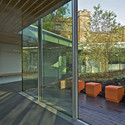
Today marks the opening of Maggie’s Gartnaval, a new center for the charity located on the ground of Gartnaval Royal Infirmary in Glasgow, Scotland. Designed by OMA, the center aims to provide emotional and psychological support to those affected by cancer in the greater Glasgow area.
Rem Koolhaas commented, “We were touched to be asked to design a Maggie’s Centre, and invigorated by the opportunity to work on a completely different scale, with different ambitions, and in a different environment. Maggie’s is so unique and urgent among the projects we are working on.”