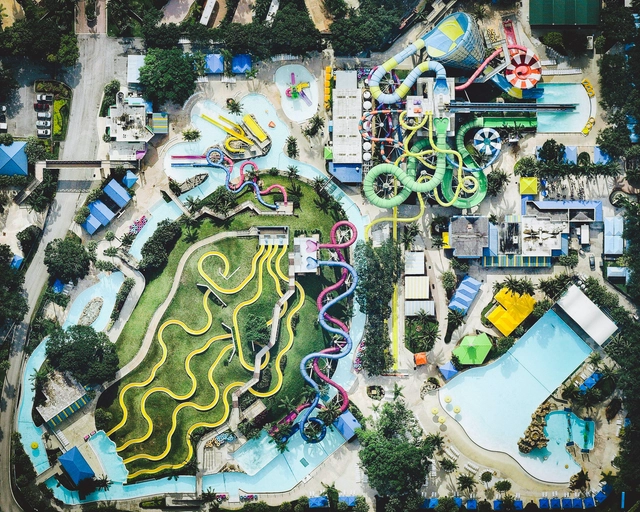
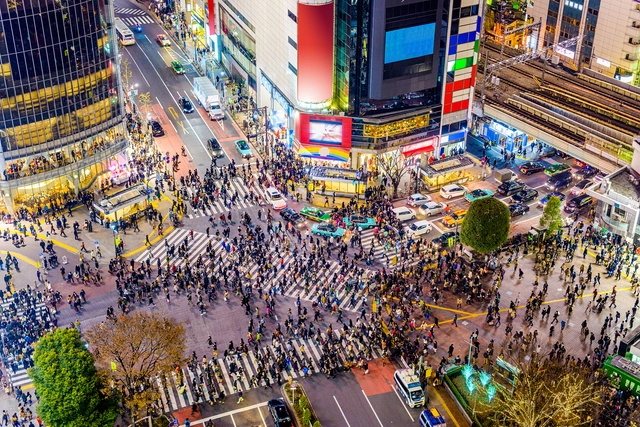
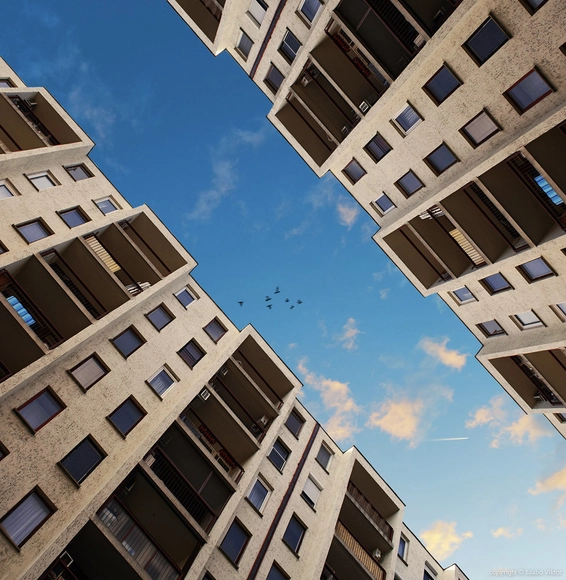
Seeing the Earth from a great distance has been proven to stimulate awe, increase the desire to collaborate, and foster long-term thinking. Daily Overview aims to inspire these feelings — commonly referred to as the Overview Effect — through their imagery, products, and collaborations. By embracing the perspective that comes from this vantage point, the team believes they can stimulate a new awareness that will lead to a better future for our one and only home. Check out Daily Overview's Gallery of Amusement Parks and follow the team's work on their Instagram.
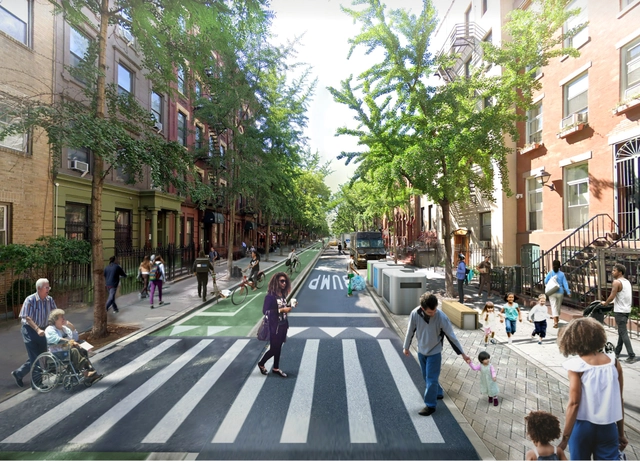
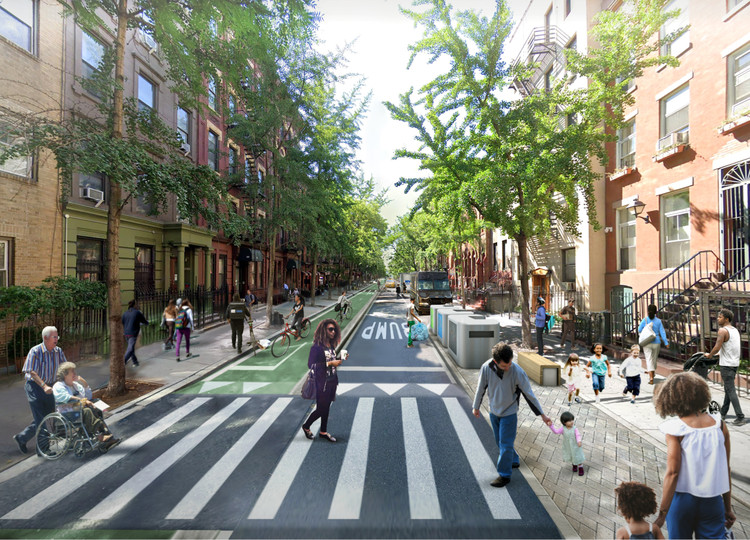
PAU or Practice for Architecture and Urbanism revealed images for a proposal that imagines New York City without cars. The visionary N.Y.C. (“Not Your Car”) project unlocks the potential of the city’s streets, reopens the public space to people and bans private vehicles.
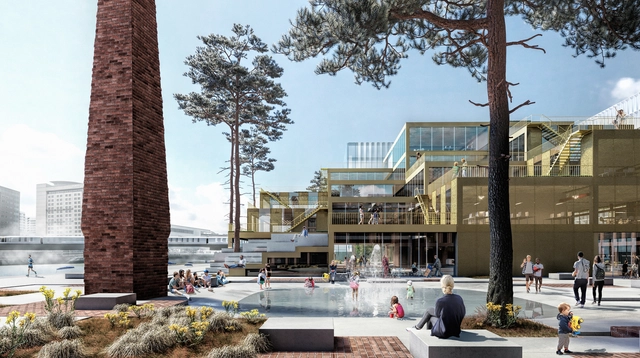
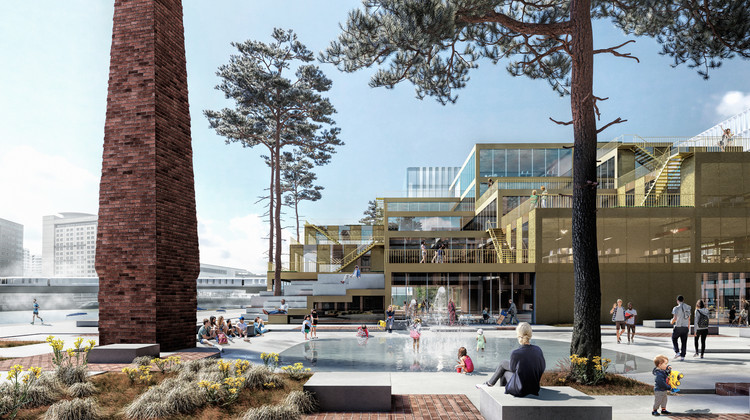
The Henning Larsen-designed Belfast Waterside development was officially granted planning approval by the Belfast City Council, after a year in the planning approval process. Located on the site of the former Sirocco Works, the project is set to “transform the 2.6-hectare area on the east bank of the River Lagan that has been disused for nearly two decades”.
When we talk about public space, we often imagine a park with happy, relaxed people on a sunny day. In actuality, this is a very restricted approach. A young woman does not cross a deserted street at dawn in the same way as a white man wearing a suit or as an immigrant who may not be welcomed by local citizens. Have you ever felt discriminated while visiting a public space?
In this edition of Editors’ Talk, editors from Los Angeles, São Paulo, Argentina, and Uruguay share their views on defining public spaces for everyone
Feeling free and safe in the city. How many times have we felt fully free when walking through our neighbourhood, when returning home, when sitting in the park? Some urban spaces give us more autonomy than others. Some areas seem more comfortable and calm. But, to keep that calm, to what extent do we express ourselves and to what extent do we hold back? What safeguards do we take to feel as good as possible when inhabiting our environment?
https://www.archdaily.com/942508/cities-should-allow-people-to-shineMaría Gonzalez & José Tomás Franco
In general, architects like to talk about how much their designs influence communities, and it makes perfect sense for them to do so. In the end, physical spaces and different social factors influence how each individual feels when they inhabit the city or occupy a building. But do all projects respond to all users the same way? We set out to question the way in which architecture approaches the LGBTQIA+ community, through an open call on our social networks, collecting the testimony of our readers on how they inhabit these spaces and how it would be possible to represent the community in the architectural field.
Architects in general are people who like to talk about how much they influence communities through their designs, and they are actually correct in saying that. After all, spaces together with various social factors influence how each individual feels when occupying the city or a building. But do these projects respond to all users in the same way? We propose to question the way architecture deals with the LGBTQIA+ community through an open call on our social media channels, bringing in our readers' testimonies on how they experience these spaces, and how is it possible to represent the LGBTQIA+ community in the architectural field.
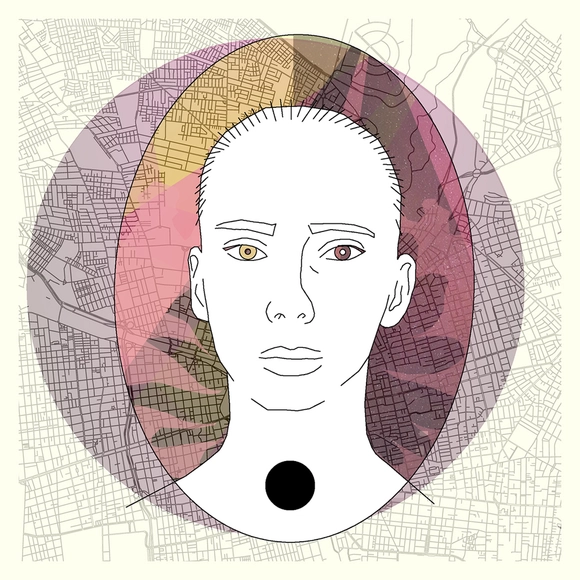
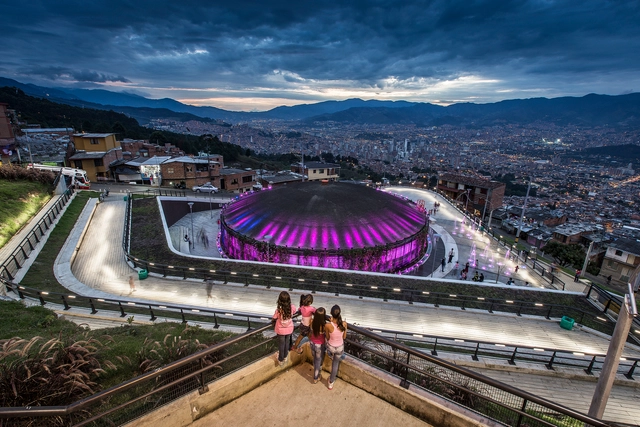
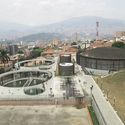
While developing a master plan for Medellin's urban lighting system, EPM, Medellin's public utility company, analyzed the Colombian city's infrastructure and nocturnal lighting system by superimposing a map of the system over a map of the city. What they found was an urban landscape blotted by "islands" of darkness.
Much to the surprise of the utilities company, the dark spots were actually 144 water tanks that were initially built on the city's outskirts; however, thanks to the progressive expansion of Medellin's city limits, the tanks now found themselves completely surrounded by the informal settlements of the Aburra Valley. Even worse, they had become focal points for violence and insecurity in neighborhoods devoid of public spaces and basic infrastructure.
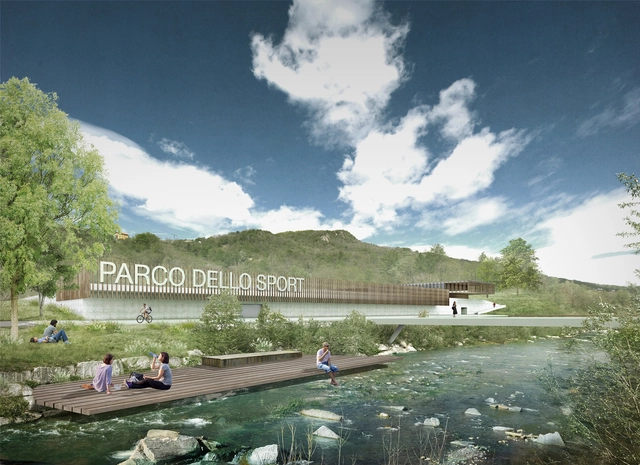
Focusing on the future of public space, and centering their approach on wellbeing and sport as drivers of sustainability, economic and social development, the Lugano Municipal Council in Switzerlandhas given the go-ahead for the planning of the new Pole of Sports and Events (PSE). Designed by LAND, the project dictates the direction for public spaces in the post-pandemic era.
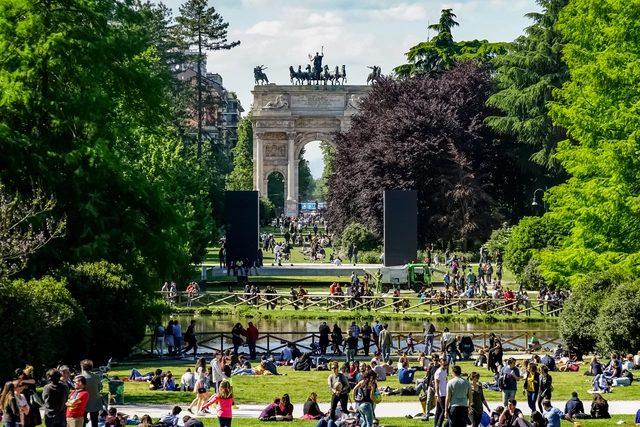
Porta Sempione triumphal arch in Sempione Park in Milan. Image via Shutterstock/ By NYC Russ
Systematica has just released a case study on access to green areas and the public realm in the city of Milan. Focusing on the availability of these gathering spaces for residents, the research, particularly relevant in this time of the pandemic, also highlights open and not crowded public spaces, convenient for a safe social life.
"Public space" is a legal terminology that tackles the notion of land ownership, suggesting that this type of parcel does not belong to anyone in particular, but to the state itself. Open, free, accessible to all, and financed by public money, these spaces are not only the results of planning, but the consequences of the public practices they hold. Actually, people define how public space is used and what it means.
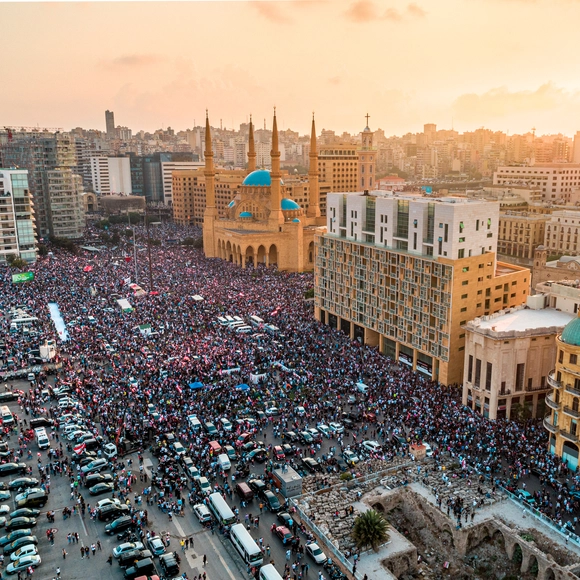
Protests - powerful political tools for change - from the March on Washington in 1963, the Arab Spring in the early 2000s to recent Black Lives Matter Movements, are altering the world. In times like these, while people still need to "take their issues to the streets" to be heard and seen, public spaces have resurfaced as a topic of discussion.
When facing emergencies such as natural disasters, warfare or pandemics, architecture must offer immediate and effective solutions. In these unfortunate circumstances, the priority is usually to solve problems around housing, however, once the emergency is under control, the focus starts to slowly move towards meeting places such as community centers, neighborhood councils and public spaces.
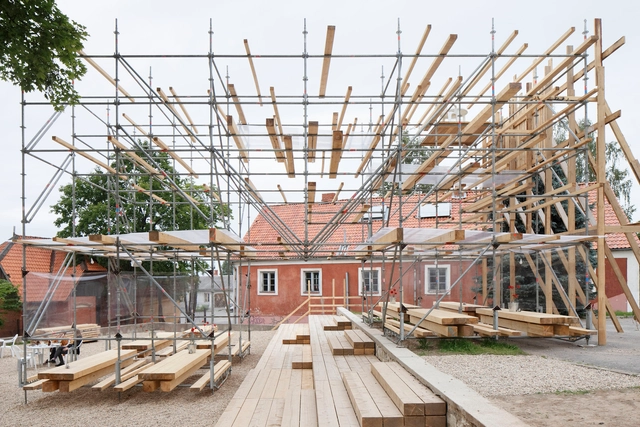
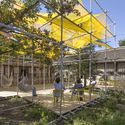
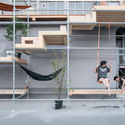
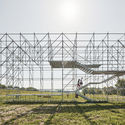
To create new meeting places in emergency situations, scaffolding is a good alternative regarding construction speed and tight budgets. Although they are usually used as temporary structures, they also allow creating a quickly composed space playing with horizontal, vertical and diagonal lines, and the combination with other materials such as textile, wood, polycarbonate and metal.
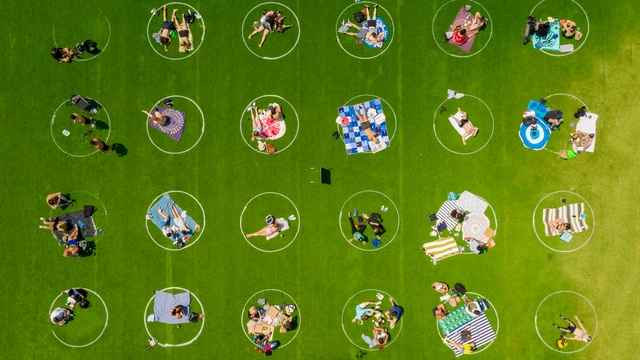
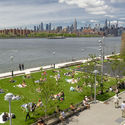
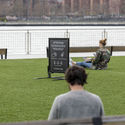
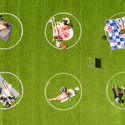
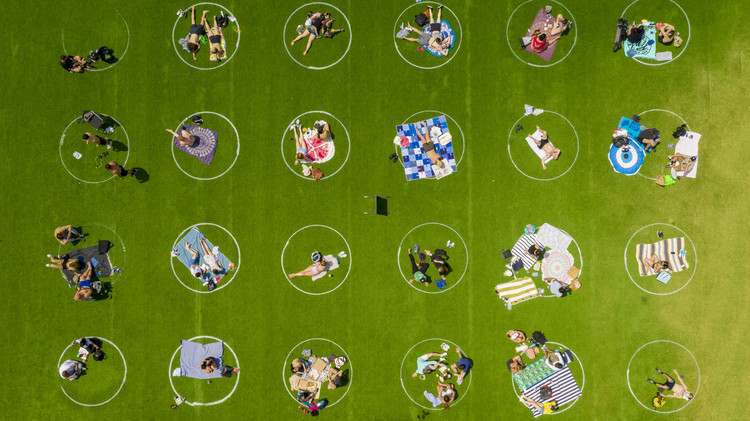
While all public spaces around the world are trying to innovate and implement safety measures to open during the coronavirus pandemic, Domino Park has introduced a series of painted social distancing circles. This strategical urban design intervention ensures that people are “following proper social distancing procedures recommended by the CDC and government”.
As the world is slowly reopening, easing lockdown measures, everyone is adapting to new realities. Imposing drastic adjustments to our lives, the coronavirus has introduced a new “normal”, changing our perceptions and altering our priorities. Driven towards questioning and evaluating our environment, we are constantly reacting and anticipating a relatively unknown future.
A casual conversation between two editors at ArchDaily generated this collaborative piece that seeks to investigate the current trends, predict the future, and offer insights to everyone/everything related to the architectural field. Tackling the evolution of the profession, the firms, and the individuals, especially young adults and students, this article, produced by Christele Harrouk and Eric Baldwin, aims to reveal what is happening in the architecture scene.
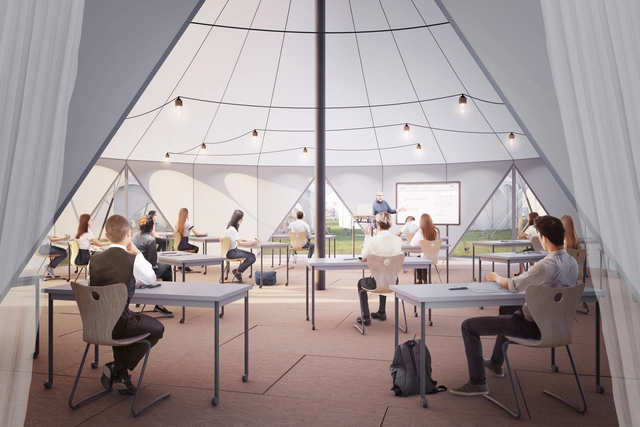
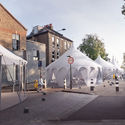
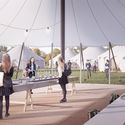
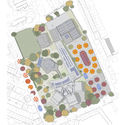
Curl la Tourelle Head Architecture (CLTH) has imagined a new design approach for classrooms when schools reopen as the lockdown eases in the UK. The architecture practice based in London has released an innovative concept “to help mitigate restricted circulation routes within schools and maintain the necessary social distancing among pupils and staff”.
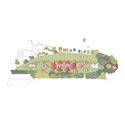
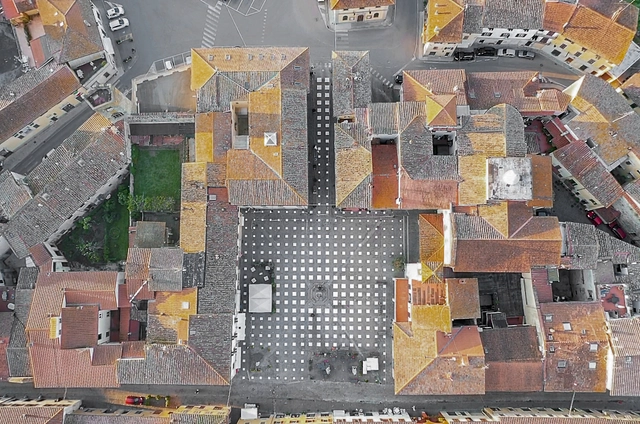
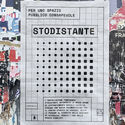
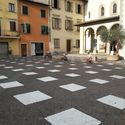
As architects around the world reimagine public spaces in the midst of the coronavirus, Italian architecture firm Caret Studio has envisioned the “StoDistante” installation. Searching to reconcile people with the outdoors, and allowing theses spaces to reopen safely while respecting the social distancing measures, Caret Studio created a temporary installation that reflects our current situation.
A global pandemic can change the way you look at things. In Greenwich, Connecticut, as with most places, restaurants and bars are shuttered now, schools are closed, and traffic is sparse as people stay home and maintain social distancing.
But each weekday, as the sun comes up over the eerily tranquil streets of the historic downtown business district, First Selectman Fred Camillo is still heading to the office. Camillo works in the Town Hall, a public building that’s been off-limits to the public—and to most employees—since mid-March, when all of Connecticut entered a constantly evolving state of lockdown following an executive order by Governor Ned Lamont in response to the COVID-19 outbreak.
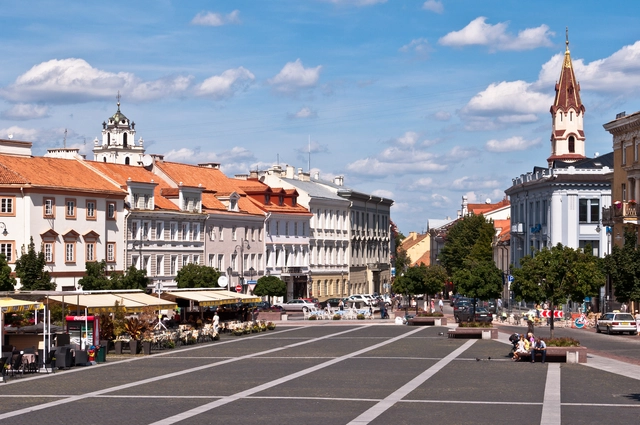
The Town Hall Square in Vilnius, Lithuania. Image via Shutterstock/ By Donatas Dabravolskas
The Lithuanian capital Vilnius has decided to allocate its public spaces to bars and cafes, to encourage the reopening of restaurants under required physical distancing measures. Turning the outdoor space into one vast open-air café, the city is taking new safety measures to step into the next phase of the lockdown.