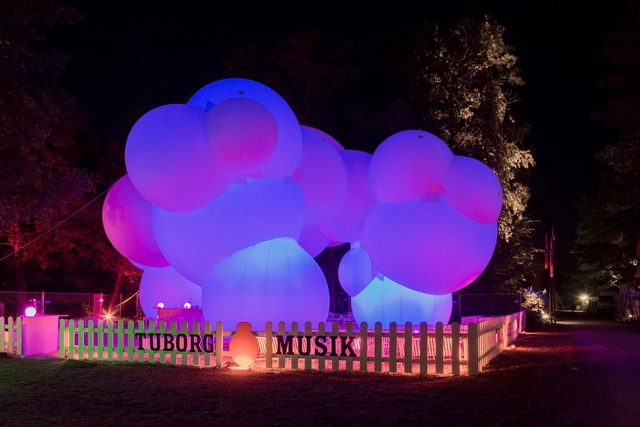
BIG Architects has designed an inflatable mobile pavilion to be displayed at three Danish events, including its original site at the Roskilde Festival 2016. Known as SKUM (Danish for foam), the structure met the challenge of creating an installation that has the ability to be both permanent and fully transportable by creating a whimsical, bubble-like form that can be blown up in just 7 minutes.
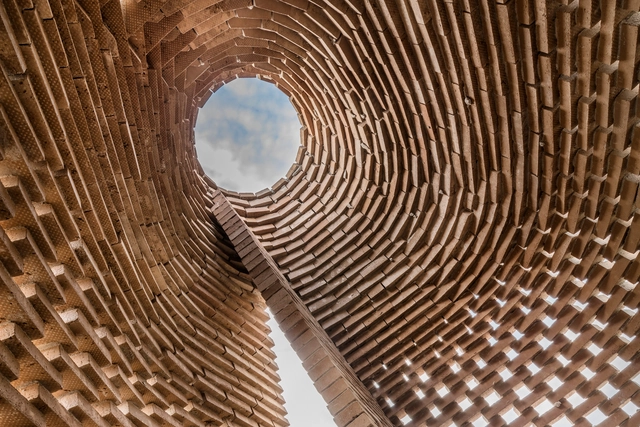
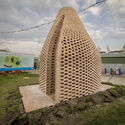
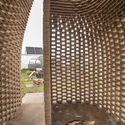
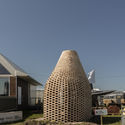
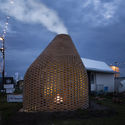
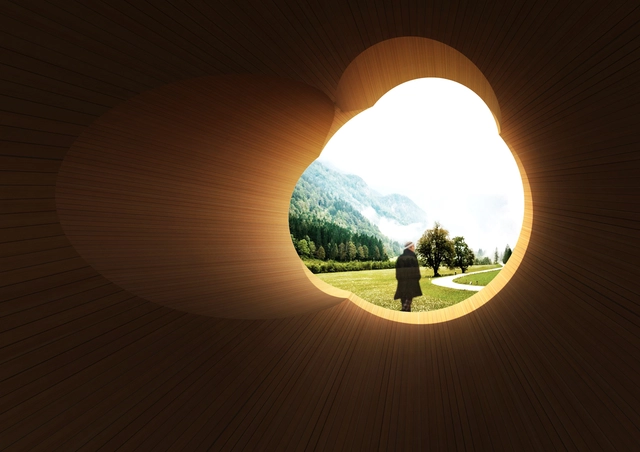
Architect Nguyen Hoa Hiep of a21 studio, in collaboration with Saigon architecture students, have created a cocoon-inspired pavilion. This exhibition is organized annually by Handhome.net in Vietnam in order to connect older generations of architects with students.
With its overblown rental market and the rising costs of tertiary education, London is turning from a city that welcomed creative individuals to one that locks them out. Boano Prišmontas believe that "creativity should not be linked to social status," and the way to counter this is through the creation of affordable spaces. As a response, they have created the "Minima Moralia"; a compact, modular steel frame assembly with infinite possibilities for customization.
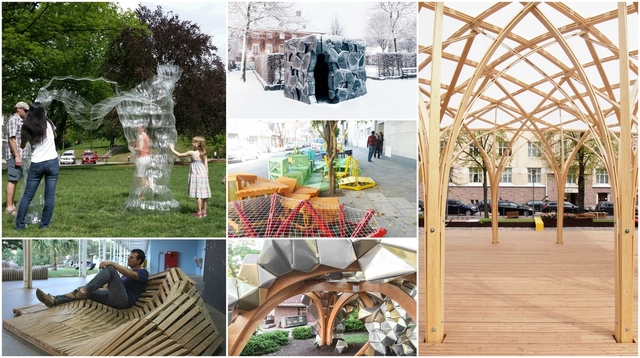
Some of the projects featured in last year's article
It's graduation time. As universities around the globe - or at least most in the Northern hemisphere, where over 80% of the world's universities are located - come to the end of the academic year, many university architecture studios have recently closed out the construction of pavilions, installations and other small educational projects. Last year at ArchDaily, with the help of our readers, we were able to round up some of the best pavilions, installations and experimental structures created by students from all over the world. The resulting article was among our most popular of the year, demonstrating people's huge appetite to see the work of the next generation of young architects.
That's why we're once again teaming up with allofArchDailyen Español,ArchDaily Brasil, and ArchDaily China, asking our readers to submit their projects, so that we can present the best work from graduating students worldwide. Read on to find out how you can take part.
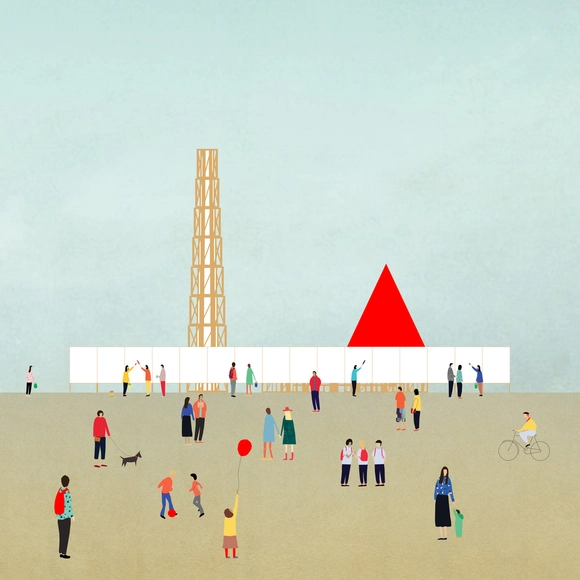
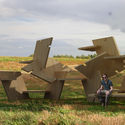
This week, Museum Gardens became the host to the annual Triumph Pavilion, this year focusing on the concept of "energy." Five Line Projects' aptly titled "Energy Pavilion" takes a multi-faceted approach to the theme, addressing social sustainability, movement and the power of community. The pavilion presents a playful meeting place, designed to explore the impact of a single positive action on its surroundings.
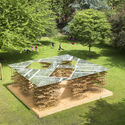
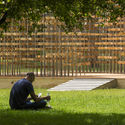
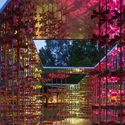
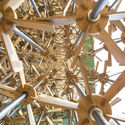
On June 11th, the European Biennial of Contemporary Art, also known as Manifesta, began its 100-day stint in this edition's host city, Zurich, Switzerland. The festival's center-piece is a timber raft floating on Lake Zurich, known as the Pavilion of Reflections. The temporary structure was designed and realized by Studio Tom Emerson and a team of thirty students from ETH Zurich. Constructed primarily of timber, Christian Jankowski, curator of Manifesta 11, describes the exhibit “as a floating multi-functional platform with a giant LED screen, a stand for spectators, a swimming pool and a bar.”
Studioninedots have designed a new pavilion, “The TrueTalker,” to generate a space for open communication and storytelling. The pavilion is one of approximately fifty at Amsterdam's temporary Fab City, an initiative organised by Europe by People to promote self-sustaining, innovative cities. The project also comes as a reaction to Amsterdam hosting the European Union this spring, where rigid and official conversation will be scrutinised and recorded from every angle. In contrast, Studioninedots said that "The TrueTalker" creates a space where “everyone is invited to sit down, relax and share warming, unreasonable, crazy, unimaginable and hilarious ideas.”
"Woodokan" by Hajima Yoshida, Japan. Image via University of Southern California and the American Academy in China
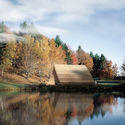
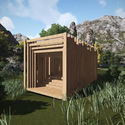
The University of Southern California's American Academy in China (AAC) has announced the seven winning designs for the international Napavilion Competition. Entrants had to design prefabricated wood structures with the sole function of providing space for guests to nap in. The winning designs will be built at Jade Valley Winery outside of Xi’an in western China, with three to be completed in time for the Napavilion Festival in July.
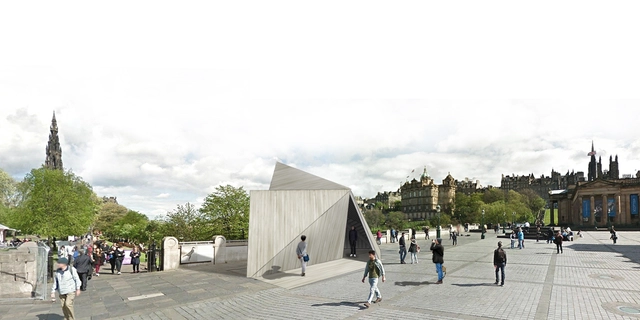
Exterior Perspective Views. Image Courtesy of Konishi Gaffney Architects
Edinburgh-based studio, Konishi Gaffney Architects, has won the competition to design a temporary pavilion for the Pop-Up Cities Expo. The Pop-Up Cities Expo is a headline event at Scotland’s Festival of Architecture, featuring pop-up pavilions at Mound Square from cities around Europe. Konishi Gaffney will be representing Edinburgh – the host of the expo - with their winning pavilion design.
Following a competition that received 286 entries from 26 of the 32 states of Mexico, 31 proposals have been selected to be presented at the Mexican Pavilion at the 2016 Venice Biennale. Narrating the “deep history of social participation in Mexico,” the exhibit, “Unfoldings and Assemblages,” will feature “architectures assembled from fragments, modules, relations, stories, tactics, technologies and construction strategies.” The exhibit will focus on work and experiences that can change, propagate and adapt, rather than closed systems or final products.
https://www.archdaily.com/787588/unfoldings-and-assemblages-mexicos-pavilion-at-the-2016-venice-biennaleArchDaily Team
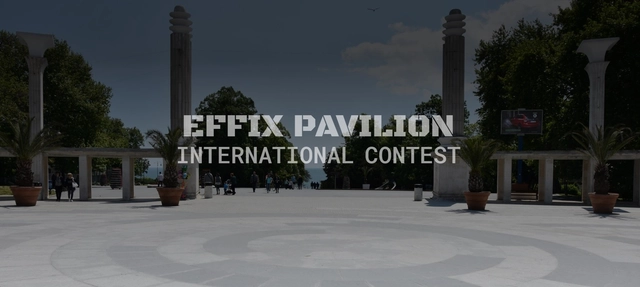
EFFIX Pavilion Contest for the Sea Garden in Varna
Devnya Cement AD, a member of Italcementi Group, and Varna Design Forum invite all students of architecture and design, and all young professionals up to 35 years old from all over the world to participate in the international contest for conceptual design of a small trading pavilion, to be situated in the Seaside Park in the city of Varna. The goal is to enrich the urban design of Varna through the realization of a contemporary and inspiring concept for a trading pavilion constructed with the innovative materials of Italcementi Group. The contest will finish with the announcement of a winner selected by a five-member Jury Panel. The winner will be awarded with monetary prize, visit to the "i.lab" research center in Italy and realization of their project as a real-size prototype.
Israel has unveiled its theme for the 2016 Venice Biennale: “LifeObject: Merging Architecture and Biology”. Their pavilion will be comprised of a large-scale sculptural installation and seven speculative architectural scenarios relating to Israel. The exhibition will focus on the relationship between biology and architecture, acting as a “research oriented platform.”
MVRDV’s design for the Dutch exhibition “Hola Holanda” at the Book Fair of Bogotá (FILBO) features a modular system of crates that will be repurposed as neighbourhood libraries after the Book Fair ends. Avoiding the waste of resources created by one-time pavilions, the Dutch firm has introduced a playful element of sustainability to the fair, maintaining its spirit even after the event ends.
International architecture competition organizers Bee Breeders have announced the three winners and honourable mentions of their competition to design a Charlie Hebdo Portable Pavilion. Intended to be a travelling exhibition of the work of the French Magazine “Charlie Hebdo,” participants were asked to “support and promote” principles of free speech in their design. Responding to the terror attacks against Charlie Hebdo and the ensuing global discourse on free speech, the competition sought to deconstruct the “conventional assumptions of free speech,” and look specifically at “what makes speech free and how much of it comes at a cost.”
Entries were judged for the way they challenged these assumptions in terms of space, material and form. Preference was given to projects that had clear concepts, circulation, sequence and narrative, in addition to public engagement and a “reconciliation between the abstract and theoretical with the physical and real.” Consideration was also given to the way projects contributed to a discourse – rather than expressing an opposition - concerning the growing grey areas between "ideological, political, and cultural binaries."
Museum of Contemporary Art Santa Barbara, Photo Credit: Stacey Bryant
MCASB invites proposals for a large-scale, outdoor, traveling pavilion to be built and installed at each site of its new public art program, TakePart/MakeArt. As a central feature of TakePart/MakeArt, the mobile pavilion will be a bold and vibrant beacon for MCASB as it travels through three different communities across Santa Barbara County: Isla Vista, the Westside, and the Waterfront.
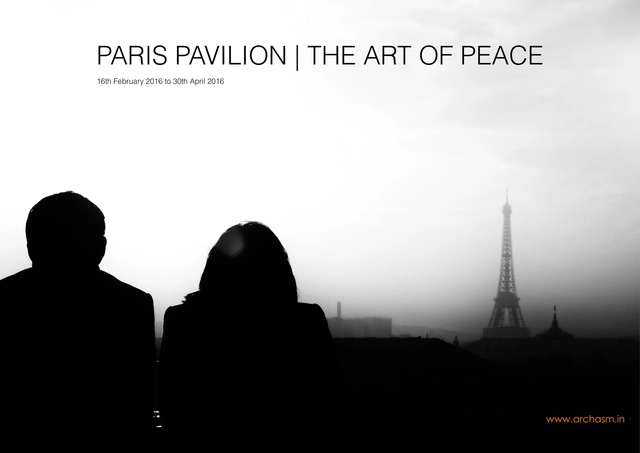
The city of Paris is rightfully termed as 'the cultural capital of the world' because of its rich and diverse ethos and character. Paris has been the artistic epicentre of the world since renaissance, inspiring many artists, philosophers, writers and architects to innovate and break the shackles of resistance. The city was home to great revolutionaries like Picasso, Miro, Modigliani, Voltaire and Corbusier. But one of the most tolerant cities of the world was shook by recent terror attacks that sent shockwaves around the world.
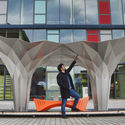
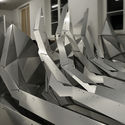
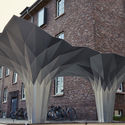
The advent of parametricism has brought architects many new design capabilities; form finding, sun shading and visual texturing are just a few of the ways the technology has impacted structures. But perhaps its most noble function is its ability to optimize structure, especially through the folding of thin, rigid materials. This is the function that architect Tal Friedman has chosen to explore in his Origami Pavilion.
A design for a pavilion constructed out of recycled clothes hangers has been selected as the winner of the sixth annual City of DreamsPavilion Competition. The temporary structure will be built on Governors Island and available to the public for summer 2016, pending final approval and fundraising.
Hosted by FIGMENT, the Emerging New York Architects Committee (ENYA) of the American Institute of Architects New York Chapter (AIANY), and the Structural Engineers Association of New York (SEAoNY), the competition speculates on possible futures with solutions to the current strain on economic and natural resources. Designers are required to consider their materials from sourcing to disposal, or ideally, reuse, promoting sustainable thinking.
Over 100 design proposals were submitted, and the jury selected four finalists who were each given a month to further develop their designs in response to jury comments. See the winning design and the three finalists after the break.







.jpg?1465734933&format=webp&width=640&height=580)
.jpg?1465734808 "© Laurian Ghinitoiu")
.jpg?1465734849 "© Laurian Ghinitoiu")
.jpg?1465734925 "© Laurian Ghinitoiu")
.jpg?1465734980 "© Laurian Ghinitoiu")
.jpg?1465734933)




.gif?1461689986)
.jpg?1463319513&format=webp&width=640&height=580)
.jpg?1461865719&format=webp&width=640&height=580)