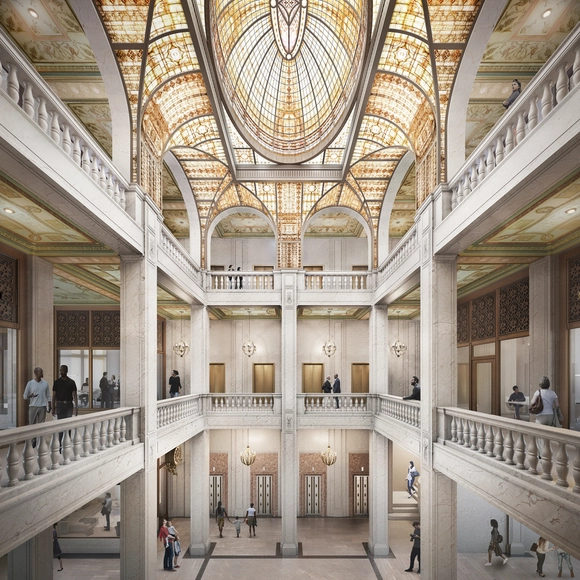
ODA New York has been selected as the Design Architect for the rehabilitation of Detroit's iconic Book Tower. Working with real estate company Bedrock, the team will create a mix of residential, hospitality, retail and office space in the tower. ODA plans to update and expand on Book Tower’s programming and existing structures with nearly 500,000 square feet of downtown programming. The restoration of the 38-story landmark aims to create a cohesive civic vision for Washington Boulevard.
New York-based architect Eran Chen (b. 1970) was born and grew up in Be'er Sheva, Israel where his Polish-born grandparents, Holocaust survivors, settled right after World War Two. Early on the original long Polish surname was abbreviated to short Chen, which is pronounced “Khen.” In Hebrew, it stands for charm. After four years in the army, following high school, Chen studied architecture at the Bezalel Academy of Arts and Design in Jerusalem, the top architecture school in the country. Upon graduation in 1999, he ventured to New York to gain professional experience. He was hired by Perkins Eastman, a global New York-based giant of over 1,000 architects. In just a few years Chen was made the youngest principal in the company to oversee the design of his own diverse projects, including several competition-winning entries. By then he got married, became a father, a licensed architect, and settled in the city that he now calls home. In 2007, Chen decided to strike on his own. He focused on working with developers on residential projects, mainly in New York, as well as other major cities in the US and around the world. Many of Chen’s projects are situated in dense urban places. They are about reinventing the familiar living typology of buildings as extruded boxes. We met at the architect’s busy Manhattan office of over 100 young, ambitious architects helping Chen to make our cities more livable. We discussed his concept of vertical urban village and the truly democratic idea that every apartment, no matter where it is positioned in the building, can be turned into a penthouse.
Where does originality and independent thinking come from? The answer is prosaically straight forward – from an inquiring individual, and an experimental environment wouldn’t hurt to stimulate it. Rem Koolhaas is credited with fostering such an environment, both through building his practice, Office for Metropolitan Architecture (OMA), a 300-architect network of seven global offices, and teaching at Harvard’s GSD, as well as lecturing all over the world. Koolhaas now has eight partners. One of the eight, since 2008, is Shohei Shigematsu who heads OMA New York since 2006. The studio originally numbered just a handful of people and over the years has grown into a large practice of 75 architects with a focus on projects in North America.
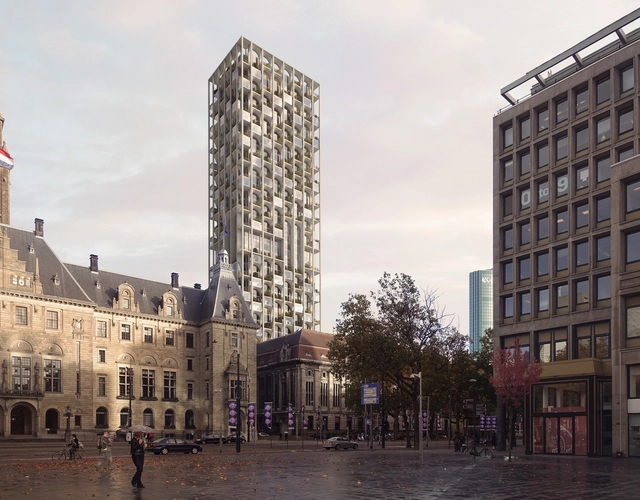
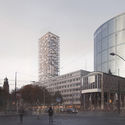
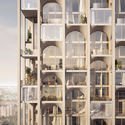
ODA New York has been selected to redesign the historic post office of Rotterdam in the Netherlands. The iconic Postkantoor has sat vacant for more than a decade, and now the adaptive reuse project aims to bring new life to the city center. Built in 1916, the post office was one of the only original structures still standing after the Rotterdam Blitz aerial bombardment in 1940. The city of Rotterdam hopes to re-energize the neighborhood by activating the site with residential, retail, and hospitality.
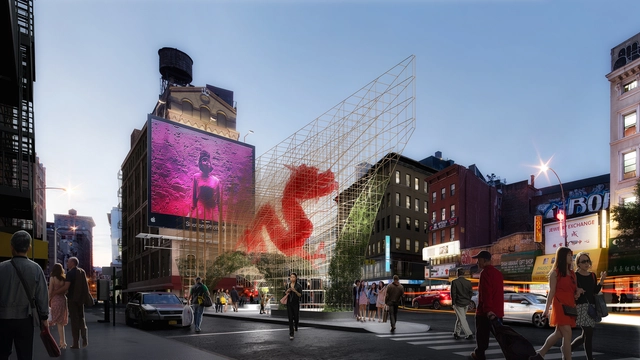
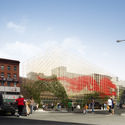
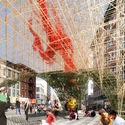
ODA New York has released images of its proposed “Dragon Gate” pavilion for New York’sChinatown, seeking to act as a symbolic gateway to the famous Manhattan neighborhood. Using modern materials and forms to invoke symbols of traditional Chinese culture, the scheme seeks to capture Chinatown’s remarkable duality: a community of tradition resistant to change, yet one regarded as a uniquely contemporary phenomenon showcasing New York’s inclusive diversity.
Situated on a triangular traffic island at the intersection of Canal, Baxter, and Walker Streets, ODA’s scheme seeks to activate a currently-underused pedestrian space. The Dragon Gate consists of a triangular form adhering to a three-dimensional, gridded structure formed from interwoven, tubular, bronze steel inspired by bamboo scaffolding. As the structure densifies, selected pieces will be painted red to create the illusion of a dragon in mid-flight.
https://www.archdaily.com/891930/oda-unveils-images-of-bamboo-inspired-dragon-gate-for-new-yorks-chinatownNiall Patrick Walsh
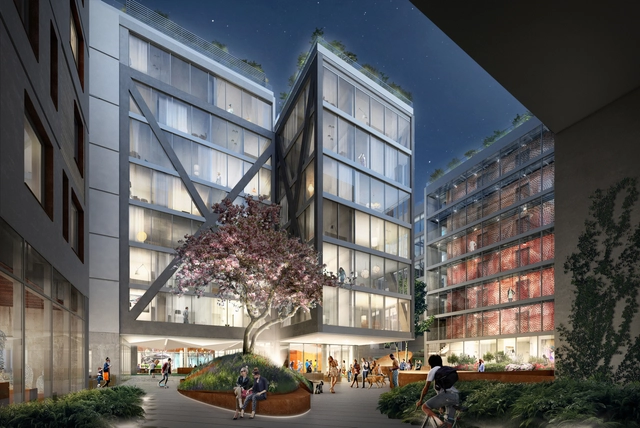
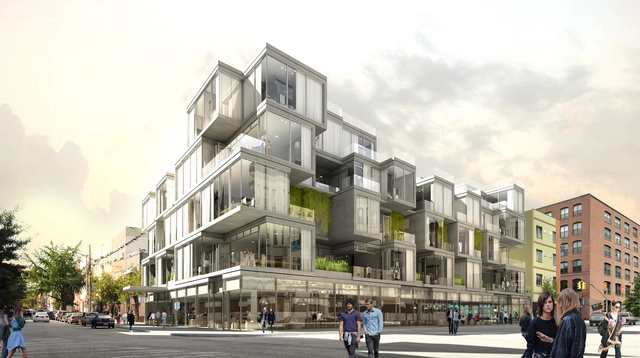
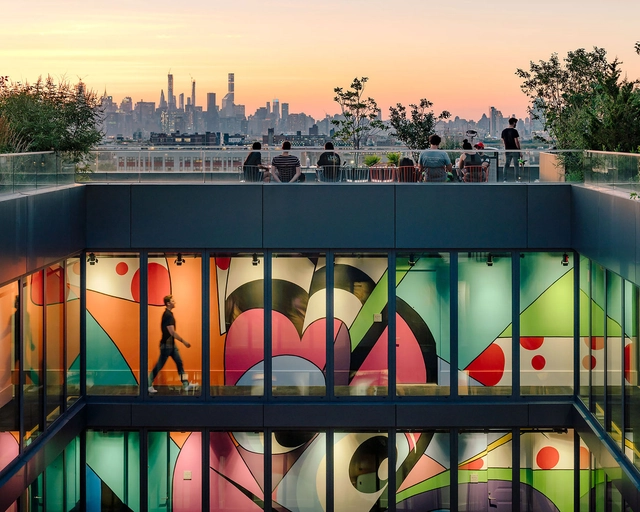
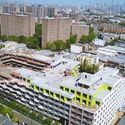
ODA New York’s design for Bushwick II, a high-end residential complex on the former site of Brooklyn’s Rheingold Brewery, is coming to life in the fast-growing neighborhood of Bushwick, New York. Developed by All Year Management, 123 Melrose is already being clad. Meanwhile, Rabksy Group’s development, 10 Montieth, recently topped out.
Together, the projects will cover three full city blocks, totaling 1.35 million gross square feet. Bushwick II will be the largest housing increase this neighborhood of Brooklyn has ever seen.
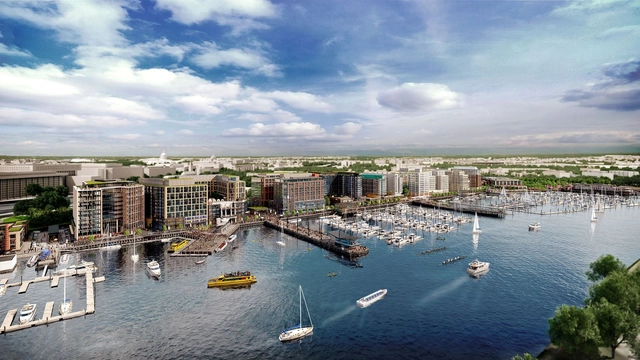
Eleven of the United States’ most prestigious architects have been selected by developers Hoffman-Madison Waterfront (HMW), to commence Phase 2 of The Wharf, a $2 billion neighborhood situated on the southwest waterfront of Washington D.C. The development is adjacent to the National Mall, spanning 24 acres of land and 50 acres of water.
“We have selected a diverse group of locally, nationally, and internationally renowned designers, knowing they will bring their talent and expertise to The Wharf, building a waterfront neighborhood that is an integral part of the city,” said Shawn Seaman, principal and Senior VP of Development at PN Hoffman.
https://www.archdaily.com/804824/eleven-practices-to-complete-2-dollars-billion-waterfront-development-in-washington-dcOsman Bari
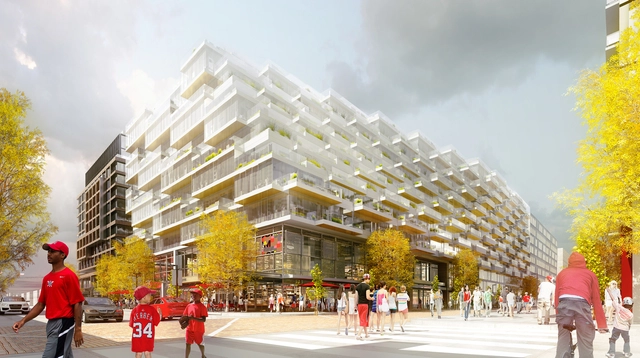
ODA New York has released plans for “West Half,” a mixed-use development for the Capitol Riverfront neighborhood of Washington, D.C., that will offer residents views into baseball games at the adjacent Nationals Park. The 11-story building will also feature two floors of retail space and community amenities as it becomes a new visual complement to the neighboring cultural landmark.
ODA New York has unveiled the plans for Bushwick II, a 1,000,000 square feet apartment development that will occupy two city blocks in Brooklyn’s Bushwick neighborhood in New York.
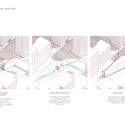
Located on the former site of the Rheingold Brewery, the project will act as a “city within the city,” and is modeled after “the quintessential European village,” featuring a meandering system of interconnected courtyards.
Details have been released on a new residential project designed by ODA Architecture at Brooklyn Bridge Park in New York. Occupying two waterfront sites in the Pier 6 uplands development area, the project will include two10,000-square-foot buildings focused on affordable housing, community development and preserving the surrounding parkland.
ODA Architecture has shared with us “510 Driggs,” a multi-family residential project that aims to provide residents with the “qualities of a private house” within Brooklyn’s dense urban landscape. Each of the six-story building’s 100 units will be equipped with a large, functional outdoor space and at least two exposures to maximize light and air.














_Bloomimages_7.jpg?1505315925 "Courtesy of ODA New York")
_Bloomimages_8.jpg?1505315959 "Courtesy of ODA New York")
_Bloomimages_1.jpg?1505315031 "Courtesy of ODA New York")