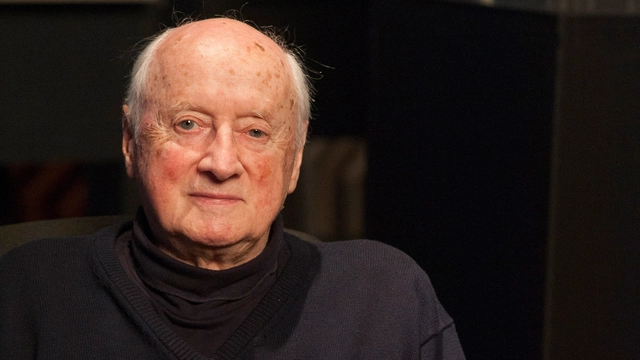
In an exclusive thirty minute-long discussion with Kevin Roche, described in this interview as "arguably the greatest living architect you've never heard of," Monocle's Steve Bloomfield hears about his early years in practice through to the evolution of his design philosophy over a career which has spanned five decades.
I think any man who really has faith in himself will be dubbed arrogant, I suppose. I think that's what happened to me. - Frank Lloyd Wright
In this video produced by Blank on Blank, Frank Lloyd Wright shares his thoughts on New York City, religious architecture, and being labeled arrogant. The interview was taken from a 1957 episode of The Mike Wallace Interview when Wright was 90 years old. Showing his trademark fieriness even at his advanced age, Wright claims that if he had another 15 years he would be able to change the whole of the United States for the better, dismissing the judgement of those with the audacity to call him arrogant. Watch the animated video above, and read on after the break for some of the interview's most quotable moments.
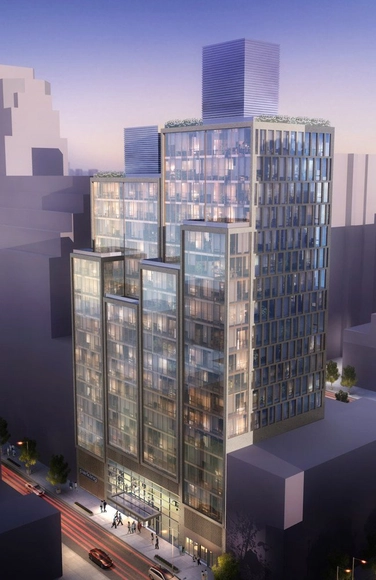
An image of Ismael Levya Architects' transformation of a six-story parking garage in New York City's Upper East Side has been revealed. The project, already under construction, will expand the structure into a 19-story residential tower that will house 56 luxury apartments. Described as a "lantern," the 210-foot-tall building was designed as "four distinct townhouse volumes with metal and glass."
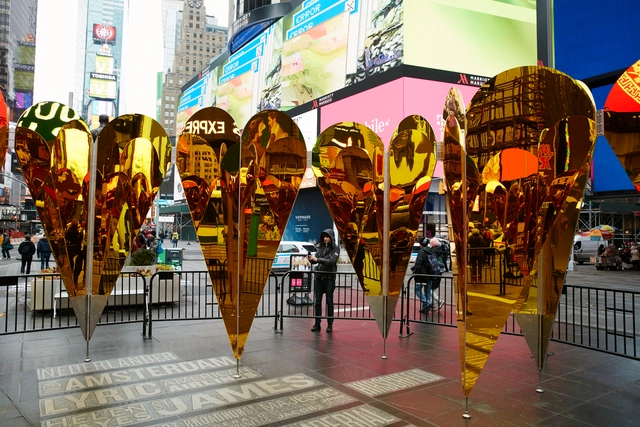
Collective–LOK's Heart of Hearts installation has officially opened in New York City's Times Square, just in time for Valentine's Day. Winner of this year's annual Times Square Valentine Heart Design, a competition curated by the Center for Architecture, the "faceted ring of 12 golden, mirrored hearts" will remain on view in Duffy Square through March 6.
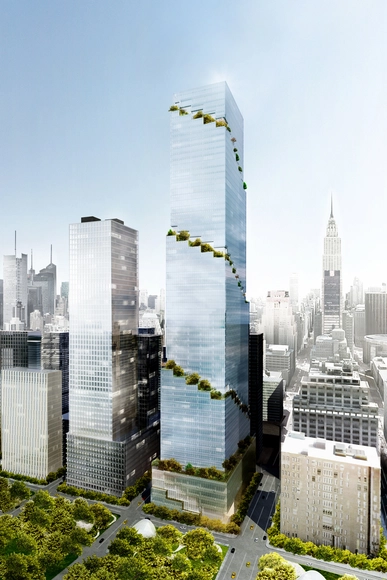
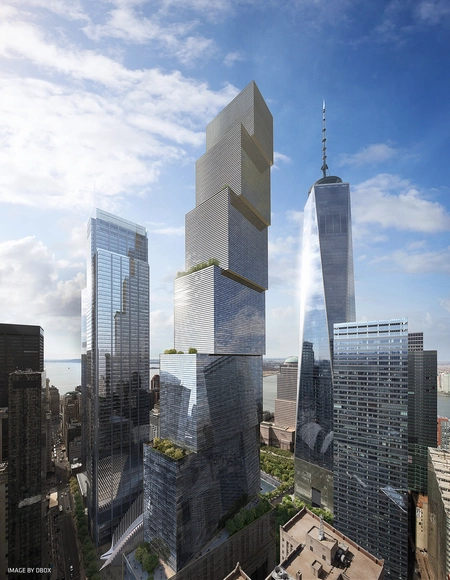
Developer Tishman Speyer has commissioned BIG to design a new office tower on the northern end of the High Line at Hudson Yards in New York City. Dubbed "The Spiral," the 1005-foot-tall tower is named after its defining feature - an "ascending ribbon of lively green spaces" that extend the High Line "to the sky," says Bjarke Ingels.
"The Spiral combines the classic Ziggurat silhouette of the premodern skyscraper with the slender proportions and efficient layouts of the modern high-rise," adds Ingels. "Designed for the people that occupy it, The Spiral ensures that every floor of the tower opens up to the outdoors creating hanging gardens and cascading atria that connect the open floor plates from the ground floor to the summit into a single uninterrupted work space. The string of terraces wrapping around the building expand the daily life of the tenants to the outside air and light.”
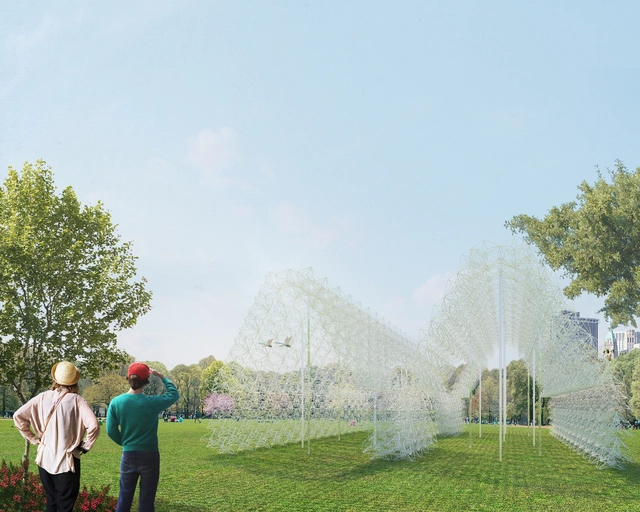
A design for a pavilion constructed out of recycled clothes hangers has been selected as the winner of the sixth annual City of DreamsPavilion Competition. The temporary structure will be built on Governors Island and available to the public for summer 2016, pending final approval and fundraising.
Hosted by FIGMENT, the Emerging New York Architects Committee (ENYA) of the American Institute of Architects New York Chapter (AIANY), and the Structural Engineers Association of New York (SEAoNY), the competition speculates on possible futures with solutions to the current strain on economic and natural resources. Designers are required to consider their materials from sourcing to disposal, or ideally, reuse, promoting sustainable thinking.
Over 100 design proposals were submitted, and the jury selected four finalists who were each given a month to further develop their designs in response to jury comments. See the winning design and the three finalists after the break.
Courtesy of Noe & Associates and The Boundary; Via The Architects' Newspaper
An image of Álvaro Siza's first US building has been released. The luxury New York tower, planned for the corner of West 56th Street and Eleventh Avenue in Midtown, will rise up to 120 meters (just over 400 feet) and offer 80 units, a private roof garden, sun deck, spa and fitness center, and more.
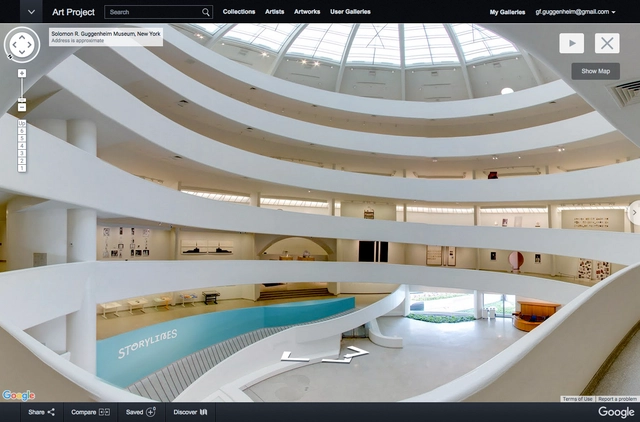
The Google Cultural Institute have teamed up with New York City's iconic Solomon R. Guggenheim Museum, designed by Frank Lloyd Wright and completed in 1959, to open its doors through Street View. Additionally, the Solomon R. Guggenheim Foundation has made over 120 artworks from its collection available for online viewing. "Using Street View technology, it will now be possible to tour the museum’s distinctive spiral ramps from anywhere online," the Foundation said.
Two major tenants, 21st Century Fox and News Corp have pulled plans to relocate to the BIG-designed 2 World Trade Center - the final building planned for the 16 acre site. 2 WTC was unveiled last summer after news broke that BIG would be replacing Foster + Partners as the building's architect. According to a report on The Wall Street Journal, the two media companies based their decision on the high cost of relocating; they plan to stay in their current Midtown site until at least 2025.
The project will be placed on hold until a new tenant is found.
New York City's Van Alen Institute have announced four new members—Haptic Architects, Mecanoo, Studio Libeskind, and Trahan Architects—to their International Council, a platform for exchange among leading architects, designers, developers, and planners. Furthermore, Jing Liu (SO–IL), Kim Herforth Nielsen (3XN), and Raymond Quinn (Arup) have joined its board of trustees to help guide the organisation's cross-disciplinary research, provocative public programs, and design competitions.
As part of OMA co-founder Rem Koolhaas' sixth interview with Charlie Rose, the Rotterdam-based Architect discusses why the Dutch port-city is his practice's base – and why he switched from journalism and scriptwriting to architecture. In the discussion, of which four snippets have been made available, Koolhaas also explains why he feels that smart technology has a "sinister dimension," and on how he—and his practice—have a tendency to "resist aesthetic."
https://www.archdaily.com/780502/why-rem-koolhaas-switched-from-scriptwriting-to-architectureAD Editorial Team
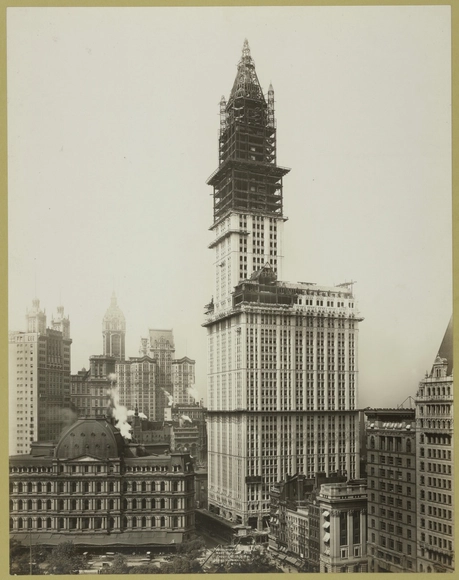
Of course, the archive also includes a significant assortment of captivating architectural images that range from everyday scenes to historic treasures. We've trawled the database to find some of the most unusual and insightful examples - read on to see a selection of the most interesting architectural images from NYPL’s digital archives.
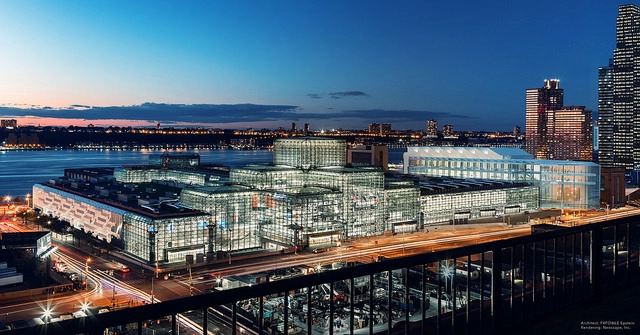
Alongside a series of 2016 proposals, including the plans to transform Penn Station, Governor Andrew Cuomo has announced that New York will be expanding its Jacob K. Javits Convention Center - the busiest convention center in the US. Originally designed by James Ingo Freed of Pei Cobb Freed & Partners in 1986, the structure has undergone a number of renovations since; this time, it will be expanded by 1.2 million-square-feet, totaling 3.3 million-square-feet, with the addition of "the largest ballroom in the Northeast," new exhibition space, a four-level truck garage, and a 34,000-square-foot solar array.
New York City has seen rapid redevelopment that has capitalized on previously undesirable locations. Sitting at the top of these locations are the sites that have access to waterfront. Most of the ventures in these areas are private economic interests that only address public value when there is a direct return on profit. If not taken into consideration many of these waterfronts will be absorbed and, with the constant return of people to the urban core, there lies a need to create public and cultural infrastructure. In a city that is filled with numerous icons, parks, theaters, and museums an
Governor Andrew Cuomo has laid out plans to transform New York's congested Pennsylvania Station and neighboring James A. Farley Post Office into a world-class transportation hub. Penn Station, North America's busiest train station, was originally designed in 1910 to accommodate 200,000; currently it's serving more than 650,000 passengers each day. Though a number of firms have been enlisted in the past to re-imagine the station, the project's developer has yet to chose an official architect.
“Penn Station is the heart of New York’s economy and transportation network, but it has been outdated, overcrowded, and unworthy of the Empire State for far too long,” said Governor Cuomo. “We want to build Penn Station to be better than it ever was, and that is exactly what we are going to do. This proposal will fundamentally transform Penn Station for the 21st century, and we are excited to move forward with the project in the days to come.”
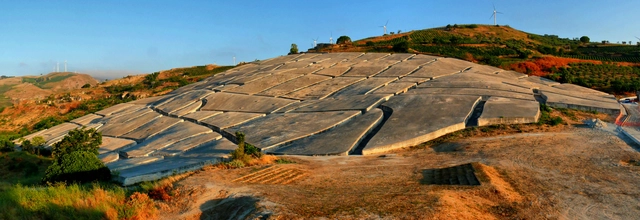
This first major retrospective of Alberto Burri's (1915-1995) work in the United States in nearly forty years will close at New York City's Guggenheim Museum later this week. More than one hundred works are on display covering his entire career, culminating in a film of Burri's largest work: the reinterpretation of the ruins of Gibellina, in Sicily. The old city, destroyed by the 1968 Belice earthquake, was later encased in concrete preserving the morphology of the buildings and the city's medieval streetscape. Alongside his two-dimensional work, the exhibition ultimately seeks to demonstrate how Burri blurred the line between painting and sculptural relief that directly influenced the Neo-Dada, Process art, and Arte Povera movements.
Shigeru Ban, the 2014 Pritzker Prize winner, is an architect often celebrated for his humanitarian and disaster relief structures, constructed out of recycled or recyclable materials. On the other end of spectrum, he is well-known for his meticulously constructed residential and museum projects, more often than not for high-end wealthy clients. The Nomadic Museum, however, combines both of these facets of his practice, using shipping containers and paper tubes to craft a bespoke mobile gallery for Gregory Colbert’s traveling exhibition of photography entitled Ashes and Snow.
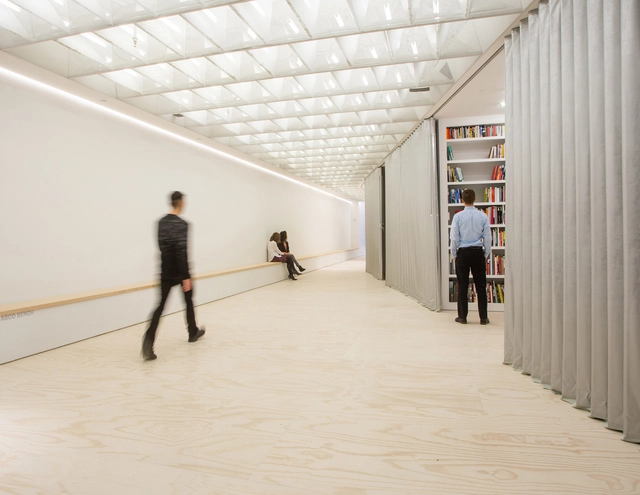
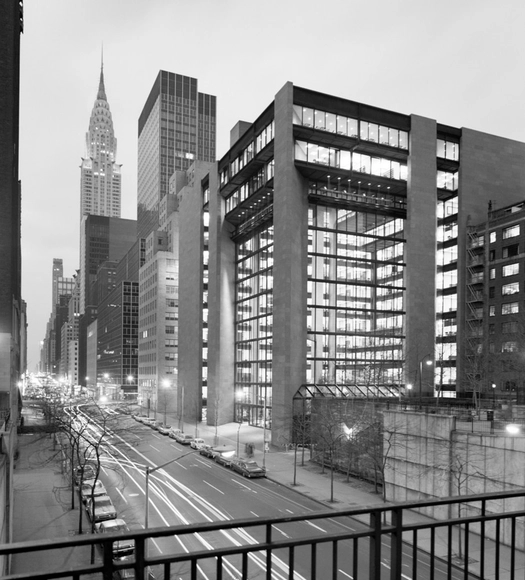
The Ford Foundation is about to undergo a massive $190 million renovation. Led by Gensler, the project will "modernize" the landmark building and expand its spaces "for convening and creating a global center for philanthropy and civil society."
Originally designed by Kevin Roche and John Dinkeloo, the Ford Foundation is considered to be one of modern architecture's most iconic buildings. "That rarity, a building aware of its world," New York Times architecture critic Ada Louise Huxtable once described, following the building's opening in 1967.