1. ArchDaily
  2. Museum of Modern Art

Museum of Modern Art: The Latest Architecture and News

Can Anyone Win in Architecture Criticism? An Appeal for a "New Sincerity"

In the mid-1980s, after literature had long been held hostage by postmodernist irony and cynicism, a new wave of authors called for an end to negativity, promoting a "new sincerity" for fiction. Gaining momentum into the 1990s, the movement reached a pinnacle in 1993 when, in his essay E Unibus Pluram: Television and U.S. Fiction, pop-culture seer David Foster Wallace, a proponent of this "new sincerity," made the following call to action: “The next real literary ‘rebels’ in this country might well emerge as some weird bunch of anti-rebels, born oglers who dare somehow to back away from ironic watching, who have the childish gall actually to endorse and instantiate single-entendre principles... These anti-rebels would be outdated, of course, before they even started. Dead on the page. Too sincere. Clearly repressed. Backward, quaint, naive, anachronistic. Maybe that’ll be the point. Maybe that’s why they’ll be the next real rebels. Real rebels, as far as I can see, risk disapproval. The old postmodern insurgents risked the gasp and squeal: shock, disgust, outrage, censorship, accusations of socialism, anarchism, nihilism. Today’s risks are different. The new rebels might be artists willing to risk the yawn, the rolled eyes, the cool smile, the nudged ribs, the parody of gifted ironists, the ‘Oh how banal.'"

Architecture, ever in debt to the styles and ideas of other art forms, could learn a thing or two now from the resuscitation of American fiction at the turn of the millennium. It too is enduring an identity crisis, mired by pessimism and uncertainty - a reality made painfully clear this past January when a New York Times Op-Ed by Steven Bingler and Martin C. Pedersen, How to Rebuild Architecture, divided camps and made the design world fume. In the editorial, the authors spoke vehemently of an architectural profession that has become mired by egos and been disconnected from public needs. Things quickly got ugly, critics wrestled with critics and subsequently the public got involved. What no one seemed to take into account is that this type of hounding is at the core of the problem. In its current landscape the discipline has struggled with its past, been deferential to its present, and wrestled with the uncertainty of its future. In a moment when we have become addicted to despondency, can anyone win?

2015 Leading Culture Destinations Awards Announced

The winners of the 2015 Leading Culture Destinations Awards have been announced at a ceremony in London. The Awards recognize the success of “museums, art organizations, and cultural destinations from around the world [that] are investing in iconic architecture, cross-sector collaborations, [and] audacious programming […] to diversify the experiences offered to visitors and establish their global reputations.”

This year’s Awards honored the Museum of Modern Art in New York City as the leading cultural destination of the year.

The winners of the 2015 Leading Culture Destinations Awards are:

MoMA Mines Its Unparalleled Holdings for Its "Endless House" Exhibition

Subscriber Access | 

There is perhaps no better display of modern architecture’s historical victory than Jacque Tati’s film Playtime. In it, a futuristic Paris has left-for-dead the grand boulevards of Haussmann, in favor of endless grids of International Style offices. The old city is reduced to longing reflections of Sacré-Cœur and the Eiffel Tower in the glass of these shiny new monoliths. But the irony central to the film is that this construction is created through mere surface treatments, and as the narrative unfolds, cheap mass-production withers in a world where the veneer has triumphed over craftsmanship and polish. In short, Modernism hasn’t always been all it's cracked up to be.

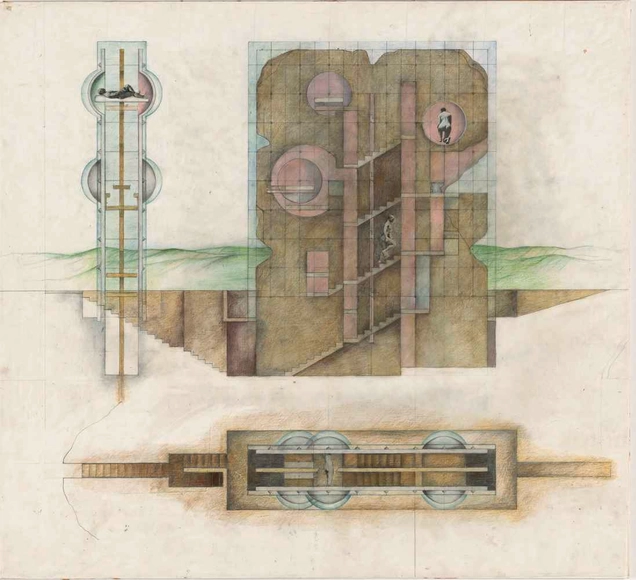
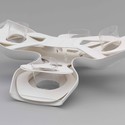
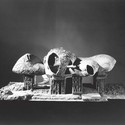
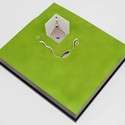
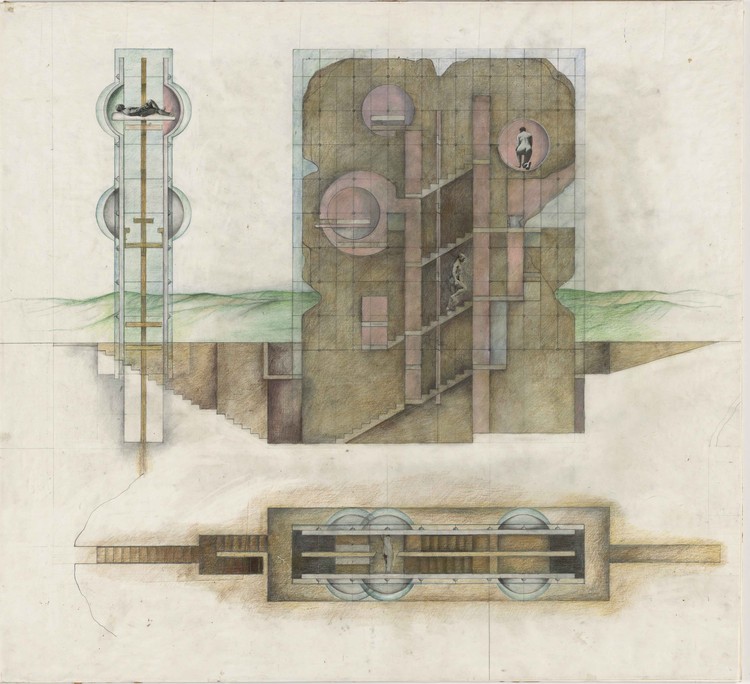
In the Museum of Modern Art’s new exhibition, "Endless House: Intersections of Art and Architecture," the simplicities of mass-market modern homes are abolished by artists and architects who, in examples from the 1940s to the present, have chosen to use the dwelling as a platform for universal messages and as an arena for architectural experimentation. In the same way that photography freed painting from the terrestrial concerns of realism, the simplicity of modernism liberated artists and architects to subvert extant conventions of buildings.

MoMA Mines Its Unparalleled Holdings for Its "Endless House" Exhibition - Image 1 of 4MoMA Mines Its Unparalleled Holdings for Its "Endless House" Exhibition - Image 2 of 4MoMA Mines Its Unparalleled Holdings for Its "Endless House" Exhibition - Image 3 of 4MoMA Mines Its Unparalleled Holdings for Its "Endless House" Exhibition - Image 4 of 4MoMA Mines Its Unparalleled Holdings for Its Endless House Exhibition - More Images+ 15

Thomas Phifer and Partners Wins Competition to Design Museum of Modern Art Warsaw

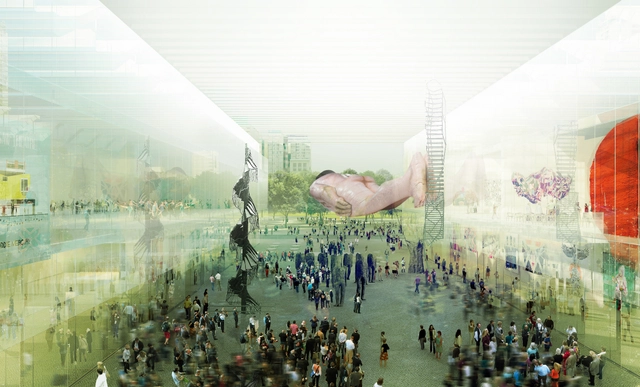
The Museum of Modern Art in Warsaw has announced that Thomas Phifer and Partners will be designing their new gallery space, after winning a competition against eleven other selected practices. The new museum, the largest cultural project in recent Polish history, will also house the TR Warsawa Theatre. The proposal consists of two separate buildings housing the theater and museum, joined by a common forum that will serve both as entrance and public multi-use space.

AD Classics: The Museum of Modern Art

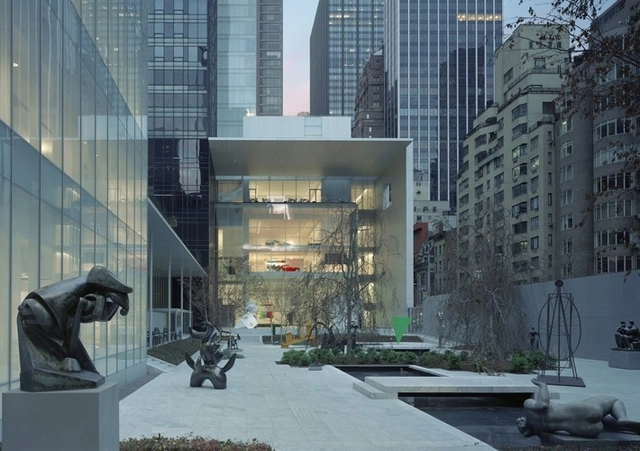
The entrance to the Museum of Modern Art is tucked beneath a demure facade of granite and glass in Midtown Manhattan. Its clean, regular planes mark Yoshio Taniguchi's 2004 addition to the MoMA's sequence of facades, which he preserved as a record of its form. Taniguchi's contribution sits beside the 1984 residential tower by Cesar Pelli and Associates, followed by Philip Goodwin and Edward Durell Stone’s original 1939 building, then Philip Johnson’s 1964 addition. Taniguchi was hired in 1997 to expand the Museum’s space and synthesize its disparate elements. His elegant, minimal solution presents a contemporary face for the MoMA while adhering to its Modernist roots.

AD Classics: The Museum of Modern Art - Exterior Photography, Museums & Exhibit , Facade, CityscapeAD Classics: The Museum of Modern Art - Museums & Exhibit AD Classics: The Museum of Modern Art - Museums & Exhibit AD Classics: The Museum of Modern Art - Exterior Photography, Museums & Exhibit , Facade, CityscapeAD Classics: The Museum of Modern Art - More Images+ 24