‘BS25′ Silos – Diving and Indoor Skydiving Center Proposal / Moko Architects

Courtesy of

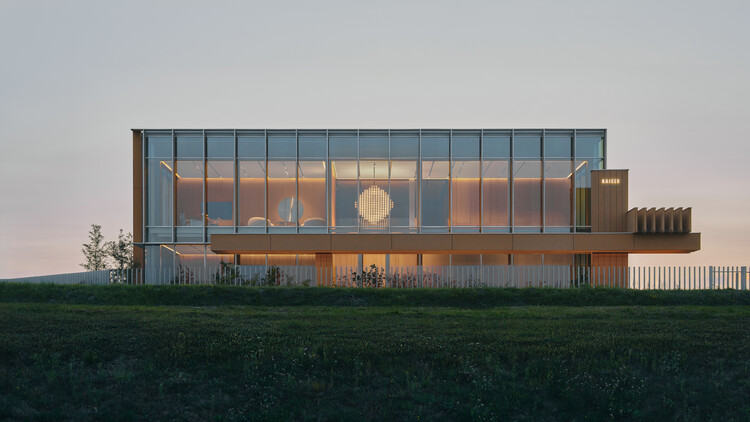
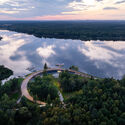
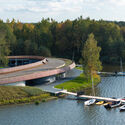
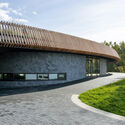
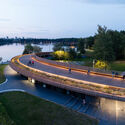
The proposal by Moko Architects for the Diving and Indoor Skydiving Center restores a part of a house factory in Żerań which operated in the past,. They turn a building in a non-developed area with abandoned halls and warehouses into a recreation center open all year round in the old silos where bulk cement used to be stored in the past. The existing facility is a perfect base for this investment and will be the only place in where people wishing to learn the skills of diving will have the opportunity to safely train at the depth of 25m under control. More images and architects’ description after the break.

Custore Pavilion / Anna Dobek + Mateusz Wojcicki

© Paulina Sasinowska (smileupyourself), ,

Custore, an experimental project, is a pavilion that explores the areas of parametric architecture used for the commercial market. Designed by Anna Dobek + Mateusz Wojcicki, they had to deal not only with the aesthetic issues of computer-generated sculptural forms, but also with practical problems associated with the execution of the project inside a commercial building, and – most importantly – with the real clash of artistic forms and commercial market guidelines. More images and architects’ description after the break.

Black and White Office / TOYA Design

Courtesy of

Architects: TOYA Design
Location: , Poland
Architect In Charge: Tomasz Wojtkowiak
Design Team: Tomasz Wojtkowiak, Anna Sędecka, Dominika Gieburowska
Area: 62 sqm
Year: 2012
Photographs: Courtesy of TOYA Design

Fiesta Del Vino Wine Bar / mode:lina architekci

© Marcin Ratajczak

Architects: mode:lina architekci
Location: Górczyn, Poznań,
Design Team: Paweł Garus, Jerzy Woźniak, Kinga Kin, Agnieszka Owsiany
Area: 120 sqm
Year: 2012
Photographs: Marcin Ratajczak

Kronverk Cinema / Robert Majkut Design

© Andrey Cordelianu

Architects: Robert Majkut Design
Location: ,
Area: 1,045 sqm
Year: 2009
Photographs: Andrey Cordelianu

PKO Bank / Robert Majkut Design

© Szymon Polański

Architects: Robert Majkut Design
Location: ,
Client: PKO Bank Polski S.A.
Area: 483 sqm
Year: 2011
Photographs: Szymon Polański

In Progress: Zlota 44 / Daniel Libeskind

© ORCO photo by Krzysztof Wierzbowski

Architects: Daniel Libeskind
Location: , Poland
Architect Of Record: Artchitecture SP ZOO
Area: 804,602 sq ft
Year: 2013
Photographs: ORCO photo by Krzysztof Wierzbowski, Courtesy of

Operlab Competition Entry / Rafal Oleksik + Krzysiek Stepien

© Agnieszka Wyrwas

Inspired by the movement of the curtain, an element inherently connected with the theatre, this second prize winning proposal for the Operlab competition focuses on this movement to induce the emotions of the viewers. Designed by and , it was crucial in the proposed concept of the pavilion to induce such emotions to encourage people to enter the facility, and at the same time, allow them to become a part of the show whether it be exhibitions, screenings, a concert or a discussion. More images and architects’ description after the break.

B+L HQ / 137kilo Architekci

© Jacek Kołodziejski

Architects: 137kilo Architekci
Location: Warsaw,
Team: 137kilo + Beza Projekt, Anna Łoskiewicz, Zofia Strumiłło-Sukiennik, Jan Sukiennik, Bartłomiej Popiela, Krzysztof Benke, Alicja Getka, Robert Kłoś, Tomek Korzewski
Wall Graphics: Tymek Jezierski
Year: 2012
Photographs: Jacek Kołodziejski

Hydroponic Pumping Station Winning Proposal / mode:lina

Courtesy of

In an effort to revitalize an old pumping station in , Poland, this first prize winning proposal by mode:lina successfully combines green thinking with eco-technology to turns a space into a place where you can learn, practice, and get accustomed to one of the best ways to help your environment - growing your own food. These three aspects: nature+mineral water+education are the base of their concept. By combining them with each other, they hope to once again promote the city and give back a pumping function to an old building. More images and architects’ description after the break.

Culture Island: Public Library Proposal / UGO Architecture

Courtesy of

Designed by UGO Architecture, their ‘Culture Island’ project is a model of a public library meant for small towns up to 15,000 inhabitants. The starting point for creating their concept was the research carried out in 2010 by the Office for Readership Research of the National Library and the Public Opinion Research Centre TNS OBOP. The research shows that 56% of Poles did not read a single book during the year. Thus, they started to think about how to make the citizens and the authorities of the municipality (the latter will finance the project) interested in the idea of model public libraries in spite of the poor readership. More images and architects’ description after the break.

Weaving In-Tension (WIT) Pavilion: Operalab Competition Entry / Meta- Studio

Courtesy of

The Weaving In-Tension (WIT) Pavilion is a multi-functional temporary pavilion designed by Meta- Studio for the Operalab Competition. The modular project concentrates on customizable space with the aim of not only to create various purposes of space, but to reflect the theatre performing motion and spirit to the pavilion. Inspired by the dancing or performance motion captured in time, the project’s facade represents the abstract act and movement of the performance of the theatre. More images and architects’ description after the break.

Operlab Competition Entry / exexe

Courtesy of  

The idea of establishing Operalab – a mobile think tank – in the urban environment is the evidence of the transformation taking place in the structure of the Grand Theatre – National Opera, representing the openness and modernity of this elite cultural institution. Designed by exexe, the main idea behind their proposal is the separation of part of the urban fabric, provoking creative use and generating more space rather than just designing the building. This time, it’s not the audience coming to the theater, but a theater coming to the audience. More images and architects’ description after the break.

Squashynski Squash Club / BUCK.ARCHITEKCI

Courtesy of

Architects: BUCK.ARCHITEKCI
Location: Jana Kazimierza 1/29, , Poland
Area: 520.0 sqm
Year: 2010
Photographs: Courtesy of BUCK.ARCHITEKCI

Pride And Glory Office / Morpho Studio

Courtesy of

Architects: Morpho Studio
Location: , Poland
Architect In Charge: Justyna Friedberg
Area: 810 sqm
Year: 2012
Photographs: Courtesy of Morpho Studio

Office-Garage / Ultra Architects

© Jeremi Buczkowski

Architects: Ultra Architects
Location: ,
Architects: Marcin Kościuch,Tomasz Osięgłowski
Collaborators: K.Dembińska, B.Suszczewicz, A.Ostrowska, Ł.Piszczałka, A.Ronżewska-Kotyńska
Area: 1000.0 sqm
Year: 2010
Photographs: Jeremi Buczkowski

Maja’s House / Ultra Architects

© Mariusz Jagniewski

Architects: Ultra Architects
Location: , Poland
Architect In Charge: Marcin Kościuch and Tomasz Osięgłowski
Collaborators: Adriana Ronżewska-Kotyńska, Agata Ostrowska
Area: 6 sqm
Year: 2010
Photographs: Mariusz Jagniewski, Łukasz Zandecki, Courtesy of

Sports Hall Competition Entry / Studio EL

Courtesy of

In search of the architectural and spatial form for the designed sports hall in , Studio EL, through their investigation of applied form typologies used in sports facilities, decided to use the coating system. This type of design is characterized by freshness, terseness and coherence in form and in contents of a function. The design consists of two-curvature, two-layered, steel space frames which will cover the space of the sports hall and will be based on the double buttresses located in its ambit. More images and architects’ description after the break.

Grand Hall Complex at The ZAMEK / Toya Design

© Maciej Augustyniak & Juliusz Jarosz

Architects: Toya Design
Location: , Poland
Design Team: Tomasz Wojtkowiak, Justyna Kielczewska-Stawicka, Anna Sędecka
Collaborators: Jacek Wojciech, Tomasz Migdałek, Jarosław Wyszyński, Magda Dzioba, Alicja Ryczkowska
Area: 5,161.82 sqm
Year: 2012
Photographs: Maciej Augustyniak & Juliusz Jarosz

Operalab Theatre Pavilion Competition Entry / UGO Architecture and Design

Courtesy of and Design

Confronted with an original form of the pyramid, the shape of the Operlab Theatre Pavilion proposal, designed by UGO Architecture and Design, is the result of a consistent analysis of the building of the Grand Theatre. The character and function of a row of interior spaces, including the entrance, auditorium, and stage, finds its reflection in the arrangement of forms composing the body of the building. The pavilion then becomes a repetition of this arrangement and gives it additional meaning. More images and architects’ description after the break.

Operalab Theatre Pavilion Competition Entry / Studio Alfirevic

Courtesy of

Designed by Studio Alfirevic, their proposal for the Operalab Theatre Pavilion competition represents ‘live’ theater, in which different performances and experiments take place in the field of art. The suggested position of the pavilion is in the fringe area of the park, in the direct vicinity of the building of the Great Theater. The circular form of the pavilion is a subtle response to the conditions of the natural environment and it allows an equal visual experience from all sides. More images and architects’ description after the break.