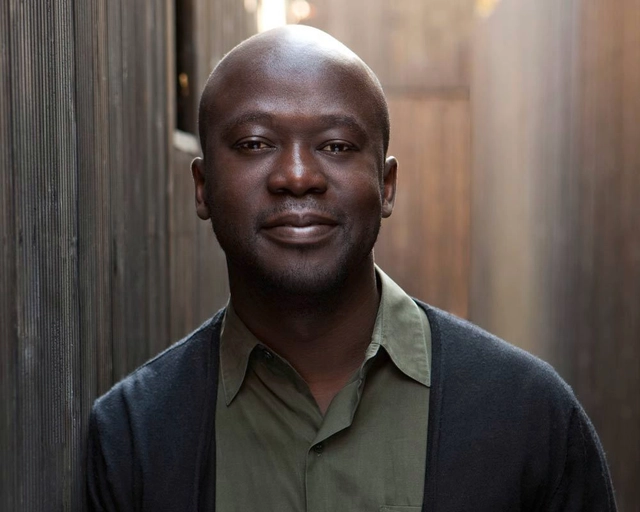
At this year's Biennale, "Reporting from the Front," MIT will have an unusually widespread presence. Ten full-time and visiting faculty, six alumni, and a handful of other MIT-affiliates (many invited by curator Alejandro Aravena himself) will contribute to over 15 installations, including "Rwanda Droneport," a full-scale earthen masonry shell designed by Norman Foster, which will serve as a small airport for drones delivering supplies to inaccessible areas of Rwanda, and "Courtyard House Plug-In," a prefabricated building system designed to be inserted into Beijing's dilapidated courtyard houses. To discuss MIT's significance on the architectural stage today, we spoke with the Dean of MIT's School of Architecture and Planning, Hashim Sarkis, who, it was recently announced, will also serve on the Biennale jury.
Videos
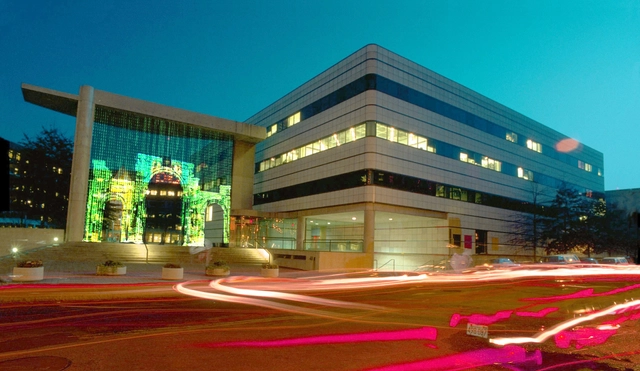
Photomontage of the Memory Matrix installation at night in front of the Wiesner Building, MIT campus. Image credit: Photomontage by Azra Aksamija, 2016. Original photo of the MediaLab by Steve Mann. Image Courtesy of Resnicow and Associates
In honor of the centenary of MIT's move to the Cambridge Campus, the university has carried out a series of public events this spring, including the installation of two innovative architecture and design projects: Memory Matrix and Biaxial Tower.
Installed in the iconic arch of MIT’s Wiesner Building (designed by Pritzker Prize winner and MIT alumni I.M. Pei), Memory Matrix is a giant screen made of intricate pixel-like Plexiglass elements, arranged to form larger matrix-like screens that reveal an image of the recently destroyed Arch of Triumph in Palmyra. The image is only visible during the day through the movement of wind and light, and at night, through the illumination of the pixels. Spearheaded by Azra Aksamija, Memory Matrix will be on display from April 23 through May 7.
The Massachusetts Institute of Technology (MIT) have announced that eight full-time or visiting faculty members and four alumni spanning five continents will be responsible for ten separate installations at the upcoming 2016 Venice Biennale. The institution have said that their "worldview for meaningful impact [is] deeply aligned with this year’s theme of architecture in action."
https://www.archdaily.com/786650/massachusetts-institute-technology-mit-announce-ten-associated-installations-at-2016-venice-biennaleAD Editorial Team
The AA Visiting School Hawaii is an architectural workshop dedicated to the investigation of flying machines through fabrication and geometry as well as performance and choreography.
It’s a shame that the inaugural Chicago Architecture Biennial has already come and gone, and that the Windy City will have to wait until next fall for another dose of architectural euphoria. But it’s worth revisiting one of the event’s standout exhibits, an installation equally exemplary for its display as for its expiry. “Rock Print,” created by Gramazio Kohler Research of ETH Zurich and Skylar Tibbits of MIT's Self-Assembly Lab, was a four-legged, neo-primitive tower of stones and string that was erected without mortar or other reinforcement, meaning its disassembly would be the exact inverse action of its construction. The string, laid down by an algorithm, was the binder for stones laid by hand in thin stacks – the team called them “slices” – in what amounted to a type of analog version of 3D printing. The material process has been given the name “reversible concrete” and could be a paradigm shift in construction for its portability and versatility.
In the above video, the deconstruction of “Rock Print” is shown in abridged stages, where the structure’s string is dislodged and returned to a motorized spool on the gallery floor. The small stone fragments spew from the top of the structure like debris from the top of a volcano in the midst of eruption, and all that remains at the end is a small mound of concrete pebbles occupying a large circumference. A structure like “Rock Print” emphasizes that detritus can be avoided by adapting the process of building to vanguard materials that seek to match the brevity of contemporary construction with materials that curtail the waste.
QS has released its 2016 rankings of the top 100 schools for architecture in the world. The company has produced an annual survey of universities since 2011, now comparing including over 800 universities worldwide across 42 subjects, and rating the top universities based on academic reputation, employer reputation and research impact. As they did last year, MIT came out top of the list in architecture. Read on for the full rankings list for architecture, and be sure to visit QS's site for the full rankings list which is sortable by subject, country or continent.
https://www.archdaily.com/784261/the-top-100-universities-in-the-world-for-architecture-2016AD Editorial Team
This two-day symposium is co-sponsored with the MIT 2016 Committee and the MIT Department of Architecture. It will examine architecture and cultures at MIT and their influences on education and student life on campus. Speakers, including David Adjaye and Hashim Sarkis, will explore the prescient design of the original buildings and the interdisciplinary, innovative research that they fomented, as well as imagine the teaching and maker spaces of the future.
Founded by Harvard and MIT, edX offers more than 800 free, online courses as well as certificates from top universities around the world, including Harvard, MIT and UC Berkeley. The courses cover everything from literature to poetry, medicine, biology, urban planning, engineering, history and architecture.
Taught mostly in English, the courses have different weekly requirements, and generally require participants to be online at designated times of the day. There are also classes offered in other languages like Chinese, French, Spanish and Portuguese. They also offer certificates that can be purchased at the end of the course, costing between $50-$70.
A group of Massachusetts Institute of Technology(MIT) engineering students has won the first round of a competition to design transport "pods" for Elon Musk's ultra-fast Hyperloop. Selected from more than 100 other university teams, the top teams will now have the opportunity to build their pods for a trial run on the Hyperloop Test Track (now under construction) by April 2016. If successful, the pods will be able to transport up to 30 people at speeds of 700 miles-per-hour through the Hyperloop's 12-foot diameter tube.
David Adjaye has been selected as the winner of MIT's 2016 Eugene McDermott Award in the Arts, which honors “individuals whose artistic trajectory reveals that they will achieve the highest distinction in their fields and continue to produce inspiring work for many years to come.” The award consists of $100,000 prize in addition to an artist residency at MIT in the spring of 2016. During the residency, Adjaye will participate in four different public events, including panels and symposia.
In the latest of a series of technological developments which are expanding the capabilities of 3D Printing, researchers at MIT's Computer Science and Artificial Intelligence Laboratory (CSAIL) have developed a 3D printer that is capable of handling up to 10 materials simultaneously, and uses a process called "machine vision" to dramatically increase the variety of objects which the printer can produce.
Glass can be molded, formed, blown, plated, sintered and now 3D printed. Neri Oxman and her Mediated Matter Group team has just unveiled their new glass printing platform: G3DP: Additive Manufacturing of Optically Transparent Glass. A collaboration with the Glass Lab at MIT, G3DP is the first of its kind and can 3D print optically transparent glass with stunning precision.
"G3DP is an additive manufacturing platform designed to print optically transparent glass," Oxman told ArchDaily. "The tunability enabled by geometrical and optical variation driven by form, transparency and color variation can drive; limit or control light transmission, reflection and refraction, and therefore carries significant implications for all things glass: aerodynamic building facades optimized for solar gain, geometrically customized and variable thickness lighting devices and so on."
India has one of the fastest growing populations in the world and to accommodate it, a better building material is needed. Currently over 200 billion of the country’s traditional clay fired bricks are manufactured every year, resulting in numerous pollution and environmental problems. To address these issues, a team from MIT –- composed of students Michael Laracy and Thomas Poinot, along with professors Elsa Olivetti, Hamlin Jennings and John Ochsendorf -- has developed Eco-BLAC bricks: an alternative to traditional bricks that reuses industrial waste and is low-cost and low energy.
In 1951, Mies van der Rohe completed a house in Plano, Illinois that was the epitome of his modernist ideals; with a steel structure surrounded entirely by glass walls the building perfectly connected the user with its idyllic natural setting, and it was - and is - venerated as a masterwork. A lesser-known story about the work is how its owner Dr Edith Farnsworth attempted to sue her architect, in a story of bitterness and unrequited love - but even less well-known, argues Nora Wendl, is the story of what really happened. In this excerpt from her essay "Uncompromising Reasons for Going West: A Story of Sex and Real Estate, Reconsidered," published in Thresholds issue 43: "Scandalous," Wendl examines the overblown and dubious assertions made about Farnsworth's intentions, finding that the truth may be much more simple: perhaps the Farnsworth House is just not a pleasant place to live.
“I have decided to speak up.”
Such is the threshold between a private affair and a public scandal: one person speaks. These are also the opening lines to “The Threat to the Next America,” which appears in the April 1953 issue of House Beautiful. Penned by editor Elizabeth Gordon, the article describes an unnamed, but “highly intelligent, now disillusioned, woman who spent more than $70,000 building a 1-room house that is nothing but a glass cage on stilts.”[1] Gordon warns readers of a design movement sweeping the nation:
Something is rotten in the state of design—and it is spoiling some of our best efforts in modern living. After watching it for several years, after meeting it with silence, House Beautiful has decided to speak out and appeal to your common sense, because it is common sense that is mostly under attack. Two ways of life stretch before us. One leads to the richness of variety, to comfort and beauty. The other, the one we want fully to expose to you, retreats to poverty and unlivability. Worst of all, it contains the threat of cultural dictatorship.[2]
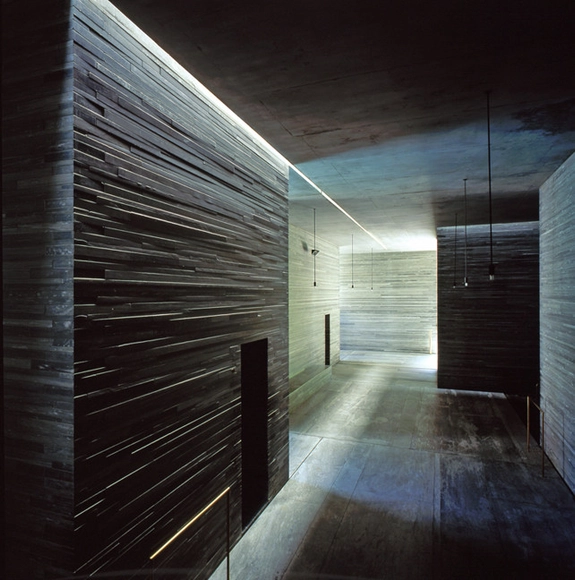
Architecture professor and photographer Henry Plummer has heightened the transformative power of daylight with his cameras and published several remarkable books about light and architecture. His deep interest in light, and his lyrical writing perspective, were formed through his contact with the designer and art theorist György Kepes while studying at MIT. Within his numerous photo journeys Plummer has documented the various facets of daylight in Japan and the Nordic Countries, and of masters like Le Corbusier and Louis Kahn. As a Professor Emeritus of Architecture at the University of Illinois at Urbana-Champaign Plummer also still has ambitious plans for future book projects. In the second part of this interview, Plummer reveals how changing technologies have affected his photography, and discusses his thoughts on phenomenology and developing a poetic language of light.
If you missed it, you can read part one of this interview here.
Architecture professor and photographer Henry Plummer has heightened the transformative power of daylight with his cameras and published several remarkable books about light and architecture. His deep interest in light, and his lyrical writing perspective, were formed through his contact with the designer and art theorist György Kepes while studying at MIT. Within his numerous photo journeys Plummer has documented the various facets of daylight in Japan and the Nordic Countries, and of masters like Le Corbusier and Louis Kahn. As a Professor Emeritus of Architecture at the University of Illinois at Urbana-Champaign Plummer also still has ambitious plans for future book projects. In the first part of this interview, Plummer shares a variety of insights about understanding light and approaching buildings for photography.
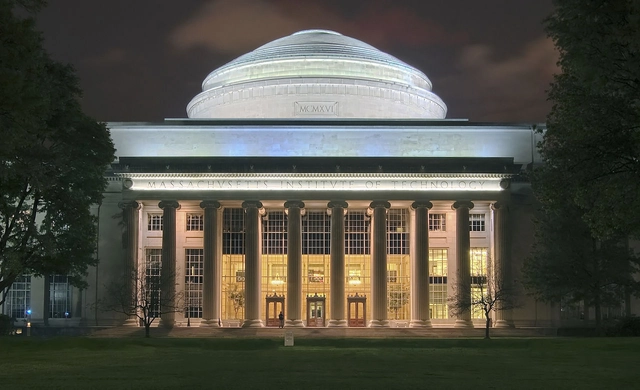
Massachusetts Institute of Technology (MIT). Cedric Weber / Shutterstock.com
QS has released its annual World University Rankings for 2015, covering 36 individual subjects and sorting based on "academic reputation, employer reputation and research impact." The company, which claims to explore the top 800 universities in the world, began publishing academic rankings in 2011. Read on to see the list of top universities for architecture, and be sure to see the full, sortable list at QS's site.
https://www.archdaily.com/625569/qs-ranks-the-top-100-universities-in-the-world-for-architectureAD Editorial Team