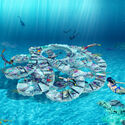
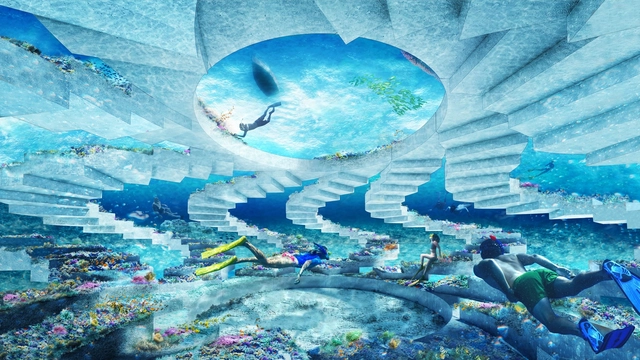
OMA / Shohei Shigematsu, together with artists Charlotte Taylor and Nicholas Préaud, created a series of NFTs inspired by an underwater sculpture designed for the ReefLine project. Commissioned by Aorist for its climate-forward NFT marketplace, the video NFT Coral Arena unfolds a virtual narrative of the monument, simulating the evolution of the future physical artwork from an abstract object to being the support of an underwater ecosystem. The NFTs were unveiled during Miami Art Week, and proceeds from their sale will be donated for the completion of the ReefLine project.
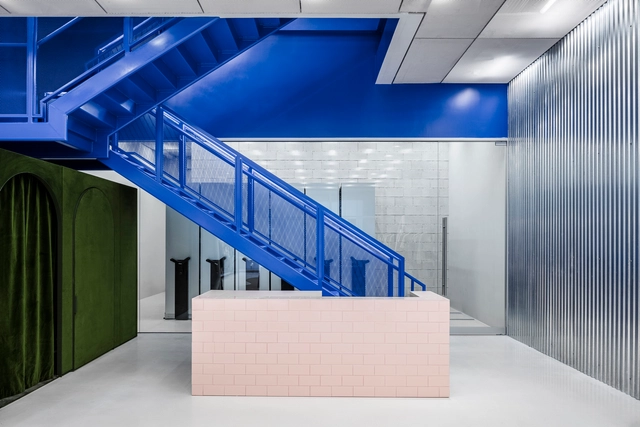
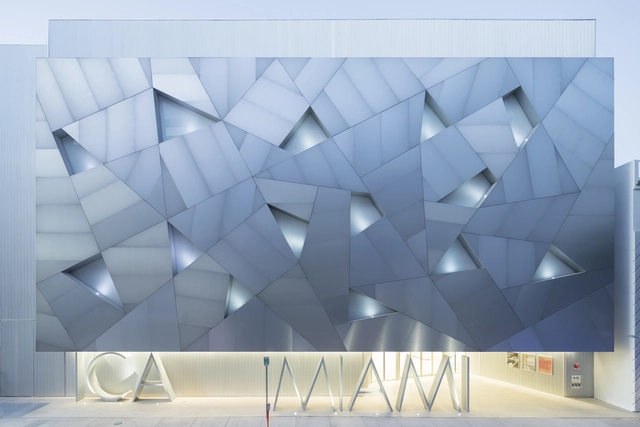
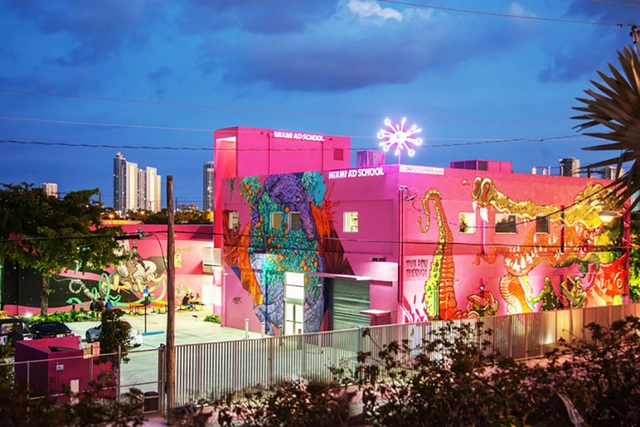
Fotografiska Museum has announced its expansion to three new locations in Berlin, Shanghai and Miami, to be housed within existing buildings redesigned by Herzog & De Meuron, Neri&Hu and Rockwell Group. A former department store in Berlin's Jewish Quarter, a 1946 factory building in Miami and a historically significant warehouse complex in Shanghai are the future Fotografiska venues set for completion in 2022 and 2023. Together with the existing locations in Stockholm, Tallin and New York, these will form the world's largest private art museum in terms of size, number of locations, and exhibitions per year.
Recent extreme weather events and the acceleration of climate change, paired with decarbonization efforts that are not on track, make climate-related disruption unavoidable for urban environments, raising the issue of climate-risk adaptation. Moving past what can be done to prevent climate change, there is a strong imperative to develop strategies to prepare urban environments to cope with inevitable challenges such as sea-level rise, floods, water scarcity or extreme heat. The following discusses how cities can build resilience and adapt to undergoing and expected future climate threats.
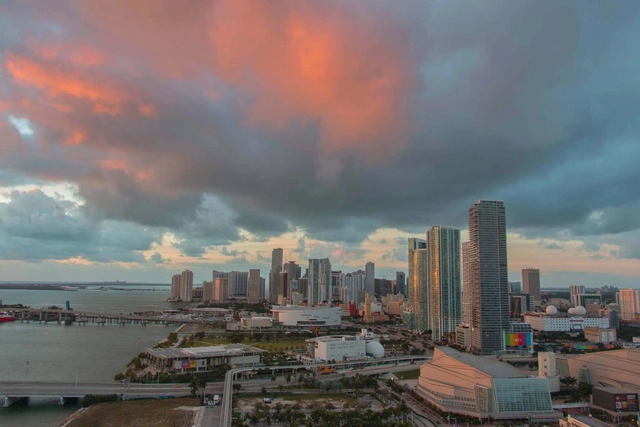
Earlier this month, the city of Miami released a draft version of its comprehensive plan to combat the effects of climate change. The so-called Stormwater Master Plan (SWMP) will be implemented to alleviate the threat of flooding throughout the city, improve the quality of water in Biscayne Bay, and fortify its coastline against stronger and more frequent storm surges over the next 40 years, at an overall cost estimate of $3.8 billion.
I am on the edge. Not emotionally or psychologically—although this could be the case—but literally, physically, spatially, geographically. As I write this, I am sitting on the balcony of a hotel room in Miami Beach, overlooking the Atlantic Ocean. Behind me is the whole State of Florida and, indeed, the entire North American continent. In front of me: the boardwalk, a narrow beach, and then a lot of water—and not much else between here and Mauritania, a distance of more than 4,400 miles.
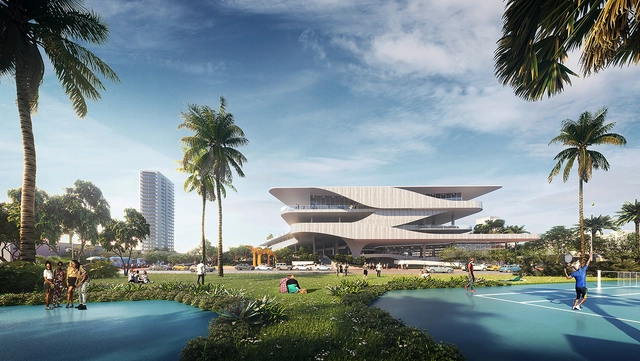
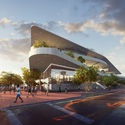
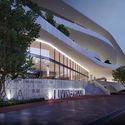
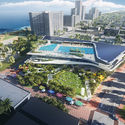
Brooks + Scarpa along with PCL and BEA, design/build team is one of three finalists selected for a new community mixed-use complex. Located in the heart of Miami Beach, just one block west of the beach, the structure that replaces a municipal surface parking lot, will include pools, libraries, retail, a community center, and a 3-acre park. Designed as a resiliency hub, the building can accommodate future residential and office use when less parking is needed.
As long as cities have been around, there’s been one pressing question central to their future: “What makes urban areas desirable?” Over half of the world’s inhabitants live in cities and that number is projected to climb over the next decade with more than 5 billion people inhabiting urban cores globally. To prepare for this demand, cities are finding ways to be more desirable, draw in talent, and entice both big and small businesses, all while finding more ways to create equitable living opportunities for all.
During the 20th century, Miami Beach reinvented itself several times, from Gilded Age mecca to Art Deco capital, to glamorous 1950s destination, only to become a faded has-been resort by the 1970s. The preservation movement that began in the 1970s and 1980s became its saving grace. By the 1990s Miami Beach, especially its South Beach neighborhood, was one of the hippest communities in the United States, drawing notable European residents like Gianni Versace.
OMA and Shohei Shigematsu have designed a proposal for Miami Beach’s first underwater sculpture park and artificial reef in Florida. Working with Ximena Caminos and BlueLab Preservation Society, the project will function as an artificial reef to protect and preserve Miami’s marine life and coastal resilience. Called ReefLine, the design will be a new 7-mile underwater public sculpture park, snorkel trail and artificial reef located off Miami Beach’s shoreline.
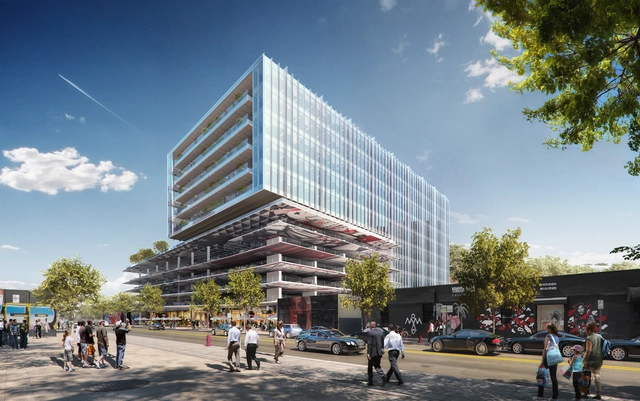
Gensler has unveiled 545wyn, “the first Class-A office tower in Miami in over a decade”. In collaboration with office developer Sterling Bay and local development partner Joe Furst of Place Projects, the project introduces a new generation of office space, aiming to attract a new type of innovative, forward-focused tenants. In fact, Gensler Miami will be the building’s first tenant of the 10-story tower.



















_HI_RES_(31)_edited.jpg?1617165461&format=webp&width=640&height=580)
_LO_RES_(40)_R.jpg?1617165581 "© Robin Hill")
_LO_RES_(91)_edit_2.jpg?1617165629 "© Robin Hill")
_HI_RES_(14).jpg?1617165367 "© Robin Hill")
_HI_RES_(95).jpg?1617165578 "© Robin Hill")
_HI_RES_(31)_edited.jpg?1617165461)

















![Bass Residence / [STRANG] - Exterior Photography, Houses, Facade](https://snoopy.archdaily.com/images/archdaily/media/images/5ecc/4304/b357/6579/0d00/07ac/slideshow/FI.jpg?1590444786&format=webp&width=640&height=580)
![Bass Residence / [STRANG] - Exterior Photography, Houses, Stairs, Handrail](https://images.adsttc.com/media/images/5ecc/3f6b/b357/6579/0d00/0766/thumb_jpg/Bass_2.jpg?1590443875 "© Claudio Manzoni")
![Bass Residence / [STRANG] - Interior Photography, Houses, Chair, Table](https://images.adsttc.com/media/images/5ecc/40c7/b357/65c1/7900/0223/thumb_jpg/Bass_8.jpg?1590444222 "© Claudio Manzoni")
![Bass Residence / [STRANG] - Exterior Photography, Houses, Stairs](https://images.adsttc.com/media/images/5ecc/40b8/b357/65c1/7900/0222/thumb_jpg/Bass_6.jpg?1590444204 "© Claudio Manzoni")
![Bass Residence / [STRANG] - Exterior Photography, Houses, Facade](https://images.adsttc.com/media/images/5ecc/416e/b357/6579/0d00/07a0/thumb_jpg/Bass_9.jpg?1590444391 "© Claudio Manzoni")
![Bass Residence / [STRANG] - More Images](https://images.adsttc.com/media/images/5ecc/4304/b357/6579/0d00/07ac/newsletter/FI.jpg?1590444786)