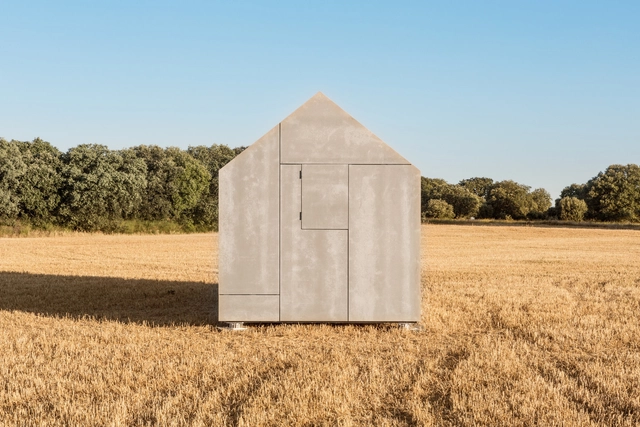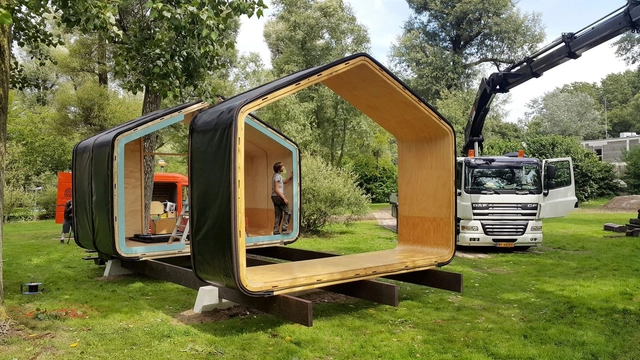
An Italian architect is proposing a new model of housing that, unlike the traditional residences, does not consist of a settled building, but in a folding and transportable house. It can be assembled in just six hours with the help of three people.

An Italian architect is proposing a new model of housing that, unlike the traditional residences, does not consist of a settled building, but in a folding and transportable house. It can be assembled in just six hours with the help of three people.

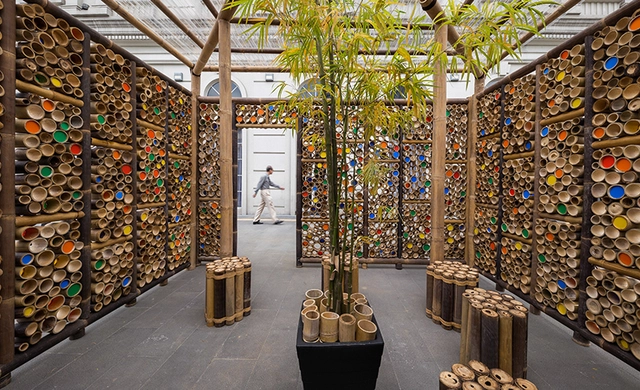
As a construction material, bamboo is resistant, versatile, grows rapidly and is immensely friendly with its own ecosystem and its agroforestry environment. In addition, it presents a large number of species that deliver different diameters and heights. But are there also variations in its color?

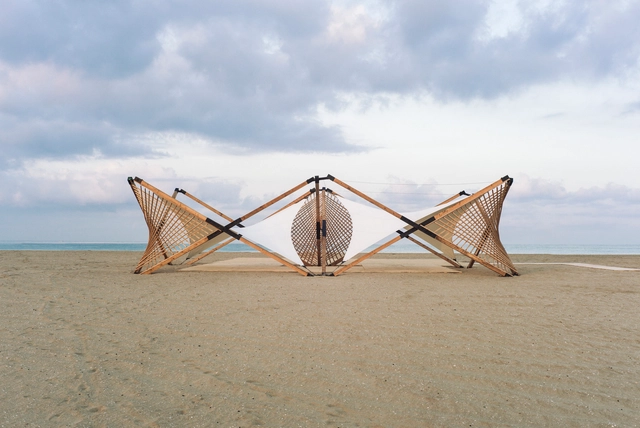
Out of 200 applicants, London-based Gilles Retsin Architecture won the Tallinn Architecture Biennale 2017 competition with their temporary outdoor installation. Participants were challenged to use the fabrication abilities of Estonian wooden house manufacturers in a new and creative way. Jury member Martin Tamke said the Retsin proposal is, “characterized by outstanding aesthetic and intellectually challenging, as it questions current beliefs and trends in architecture."

"Bamboo is close to an ideal structural material." This statement by Neil Thomas during his talk at Bamboo U, which took place in November 2017 in Bali, really caught my attention. Neil is the founding director of atelier one, a London office of structural engineering, whose outstanding projects include stage and scenography for the Rolling Stones, Pink Floyd, and U2; art installations by Anish Kapoor and Marc Quinn; the Gardens by the Bay, in Singapore, among many others. From the last few years, the engineer has exhaustively studied about bamboo, its structural properties and its most diverse potential.

Testing the limits of structural viability and computer-based modeling, the 2017 Komorebi Pavilion used thin sheets of polyethylene terephthalate (PETG) in a unique way to develop an ethereal, self-supporting enclosure. The pavilion is the result of a collaboration between architecture students at Harvard Graduate School of Design (GSD) and engineering researchers at the University of Tokyo.

Milan based office ZarCola and Francisco Rodriguez were tasked with designing a bar and theatre for a new Milanese music festival.

Theatre Projects consultants, together with the architectural office Studio KO, have designed a multipurpose auditorium of 115 seats, with the aim of hosting conferences, screenings, concerts, theater, and cinema.

The Fundación EcoInclusión - winner of the first prize in the regional competition Google.org Challenge - is an Argentine non-profit organization that was born in 2015, from the hands of a group of young people that promote the construction of a fairer, equitable and sustainable society.

The Academy Bezalel students' bamboo project, in Jerusalem, is a proposal that approaches the construction in real scale and the experimentation with materials as an important driving force of architectural design.

Unbeknown to many, cork is something of a dark horse when it comes to the environment—a model of a sustainable industry and building material. By its very nature, cork is both recyclable and renewable, as it is the only tree that regenerates its bark, while harvesting that bark causes the tree no harm.

Sarovic_Plaut Arquitectos’ latest work, “The Grater,” was the Bazar ED 2017 entry pavilion. Last November, Bazar ED’s 13th annual fair united design, decoration and trends at Santiago’s Bicentennial Park.

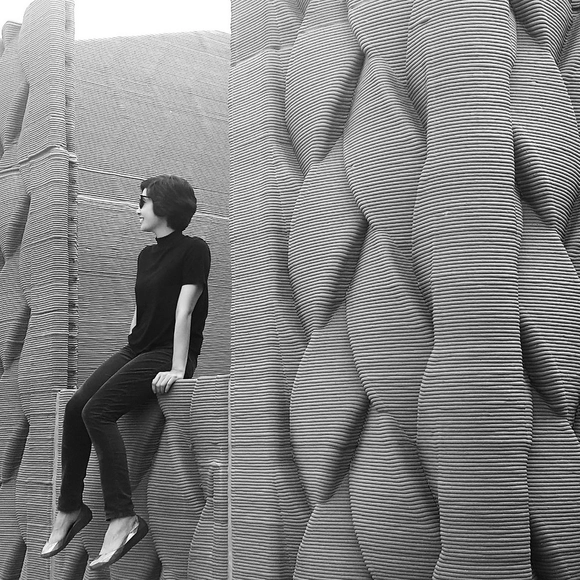
Of all construction materials, concrete is perhaps the one that allows the greatest diversity of finishes and textures. The mixture of its ingredients, the shape and texture of the formwork, and the pigmentation of the materials all offer the opportunity to achieve an interesting design. This week we've prepared a selection of 10 inspiring images of innovative concrete, taken by renowned photographers such as Gonzalo Viramonte, Song Yousub, and Ana Cecilia Garza Villarreal.

This article was originally published on Autodesk's Redshift publication as "Hurricane-Proof Construction Methods Can Prevent the Destruction of Communities."

Downtown Studio's latest design for a street library in Bulgaria, that utilizes the tools of parametric design to create a wooden structure that is light and transportable.

Walking in through the entrance of the Experimentarium by architecture firm CEBRA, visitors can immediately take notice of the radiating copper Helix staircase. The Helix staircase is 100 meters long, supported with 160 tons of steel and clad and 10 tons of 7mm thick copper.

Dande-lier – a pavilion designed for the Marina Bay waterfront promenade in Singapore uses PVC pipes and translucent umbrellas to form a reciprocal dome – reimagining everyday items as architectural components. The result is an ethereal shelter, referential of the commonly seen umbrella in Singapore and resembling a dandelion from afar. At night the project becomes a chandelier, lit up in an array of colors.

Born from a system of sliding, curved glass doors, and inspired by its potential presence in nature, this house takes new technology and uses it in a beautiful way.

The use of stone is gaining popularity more and more in architectural design. Though it is an ancient construction technique, these days the texture that stone offers to spaces is having an undeniable impact on the many architects incorporating the material into their projects. For this reason, this week we present a second installment of stunning images of stone architecture, including 15 amazing images of this construction system by renowned photographers such as Hannes Henz, César Bejar, and Erieta Attali.