The design media is little more than a sycophantic, vapid and naval gazing extension of the PR industry. Our monographs, magazines and museums feed a cycle of shallow celebratory hysterics with little to no investigative or critical practice. Awards programmes lurch between jacking off the already engorged egos of starchitects or chasing the virginal myth of untainted emerging designers preying simultaneously on the young's insecurity and the old's fear of death in the name of profit for disconnected share holders. Cosy relationships between judges and judged, editors and edited amount to mild corruption - unsubscribe now.
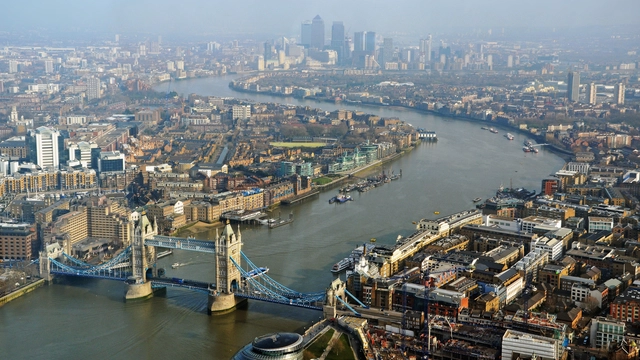
River Thames, London. Image Courtesy of Monocle 24
For this edition of The Urbanist, Monocle 24's weekly "guide to making better cities," the team report from the two-day CityLab summit, which "gathered the world’s top mayors and urban leaders for a series of chats on how to to make our cities a better place." They explore the vision for London’s transport infrastructure, discover how Rio de Janeiro is gearing up its digital strategy ahead of the 2016 Olympic Games, and find out how to create a smart city through data. On top of that, they chat to millennials in Washington and "sit down for a very honest chat with the mayor of Athens."
Community consultation is meaningless vacuous tick-box bullshit. It has become a decoy that developers deploy to shove unwanted projects down the throats of an unconsenting public. Its cringeworthy language of community empowerment is just thinly veiled power moves and lazy spin. The profession, the public, and the built environment would be better off without it.
We all assume that to quit architecture is to fail. Yet the vast majority of those who stick it out are sucked into a world of disempowered subservience to big business. Becoming an architect squanders the creativity and energy of those who are attracted to study architecture in the first place, robbing society and the individual of their potential. There is a better way. We should all quit architecture before it's too late.
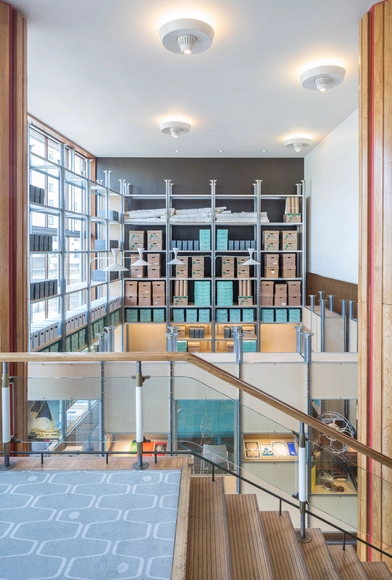
The Southbank Centre—a large complex of Grade One listed, Modernist cultural venues on the banks of the River Thames—are poised to refurbish three of their most loved spaces: the Queen Elizabeth Hall, the Purcell Room and the Hayward Gallery. As part of this transformation, London-based practice Jonathan Tuckey Design (JTD) have been commissioned to create a new 'Archive Studio' set within the foyer of the Royal Festival Hall, all part and parcel of the Southbank Centre’s desire to open up access to their collections and archives. JTD's free-standing, self-supporting structure is "an open framework which makes the scale the archival process apparent to visitors, held together by polished brass nuts and bolts and clad in perforated hardboard."
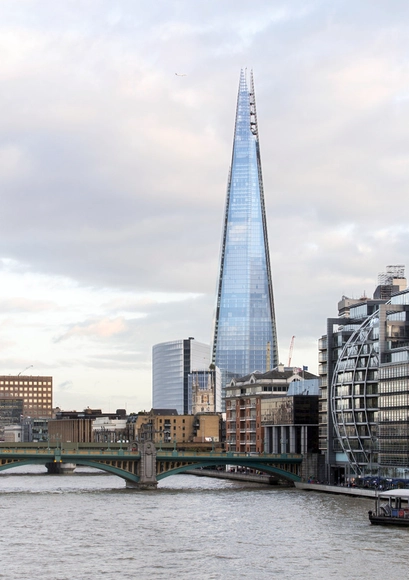
"Cities face a choice of building up or building out," says Renzo Piano, according to a recent article on the Daily Mail. Responding to backlash led by the Skyline Campaign, a campaign spearheaded by architect Barbara Weiss that "aims to stop the devastation of London by badly designed and poorly placed tall buildings," Piano is defending London's controversial skyscraper boom by saying it's giving the one thing the city needs most: "space on the ground."
WELL-line by Chetwoods. Image Courtesy of London Royal Academy of Arts
The Royal Academy of Arts in London has announced the four shortlisted proposals in their Urban Jigsaw competition, which aims to generate ideas for the renewal of Brownfield sites in London. After appraisal of many high-quality entries, four finalists have been selected to move onto the next stage of the project. See the finalist proposals after the break.
'Defiance' manifests itself in many forms: riots in Baltimore, makeshift housing in Rwanda, Pink Floyd in Venice and plants growing where they ought not sprout. To defy the norm is an act of rebellion and in architecture, doubly so. In the third issue of LOBBY, the burgeoning magazine from London's Bartlett School of Architecture, the notion of defiance and its incarnations are investigated in a collection of essays, interviews and discussions with leading and emerging thinkers in urbanism and architecture. From Swiss master Mario Botta to Carme Pinós, former partner to Enric Miralles, this latest LOBBY investigates the act of defiance as a core tenet of architectural practice.
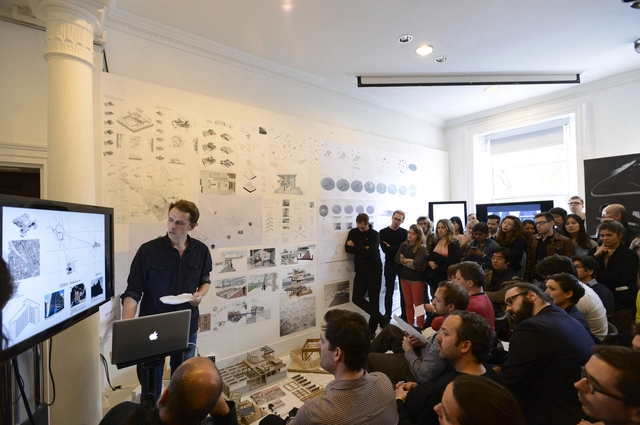
This article was written by Barbara Campbell-Lange, Head of Teaching at the AA School of Architecture in London, on her experience working at the school.
To be taught in a Georgian home, in rooms with fireplaces and moulded ceilings, in the centre of London, is exceptional. High ceilinged drawing rooms over-looking Bedford Square are connected to an idiosyncratic mews at the back via a network of un-designed bridge-pieces. This allows, through juxtapositions and awkwardnesses, glimpses and serendipitous meetings between students, staff and visitors that might otherwise not occur. It is the very nature and imperfection of this architecture that creates the School Community. Rubbing up against each other, against difference, against history, is essential to the formation of ideas: impossible people and situations are essential to creativity. Great thinkers and makers have walked these stairs, others will follow.
https://www.archdaily.com/776168/the-question-of-honors-in-architectural-educationSponsored Post
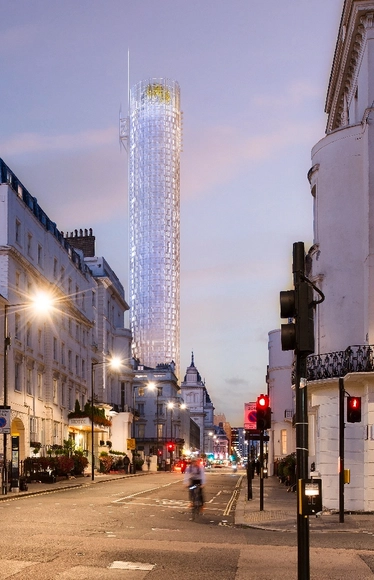
Plans have been unveiled for a "skinny Shard" in London's Paddington area. Designed by Renzo Piano, the 65-story skyscraper is the focus of a £1 billion plan aimed at revitalizing the "soulless" district.
"At the moment you only go to Paddington for two reasons - to catch a train or to see someone in hospital. It is soulless and has no life and yet it is only five minutes from Hyde Park and seven or eight minutes from Marble Arch," Sellar Property Group chairman Irvine Sellar told Evening Standard. "It is a fantastic location but it is stuck in a Fifties time-warp. We intend to create a place for people to go, where they will want to live, work, eat and shop."
A much anticipated retrospective—The World of Charles and Ray Eames—opens today at London's Barbican Centre. The show, curated by Catherine Ince and designed by 6a architects, surveys the careers of Charles (1907-1978) and Ray (1912-1988), and the extraordinary body of work prodced by the Eames Office: a ‘laboratory’, active for over four decades, in which the Eameses, their collaborators and staff produced "an array of pioneering and influential work – from architecture, furniture, graphic and product design, to painting, drawing, film, sculpture, photography, multi-media installation and exhibitions, as well as new models for education."
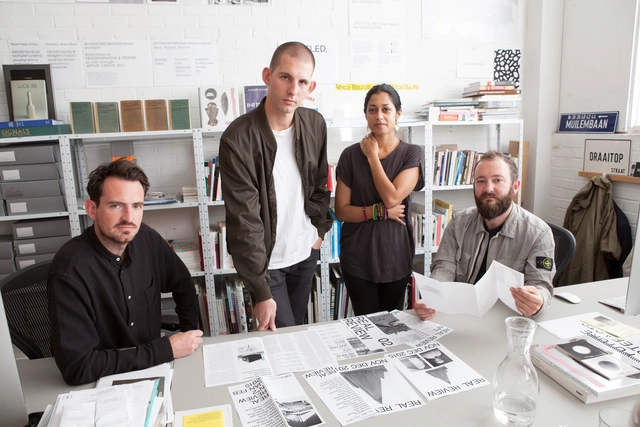
A Kickstarter campaign recently launched by Jack Self and Shumi Bose of the Real Estate Architecture Laboratory (REAL) has reached its funding target in only twenty days. Produced by an independent team of editors and designers, this bi-monthly magazine intends to "revive the review as a writing form" to a general readership within the architectural sphere and its orbital subjects, with a particular focus on politics and economics. Their campaign has so far seen considerable support from the architectural community and beyond — testament to their 'no-ads policy' and dedication to paying their contributors.
In a statement to those who have pledged so far, the editors have said that "the Real Review will happen, and it is directly and completely due to your commitment, your vision and your generosity. We can’t thank you enough for getting us here!" They are now looking to surpass this crowdfunded milestone, with Kickstarter remaining the only way to subscribe.
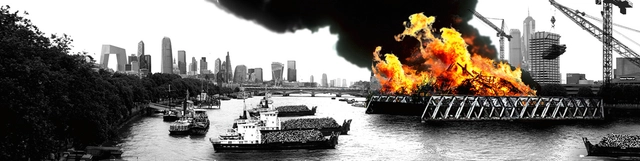
The Green Fire of London. Image Courtesy of A Folly for London
London is in the throes of an architectural identity crisis, compounded by a severe shortage of housing. While politicians and public figures debate various solutions to the city's design dilemmas, a London-based artist has conceived of a "satirical competition for architecture of the absurd." Known as A Folly for London, the free open-call for solutions to London's architectural conundrums was created in response to Arup and Heatherwick Studio's proposal for the yet to be built, and highly controversial, Garden Bridge.
Unlike traditional architectural competitions, A Folly for London sought to ignite debate on the current state of architecture in London. Presented with a distinctly British sense of humour, the competition received more than fifty entries. Winning proposals include the systematic burning of London's forests, construction of a massive inhabitable light bulb and the creation of a catacomb of submerged signature double-decker buses at the centre of the River Thames.
See the winners of "A Folly for London" after the break
Buoyant Starts / Floating Homes Ltd with Baca Architects. Image Courtesy of New London Architecture
Following their selection of 100 ideas to help solve London's housing crisis last month, New London Architecture (NLA) and the Mayor of London have narrowed down the entrants to ten winners which they believe offer exemplary models for the UK capital. The selected designs range from radical architectural solutions, such as Floating Homes and Baca Architects' proposal to create 7,500 new homes in a matter of mere months by floating small abodes in London's canals, to radical economic solutions such as David Kroll's recommendation to separate the value of properties from the value of the land they occupy.
In addition to being displayed alongside the 90 other proposals in an exhibition put on by NLA, these ten projects will be presented to the Greater London Authority to be assessed for their feasibility as real-world solutions to the crisis. Together, these ten designs provide insights into potential solutions - but also the many different causes - of London's housing crisis. Read on for images and descriptions of all ten designs.
Since we looked at this aerial footage of London in 2012, some major changes in the architecture of the city have occurred. Shot by the same photographer, Jason Hawkes, this new footage of London travels over greenbelts, Piccadilly Circus, the Thames River, The Shard, and Canary Wharf, among other impressive views. Take a look at London’s changed landscape by watching the video above.
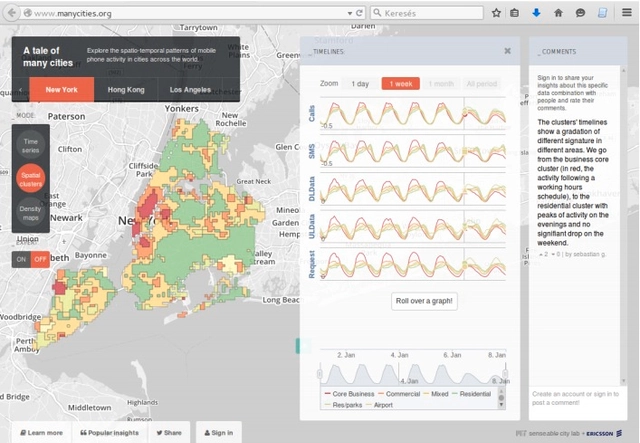
The SENSEable City Laboratory at MIT has developed a new tool with Ericsson to better understand human behavior. "ManyCities" is a new website that "explores the spatio-temporal patterns of mobile phone activity in cities across the world," including London, New York, Los Angeles and Hong Kong. Taking complex data and organizing it in a intuitive way, the application allows users to quickly visualize patterns of human movement within the urban context down to the neighborhood scale. You can imagine how useful a tool like this can be for urban planners or even daily commuters, especially once real time analytics come into play. Take a look at ManyCities yourself, here.
The Jane; Belgium / Studio Piet Boon. Image Courtesy of The Restaurant & Bar Design Awards
The winners of the seventh annual Restaurant & Bar Design Awards—the only awards in the world dedicated to the design of food and beverage spaces—have been announced in London. Out of over 860 entries from the United Kingdom and 70 other countries, 36 designs were awarded, with two grand prize winners.
The winners of the Restaurant & Bar Design Awards are:
The Real Estate Architecture Laboratory (REAL) have today announced a Kickstarter campaign in preparation for the launch of their flagship publication, the Real Review. Produced by an independent team of editors and designers, this bi-monthly magazine intends to "revive the review as a writing form" to a general readership within the architectural sphere and its orbital subjects.
The Real Review will be "a printed object of exceptional quality, featuring engaging texts by leading international commentators," alongside providing "a highly visible platform for emerging writers." Confirmed authors at this time include, among others, Assemble, Pier Vittorio Aureli (Dogma, AA), Reinier de Graaf (OMA), Sam Jacob (Sam Jacob Studio), and a rostra of journalists including the Financial Times' architecture critic Edwin Heathcote.




_by_Chetwoods.jpg?1445476730&format=webp&width=640&height=580)






.jpg?1445374472&format=webp&width=640&height=580)
.jpg?1445374515 "© Tristan Fewings/Getty Images. Courtesy Barbican Art Gallery")
.jpg?1445374404 "© Tristan Fewings/Getty Images. Courtesy Barbican Art Gallery")
.jpg?1445374314 "© Tristan Fewings/Getty Images. Courtesy Barbican Art Gallery")
.jpg?1445374335 "© Tristan Fewings/Getty Images. Courtesy Barbican Art Gallery")
.jpg?1445374472)


.jpg?1444075319&format=webp&width=640&height=580)