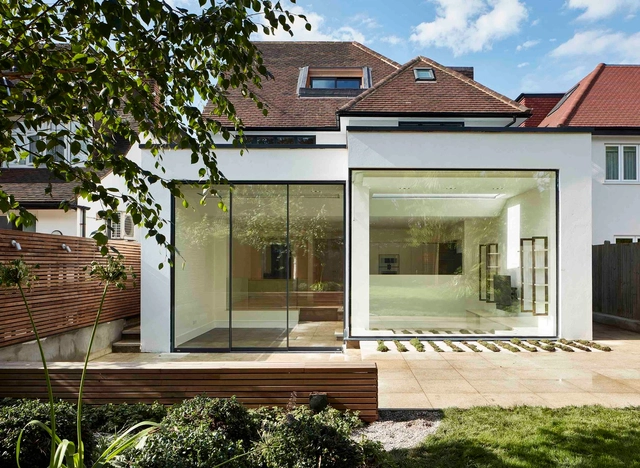
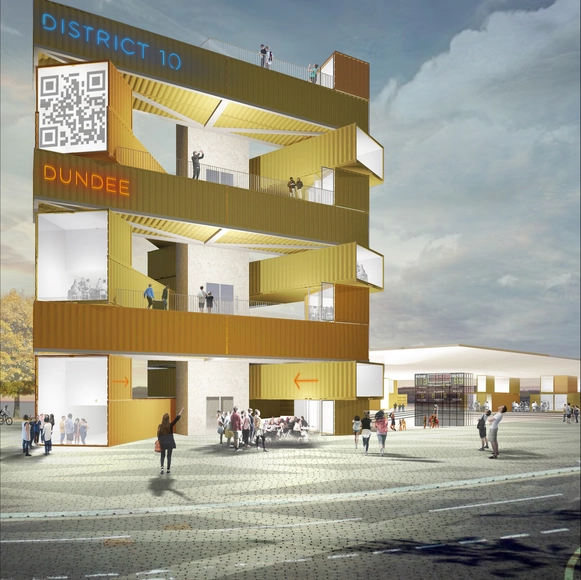
Flexible studios to aid Dundee's thriving digital creative sector. Image Courtesy of Studioshaw
London-based firm Studioshaw has won a competition to design a hub facility for children and young people in Dundee, Scotland. The Interactive Hub will be located on the site of a former railway depot at the Seabraes Yards Digital Media Park. The competition, hosted by the Dundee Institute of Architects (DIA) and Scottish Enterprise, was one of 400 events taking place across Scotland as part of the RIAS 2016 Festival of Architecture.
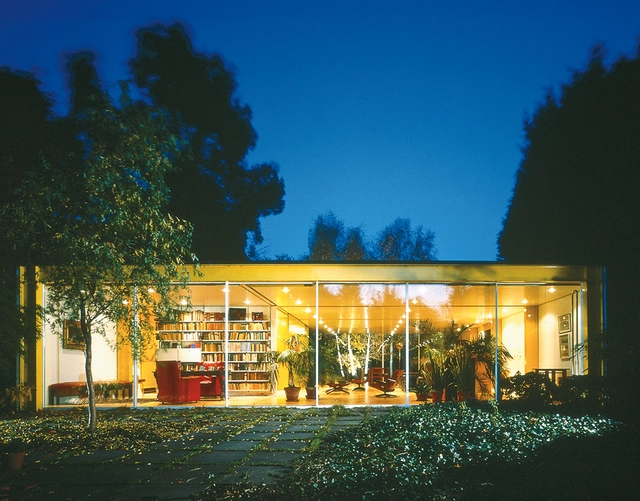
Fellows will be based at the Grade II listed Wimbledon House designed by Richard Rogers. Image Courtesy of Harvard Graduate School of Design
The Harvard University Graduate School of Design in Massachusetts has announced the winners of the Richard Rogers Fellowship 2017. Launched in October 2016, the Fellowship seeks to act as an international platform assembling experts and practitioners from a broad range of disciplines, using the built environment to positively impact on the quality of human life. The six inaugural Fellows, selected from 200 applicants worldwide, will undertake three months of research at the Wimbledon House, a Grade II listed residence in Londongifted to the School by world-renowned British architect Richard Rogers.
https://www.archdaily.com/805645/richard-rogers-fellowship-2017-winners-announcedNiall Patrick Walsh
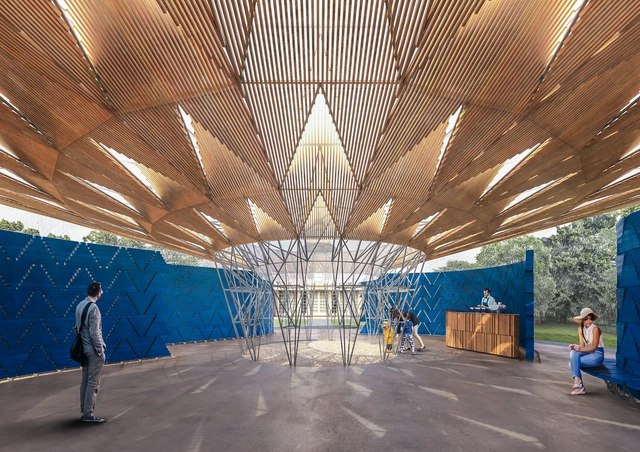
Serpentine Pavilion 2017, Designed by Francis Kéré, Design Render, Interior. Image Courtesy of Kéré Architecture
The Serpentine Galleries have announced that the 2017 Serpentine Pavilion will be designed by Diébédo Francis Kéré (Kéré Architecture), an African architect based between Berlin, Germany, and his home town of Gando in Burkino Faso. The design for the proposal, which will be built this summer in London's Kensington Gardens, comprises an expansive roof supported by a steel frame, mimicking the canopy of a tree. According to Kéré, the design for the roof stems from a tree that serves as the central meeting point for life in Gando. In line with the criteria for the selection of the Serpentine Pavilion architect Kéré has yet to have realised a permanent building in England.
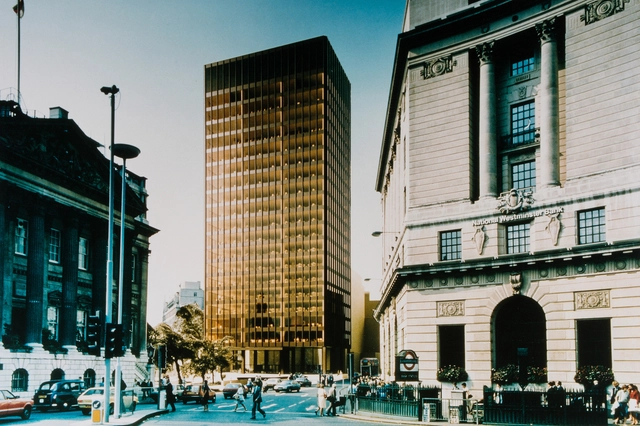
In the 1960s James Stirling asked Ludwig Mies van der Rohe why he didn’t design utopian visions for new societies, like those of Frank Lloyd Wright’s Broadacre City or Corbusier’s Cité Radieuse. Mies replied that he wasn’t interested in fantasies, but only in “making the existing city beautiful.” When Stirling recounted the conversation several decades later it was to the audience of a public enquiry convened in London – he was desperately trying to save Mies’ only UK design from being rejected in planning.
Amongst the rapid materializing of telecoms, media and tech companies within the Blackfriar’s Southbank region, PLP Architecture has been chosen for the design of a new office building with the challenge of successfully integrating into the ever-changing local fabric.
“Our proposal speculates on the nature of the contemporary office tower,” explained the firm. “What is the architectural expression of today’s high-density workplace? How does the building acquire an identity specific to its media/tech occupiers and how is that identity conveyed to the city?”
https://www.archdaily.com/804616/plp-architectures-proposed-office-building-responds-to-londons-historic-urban-identityOsman Bari
In a recent episiode of Section D, Monocle 24 visit a new exhibition at London's Serpentine Galleries presenting the paintings of Zaha Hadid. The show, first conceived with Hadid herself, "reveals her as an artist with drawing at the very heart of her work." According to the gallery, it "includes the architect’s calligraphic drawings and rarely seen private notebooks with sketches that reveal her complex thoughts about architectural forms and their relationships." This episode takes the listener on a tour of the display with commentary from the exhibition's curator.
https://www.archdaily.com/804667/zaha-hadid-explosive-paintings-drawings-sketches-on-display-london-serpentineAD Editorial Team
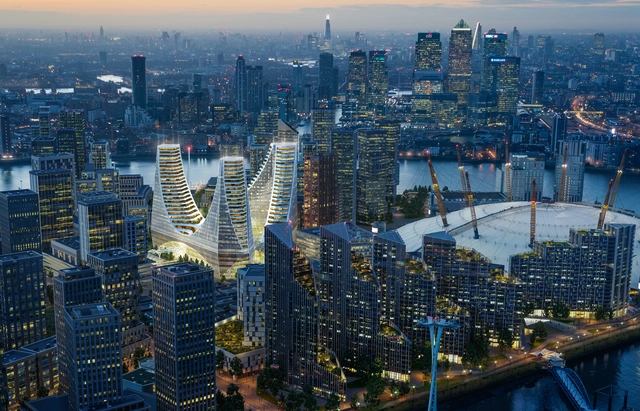
Santiago Calatrava has unveiled designs for a £1-billion mixed-use project in Greenwich Peninsula, East London. Named Peninsula Place, the 1.4-million-square-foot (130,000-square-meter) project will be located adjacent to the Roger Stirk Harbour + Partners-designed O2 Arena (formerly known as the Millennium Dome). It will include a new tube and bus station, a theater, cinema and performance venue, bars, shops and a wellbeing hub on the lower levels, with three towers rising above featuring offices, hotels, and apartments. The scheme will also be served by a new land bridge, also designed by Calatrava.
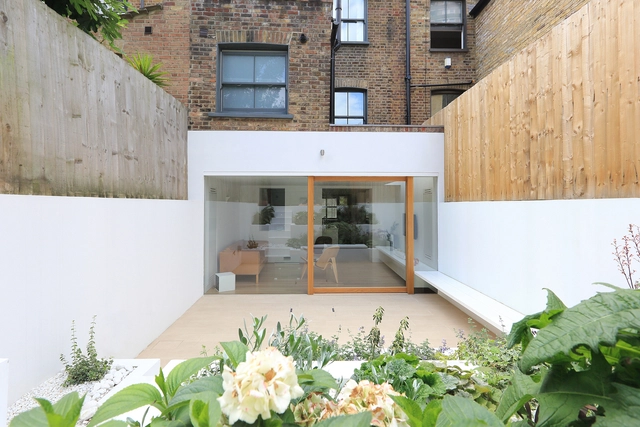
Looking east along Downham Road. Image Courtesy of Henley Halebrown
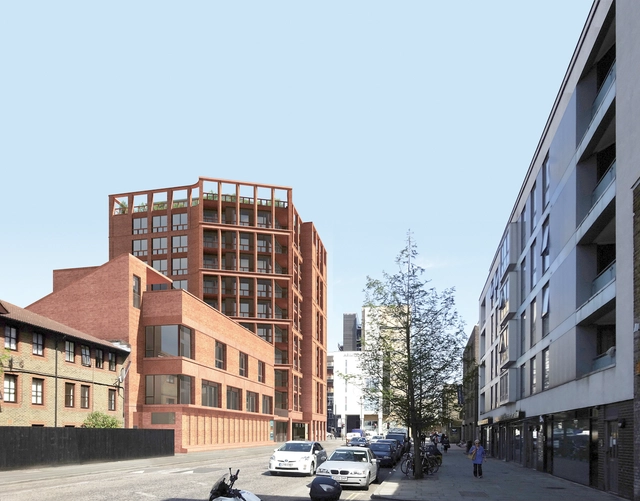
Henley Halebrown has released updates for their proposed mixed-use scheme in Hackney, London. 333 Kingland Road, previously occupied by a fire station, will soon be home to the Hackney New Primary School, commercial units, and dual aspect apartments. The scheme aims to address a need for school places and homes in London and to maintain a connection between learning and living in a dense urban environment.
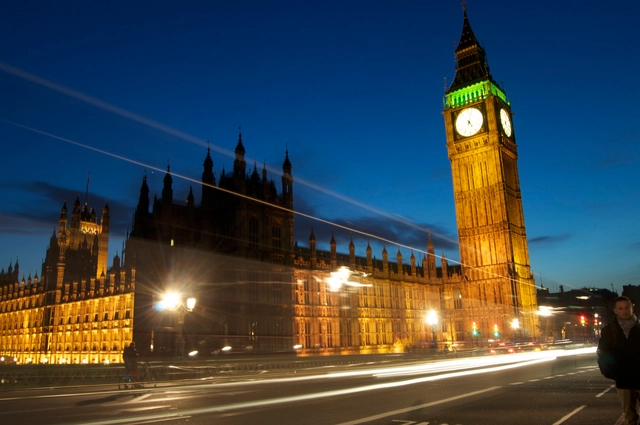
MIT has published new research revealing how the reconstruction of the British Houses of Parliament paved the way for legislation to tackle air pollution in Victorian London. Through original archival work into the 1840-1870 reconstruction, MIT architectural historian Timothy Hyde has revealed that work on the Parliament building was so hindered by air pollution that the British government ordered an inquiry into the effects of the atmosphere on new buildings.
https://www.archdaily.com/804029/how-rebuilding-britains-houses-of-parliament-helped-create-clean-air-lawsNiall Patrick Walsh
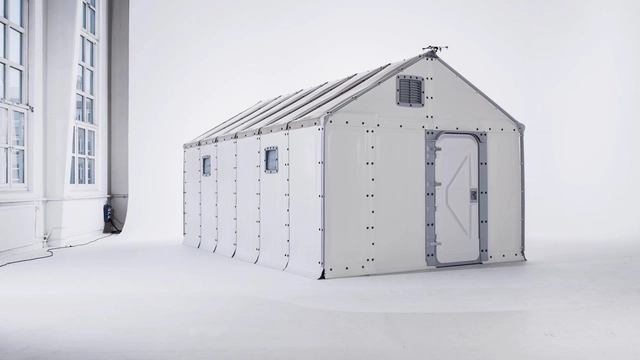
IKEA’s flat-packed refugee housing solution, the “Better Shelter,” has been announced as the winner of the Beazley Design of the Year 2016. Presented by the Design Museum in London, the award is given to the project that best meets the criteria of design that “promotes or delivers change,” “captures the spirit of the year,” “enables access,” and “work that has extended design practice.”
Selected as the winner of the Architecture category, the Better Shelter beat out winners from five other categories, including Digital, Fashion, Graphics, Product and Transport, to take home the top honor of Design of the Year.
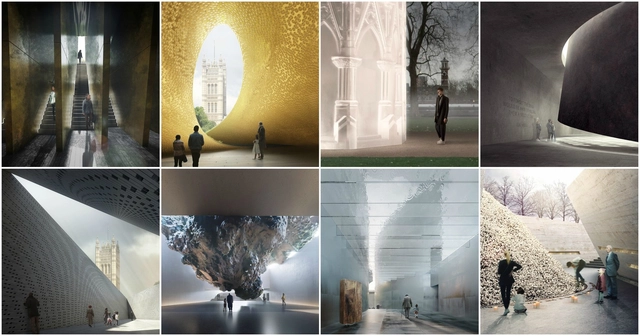
The UK Holocaust Memorial Foundation and Malcolm Reading Consultants have revealed the designs of 10 teams shortlisted to design a new Holocaust Memorial, to be located in London's Victoria Tower Gardens next to the Houses of Parliament. After a call for expressions of interest was launched in September, 10 star-studded teams were selected in November and invited to submit their designs for an "emotionally powerful and sensitively designed memorial."
With the designs now revealed to the public, competition organizer Malcolm Reading Consultants and the government-led Memorial Foundation are now consulting with the public and are inviting people to submit feedback about the designs here. The feedback received in this consultation period "will play a crucial role in informing the jury’s final decision on the memorial," they explained in a press release. Read on to see all 10 shortlisted designs.
In 1994, with the third millennium fast approaching, the British announced a national festival to mark the year 2000. Amid a new sense of optimism, the year-long festival, which became known as the Millennium Experience, would take the form of an exhibition celebrating “who we are, what we do, and where we live.” Under the project direction of Mike Davies, a partner of Richard Rogers’ practice (known today as RSHP) designed the Millennium Dome to house this exhibition.
In an extraordinary feat of architecture and engineering, the vast dome, whose canopy encompasses a volume of 2.2million cubic meters, sped from initial concept design to topping out in only two years. Although the Millennium Experience closed its doors as the year 2000, the building which housed it has since been put to a variety of uses, its durability largely due to Richard Rogers’ characteristically flexible design.
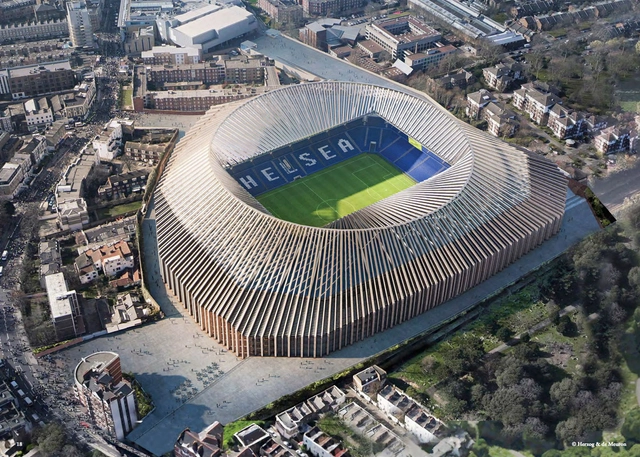
Herzog & de Meuron’s Chelsea Football Club stadium has been given approval by Hammersmith and Fulham council’s planning committee, reports BBC. The new £500 million stadium, which is estimated to be completed by 2020, will replace the existing stadium at Stamford Bridge, increasing the capacity of the space by almost 20,000 spectators to 60,000 seats.
The design of the new stadium is inspired by Gothic architecture, as well as nearby Victorian-era brick terraces, which will wrap around the entirety of the building.
Committee decision to approve the stadium plans does not mean that work can begin on site; various other permissions will be necessary before the final decision will be made by London Mayor Sadiq Khan.




.jpg?1487076478&format=webp&width=640&height=580)


.jpg?1486088735&format=webp&width=640&height=580)









.jpg?1484600230 "© Hélène Binet")
.jpg?1484600241 "© Hélène Binet")